
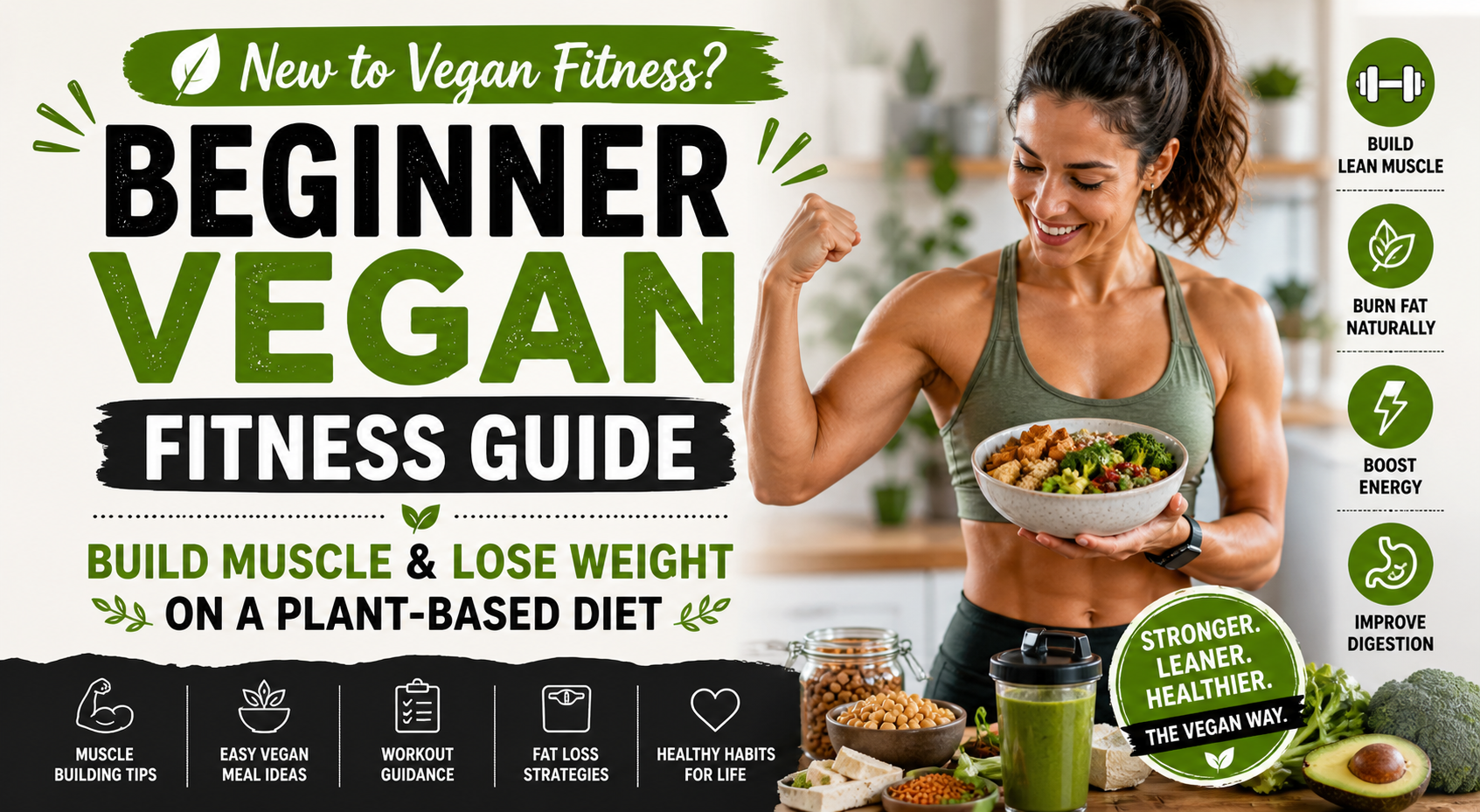
New to vegan fitness? Learn how to build muscle, lose weight, and fuel your workouts on a plant-based diet. Includes meal ideas, workout tips, and free tracking tools.
Let me tell you about the biggest fear I had before going vegan.
I was already going to the gym three times a week. I wasn’t a bodybuilder, but I was proud of my strength. Then I heard the rumors: “Vegans are weak.” “You can’t build muscle without meat.” “Plant protein doesn’t count.”
I almost didn’t make the switch.
But I did. And six months later, I was stronger than ever. My recovery was faster. My energy was steadier. And I wasn’t missing meat at all.
If you’re new to veganism and worried about your fitness, this guide is for you. I’m going to show you exactly how to build muscle, lose weight, and thrive as a vegan athlete – even if you’re just starting out.
Here is a clear, beginner-friendly guide to Vegan Nutrition Basics, covering protein needs, top food sources, and the essential roles of carbs and healthy fats.
Vegan Nutrition Basics for Beginners
Switching to a vegan diet can feel overwhelming, but the core principles are simple: eat a variety of whole plant foods to get all the nutrients your body needs. No single vegan food provides everything, but a balanced combination covers all bases.
The golden rule: Fill your plate with vegetables + plant protein + complex carbs + healthy fat at every meal.
How Much Protein Do You Need Daily?
This is the #1 question new vegans ask. The good news: most people overestimate how much protein they need, and plant protein is more than sufficient.
General daily protein recommendation for adults:
| Activity Level | Grams of protein per kg of body weight | Example (68kg / 150lb person) |
|---|---|---|
| Sedentary (office job, little exercise) | 0.8–1.0 g/kg | 54–68 g per day |
| Moderately active (walking, light exercise 3–5x/week) | 1.0–1.2 g/kg | 68–82 g per day |
| Active (gym, running, sports 5–6x/week) | 1.2–1.6 g/kg | 82–109 g per day |
| Athlete or muscle building | 1.6–2.2 g/kg | 109–150 g per day |
Simple rule for beginners: Aim for 1 gram of protein per kg of body weight (e.g., 70g protein for a 70kg person). That’s easy to hit with whole foods.
What 70g of vegan protein looks like in one day:
| Meal | Food | Protein |
|---|---|---|
| Breakfast | 1 cup cooked oatmeal + 2 tbsp peanut butter | 13g |
| Lunch | 1.5 cups lentil soup + 1 slice whole wheat bread | 18g |
| Snack | 1/2 cup roasted chickpeas | 10g |
| Dinner | 150g firm tofu stir-fry + 1 cup quinoa | 28g |
| Total | 69g |
Myth busted: Plant protein is “incomplete.” Your body pools amino acids from all foods eaten throughout the day — you don’t need to combine proteins at the same meal (e.g., rice + beans). Just eat a variety.
Best High-Protein Vegan Foods (Tofu, Lentils, Quinoa)
Here are the top plant-based protein sources, organized by protein density. Aim to include 2–3 of these daily.
Top 10 high-protein vegan foods (protein per standard serving):
| Food | Serving Size | Protein | Best Used In |
|---|---|---|---|
| Seitan | 100g (3.5 oz) | 25g | Sandwiches, stir-fries, “wheat meat” |
| Tofu (firm) | 100g | 12–15g | Stir-fries, scrambles, grilled |
| Tempeh | 100g | 19g | Sandwiches, crumbled in sauces |
| Edamame | 1 cup (shelled) | 17g | Snacks, salads, rice bowls |
| Lentils | 1 cup cooked | 18g | Soups, curries, veggie loaves |
| Chickpeas | 1 cup cooked | 15g | Hummus, curries, roasted snacks |
| Black beans | 1 cup cooked | 15g | Burritos, burgers, salads |
| Quinoa | 1 cup cooked | 8g | Base for bowls, side dish |
| Pumpkin seeds | 1/4 cup | 10g | Toppings, smoothies, snacks |
| Peanut butter | 2 tbsp | 8g | Oatmeal, sandwiches, smoothies |
Three standouts explained:
| Food | Why It’s Special | Quick Tip |
|---|---|---|
| Tofu | Absorbs any flavor; versatile (silken to extra-firm) | Press it for 15 min before cooking to remove water and improve texture |
| Lentils | Cook in 15–20 min (no soaking); high in iron + fiber | Red lentils dissolve into soups; brown/green hold shape for salads |
| Quinoa | One of few complete plant proteins (all 9 essential amino acids) | Rinse before cooking to remove bitterness |
Beginner meal template: Choose 1 protein source (e.g., tofu) + 1 carb source (e.g., quinoa) + vegetables + sauce. Done.
Importance of Carbs & Healthy Fats
Many beginners mistakenly try to eat “low carb” on a vegan diet. Don’t. Whole plant carbs and healthy fats are essential for energy, brain function, and absorbing nutrients.
Carbs: Your Primary Fuel
| Type | Examples | Role | How Much on Plate |
|---|---|---|---|
| Complex carbs (eat most) | Oats, brown rice, quinoa, sweet potato, whole wheat bread, beans, lentils | Slow-burning energy; fiber for gut health; stable blood sugar | 1/4 of plate |
| Simple carbs (eat less) | White sugar, white flour, soda, fruit juice | Quick energy but can spike blood sugar | Occasional |
Why vegans need plenty of complex carbs:
- Carbs are the brain’s preferred fuel (vegans who cut carbs often feel “brain fog”)
- Fiber from carbs feeds healthy gut bacteria (crucial for immunity)
- Whole carbs provide B vitamins, iron, and magnesium
Sample carb servings: 1 cup cooked oats, 1 medium sweet potato, 1 cup cooked quinoa, 2 slices 100% whole grain bread.
Healthy Fats: Don’t Skip Them
| Type | Best Sources | Why You Need It |
|---|---|---|
| Unsaturated fats | Avocado, nuts, seeds, olives, olive oil | Absorb vitamins A, D, E, K; reduce inflammation; hormone production |
| Omega-3 fatty acids | Flaxseeds, chia seeds, walnuts, hemp seeds | Brain health, mood regulation, joint health |
Common vegan fat mistakes:
- Eating zero fat (leads to dry skin, low energy, poor nutrient absorption)
- Relying only on processed vegan junk food (fried chips, vegan cookies)
- Adding 1–2 servings of whole food fats per meal
Easy fat additions:
- Breakfast: 1 tbsp flaxseed or chia seeds in oatmeal
- Lunch: 1/4 avocado or 2 tbsp pumpkin seeds on salad
- Dinner: 1 tbsp olive oil or sesame oil in cooking
Quick-Start Vegan Plate Template (No Measuring)
Use your hand and the plate visual:
| Section | Size | Foods |
|---|---|---|
| 🥬 Vegetables (half the plate) | 2 fists | Leafy greens, broccoli, peppers, cauliflower, zucchini |
| 🌱 Plant Protein (quarter of plate) | 1 palm | Tofu, tempeh, lentils, beans, seitan |
| 🍚 Complex Carbs (quarter of plate) | 1 cupped hand | Quinoa, brown rice, sweet potato, oats, whole grain bread |
| 🧈 Healthy Fat (add on top) | 1–2 thumbs | Avocado, nuts, seeds, olive oil |
3 Common Beginner Mistakes & Fixes
| Mistake | Why It Happens | Quick Fix |
|---|---|---|
| Always hungry / low energy | Not eating enough calories (plant foods are less calorie-dense than animal foods) | Add more nuts, seeds, avocado, and grains. Eat larger volumes. |
| Cravings for sweets / bread | Not enough protein or healthy fat at meals | Add tofu or beans + avocado or nuts to every meal. This stabilizes blood sugar. |
| No idea what to eat | Overwhelmed by options | Pick 3 go-to breakfasts, 3 lunches, 3 dinners. Rotate them. (Example: oatmeal, lentil soup, tofu stir-fry) |
One Week Sample Vegan Menu (Simple)
| Day | Breakfast | Lunch | Dinner |
|---|---|---|---|
| Mon | Oatmeal + peanut butter + banana | Lentil soup + whole grain bread | Tofu stir-fry + brown rice |
| Tue | Smoothie (banana, spinach, peanut butter, plant milk) | Chickpea salad sandwich + side salad | Black bean burrito bowl + avocado |
| Wed | Tofu scramble + sautéed mushrooms | Leftover burrito bowl | Red lentil pasta + tomato sauce + nutritional yeast |
| Thu | Overnight oats + chia + berries | Quinoa bowl + roasted veggies + hummus | Tempeh tacos + cabbage slaw |
| Fri | Smoothie bowl + granola | Leftover tempeh tacos | Veggie curry + coconut milk + rice |
| Sat | Whole grain toast + avocado + pumpkin seeds | Leftover curry | Veggie burger + sweet potato fries |
| Sun | Pancakes (whole wheat) + berries + walnuts | Simple chopped salad + kidney beans + lemon tahini | Meal prep for week (lentils, quinoa, roasted veg) |
Final Takeaway for Beginners
Don’t overcomplicate it. Eat a rainbow of vegetables, add a palm-sized portion of plant protein at each meal, fill the rest with whole grains and starchy veggies, and don’t fear healthy fats. Within 2–3 weeks, your energy will stabilize, cravings will reduce, and eating will feel automatic.
One actionable step: Tomorrow, add 1 tbsp of flax or chia seeds to your breakfast and 1/4 cup of beans or tofu to your lunch. That’s it. Start small.
Would you like a printable vegan protein cheat sheet or a grocery shopping list based on this guide?
🛒 Free Grocery List PDF
Make your shopping easy with this simple printable checklist!
📥 Download Now (Free)✔ Printable • ✔ Easy to Use • ✔ Time Saving
First, Let’s Bust the Biggest Myth
Myth: You can’t get enough protein on a vegan diet.
Truth: You absolutely can. Every plant has protein. Some have a lot.
The real question isn’t “where do you get protein?” It’s “are you eating enough total calories and a variety of whole foods?”
Here’s the reality: The largest study on plant-based athletes found that they meet or exceed protein recommendations without trying. The key is eating enough food.
How Much Protein Do You Actually Need?
| Goal | Protein per kg of body weight | For a 70kg (154lb) person |
|---|---|---|
| Sedentary (minimal exercise) | 0.8g | 56g per day |
| Active / Recreational fitness | 1.2-1.5g | 84-105g per day |
| Building muscle / Intensive training | 1.6-2.2g | 112-154g per day |
Example: If you weigh 70kg and want to build muscle, aim for 112-154g of protein daily.
That sounds like a lot. But it’s very doable on a vegan diet.
The Best Vegan Protein Sources (Your New Pantry)
| Food | Protein per 100g | Serving Size | Protein per Serving |
|---|---|---|---|
| Seitan | 25g | 3 oz (85g) | 21g |
| Tempeh | 19g | 3 oz (85g) | 16g |
| Lentils | 9g | 1 cup cooked | 18g |
| Edamame | 11g | 1 cup shelled | 17g |
| Tofu (firm) | 8g | 3 oz (85g) | 8g |
| Chickpeas | 7g | 1 cup | 15g |
| Black beans | 9g | 1 cup | 15g |
| Quinoa | 4g | 1 cup cooked | 8g |
| Hemp seeds | 31g | 3 tbsp (30g) | 9g |
| Pumpkin seeds | 19g | 1/4 cup | 9g |
| Peanut butter | 25g | 2 tbsp (32g) | 8g |
| Vegan protein powder | 60-80g | 1 scoop | 20-30g |
Pro Tip: Aim for 20-30g of protein per meal (about a palm-sized portion of tofu, tempeh, or beans).
Sample Vegan Fitness Meal Plan (1800 calories, 120g protein)
Breakfast (30g protein)
- Tofu scramble (1/2 block tofu – 12g)
- 1 slice whole grain toast (4g)
- 1/2 cup black beans (7g)
- 2 tbsp nutritional yeast (4g)
- 1 cup soy milk (8g)
- Plus multivitamin
Lunch (35g protein)
- Lentil & quinoa power bowl
- 1 cup cooked lentils (18g)
- 1/2 cup cooked quinoa (4g)
- 1/2 cup edamame (6g)
- 2 tbsp hemp seeds (6g)
- Mixed greens
Afternoon Snack (20g protein)
- Protein smoothie
- 1 scoop vegan protein powder (20g)
- 1 cup oat milk (3g)
- 1 frozen banana
- 1 tbsp peanut butter
Dinner (35g protein)
- Crispy tofu & broccoli stir-fry
- 1/2 block firm tofu (12g)
- 1 cup cooked edamame (6g)
- 2 cups broccoli
- 1/2 cup cooked brown rice (2g)
- Soy sauce, garlic, ginger
- Sprinkle of sesame seeds
Total: ~1800 calories, ~120g protein, ~30g fiber
Pre-Workout and Post-Workout Nutrition
What to Eat Before a Workout (1-2 hours before)
Goal: Slow-burning energy that won’t upset your stomach.
- Banana with peanut butter
- Oatmeal with berries and hemp seeds
- Slice of whole grain toast with avocado
- Small smoothie with fruit and a scoop of protein powder
Eat a small meal: 200-300 calories, mostly carbs, some protein. Low fat (fat digests slowly).
What to Eat After a Workout (Within 60 minutes)
Goal: Repair muscle and replenish energy stores.
- Protein shake with added carbs (fruit, oat milk)
- Tofu scramble on toast
- Lentil pasta with tomato sauce
- Chickpea salad sandwich on whole grain bread
- Greek style vegan yogurt with berries and granola
Eat a full meal: 300-500 calories, protein + carbs.
The 3 Most Important Vegan Fitness Supplements
Even with a perfect diet, vegans may be low in certain nutrients. These are non-negotiable for fitness.
| Supplement | Why You Need It | Recommended Dose |
|---|---|---|
| Vitamin B12 | Not found in plants. Essential for energy and nerve function. | 25-100 mcg daily |
| Vitamin D3 (vegan) | Supports bone health, immunity, and muscle function. | 1000-2000 IU daily |
| Omega-3 (algae oil) | Reduces inflammation, supports recovery and brain health. | 250-500 mg combined DHA/EPA |
Also consider: Creatine (improves high-intensity performance) and Iron (especially for female athletes).
Sample Vegan Fitness Week (Workout Plan)
| Day | Workout | Focus |
|---|---|---|
| Monday | Full body strength (45 min) | Squats, push-ups, rows, lunges, planks |
| Tuesday | Cardio (30 min) + abs (10 min) | Run, swim, cycle, or brisk walk |
| Wednesday | Full body strength (45 min) | Deadlifts, overhead press, pull-ups, glute bridges |
| Thursday | Active recovery (20-30 min) | Yoga, stretching, light walk |
| Friday | Full body strength (45 min) | Same as Monday or Wednesday |
| Saturday | Cardio (45 min) | Long run, hike, or intense cycle |
| Sunday | Rest (or gentle walk) | Let your body recover |
Pro Tip: Always warm up for 5-10 minutes before strength workouts. Always cool down and stretch after.
Common Beginner Vegan Fitness Mistakes (And How to Fix Them)
| Mistake | Why It Happens | The Fix |
|---|---|---|
| Not eating enough calories | Plant foods are less calorie-dense | Add nuts, seeds, avocados, and nut butters |
| Low protein intake | Not planning meals | Use the protein chart above. Aim for 20-30g per meal |
| Feeling tired during workouts | Low iron or B12 | Check your iron and B12 levels. Supplement if needed |
| Slow recovery | Not enough carbs or protein post-workout | Eat a post-workout meal within 60 minutes |
| Not building muscle | Not eating enough total food | Track your calories for a week. You may need to eat more |
Track Your Vegan Fitness Journey with These Free Tools
Building muscle and losing weight is easier when you track your progress. These tools help you stay on top of your goals.
📊 Vitalis Dashboard – Track Fitness, Sleep & Calories
Log your workouts, protein intake, sleep, and recovery. See your progress over time in one place.
👉 Visit Your Vitalis Dashboard
🔥 RoutineFlow AI – Build Your Workout Streak
Set daily reminders for your workouts and watch your streak grow. Consistency is key.
👉 Start Your Streak with RoutineFlow AI
⚡ Streakify AI – Track Multiple Fitness Habits
Monitor your daily protein intake, workout consistency, and recovery days.
👉 Build Your Streak with Streakify AI
✅ Habit Tracker – Simple Daily Check-ins
Log your workouts and meals with this easy-to-use habit tracker.
Keep You Exploring
- High Protein Vegan Meals That Actually Keep You Full – Recipes to fuel your workouts.
- 7-Day Vegan Weight Loss Meal Plan – A complete week of plant-based eating.
- What to Eat for Breakfast to Feel Your Best All Day Long – Start your day strong.
- How to Handle Social Events on a Vegan Diet – Navigate parties, restaurants, and family dinners with confidence.
- Beginner-Friendly Nutrition Tips for Home Fitness – Learn how to fuel your workouts.
Frequently Asked Questions
1. Can you build muscle on a vegan diet?
Absolutely. Many vegan athletes – from ultramarathoners to bodybuilders – build significant muscle. The key is eating enough total protein and calories. Aim for 1.6-2.2g of protein per kg of body weight, spread across 3-4 meals.
2. Do vegan athletes need protein powder?
Not necessarily, but it helps. Whole foods like tofu, tempeh, lentils, and beans are excellent protein sources. However, protein powder is convenient – especially post-workout when you need protein quickly.
3. Is soy bad for male hormones?
No. This is a myth. Hundreds of studies show that soy does not lower testosterone or feminize men. In fact, soy is associated with reduced cancer risk and improved heart health.
4. How long does it take to see results on a vegan fitness plan?
Most people notice improved energy within 2 weeks. Visible changes in muscle tone typically appear in 8-12 weeks of consistent training and proper nutrition. Be patient and trust the process.
5. What if I’m vegan and not losing weight?
You’re likely eating more calories than you think. Plant foods are healthy, but nuts, seeds, avocados, and oils are calorie-dense. Track your food for a week using a free app or our Vitalis Dashboard. You may need to adjust portions.
6. Can I do intermittent fasting on a vegan diet?
Yes, many vegans do. However, if you’re trying to build muscle, eating 3-4 meals per day (including protein at each meal) is generally more effective. Intermittent fasting can make it harder to eat enough total protein.
A Final Thought
Going vegan doesn’t mean giving up your fitness goals. It means fueling your body with plants – and plants are powerful.
The research is clear: plant-based athletes have comparable strength, endurance, and recovery to omnivores. The key is planning. Eat enough calories. Prioritize protein. Supplement where needed.
You can absolutely build muscle, lose weight, and thrive as a vegan athlete. Millions of us are doing it every day.
Now go crush your workout. Plant-powered.
This article contains links to other pages on our site. We also offer free tools to support your health journey. Please consult your healthcare provider before making significant dietary changes.
Workout Routines & Daily Fitness Planner
Printable workout schedule, daily workout plans, home workouts, exercise tracking, and weight lifting schedules for women — all in one digital planner bundle.
Get Instant DownloadWhat’s Included
Perfect for women starting a healthy lifestyle journey.
Workout Schedule
Weekly fitness planning pages to organize your workouts.
Home Workout Plan
Simple printable exercises for home fitness routines.
Weight Lifting Tracker
Track reps, sets, progress, and strength goals.
Daily Fitness Planner
Log meals, water intake, workouts, and mood daily.
Planner Preview
Modern printable pages designed for easy use.
Weekly Workout Routine
Stay consistent with your fitness goals.

Daily Exercise Plan
Easy-to-follow daily fitness planning pages.

Weight Lifting Schedule
Track gym sessions and strength progress.
Only $5
Instant digital download after purchase.
Replace the payment link with Gumroad, Etsy, Payhip, or Stripe checkout.
Easy Selling Method
1. Upload Product
Upload your PDF planner to Gumroad or Payhip.
2. Add Payment Link
Replace the button link with your checkout URL.
3. Share on Pinterest
Create Pinterest pins to drive traffic and sales.
4. Instant Delivery
Customers automatically receive the download after payment.