
Follow this 7-day vegan weight loss meal plan with a free printable PDF. Get calorie-conscious recipes, a shopping list, and tips that actually work.
Download this free 7-day vegan weight loss meal plan with PDF, grocery list, and 1500-calorie sample day. Easy, budget-friendly recipes. Start losing weight today!
“Lose weight fast with this 7-day vegan diet plan. Simple meals, grocery list & free PDF included. Start today!
🛒 Free Grocery List PDF
Make your shopping easy with this simple printable checklist!
📥 Download Now (Free)✔ Printable • ✔ Easy to Use • ✔ Time Saving
🛒 Smart Grocery List (Save Time & Money)
If you are trying to lose weight on a vegan diet, you have probably noticed two kinds of advice online. One kind tells you that going vegan automatically melts away fat. The other insists it is impossible to lose weight without meat and dairy. Neither is true. A vegan diet can absolutely support weight loss, but like any approach, it works through the same basic principles: eating enough protein and fiber to stay full, managing your overall calorie intake, and choosing whole foods over heavily processed ones, most of the time.
This guide gives you a complete, realistic 7-day vegan weight loss meal plan, built around whole plant foods, moderate calories, and satisfying portions, so you are not white-knuckling your way through hunger. You will find a full day-by-day meal plan, 16 easy recipes, a shopping list, calorie and macro guidance, a free printable PDF you can download and stick on your fridge, and answers to the most common questions about losing weight on a plant-based diet.
(Insert email opt-in box here: “Get the free 7-Day Vegan Weight Loss Meal Plan PDF, plus a printable shopping list and tracker, sent straight to your inbox.”)
This is not a crash diet, a juice cleanse, or a plan built on tiny portions of lettuce. It is a structured week of real meals: oatmeal, stir-fries, curries, hearty salads, pasta, and tacos, all built to keep your calories moderate and your protein and fiber high, which is the combination most strongly linked to staying full and losing weight sustainably.
Important note: This article is for general education and is not medical advice. Weight loss needs and safe calorie levels vary by individual. If you are pregnant or breastfeeding, have a medical condition, take medication, have a history of disordered eating, or are under 18, please speak with a doctor or registered dietitian before starting any weight loss plan.
Table of Contents
- Can You Actually Lose Weight on a Vegan Diet?
- How This 7-Day Plan Is Built: Calories, Protein, and Fiber
- Who This Plan Is For (and Who Should Check With a Doctor First)
- Get the Free Printable PDF
- Before You Start: 8 Steps to Set Yourself Up for Success
- The Calorie and Macro Basics of Vegan Weight Loss
- The Best Vegan Foods for Weight Loss
- Vegan Foods That Can Work Against Weight Loss
- The Complete 7-Day Shopping List
- The 7-Day Vegan Weight Loss Meal Plan (Full Breakdown)
- 16 Vegan Weight Loss Recipes
- How to Adjust the Plan to Your Calorie Needs
- Exercise and Movement to Support the Plan
- Common Mistakes That Stall Vegan Weight Loss
- Cravings, Hunger, and Plateaus: Troubleshooting Guide
- Eating Out and Social Situations While Losing Weight
- How to Track Your Progress the Right Way
- What to Do After Day 7
- Vegan Weight Loss Myths, Debunked
- A Closer Look: Protein, Satiety, and Why This Plan Emphasizes It So Heavily
- 25 Low-Calorie Vegan Snacks Under 150 Calories
- Meal Swap Guide: Customize the Plan to Your Taste
- What’s Inside the Free Printable PDF
- Budget Breakdown: What This Plan Costs
- A Note on Special Situations
- Frequently Asked Questions About the 7-Day Vegan Weight Loss Meal Plan
- Vegan Weight Loss Food Reference Chart: Calories and Protein at a Glance
- Low-Calorie Cooking Techniques That Don’t Sacrifice Flavor
- Vegan Weight Loss vs. Other Popular Diets: An Honest Comparison
- Sample Day, Hour by Hour: What Following This Plan Actually Looks Like
- Mindset Tips for a Successful Week (and Beyond)
- Want to Keep Going? A Second Week Meal Plan (Days 8–14)
- A Pre-Flight Checklist: Everything in One Place
- Reading Labels for Weight Loss: What to Actually Look For
- Signs You May Need to Eat More, Not Less
- Build Your Own 1,600-Calorie Vegan Day: A Worksheet
- Nutrient Safety Checklist While Losing Weight on a Vegan Diet
- Vegan Weight Loss: Are the Needs Different for Men and Women?
- More Frequently Asked Questions
- 7 Daily Habits That Make This Plan Easier to Follow
- Shopping List by Budget Tier
- Meal Prep vs. Meal Delivery: Which Fits Your Life?
- Essential Kitchen Tools for This Plan (and How to Use Them Well)
- Glossary: Key Terms Used in This Guide
- 5 Bonus Recipes for Variety
- A Few More Common Questions
- Quick Reference Summary
- Final Thoughts: Building a Week You Can Actually Sustain
Can You Actually Lose Weight on a Vegan Diet?
Yes. A substantial body of research, including multiple clinical trials and reviews, has found that vegan and vegetarian diets are associated with weight loss and lower average body mass index compared with diets that include meat. Some randomized controlled trials have directly compared a vegan diet to other diets for weight loss and found that participants following a plant-based approach lost a comparable or, in some studies, greater amount of weight, often without deliberately counting calories.
The likely reasons are straightforward:
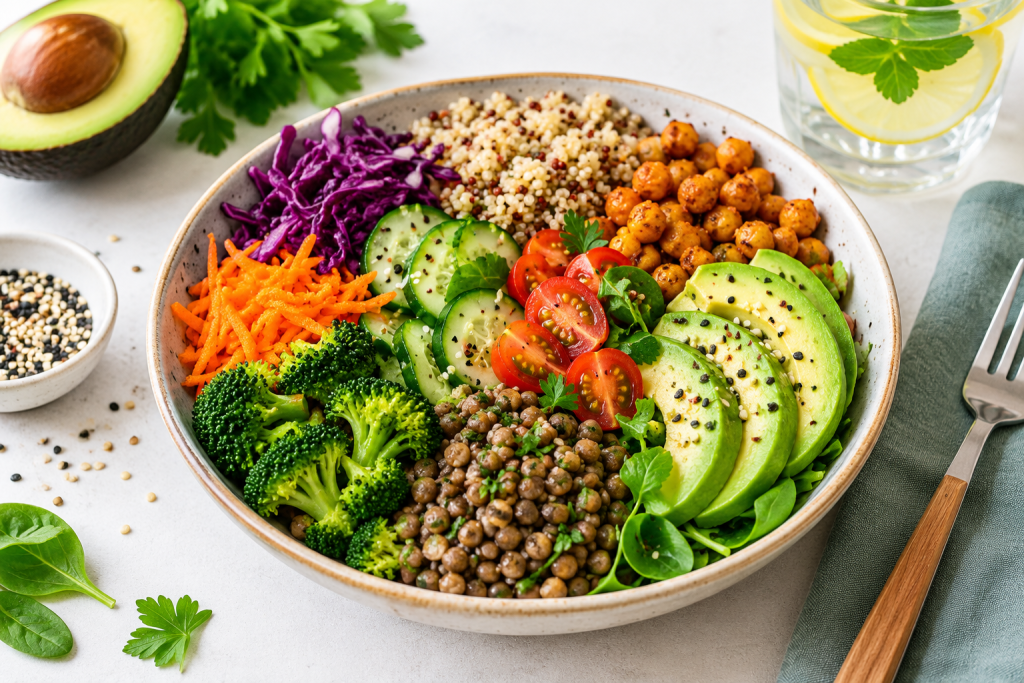
- Lower calorie density. Whole plant foods, such as vegetables, fruits, legumes, and whole grains, tend to contain more water and fiber and fewer calories per bite than many animal products and processed foods, meaning you can eat a satisfying volume of food for fewer calories.
- Higher fiber intake. Fiber slows digestion, promotes fullness, and supports stable blood sugar, all of which help control appetite.
- Displacement of processed and high-fat animal foods. Removing animal products often naturally reduces intake of saturated fat and some processed foods, although this is not automatic, since plenty of vegan foods are also processed and calorie-dense.
- Improved insulin sensitivity. Some research suggests plant-based eating patterns are linked to better insulin sensitivity, which may support more stable energy and appetite regulation.
But Vegan Does Not Automatically Mean Low-Calorie
This is the part many weight-loss articles skip. French fries, vegan donuts, oil-heavy stir-fries, and large portions of nuts and nut butter are all vegan, and all can easily lead to a calorie surplus. Weight loss, on any diet, ultimately depends on consistently eating somewhat fewer calories than your body uses, which is often called a calorie deficit. A vegan diet makes it easier to create a moderate, sustainable deficit without constant hunger, because whole plant foods are naturally filling for their calorie content, but it does not do the work automatically. This plan is built specifically with that balance in mind: enough food to feel satisfied, structured to keep calories in a reasonable, sustainable range.
What Makes This Plan Different From “Just Eating Vegan”
Three design choices separate a true weight-loss-focused vegan meal plan from a generic vegan meal plan:
- Protein is prioritized at every meal. Protein is the most filling macronutrient and helps protect muscle mass during weight loss.
- Portions and calorie-dense extras are controlled. Nuts, oils, nut butters, and dried fruit are nutritious, but they add up fast. This plan uses them intentionally rather than freely.
- Fiber is maximized. Vegetables, legumes, and whole grains form the base of almost every meal, which supports fullness on a moderate calorie intake.
Realistic Expectations for One Week
In seven days, many people following a well-structured plan notice some reduction on the scale, but a meaningful portion of early weight loss, especially in the first few days, reflects water weight and reduced food residue in the digestive tract rather than fat loss. This is normal for any new eating pattern, vegan or not. A realistic, sustainable rate of fat loss for most people is often cited as about 0.5 to 1 kilogram (roughly 1 to 2 pounds) per week, and even that pace will not always show up smoothly on a day-to-day scale. Use this week as the start of a pattern, not a single make-or-break test.
How This 7-Day Plan Is Built: Calories, Protein, and Fiber
Rather than a single fixed menu, this plan is built around a flexible calorie range so it can work for different people. Below is the framework, which you can adjust using the guidance in the “How to Adjust the Plan to Your Calorie Needs” section later in this guide.
The Default Framework
- Calorie range: Meals and snacks in this plan are built around a baseline of roughly 1,500 to 1,700 calories per day, with easy additions and swaps to reach 1,800 to 2,000 calories for those with higher needs. These are general reference ranges, not prescriptions; your own needs depend on your age, sex, height, weight, activity level, and goals.
- Protein target: Roughly 20 to 30 grams of protein per main meal, and 5 to 10 grams per snack, aiming for a daily total in the range of 70 to 100+ grams depending on your body size and goals. Research on weight management suggests that higher protein intakes, often cited in the range of about 1.2 to 1.6 grams per kilogram of body weight per day, can help preserve muscle mass and increase fullness during a calorie deficit.
- Fiber target: 30 or more grams of fiber per day, achieved through generous vegetables, legumes, whole grains, and fruit.
- Fat: Moderate and intentional, mostly from whole-food sources such as avocado, nuts, seeds, and small amounts of added oil, rather than restricted to very low levels.
Why This Plan Avoids Very Low Calorie Levels
Very low-calorie diets, often defined as below about 800 calories per day, and overly restrictive diets in general, are associated with muscle loss, nutrient deficiencies, fatigue, gallstone risk, metabolic slowdown, and a high likelihood of regaining weight afterward. This plan deliberately avoids that approach. Instead, it targets a moderate deficit that most healthy adults can sustain, which is more likely to produce lasting results. If you have significant weight to lose or a medical condition, work with a healthcare provider or registered dietitian to determine the safest and most effective calorie target for you.
Macronutrient Breakdown (Approximate)
For a 1,600-calorie day, a typical breakdown in this plan looks roughly like this. These are approximate and will vary day to day:
| Macronutrient | Approximate grams | Approximate calories | Percent of total |
|---|---|---|---|
| Protein | 90 to 100 g | 360 to 400 | 23 to 25% |
| Carbohydrates | 180 to 210 g | 720 to 840 | 45 to 52% |
| Fat | 45 to 55 g | 405 to 495 | 25 to 31% |
| Fiber | 30 to 40 g | (counted within carbs) | — |
You do not need to track these numbers precisely to succeed. They are provided so you understand the structure behind the meals, and so you can adjust intelligently if you want to.
Who This Plan Is For (and Who Should Check With a Doctor First)
This Plan Is a Good Fit If You:
- Want to lose weight gradually and sustainably while eating vegan.
- Are comfortable with moderate home cooking.
- Want a structured plan rather than having to plan every meal from scratch.
- Are a healthy adult without a medical condition that requires specialized nutrition guidance.
- Want a free PDF to print and follow without needing to be on your phone constantly.
Please Consult a Doctor or Registered Dietitian First If You:
- Are pregnant, trying to conceive, or breastfeeding. This is not the time for a weight-loss-focused calorie target.
- Have diabetes, are on insulin or other glucose-lowering medication, or have a thyroid condition, kidney disease, or another chronic condition.
- Take any prescription medication, since calorie and macronutrient changes can affect dosing needs for some medications.
- Have a history of an eating disorder or disordered eating, including restrictive eating, binge eating, or an unhealthy relationship with food or body image. A structured weight-loss meal plan may not be appropriate for you, and your wellbeing matters more than any plan.
- Are under 18. Growing bodies have different needs, and a parent should consult a pediatrician before changing a teenager’s diet for weight loss purposes.
- Have lost a significant amount of weight recently or have a low body weight already.
A Note on Mindset
This plan is designed to be a tool, not a rulebook you must follow perfectly. If a day does not go as planned, that is normal and does not undo your progress. The goal is a pattern you can sustain, learn from, and build on, whether that means continuing for a second week, adjusting the plan to fit your life, or taking what you learned and applying it more loosely going forward.
Get the Free Printable PDF
(Insert email opt-in box here: “Download your free 7-Day Vegan Weight Loss Meal Plan PDF — includes the full meal plan, a printable shopping list, and a simple daily tracker. Enter your email to get instant access.”)
The PDF version of this plan is designed to be printed and stuck on your fridge or kept in your bag, so you always know what is for your next meal without checking your phone. It includes:
- The full 7-day meal plan in a clean, printable format
- A consolidated shopping list organized by grocery store section
- A simple daily tracker for energy, hunger, and how each day went
- A blank meal-swap template so you can substitute meals you prefer
(Editor’s note for FitHealthyMind.com: build this as a short, well-designed PDF using your usual lead magnet template, and connect the opt-in form here to your email service provider. Consider offering it as an upsell path into your paid wellness dashboards.)
Before You Start: 8 Steps to Set Yourself Up for Success
Preparation determines whether a meal plan actually gets followed. These eight steps take about two to three hours total, spread across the days before you begin.
Step 1: Choose Your Start Date
Pick a seven-day stretch that does not include a wedding, major holiday, or heavy travel. A Monday start is common because it allows weekend shopping and prep, but any day works if you can prepare in advance.
Step 2: Set a Realistic Goal
Weight loss goals should be specific and modest for a one-week plan. A reasonable target is simply “follow the plan consistently and see how I feel,” rather than a specific number on the scale. If you want a numeric goal, remember that 1 to 2 pounds (0.5 to 1 kg) per week is a commonly cited sustainable pace, and much of a first week’s change may be water weight rather than fat.
Step 3: Calculate Your Calorie Range
Use the guidance in the “How to Adjust the Plan to Your Calorie Needs” section below to decide whether the default 1,600-calorie framework fits you, or whether you need to adjust up or down.
Step 4: Clear Out Calorie Traps
You do not need to throw away food, but it helps to put tempting, calorie-dense processed snacks out of easy reach for the week: chips, cookies, sugary cereal, and similar items. Replace the space with prepped vegetables, fruit, and the snacks listed in this guide.
Step 5: Shop Using the List Provided
Use the complete shopping list later in this guide. Buying everything in one trip removes decision fatigue during the week.
Step 6: Do a Prep Session
Spend 60 to 90 minutes before day one cooking a batch of grains, roasting a tray of vegetables, cooking a pot of beans or lentils, and making one sauce. This single session makes the rest of the week dramatically easier.
Step 7: Set Up Your Tracking
Whether you use the PDF tracker, a notebook, or an app, decide how you will track your days before you start. Tracking does not need to be perfect or obsessive; even simple yes/no notes on whether you followed the plan, plus a note on hunger and energy, are useful.
Step 8: Plan Your Movement
You do not need an intense workout plan for this week, but deciding in advance when you will walk, stretch, or exercise removes the “I’ll figure it out later” excuse that often leads to skipped activity. See the exercise section later in this guide for specific, low-effort suggestions.
EOF wc -w /mnt/user-data/outputs/7-day-vegan-weight-loss-meal-plan.md—
The Calorie and Macro Basics of Vegan Weight Loss
You do not have to count every calorie to lose weight, but understanding the basics helps you make smarter choices, especially when you deviate from the plan or eat out.
What Determines Your Calorie Needs
Your body burns calories through your basal metabolic rate (the energy used for basic functions like breathing and circulation), digestion, and physical activity. Several online calculators can estimate your total daily energy expenditure using your age, sex, height, weight, and activity level, such as the Mifflin-St Jeor equation, which is commonly used by dietitians. These calculators give an estimate, not an exact number, and actual needs vary by individual.
Creating a Moderate Deficit
A commonly cited approach for sustainable weight loss is to eat roughly 300 to 500 calories per day below your estimated maintenance level, which theoretically corresponds to about 0.5 to 1 pound (roughly 0.25 to 0.5 kg) of fat loss per week, though individual results vary due to water retention, hormones, and other factors. Larger deficits can produce faster short-term results but are harder to sustain and more likely to cause muscle loss, fatigue, and rebound overeating.
Why Protein Matters So Much for Weight Loss
Protein has a few specific advantages during weight loss:
- It is the most filling macronutrient, which helps control hunger and reduces the temptation to overeat.
- It has a higher “thermic effect,” meaning your body uses more energy to digest and process protein compared with fat or carbohydrates.
- It helps preserve lean muscle mass during a calorie deficit, which matters for long-term metabolic health and appearance.
On a vegan diet, reaching a higher protein target takes a bit more intention, since plant proteins are often less concentrated than animal proteins per calorie. This plan solves that by centering meals around tofu, tempeh, lentils, beans, edamame, and seitan, and by including a protein-rich snack most days.
Why Fiber Matters So Much for Weight Loss
Fiber slows down digestion, which extends the feeling of fullness after a meal. It also adds bulk to meals without adding many calories, supports stable blood sugar (which helps prevent energy crashes and cravings), and feeds beneficial gut bacteria. Most plant-based weight loss plans naturally hit high fiber targets because vegetables, legumes, fruits, and whole grains are fiber’s primary sources.
The Role of Fat
Fat is calorie-dense, at about 9 calories per gram compared with 4 calories per gram for protein and carbohydrates, so it is easy to overdo with foods like oil, nuts, nut butter, and avocado. That does not mean you should eliminate fat. Healthy fats support hormone function, nutrient absorption, and satisfaction with meals. The key is portioning intentionally rather than eating freely from calorie-dense fat sources.
Should You Count Calories?
You do not have to. Many people succeed with this plan simply by following the meals as written and using the “simple plate” portions described later. If you enjoy data and want more precision, tracking calories and protein with a free app for a week or two can be a useful learning tool, even if you do not track long-term. It often reveals surprises, such as how much oil accumulates in cooking, or how filling a properly portioned bean-and-vegetable meal actually is.
The Best Vegan Foods for Weight Loss
Not all vegan foods are created equal when your goal is weight loss. These categories form the foundation of this plan because they deliver high nutrition and fullness for relatively few calories.
High-Volume, Low-Calorie Vegetables
Non-starchy vegetables are the backbone of a weight-loss-focused vegan plan. They are high in water and fiber and very low in calories, so you can eat large portions. Examples include leafy greens (spinach, kale, arugula, lettuce), broccoli, cauliflower, zucchini, cucumber, bell peppers, mushrooms, tomatoes, green beans, asparagus, cabbage, and Brussels sprouts. Fill at least half your plate with these at lunch and dinner.
Lean Plant Proteins
- Tofu, especially firm and extra-firm: Low in calories relative to protein, and extremely versatile.
- Tempeh: Higher in protein and calories than tofu, with a hearty, filling texture.
- Legumes (lentils, chickpeas, black beans, kidney beans): High in both protein and fiber, which is a particularly powerful combination for fullness.
- Edamame: A complete protein with a good calorie-to-protein ratio.
- Seitan: Very high in protein (though not suitable for those avoiding gluten).
- Plant-based protein powders (pea, soy, or a blend): Useful for smoothies and quick protein boosts, though whole foods should still make up most of your diet.
Fiber-Rich Whole Grains and Starches
Whole grains and starchy vegetables provide steady energy and fiber. Choose whole, minimally processed forms: oats, quinoa, brown rice, barley, whole wheat pasta, potatoes, and sweet potatoes. These are not “bad” for weight loss; portioned appropriately, they are an important part of a sustainable plan.
Fruit
Fruit provides fiber, water, and natural sweetness for relatively few calories. Berries are particularly high in fiber relative to their calorie content. Whole fruit is generally more filling than fruit juice, which lacks fiber and is easy to overconsume.
Healthy Fats, in Controlled Portions
Avocado, nuts, seeds, nut butter, and olive oil all support health and satisfaction, but they are calorie-dense. This plan includes them in measured amounts rather than unlimited amounts.
Water and Low-Calorie Beverages
Drinking water before meals can support fullness, and staying hydrated is important generally, including for supporting a higher-fiber diet. Unsweetened tea and black coffee are also low-calorie options. Minimizing sugary drinks, including fruit juice, sweetened plant milk, and soda, is one of the simplest ways to reduce calorie intake without feeling deprived at meals.
Vegan Foods That Can Work Against Weight Loss
Being aware of these does not mean banning them forever. It means using them with intention rather than by default.
Highly Processed Vegan Convenience Foods
Vegan meat substitutes, frozen vegan meals, vegan cookies, and vegan “junk food” are often calorie-dense, high in refined starch, and easy to overeat, because they are engineered to be palatable. Occasional use is fine, but building a weight-loss plan around them usually backfires.
Liquid Calories
Smoothies, sweetened plant milks, fruit juice, and sugary coffee drinks can add hundreds of calories without much fullness. A large smoothie packed with multiple fruits, nut butter, and sweetener can easily reach 500 to 700 calories. This plan uses smoothies occasionally and keeps portions controlled.
Oil-Heavy Cooking
A tablespoon of oil adds about 120 calories, and it is easy to use several tablespoons without noticing, especially in stir-fries, roasted vegetables, and sautéed dishes. Using a light hand with oil, measuring instead of free-pouring, and leaning on non-stick cookware or parchment paper for roasting can meaningfully reduce calories without sacrificing flavor.
Nuts, Seeds, and Nut Butter in Large Amounts
These are nutritious but extremely calorie-dense. A quarter cup of nuts can be 200 calories or more. Portioning with a measuring spoon or small container, rather than eating from the jar or bag, prevents significant, easy-to-miss calorie creep.
Dried Fruit
Dried fruit concentrates both sugar and calories into a small volume, since removing water makes it easy to eat much more fruit than you would in fresh form. A small handful goes a long way.
Vegan Desserts and Baked Goods
Vegan does not mean low-calorie. Vegan brownies, muffins, and pastries can match or exceed their non-vegan counterparts in calories, since they are often made with oil, sugar, and refined flour. Enjoy these mindfully and in planned amounts, rather than as an unlimited category just because they are plant-based.
The Complete 7-Day Shopping List
This list covers all ingredients needed for the meal plan and recipes below, for one adult, based on the default 1,600-calorie framework. If you are cooking for more people or adjusting your calorie target upward, increase protein and grain quantities accordingly.
Produce
- Spinach or mixed greens, 2 large containers
- Broccoli, 2 heads
- Cauliflower, 1 head
- Zucchini, 2
- Bell peppers, 4 (mixed colors)
- Cucumbers, 2
- Cherry tomatoes, 1 pint, plus 2 regular tomatoes
- Mushrooms, 2 packages (8 oz / 225 g each)
- Carrots, 1 bag
- Red onions, 2, and yellow onions, 2
- Garlic, 1 head
- Fresh ginger, 1 small piece
- Cabbage or coleslaw mix, 1 small bag
- Green beans or asparagus, 1 bunch (optional, seasonal)
- Avocados, 3
- Lemons, 4, and limes, 2
- Fresh herbs: cilantro, parsley, basil (1 bunch each)
- Bananas, 4 to 5
- Apples, 3
- Berries, fresh or frozen, 2 containers
- Oranges, 2 to 3
Proteins
- Firm or extra-firm tofu, 3 blocks (14 oz / 400 g each)
- Tempeh, 1 package (8 oz / 225 g)
- Canned or dried chickpeas, 3 cans or 1 lb dried
- Canned black beans, 2 cans
- Canned lentils or 1 bag dried red or green lentils
- Edamame, frozen, 1 bag
- Seitan (optional), 1 package
Grains and Starches
- Rolled oats, 1 bag (about 1 lb / 450 g)
- Quinoa, 1 small bag (12 oz / 340 g)
- Brown rice, 1 bag (about 2 lb / 900 g)
- Sweet potatoes, 3 to 4 medium
- Whole wheat or chickpea pasta, 1 box
- Whole grain bread or wraps, 1 loaf or pack
Plant Milks and Dairy Alternatives
- Fortified unsweetened soy milk, 2 cartons
- Unsweetened soy yogurt, 1 or 2 tubs
- Nutritional yeast, 1 small container
Pantry, Oils, and Condiments
- Extra-virgin olive oil (used sparingly), 1 bottle
- Soy sauce or tamari, 1 bottle
- Rice vinegar
- Dijon mustard
- Tahini, 1 small jar
- Peanut butter, 1 small jar
- Canned diced tomatoes, 2 cans
- Vegetable broth, 1 carton (low-sodium if possible)
- Salsa, 1 jar
Spices
- Salt and black pepper
- Cumin, smoked paprika, chili powder, turmeric
- Garlic powder, onion powder
- Dried oregano and basil
- Curry powder
Snacks and Extras
- Ground flaxseed or chia seeds, 1 small bag
- Almonds or walnuts, 1 small bag (portioned)
- Dark chocolate, 70 percent or higher, dairy-free (small amount)
- Vitamin B12 supplement
A Note on Portioning for Weight Loss
This list is designed around controlled portions of calorie-dense items like oil, nuts, and nut butter. Resist the urge to buy “family size” versions of these specific items if you know you tend to overuse them; smaller packages naturally limit portions.
The 7-Day Vegan Weight Loss Meal Plan (Full Breakdown)
This plan is built around the default 1,600-calorie framework, with approximate calorie and protein counts for each day so you can see how the structure works. Recipes marked with (Recipe #) appear in the recipe section that follows. All figures are approximate and will vary based on exact brands, portion sizes, and preparation methods.
How to use this plan:
- Each day totals approximately 1,500 to 1,700 calories and 85 to 100+ grams of protein.
- If you need more calories, use the additions listed in “How to Adjust the Plan to Your Calorie Needs.”
- Drink water throughout the day, and consider a glass before meals.
- Take your vitamin B12 supplement daily, or as advised by your healthcare provider.
- Eat slowly and pay attention to fullness; these portions are designed to be satisfying, not minimal.
Day 1
- Breakfast: Protein Power Oatmeal (Recipe 1) — approx. 350 calories, 18 g protein
- Lunch: Mediterranean Chickpea Power Salad (Recipe 5) — approx. 420 calories, 20 g protein
- Dinner: Lemon-Garlic Tofu Stir-Fry (Recipe 9) with 3/4 cup brown rice — approx. 480 calories, 32 g protein
- Snack: Apple with 1 tablespoon peanut butter — approx. 170 calories, 4 g protein
- Daily total: approx. 1,420 calories, 74 g protein (add an evening snack from the list below if you are hungry, to reach the 1,600-calorie target)
- Evening snack suggestion: 1/2 cup edamame — approx. 95 calories, 8 g protein
Day 2
- Breakfast: Savory Tofu Scramble Breakfast Bowl (Recipe 2) — approx. 320 calories, 22 g protein
- Lunch: Leftover Lemon-Garlic Tofu Stir-Fry over greens instead of rice, or Black Bean Taco Salad Bowl (Recipe 6) — approx. 400 calories, 24 g protein
- Dinner: Red Lentil and Spinach Curry (Recipe 10) with 1/2 cup brown rice — approx. 450 calories, 24 g protein
- Snack: Roasted chickpeas, 1/3 cup — approx. 140 calories, 7 g protein
- Snack: Orange — approx. 65 calories
- Daily total: approx. 1,375 to 1,600 calories depending on lunch choice, 77 to 90 g protein
Day 3
- Breakfast: Berry Protein Smoothie (Recipe 3) — approx. 300 calories, 24 g protein
- Lunch: Leftover Red Lentil and Spinach Curry — approx. 450 calories, 24 g protein
- Dinner: Cauliflower and Chickpea Sheet-Pan Dinner (Recipe 11) with a side salad — approx. 420 calories, 18 g protein
- Snack: Hummus (3 tablespoons) with cucumber and bell pepper — approx. 150 calories, 5 g protein
- Snack: Soy yogurt with berries — approx. 130 calories, 8 g protein
- Daily total: approx. 1,450 calories, 79 g protein
Day 4
- Breakfast: Protein Power Oatmeal (Recipe 1), repeated for ease — approx. 350 calories, 18 g protein
- Lunch: Tempeh and Veggie Grain Bowl (Recipe 7) — approx. 480 calories, 28 g protein
- Dinner: Zucchini Noodle and White Bean “Alfredo” (Recipe 12) — approx. 400 calories, 22 g protein
- Snack: Apple with 1 tablespoon almond butter — approx. 170 calories, 4 g protein
- Daily total: approx. 1,400 calories, 72 g protein
Day 5
- Breakfast: Savory Tofu Scramble Breakfast Bowl (Recipe 2), repeated — approx. 320 calories, 22 g protein
- Lunch: Leftover Tempeh and Veggie Grain Bowl or Mediterranean Chickpea Power Salad — approx. 450 calories, 24 g protein
- Dinner: Black Bean and Sweet Potato Skillet (Recipe 13) — approx. 420 calories, 20 g protein
- Snack: Edamame, 1/2 cup — approx. 95 calories, 8 g protein
- Snack: Dark chocolate square and a handful of berries — approx. 110 calories
- Daily total: approx. 1,400 to 1,600 calories, 74 to 85 g protein
Day 6
- Breakfast: Berry Protein Smoothie (Recipe 3), repeated — approx. 300 calories, 24 g protein
- Lunch: Black Bean Taco Salad Bowl (Recipe 6) — approx. 400 calories, 24 g protein
- Dinner: Vegetable and Chickpea Curry Soup (Recipe 14) with a slice of whole grain bread — approx. 420 calories, 20 g protein
- Snack: Roasted chickpeas, 1/3 cup — approx. 140 calories, 7 g protein
- Snack: Fruit of choice — approx. 80 calories
- Daily total: approx. 1,340 to 1,600 calories, 75 to 90 g protein
Day 7
- Breakfast: Savory Breakfast Burrito Bowl (Recipe 4) — approx. 380 calories, 24 g protein
- Lunch: Mediterranean Chickpea Power Salad (Recipe 5), repeated — approx. 420 calories, 20 g protein
- Dinner: Celebration Buddha Bowl with Peanut-Lime Dressing (Recipe 15) — approx. 480 calories, 26 g protein
- Snack: Chocolate Peanut Butter Protein Bites (Recipe 16), 2 pieces — approx. 150 calories, 6 g protein
- Daily total: approx. 1,430 calories, 76 g protein
The 7-Day Plan at a Glance
| Day | Breakfast | Lunch | Dinner | Approx. Calories |
|---|---|---|---|---|
| 1 | Protein power oatmeal | Mediterranean chickpea salad | Lemon-garlic tofu stir-fry | ~1,500 to 1,600 |
| 2 | Tofu scramble bowl | Stir-fry leftovers or taco salad | Red lentil spinach curry | ~1,400 to 1,600 |
| 3 | Berry protein smoothie | Curry leftovers | Cauliflower chickpea sheet pan | ~1,450 |
| 4 | Protein power oatmeal | Tempeh grain bowl | Zucchini noodle white bean alfredo | ~1,400 |
| 5 | Tofu scramble bowl | Grain bowl or chickpea salad leftovers | Black bean sweet potato skillet | ~1,400 to 1,600 |
| 6 | Berry protein smoothie | Black bean taco salad bowl | Vegetable chickpea curry soup | ~1,340 to 1,600 |
| 7 | Breakfast burrito bowl | Mediterranean chickpea salad | Celebration Buddha bowl | ~1,430 |
Batch Cooking Notes to Make This Week Easy
- Cook a large batch of brown rice or quinoa early in the week; it appears across multiple meals.
- Double the chickpea salad on day 1 so you have an easy lunch backup on day 7.
- Cook extra tofu or tempeh whenever you prepare it, so leftovers are ready for salads or bowls.
- Make a double batch of any soup or curry, since they reheat well and often taste better the next day.
16 Vegan Weight Loss Recipes
Each recipe below is built with weight loss in mind: generous vegetables, a strong protein source, controlled added fat, and real flavor so the meals feel satisfying rather than restrictive. Calorie and protein figures are approximate per serving and will vary by brand and exact measurements.
Recipe 1: Protein Power Oatmeal
Serves: 1 | Approx. 350 calories, 18 g protein | Time: 10 minutes
Ingredients:
- 1/2 cup (40 g) rolled oats
- 3/4 cup unsweetened fortified soy milk
- 1/4 cup water
- 1 scoop (about 20 g) unflavored or vanilla plant protein powder
- 1/2 banana, sliced
- 1/2 cup berries
- 1 teaspoon ground flaxseed
- Cinnamon to taste
Method:
- Combine oats, soy milk, and water in a saucepan. Bring to a gentle boil, then simmer for 5 minutes, stirring occasionally.
- Remove from heat and stir in the protein powder until smooth (adding it off the heat helps preserve texture).
- Top with banana, berries, flaxseed, and cinnamon.
Why it works: Combining soy milk and a protein powder boosts the protein content well above a standard bowl of oatmeal, which keeps you full for longer.
Recipe 2: Savory Tofu Scramble Breakfast Bowl
Serves: 1 | Approx. 320 calories, 22 g protein | Time: 15 minutes
Ingredients:
- 1/2 block (7 oz / 200 g) firm tofu, crumbled
- 1/2 teaspoon oil
- 1/2 cup diced bell pepper
- 1 cup spinach
- 1/2 teaspoon turmeric
- 1/2 teaspoon garlic powder
- Pinch of black salt (kala namak) or regular salt
- 1/2 cup roasted sweet potato cubes (from batch-cooked prep)
- Salsa, to taste
Method:
- Heat the oil in a non-stick skillet. Sauté the pepper for 3 minutes.
- Add the tofu, turmeric, garlic powder, and salt. Cook for 5 to 6 minutes.
- Stir in the spinach until wilted.
- Serve over the roasted sweet potato with a spoonful of salsa.
Why it works: Tofu delivers protein for relatively few calories, and the roasted sweet potato adds fiber and lasting energy without needing added fat.
Recipe 3: Berry Protein Smoothie
Serves: 1 | Approx. 300 calories, 24 g protein | Time: 5 minutes
Ingredients:
- 1 cup unsweetened fortified soy milk
- 1 scoop (about 20 g) plant protein powder
- 3/4 cup frozen mixed berries
- A handful of spinach (optional, barely noticeable in flavor)
- 1 teaspoon chia seeds
- Ice, if needed
Method:
- Blend all ingredients until smooth, adding ice or water to reach your preferred thickness.
Why it works: This smoothie is controlled in portion and ingredients, unlike many smoothies that pack in multiple fruits, juice, and nut butter, which can quietly double the calories.
Recipe 4: Savory Breakfast Burrito Bowl
Serves: 1 | Approx. 380 calories, 24 g protein | Time: 15 minutes
Ingredients:
- 1/2 cup cooked black beans
- 1/3 cup crumbled firm tofu, sautéed with cumin and chili powder
- 1/3 cup cooked brown rice
- 1/4 cup corn
- 1/4 avocado, sliced
- 2 tablespoons salsa
- Shredded lettuce or cabbage
- Lime juice and cilantro
Method:
- Warm the beans and tofu separately or together in a skillet.
- Assemble the bowl with rice on the bottom, then beans, tofu, corn, lettuce, avocado, and salsa.
- Finish with lime juice and cilantro.
Why it works: The combination of beans, tofu, and rice provides a complete, satisfying protein profile, and measured avocado keeps fat in check.
Recipe 5: Mediterranean Chickpea Power Salad
Serves: 1 (double for leftovers) | Approx. 420 calories, 20 g protein | Time: 15 minutes
Ingredients:
- 1 cup canned chickpeas, drained and rinsed
- 2 cups mixed greens
- 1/2 cucumber, diced
- 1/2 cup cherry tomatoes, halved
- 2 tablespoons red onion, diced
- 1 tablespoon olives, sliced
- 1 tablespoon pumpkin seeds
- Dressing: 1 tablespoon olive oil, juice of 1/2 lemon, 1/2 teaspoon dried oregano, salt and pepper
Method:
- Combine the chickpeas, greens, cucumber, tomatoes, onion, and olives in a large bowl.
- Whisk the dressing ingredients and toss with the salad.
- Top with pumpkin seeds.
Why it works: Chickpeas provide both protein and fiber, a combination that research consistently links to greater fullness than either nutrient alone, and the measured one tablespoon of olive oil keeps added fat intentional.
Recipe 6: Black Bean Taco Salad Bowl
Serves: 1 | Approx. 400 calories, 24 g protein | Time: 15 minutes
Ingredients:
- 1 cup canned black beans, warmed with cumin and chili powder
- 2 cups shredded romaine or mixed greens
- 1/3 cup corn
- 1/4 cup diced tomato
- 2 tablespoons salsa
- 2 tablespoons soy yogurt mixed with lime juice (as a “crema”)
- 1/4 avocado, sliced
- A few crushed baked tortilla chips (optional, measured)
Method:
- Layer greens, beans, corn, and tomato in a bowl.
- Top with salsa, the soy yogurt crema, and avocado.
- Add a few crushed chips for crunch, if using.
Why it works: This recipe recreates a calorie-heavy restaurant taco salad using measured, intentional portions of avocado and chips, instead of a fried shell and large amounts of cheese and sour cream.
Recipe 7: Tempeh and Veggie Grain Bowl
Serves: 1 | Approx. 480 calories, 28 g protein | Time: 25 minutes
Ingredients:
- 3 oz (85 g) tempeh, cubed
- 1 teaspoon soy sauce and 1/2 teaspoon oil, for marinating/cooking
- 1 cup broccoli florets, roasted or steamed
- 1/2 cup cooked quinoa
- 1/4 avocado
- 1 tablespoon tahini-lemon dressing (recipe in “Vegan Swaps” section of related guides, or: 1 tablespoon tahini, squeeze of lemon, water to thin)
Method:
- Toss tempeh cubes with soy sauce. Pan-fry in the oil for 6 to 8 minutes until golden.
- Steam or roast the broccoli.
- Assemble the bowl with quinoa, broccoli, tempeh, and avocado. Drizzle with the tahini dressing.
Why it works: Tempeh is one of the most protein-dense whole plant foods, making this bowl especially filling relative to its calorie count.
Recipe 8: Hearty Minestrone (used as a flexible lunch or side)
Serves: 4 | Approx. 220 calories per serving, 11 g protein | Time: 35 minutes
Ingredients:
- 1 teaspoon olive oil
- 1 onion, 2 carrots, and 2 celery stalks, diced
- 3 cloves garlic, minced
- 1 can diced tomatoes
- 4 cups vegetable broth
- 1 can white beans or kidney beans, drained and rinsed
- 1 cup diced zucchini
- 1/2 cup small whole wheat pasta
- 2 cups spinach
- Salt, pepper, and Italian herbs
Method:
- Sauté the onion, carrot, and celery in oil for 5 to 6 minutes. Add garlic and cook for 1 minute.
- Add tomatoes, broth, beans, and zucchini. Simmer for 15 minutes.
- Add the pasta and cook until tender, about 8 to 10 minutes. Stir in spinach at the end.
Why it works: A broth-based soup with beans and vegetables is naturally low in calorie density while being high in volume and fiber, which research links to greater fullness per calorie.
Recipe 9: Lemon-Garlic Tofu Stir-Fry
Serves: 2 | Approx. 480 calories per serving (with rice), 32 g protein | Time: 20 minutes
Ingredients:
- 1 block (14 oz / 400 g) extra-firm tofu, pressed and cubed
- 1 tablespoon cornstarch
- 1 teaspoon oil
- 3 cups mixed vegetables (broccoli, bell pepper, snap peas, carrots)
- 3 cloves garlic, minced
- Zest and juice of 1 lemon
- 2 tablespoons soy sauce
- 1 teaspoon maple syrup
- 1 1/2 cups cooked brown rice, to serve (3/4 cup per serving)
Method:
- Toss the tofu cubes with cornstarch. Pan-fry in the oil over medium-high heat until golden on most sides, about 8 minutes.
- Add the vegetables and garlic, and stir-fry for 4 to 5 minutes until crisp-tender.
- Whisk the lemon juice, zest, soy sauce, and maple syrup, and pour over the pan. Toss for 1 to 2 minutes until coated.
- Serve over brown rice.
Why it works: The cornstarch coating gives the tofu a satisfying texture using minimal oil, and the lemon-based sauce adds big flavor without extra calories.
Recipe 10: Red Lentil and Spinach Curry
Serves: 3 | Approx. 450 calories per serving (with rice), 24 g protein | Time: 30 minutes
Ingredients:
- 1 teaspoon oil
- 1 onion, diced
- 3 cloves garlic, minced
- 1 tablespoon grated ginger
- 1 tablespoon curry powder
- 1 cup dry red lentils, rinsed
- 1 can diced tomatoes
- 2 cups vegetable broth
- 1/2 can light coconut milk
- 3 cups spinach
- Salt and lime juice
- 1 1/2 cups cooked brown rice, to serve (1/2 cup per serving)
Method:
- Sauté the onion in oil for 5 minutes. Add garlic, ginger, and curry powder, and cook for 1 minute.
- Add lentils, tomatoes, broth, and coconut milk. Simmer for 20 minutes, stirring occasionally, until the lentils are soft and the curry has thickened.
- Stir in spinach until wilted. Season with salt and lime juice.
- Serve over a modest portion of rice.
Why it works: Using “light” coconut milk in a smaller quantity, combined with the fiber and protein in lentils, keeps this curry filling without the heavy calorie load of a traditional full-fat coconut curry.
Recipe 11: Cauliflower and Chickpea Sheet-Pan Dinner
Serves: 2 | Approx. 420 calories per serving, 18 g protein | Time: 35 minutes
Ingredients:
- 1 head cauliflower, cut into florets
- 1 can chickpeas, drained, rinsed, and patted dry
- 1 tablespoon olive oil
- 1 teaspoon cumin, 1 teaspoon smoked paprika, 1/2 teaspoon turmeric
- Salt
- 2 cups mixed greens, to serve
- 2 tablespoons tahini-lemon dressing (1 tablespoon tahini, lemon juice, water, salt, divided)
Method:
- Preheat the oven to 425°F (220°C).
- Toss the cauliflower and chickpeas with oil and spices on a sheet pan.
- Roast for 25 to 30 minutes, stirring halfway, until browned.
- Serve over greens with the tahini dressing.
Why it works: Roasting at high heat develops deep flavor without needing extra oil or sauce, and chickpeas add protein that cauliflower alone would not provide.
Recipe 12: Zucchini Noodle and White Bean “Alfredo”
Serves: 2 | Approx. 400 calories per serving, 22 g protein | Time: 25 minutes
Ingredients:
- 2 large zucchini, spiralized into noodles (or 4 oz / 115 g whole wheat pasta, for a less strict version)
- 1 can white beans, divided
- 1/2 cup unsweetened soy milk
- 2 cloves garlic
- 1 tablespoon nutritional yeast
- Juice of 1/2 lemon
- Salt, pepper, and red pepper flakes
- 1 cup cherry tomatoes, halved
- Fresh basil
Method:
- Blend half the white beans with the soy milk, garlic, nutritional yeast, lemon juice, salt, and pepper until smooth and creamy. This is your “Alfredo” sauce.
- Warm the remaining whole beans and cherry tomatoes in a skillet for a few minutes.
- If using zucchini noodles, sauté briefly (2 to 3 minutes) just to soften slightly; do not overcook, or they will become watery. If using pasta, cook according to package directions.
- Toss the noodles with the sauce, beans, and tomatoes. Top with basil and red pepper flakes.
Why it works: Swapping some or all of the pasta for zucchini noodles significantly reduces calorie density while keeping the dish satisfying, and blended white beans create a creamy sauce without any cream or cheese.
Recipe 13: Black Bean and Sweet Potato Skillet
Serves: 2 | Approx. 420 calories per serving, 20 g protein | Time: 30 minutes
Ingredients:
- 1 medium sweet potato, diced small
- 1 teaspoon oil
- 1/2 onion, diced
- 1 bell pepper, diced
- 1 can black beans, drained and rinsed
- 1 teaspoon cumin, 1/2 teaspoon smoked paprika
- Salt and lime juice
- 2 cups mixed greens, to serve
- 1/4 avocado, sliced
Method:
- Heat the oil in a large skillet. Add the sweet potato and cook, covered, for 10 to 12 minutes, stirring occasionally, until nearly tender.
- Add the onion and pepper, and cook for 5 minutes.
- Add the black beans and spices, and cook for 5 more minutes until heated through.
- Finish with lime juice and serve over greens with avocado.
Why it works: Covering the pan while the sweet potato cooks speeds things up without needing extra oil, and the fiber from beans and sweet potato makes this a filling, moderate-calorie dinner.
Recipe 14: Vegetable and Chickpea Curry Soup
Serves: 4 | Approx. 280 calories per serving, 14 g protein | Time: 30 minutes
Ingredients:
- 1 teaspoon oil
- 1 onion, diced
- 3 cloves garlic, minced
- 1 tablespoon curry powder
- 1 can chickpeas, drained and rinsed
- 1 can diced tomatoes
- 1/2 can light coconut milk
- 3 cups vegetable broth
- 2 cups cauliflower florets
- 2 cups spinach
- Salt and lime juice
Method:
- Sauté the onion in oil for 5 minutes. Add garlic and curry powder, and cook for 1 minute.
- Add chickpeas, tomatoes, coconut milk, broth, and cauliflower. Simmer for 15 to 20 minutes until the cauliflower is tender.
- Stir in spinach until wilted. Season with salt and lime juice.
Why it works: A broth-based curry soup gives you a large, warming portion for a moderate calorie count, which is ideal for a satisfying dinner on a calorie-conscious day.
Recipe 15: Celebration Buddha Bowl with Peanut-Lime Dressing
Serves: 1 | Approx. 480 calories, 26 g protein | Time: 20 minutes
Ingredients:
- 1/2 cup cooked quinoa
- 1/2 cup roasted sweet potato
- 1/2 cup edamame
- 1 cup shredded cabbage or mixed greens
- 1/4 avocado
- Dressing: 1 tablespoon peanut butter, juice of 1/2 lime, 1 teaspoon soy sauce, 1/2 teaspoon maple syrup, water to thin
Method:
- Whisk the dressing ingredients until smooth, adding water a teaspoon at a time until pourable.
- Assemble the bowl with quinoa, sweet potato, edamame, cabbage, and avocado.
- Drizzle with the dressing.
Why it works: This bowl is designed as the week’s “celebration” meal: still calorie-conscious, but visually generous and flavorful, which helps reinforce that a weight-loss plan does not have to feel like deprivation.
Recipe 16: Chocolate Peanut Butter Protein Bites
Makes: about 12 bites | Approx. 75 calories, 3 g protein per bite | Time: 10 minutes (plus chilling)
Ingredients:
- 1 cup rolled oats
- 1/4 cup peanut butter
- 1/4 cup plant protein powder (chocolate or vanilla)
- 2 to 3 tablespoons unsweetened soy milk, as needed
- 1 tablespoon cocoa powder
- 1 tablespoon maple syrup
- Pinch of salt
Method:
- Combine all ingredients in a bowl, adding soy milk a tablespoon at a time until a thick, moldable dough forms.
- Roll into 12 balls.
- Chill for 20 minutes before eating. Store in the refrigerator for up to a week.
Why it works: Using protein powder in the recipe, rather than relying only on peanut butter and oats, boosts the protein-to-calorie ratio, making these a smarter sweet snack than a typical energy ball.
How to Adjust the Plan to Your Calorie Needs
This plan is built as a flexible framework, not a one-size-fits-all number. Here is how to scale it up or down.
If You Need Fewer Calories (Roughly 1,200 to 1,400 Calories)
This range is lower and is generally more appropriate for smaller individuals, older adults, or those with lower activity levels; it should not go lower without professional guidance, since very low calorie intakes risk inadequate nutrition.
- Reduce grain and starch portions by about 25 percent (for example, 1/2 cup rice instead of 3/4 cup).
- Reduce added fats, such as oil and tahini, by about half.
- Keep protein portions the same, since protein is especially important to preserve during a larger deficit.
- Remove one snack per day, or choose a lower-calorie option such as cucumber with a small amount of hummus.
If You Need More Calories (Roughly 1,800 to 2,200 Calories)
This range suits larger individuals, more active people, or anyone who finds 1,600 calories leaves them too hungry.
- Add an extra 1/4 to 1/2 cup of grains or starchy vegetables at lunch and dinner.
- Add a full tablespoon of nut butter, tahini, or avocado to meals that currently use a smaller portion.
- Add a second snack, such as a handful of nuts or a protein smoothie.
- Increase protein portions by about 25 percent, for example using a full block of tofu instead of half in the scramble recipe.
A General Formula for Any Calorie Target
- Start with the protein source and keep it roughly fixed. Protein should not be the first thing you cut.
- Adjust starchy carbohydrates (grains, starchy vegetables) up or down to hit your target.
- Adjust fats (oil, nuts, nut butter, avocado) up or down in smaller increments, since they are calorie-dense.
- Keep non-starchy vegetables as unlimited as possible. They are the easiest way to add volume and nutrients without meaningfully increasing calories.
Using an App or Calculator
If you want precision, a free calorie-tracking app can help you log meals and see real numbers rather than estimates. Many people find it useful for a week or two as a learning tool, then transition to eyeballing portions once they have a feel for what their target amount of food looks like.
Exercise and Movement to Support the Plan
You do not need an intense workout routine to follow this plan successfully, but movement supports weight loss, mood, and energy, and it helps preserve muscle mass during a calorie deficit.
Walking: The Underrated Weight Loss Tool
Walking is one of the most sustainable forms of exercise for weight loss because it is low-impact, requires no equipment, and is easy to fit into a busy schedule. Aim for at least a 20 to 30 minute walk most days, and consider adding short walks after meals, which may also support healthy blood sugar responses.
Strength Training
Resistance exercise, whether with weights, resistance bands, or bodyweight movements, helps preserve muscle mass during a calorie deficit, which supports long-term metabolic health and a toned appearance as you lose fat. Two to three sessions per week of 20 to 30 minutes is a reasonable starting target for most healthy adults. If you are new to strength training, bodyweight exercises such as squats, lunges, push-ups (including modified versions), and planks are an accessible starting point.
A Simple 7-Day Movement Framework
This is optional and should be adjusted to your fitness level and any physical limitations. Consult a healthcare provider before starting a new exercise program if you have health concerns.
- Day 1: 25-minute walk
- Day 2: Bodyweight strength circuit (squats, push-ups, lunges, plank), 20 minutes
- Day 3: 30-minute walk or light cardio
- Day 4: Rest or gentle stretching
- Day 5: Bodyweight strength circuit, 20 minutes
- Day 6: 30-minute walk, ideally outdoors
- Day 7: Rest, stretching, or a leisurely activity you enjoy
Why Not to Over-Exercise During a Calorie Deficit
Pairing a significant calorie deficit with intense daily exercise can lead to excessive fatigue, poor recovery, and sometimes a drop in motivation or even metabolic adaptation that works against your goals. Moderate, consistent movement tends to be more sustainable and effective than sporadic, extreme workouts.
Non-Exercise Movement Matters Too
General daily activity, sometimes called non-exercise activity thermogenesis, includes things like taking the stairs, standing more, doing household chores, and walking instead of driving for short trips. These small amounts of movement add up over a week and can meaningfully support your calorie balance without feeling like “exercise.”
Common Mistakes That Stall Vegan Weight Loss
Understanding these pitfalls in advance can save you a lot of frustration.
Mistake 1: Treating “Vegan” as Synonymous With “Low-Calorie”
As discussed earlier, vegan junk food, oil-heavy dishes, and oversized portions of nuts and nut butter can all add up quickly. Fix: Build meals around the protein and vegetable-forward structure in this plan, and use calorie-dense extras intentionally.
Mistake 2: Not Eating Enough Protein
Low-protein vegan meals, such as a plate of plain vegetables and rice, leave you hungry soon after eating, which can lead to overeating later. Fix: Include tofu, tempeh, legumes, or seitan at every meal.
Mistake 3: Drinking Your Calories
Smoothies, juices, and sweetened plant milk can add significant calories without much fullness. Fix: Keep smoothies portion-controlled, and choose unsweetened plant milk and whole fruit over juice.
Mistake 4: Free-Pouring Oil
A “light drizzle” from a bottle can easily be two or three tablespoons, adding 240 to 360 calories without you realizing it. Fix: Measure oil with a spoon, especially while you are building a feel for portions.
Mistake 5: Under-Eating and Triggering a Binge Cycle
Severely restricting calories often leads to intense hunger, followed by overeating, which can feel discouraging and derail progress. Fix: Stick to the moderate calorie range in this plan rather than cutting further, and eat regular meals rather than skipping them.
Mistake 6: Ignoring Portion Sizes on “Healthy” Foods
Avocado, nuts, dried fruit, and granola are nutritious, but it is easy to eat several servings’ worth without noticing, especially with foods eaten straight from a container. Fix: Portion snacks into small bowls or containers rather than eating from the bag.
Mistake 7: Expecting Daily Scale Progress
Weight naturally fluctuates day to day due to water retention, digestion, sodium intake, and hormonal changes, especially for menstruating individuals. Seeing the scale go up one day does not mean the plan is not working. Fix: Focus on weekly trends rather than daily numbers, and consider tracking other markers, such as how clothes fit or your energy levels.
Mistake 8: Not Planning for Social Situations
Skipping preparation for restaurant meals, parties, or travel often leads to unplanned, high-calorie choices simply because there was no better option at hand. Fix: Use the strategies in the “Eating Out” section below.
Mistake 9: All-or-Nothing Thinking
Believing that one “bad” meal ruins the whole week often leads to giving up entirely. Fix: Treat each meal as its own decision. One meal that goes off plan does not undo several days of consistent effort.
Mistake 10: Not Prioritizing Sleep and Stress Management
Poor sleep and high stress are linked to increased hunger hormones, cravings for high-calorie foods, and reduced willpower. Fix: Treat sleep and stress management as part of your weight loss plan, not a separate issue.
Cravings, Hunger, and Plateaus: Troubleshooting Guide
Even a well-designed plan runs into real-life obstacles. Here is how to handle the most common ones.
“I’m Hungry All the Time”
This is the single most common complaint during any weight-loss plan, vegan or not, and it usually traces back to one of a few causes:
- Not enough protein or fiber at meals. Double-check that you are including a real protein source and plenty of vegetables at each meal, not just carbohydrates.
- Eating too fast. It takes roughly 15 to 20 minutes for fullness signals to register. Slow down, and put your fork down between bites.
- Not enough volume. Low-calorie-density vegetables can be added generously to bulk up meals without much calorie cost. Add an extra cup of roasted or steamed vegetables to any meal that leaves you unsatisfied.
- Dehydration mistaken for hunger. Thirst is sometimes misread as hunger. Try a glass of water first and wait 10 to 15 minutes.
- Poor sleep. Sleep deprivation is strongly linked to increased hunger and cravings. Prioritizing sleep can meaningfully reduce how hungry you feel.
- Too large a calorie deficit. If you consistently feel very hungry, you may be eating below what is appropriate for you. Consider moving up to the higher end of the calorie range, or beyond it, using the adjustment guidance above.
“I’m Craving Sugar or Junk Food”
- Check your sleep and stress levels first. Both significantly increase cravings for high-sugar, high-fat foods.
- Make sure you are eating enough overall. Restriction often backfires into cravings.
- Keep a planned sweet option on hand, such as the chocolate peanut butter protein bites or a square of dark chocolate with fruit, so you are not choosing between “nothing” and “everything.”
- Address the craving directly once, mindfully, rather than trying to white-knuckle through it repeatedly. A small, planned portion of what you are craving is often more effective than complete avoidance, which can backfire into overeating later.
“The Scale Hasn’t Moved” (The One-Week Plateau)
A week is a short window, and weight can fluctuate for reasons unrelated to fat loss, including water retention from sodium, carbohydrate intake, exercise-related inflammation, hormonal cycles, and simply the amount of food currently in your digestive tract. If the scale has not moved after one week:
- Check your consistency honestly. Were portions, snacks, and extras tracked or estimated accurately?
- Give it more time. One week is often not enough to see a clear trend, especially with normal fluctuation.
- Look at non-scale indicators, such as energy, digestion, how clothes fit, and workout performance.
- Consider that your estimated calorie needs may be off. Everyone’s metabolism is slightly different from population averages, and some adjustment may be needed.
“I Feel Tired or Low-Energy”
- Make sure you are eating enough total calories; too large a deficit commonly causes fatigue.
- Check your iron and B12 intake, which are both important for energy and are the nutrients most at risk on a vegan diet.
- Ensure you are getting enough carbohydrates, since very low-carbohydrate approaches can feel especially draining for some people, particularly during exercise.
- Prioritize sleep and hydration.
“I Slipped Up and Ate Something Off-Plan”
This is completely normal and does not erase your progress. One meal represents a tiny fraction of your weekly calorie intake. Acknowledge it, consider what led to it (were you overly hungry, stressed, or unprepared?), and simply continue with your next planned meal. Do not try to “make up for it” by skipping a meal or drastically cutting calories the next day, which often leads to a cycle of restriction and overeating.
“I Don’t Have Time to Cook Every Meal”
Use the batch-cooking notes from the meal plan section to prepare components in advance. On especially busy days, lean on quick assembly meals: a bowl of canned beans, pre-cooked grains, and frozen vegetables, topped with a simple sauce, takes under 10 minutes and still fits the plan’s structure.
Eating Out and Social Situations While Losing Weight
A weight-loss plan should not mean turning down every invitation. Here is how to navigate restaurants and social events while staying broadly on track.
Strategies for Restaurants
- Check the menu in advance and decide what you will order before you arrive, when you are not influenced by hunger or smells.
- Choose protein-and-vegetable-forward dishes such as a bean or tofu-based entrée, a grain bowl, or a salad with a substantial protein addition.
- Ask for dressings and sauces on the side, so you control the amount.
- Request steamed, grilled, or roasted preparations instead of fried when possible.
- Watch liquid calories. Choose water, unsweetened tea, or black coffee over sugary drinks or alcohol, which add calories without much nutritional value.
- Do not arrive starving. A small protein-rich snack beforehand, such as a handful of edamame, can prevent overordering.
Strategies for Parties and Gatherings
- Eat a small, protein-rich snack before you go, so you are not making decisions purely from hunger.
- Survey the spread before filling your plate, so you can choose intentionally rather than grabbing the first thing you see.
- Fill at least half your plate with vegetables and protein-rich options before adding smaller portions of higher-calorie dishes.
- Allow yourself to enjoy a treat or two mindfully, rather than either restricting completely or eating without limit. Moderation tends to be more sustainable than either extreme.
- Focus on the social connection, not just the food. Gatherings are about people as much as what is served.
Strategies for Travel
- Pack portable, protein-rich snacks such as roasted chickpeas, nuts (portioned), or a protein bar.
- Research grocery stores or vegan-friendly restaurants at your destination in advance.
- Stay hydrated, since travel often leads to under-drinking water.
- Do not aim for perfection while traveling; aim for “reasonably on track,” and return to the full plan when you are home.
A Balanced Perspective on Flexibility
A weight-loss plan that cannot accommodate a dinner out, a birthday cake, or a vacation is not sustainable. The goal of this plan is to build a pattern you can return to again and again, not to follow it with zero deviation forever. Flexibility, used thoughtfully, is part of what makes a plan work long-term.
How to Track Your Progress the Right Way
Tracking helps you understand what is actually happening, rather than relying on memory or mood, which are often unreliable. It also helps you notice small wins that the scale alone will not show.
What to Track Daily
- Did you follow the plan today? A simple yes, mostly, or no.
- Hunger levels before and after meals, on a 1 to 10 scale.
- Energy in the morning, afternoon, and evening.
- Sleep hours and quality.
- Any cravings and how you handled them.
- Movement completed, if you are following the exercise framework.
What to Track Weekly
- Body weight, ideally measured at the same time of day under similar conditions (for example, first thing in the morning), understanding that day-to-day numbers fluctuate.
- Waist circumference, if you find this a useful metric; measure at the same spot each time.
- How clothes fit.
- Progress photos, if you find them motivating; these are optional and entirely up to personal preference.
- A short written reflection: What went well? What was hard? What will you adjust next week?
Why the Scale Is Not the Whole Story
Body weight reflects far more than fat mass: water retention, food and fluid currently in your digestive system, sodium intake, hormonal cycles, and recent exercise can all shift the number by a pound or more in a single day. Weighing yourself weekly, or taking a multi-day average if you weigh daily, gives a clearer picture than any single reading.
Non-Scale Victories Worth Tracking
- Cooking a new recipe successfully
- Feeling less bloated or more comfortable after meals
- Having steadier energy throughout the day
- Fitting into clothes more comfortably
- Completing all your planned workouts or walks
- Handling a social event without feeling out of control around food
- Noticing fewer intense cravings by the end of the week
Should You Track Calories and Macros?
This is optional. Many people do well simply following the meal plan’s structure and portions without counting anything. If you are curious or want more precision, using a free tracking app for this one week can be an excellent educational exercise, helping you calibrate your sense of portion sizes even if you stop tracking formally afterward.
What to Do After Day 7
Finishing seven days is a genuine accomplishment, and the end of the week is a natural decision point.
Option 1: Repeat the Plan for Another Week
If the plan worked well for you, simply restart it, or use the recipes and structure to build a slightly varied second week. Repetition is efficient and makes shopping and cooking easier each time.
Option 2: Move to a Longer Vegan Challenge
If you want more structure and variety beyond weight loss specifically, consider a 14-day or 30-day vegan challenge, which introduces more recipes and a broader exploration of plant-based eating. (Internal link placeholder: insert link to your “14-Day or 30-Day Vegan Challenge” guide here.) If you simply want to build general vegan eating habits without the weight-loss framing, see our broader guide on how to start a 7-day vegan challenge. (Internal link placeholder: insert link to your general 7-day vegan challenge guide here.)
Option 3: Build Your Own Rotation
Take the recipes and structure from this week and build a personal rotation of 10 to 15 meals you enjoyed, which you can mix and match indefinitely. This tends to be the most sustainable long-term approach, since you are not following a rigid script but rather applying the principles (protein-forward, vegetable-rich, portion-aware) to meals you genuinely like.
Option 4: Loosen the Structure While Keeping the Principles
If strict meal planning is not sustainable for your lifestyle long-term, you can carry forward the underlying principles, protein at each meal, generous vegetables, intentional portions of calorie-dense extras, without following an exact daily script. This is often how structured plans translate into lasting habits.
Reassess and Adjust
At the end of the week, honestly assess:
- Did the calorie range feel right, or did you need more or less?
- Which meals did you genuinely enjoy and want to repeat?
- Which felt like a chore, and could be swapped for something you like better?
- How did your energy, hunger, and mood compare to before the week started?
Use these answers to refine your approach going forward, whether that means continuing exactly as planned or making adjustments.
Continuing Safely for Long-Term Weight Loss
If you plan to continue a vegan weight-loss approach beyond one week, keep these points in mind:
- Reassess your calorie needs periodically, since they change as you lose weight and your body adjusts.
- Keep protein intake a priority throughout the process, not just in the first week.
- Watch for signs of excessive restriction, such as persistent fatigue, irritability, obsessive thoughts about food, or skipped periods (in those who menstruate), and scale back the deficit or consult a professional if these occur.
- Reintroduce more calories gradually once you reach your goal, rather than suddenly returning to prior eating patterns, which can support better long-term weight maintenance.
- Consider working with a registered dietitian for personalized guidance, especially for larger amounts of weight to lose or any underlying health conditions.
Vegan Weight Loss Myths, Debunked
Myth 1: “You Can’t Build or Keep Muscle on a Vegan Diet While Losing Weight”
Reality: Muscle preservation during weight loss depends primarily on adequate protein intake and resistance training, not on whether protein comes from plants or animals. Studies comparing matched protein intakes from plant and animal sources during weight loss and resistance training generally find similar outcomes for muscle retention. Soy protein in particular has repeatedly been shown to support muscle maintenance comparably to animal protein when total intake is adequate.
Myth 2: “Carbs Make You Fat, So a Vegan Diet (Which Is High in Carbs) Can’t Work for Weight Loss”
Reality: Weight loss depends on overall calorie balance, not on the proportion of carbohydrates specifically. Numerous studies have found that higher-carbohydrate, plant-based diets can produce weight loss as effectively as lower-carbohydrate diets, provided total calorie intake is managed and protein and fiber are adequate.
Myth 3: “You Need to Eat Six Small Meals a Day to Lose Weight”
Reality: Meal frequency has not been shown to meaningfully affect weight loss independent of total calorie intake. Some people prefer three meals and one or two snacks, as in this plan; others do well with two larger meals, or even intermittent fasting approaches. The best structure is the one you can sustain consistently.
Myth 4: “Fruit Is Too High in Sugar for Weight Loss”
Reality: Whole fruit contains fiber, water, and a range of nutrients, and it has not been linked to weight gain in observational studies; if anything, higher fruit intake is generally associated with healthier body weight. The concern about sugar applies much more to added sugars in processed foods and sugary beverages, not to whole fruit eaten in reasonable amounts.
Myth 5: “You Need to Avoid All Oil to Lose Weight on a Vegan Diet”
Reality: Oil is calorie-dense and worth using with intention, but it is not inherently fattening in moderate amounts. Some people do best with very low oil intake (as in some whole-food plant-based approaches), while others find a small amount of healthy fat helps with satisfaction and nutrient absorption. Total calorie balance matters more than whether a small amount of oil is included.
Myth 6: “Detox Teas, Juice Cleanses, or Skipping Meals Will Speed Up Weight Loss”
Reality: These approaches typically cause short-term water loss, not meaningful fat loss, and can leave you fatigued, light-headed, and prone to overeating afterward. Sustainable weight loss comes from a moderate, consistent calorie deficit with adequate nutrition, not extreme short-term measures.
Myth 7: “If You’re Not Losing Weight, You Must Be Eating Too Much Protein”
Reality: Protein is among the least likely macronutrients to cause weight gain due to its high satiety and thermic effect. If weight loss has stalled, the more common culprits are inconsistent portion sizes of calorie-dense extras (oils, nuts, nut butter), underestimated snacking, or a calorie target that no longer matches your changing body weight.
Myth 8: “Weight Loss Should Be Fast to Be Effective”
Reality: Research consistently shows that gradual weight loss, in the range of about 0.5 to 1 kilogram (roughly 1 to 2 pounds) per week, is more likely to be maintained long-term than rapid weight loss, which is more often followed by regain.
A Closer Look: Protein, Satiety, and Why This Plan Emphasizes It So Heavily
Because protein plays such a central role in this plan’s design, it is worth understanding the research behind that choice in a bit more depth.
The Science of Protein and Fullness
Protein has consistently been shown in controlled studies to be more filling, meal for meal, than equivalent calories of fat or carbohydrates. Several mechanisms are thought to contribute: protein takes longer to digest, it triggers the release of fullness-related hormones, and it has a higher thermic effect, meaning your body uses more energy digesting it, which may contribute to a feeling of fullness as well as a small calorie expenditure.
How Much Protein Is Enough?
For general health, the standard recommendation for adults is about 0.8 grams per kilogram of body weight per day. During active weight loss, however, research suggests higher intakes, often cited in the range of 1.2 to 1.6 grams per kilogram, may better preserve lean muscle mass and support fullness. For a person weighing 70 kg (about 154 lb), that translates to roughly 84 to 112 grams of protein per day, a range this plan is designed to meet or approach through its protein-forward meal structure.
Why Plant Protein Requires a Bit More Planning
Gram for gram, many plant protein sources contain fewer calories’ worth of protein per serving compared with concentrated animal sources like chicken breast. This does not make plant protein inferior; it simply means portions and food choices matter more. Building meals around tofu, tempeh, seitan, legumes, and, when helpful, a plant protein powder, makes it straightforward to reach adequate protein without excess calories.
Complete Proteins and Amino Acids
A “complete” protein contains all nine essential amino acids in meaningful amounts. Soy products (tofu, tempeh, edamame, soy milk), quinoa, and buckwheat are complete proteins on their own. Other plant proteins, such as beans and rice, are not individually complete but combine well across the day to provide all essential amino acids, since your body maintains a pool of amino acids rather than requiring every one at every single meal. You do not need to pair specific foods at the same meal to “complete” your protein.
Protein Powder: Useful Tool, Not Required
Plant protein powders (pea, soy, rice, or blends) are a convenient way to boost protein in smoothies and recipes like the protein bites in this plan, particularly for those who struggle to reach their target through whole foods alone. They are not required; whole foods can meet protein needs on their own with enough planning. If you use a protein powder, look for one with minimal added sugar and a reasonably short ingredient list.
25 Low-Calorie Vegan Snacks Under 150 Calories
Keep this list handy for whenever you need a planned snack that fits a weight-loss-focused plan. Calorie figures are approximate and depend on exact brands and portions.
- Cucumber slices with 2 tablespoons hummus — approx. 80 calories
- Apple with 1 teaspoon peanut butter — approx. 110 calories
- 1/2 cup edamame, shelled — approx. 95 calories
- Roasted chickpeas, 1/4 cup — approx. 105 calories
- Air-popped popcorn, 3 cups, with a sprinkle of nutritional yeast — approx. 95 calories
- Rice cake with 1 teaspoon almond butter and sliced strawberries — approx. 90 calories
- Soy yogurt (unsweetened), 1/2 cup, with a few berries — approx. 80 calories
- Orange or clementine — approx. 60 calories
- Celery sticks with 1 tablespoon hummus — approx. 60 calories
- 10 almonds — approx. 70 calories
- 1 cup cherry tomatoes with a pinch of salt — approx. 30 calories
- Frozen grapes, 1 cup — approx. 100 calories
- 1/2 cup roasted edamame (dry-roasted, lightly salted) — approx. 130 calories
- Bell pepper strips with 2 tablespoons salsa — approx. 45 calories
- 1 small banana — approx. 90 calories
- Dark chocolate square (70% or higher), 1 piece — approx. 50 calories
- 1 cup steamed edamame pods, shelled as you eat — approx. 100 calories
- Carrot sticks with 2 tablespoons tzatziki-style soy yogurt dip — approx. 70 calories
- 1 small baked sweet potato (no toppings) — approx. 100 calories
- 1 cup watermelon cubes — approx. 45 calories
- 2 rice cakes with a thin layer of mashed avocado and chili flakes — approx. 110 calories
- 1/2 cup cooked lentils with a squeeze of lemon and herbs — approx. 115 calories
- A small handful (about 15) pistachios — approx. 85 calories
- 1 cup fresh pineapple chunks — approx. 80 calories
- Herbal tea with a small square of dark chocolate — approx. 50 calories
Snacking Strategy Tips
- Pre-portion snacks into small containers or bags so you are not eating directly from a large bag or jar.
- Pair a snack with a few minutes of distraction-free eating rather than eating mindlessly in front of a screen, which can lead to eating more than intended.
- Save a snack for genuine hunger, not boredom or habit. If you are not sure whether you are truly hungry, a glass of water and a short wait can help clarify.
Meal Swap Guide: Customize the Plan to Your Taste
If a specific meal in this plan does not appeal to you, swap it for another option with a similar calorie and protein profile. Use this guide to keep the plan’s structure intact while matching your preferences.
Breakfast Swaps (Approx. 300 to 380 calories, 18 to 24 g protein)
- Protein Power Oatmeal (Recipe 1)
- Savory Tofu Scramble Breakfast Bowl (Recipe 2)
- Berry Protein Smoothie (Recipe 3)
- Savory Breakfast Burrito Bowl (Recipe 4)
- Alternative: 2 slices whole grain toast with 1/3 cup mashed chickpeas, sliced tomato, and a drizzle of hot sauce — approx. 320 calories, 18 g protein
Lunch Swaps (Approx. 400 to 480 calories, 20 to 28 g protein)
- Mediterranean Chickpea Power Salad (Recipe 5)
- Black Bean Taco Salad Bowl (Recipe 6)
- Tempeh and Veggie Grain Bowl (Recipe 7)
- Hearty Minestrone (Recipe 8), doubled portion, with a side of 1/2 cup chickpeas for extra protein
- Alternative: A large salad with 4 oz (115 g) baked tofu, 2 cups mixed vegetables, 1/2 cup cooked quinoa, and 1 tablespoon dressing — approx. 430 calories, 24 g protein
Dinner Swaps (Approx. 400 to 480 calories, 18 to 32 g protein)
- Lemon-Garlic Tofu Stir-Fry (Recipe 9)
- Red Lentil and Spinach Curry (Recipe 10)
- Cauliflower and Chickpea Sheet-Pan Dinner (Recipe 11)
- Zucchini Noodle and White Bean “Alfredo” (Recipe 12)
- Black Bean and Sweet Potato Skillet (Recipe 13)
- Vegetable and Chickpea Curry Soup (Recipe 14), with an added side of 1/2 cup chickpeas for extra protein if needed
- Alternative: Baked tofu or tempeh (4 oz / 115 g) with 2 cups roasted vegetables and 1/2 cup cooked grain of choice, topped with a tablespoon of sauce — approx. 440 calories, 26 g protein
Snack Swaps
Use any item from the “25 Low-Calorie Vegan Snacks” list above, combining two smaller items if you want something closer to 150 to 200 calories.
What’s Inside the Free Printable PDF
(Insert email opt-in box here: “Don’t want to scroll back through this guide every day? Grab the free printable PDF version, with the full meal plan, shopping list, and a simple daily tracker, delivered straight to your inbox.”)
The PDF is designed to be the simplest possible companion to this guide: short, visual, and easy to follow without extra reading. It includes:
- A one-page overview of all seven days, breakfast through dinner, so you can see the whole week at a glance.
- The complete shopping list, organized by grocery store section (produce, proteins, grains, pantry), so you can shop efficiently in one trip.
- A simple daily tracker with space to note whether you followed the plan, your hunger and energy levels, and a short reflection.
- A blank “build your own day” template, using the meal swap guide above, for weeks two and beyond.
- A quick-reference card of the 25 low-calorie snacks, so you always have an answer ready when hunger strikes between meals.
(Editor’s note for FitHealthyMind.com: design this PDF using your usual brand template, keep it to 4 to 6 pages for easy printing, and consider adding a soft upsell to your paid wellness dashboards or a related digital product at the end of the PDF.)
Budget Breakdown: What This Plan Costs
A common concern is that a protein-focused vegan weight-loss plan might be expensive. In reality, the core ingredients, beans, lentils, tofu, oats, rice, and seasonal produce, are among the most affordable foods available.
Approximate Weekly Cost (One Person)
Prices vary significantly by region and store, but as a rough guide, the full shopping list for this plan typically falls in the range of $35 to $55 USD per week for one person, depending on where you shop and whether you choose store brands or specialty items. This is often comparable to, or less than, a typical non-vegan grocery budget, especially when it replaces meat, which tends to be one of the more expensive items in a weekly shop.
Ways to Reduce Cost Further
- Buy dried beans and lentils instead of canned when you have time to cook them; dried legumes cost a fraction of the price per serving.
- Buy tofu and tempeh in bulk if your store offers a better price per unit for larger packages, since both freeze well.
- Choose frozen vegetables and fruit over fresh when prices are high or produce is out of season; frozen produce is picked at peak ripeness and is nutritionally comparable.
- Skip the protein powder if budget is tight; whole-food protein sources can fully replace it in this plan with minor recipe adjustments (for example, adding extra tofu to a smoothie in place of protein powder).
- Buy spices in bulk or from international grocery stores, which are often significantly cheaper than small spice jars at conventional supermarkets.
- Plan around sales, and stock up on shelf-stable items like canned beans and grains when discounted.
A Note on Special Situations
If You Have PCOS, Insulin Resistance, or Are Managing Blood Sugar
Some people managing conditions like polycystic ovary syndrome (PCOS) or insulin resistance find that a higher-protein, higher-fiber, moderate-carbohydrate approach, similar to the structure of this plan, supports more stable blood sugar and appetite. However, individual needs vary considerably, and this plan is not a substitute for guidance from your doctor or a registered dietitian familiar with your specific health history. If you manage a blood sugar-related condition, please review this plan with your healthcare provider before starting, and monitor your blood sugar as advised if you take glucose-lowering medication.
If You Are Perimenopausal or Menopausal
Hormonal changes during this life stage can affect metabolism, body composition, and appetite for many people. Maintaining adequate protein intake and including resistance exercise, both already built into this plan’s framework, are commonly recommended strategies during this transition. Calorie needs may also shift, so pay attention to your own hunger and energy signals and adjust using the guidance in the “How to Adjust the Plan” section.
If You Are an Athlete or Very Active
This plan’s default calorie range is designed for moderate activity levels. If you train intensely or have a physically demanding job, you will likely need to move toward the higher end of the calorie adjustment range, or beyond it, and may need additional protein. Very active individuals pursuing both weight loss and performance goals should strongly consider working with a sports dietitian for individualized guidance.
If You Have a History of Disordered Eating
Please read this section carefully. Structured meal plans, calorie ranges, and weight-focused goals can be genuinely harmful for people with a history of disordered eating, including restrictive eating, binge eating, or an unhealthy relationship with food, weight, or body image. If this applies to you, please do not use this plan without the involvement of a healthcare provider or therapist who can help you determine whether and how to approach any structured eating plan safely. Your wellbeing comes first, always.
Frequently Asked Questions About the 7-Day Vegan Weight Loss Meal Plan
How much weight can I lose in 7 days on a vegan diet?
Results vary widely between individuals. Some scale movement in the first week often reflects water weight and reduced digestive content rather than fat loss. A commonly cited sustainable pace for actual fat loss is about 0.5 to 1 kilogram (roughly 1 to 2 pounds) per week, though this is highly individual and influenced by starting weight, activity level, and consistency.
Is this plan safe for long-term use?
The calorie and macronutrient framework used here, a moderate deficit with adequate protein and fiber, is generally considered a safe and sustainable approach for most healthy adults. If you plan to continue for an extended period, periodically reassess your calorie needs, since they change as your weight changes, and consider consulting a registered dietitian for personalized long-term guidance.
Do I need to count calories to use this plan?
No. The meals and portions are already structured to fall within the target calorie and protein ranges. You can follow the plan as written without tracking anything, though some people find tracking for a week or two helpful for learning portion sizes.
What if I’m still hungry after a meal?
Add extra non-starchy vegetables first, since they add volume and fiber for minimal calories. If you are still hungry, you may need to move to the higher end of the calorie range described in the “How to Adjust” section, since the default framework may simply be too low for your individual needs.
Can I drink coffee or tea on this plan?
Yes. Black coffee and unsweetened tea are essentially calorie-free and are not restricted. If you add plant milk or sweetener, account for those calories, since they can add up if used generously throughout the day.
Is soy safe to eat every day for weight loss?
For most people, moderate daily consumption of whole and minimally processed soy foods, such as tofu, tempeh, edamame, and soy milk, is considered safe based on extensive research, and soy is a nutrient-dense, high-protein food that fits well into a weight-loss plan. If you have a soy allergy or a specific thyroid condition and have been advised to limit soy, follow your healthcare provider’s guidance and use the recipe swaps suggested throughout this guide (lentils, chickpeas, seitan) instead.
Will I lose muscle while following this plan?
Significant muscle loss is more likely with very low calorie intakes and inadequate protein. This plan is designed with a moderate deficit and a relatively high protein target specifically to help minimize muscle loss, especially when combined with resistance exercise as outlined in the exercise section.
Can I follow this plan if I’m vegetarian rather than fully vegan?
Yes, with simple adjustments. You can add eggs or dairy in moderate, calorie-conscious portions to any meal if you prefer, though the plan as written works as a fully vegan framework and does not require animal products to meet its protein and calorie targets.
What if I don’t like tofu or tempeh?
Swap them for other protein sources throughout the plan: canned lentils, chickpeas, black beans, edamame, or seitan (if you are not avoiding gluten) can replace tofu or tempeh in most recipes with only minor adjustments to cooking method.
Is this plan gluten-free?
Most recipes are naturally gluten-free or easily adapted. Seitan is the main exception, since it is made from wheat gluten; it is mentioned as an optional ingredient and can simply be omitted or replaced with tofu, tempeh, or legumes. Double-check that soy sauce (use tamari for a gluten-free option), oats (choose certified gluten-free if needed), and any packaged items like tortillas or bread are labeled gluten-free if this applies to you.
How do I get the free PDF?
Enter your email in the opt-in box included earlier in this article, and the PDF will be sent directly to your inbox.
Can I repeat this exact plan for multiple weeks?
Yes. Many people find repeating a plan they enjoy is more sustainable than constantly planning new meals. If you want more variety, use the meal swap guide to rotate in different options from week to week while keeping the same overall structure.
What should I do if I plateau after a few weeks?
Reassess your calorie needs, since they typically decrease somewhat as body weight decreases. Also honestly review portion consistency, since small amounts of extra oil, nut butter, or snacks can accumulate over time without being noticed. If a plateau persists despite consistent effort, consulting a registered dietitian can help identify what might be adjusted.
Is it normal to feel gassy or bloated on this plan?
Yes, this is common when increasing fiber intake, particularly from legumes, and usually improves within one to two weeks as your digestive system adjusts. Increasing fiber gradually, drinking plenty of water, and starting with easier-to-digest legumes like red lentils and well-cooked beans can help ease the transition.
Can I use this plan if I’m breastfeeding?
Weight loss plans with a calorie deficit are generally not recommended during breastfeeding without medical supervision, since calorie and nutrient needs are elevated during this time to support milk production. Please consult your doctor or a registered dietitian before applying any calorie-restricted eating plan while breastfeeding.
Vegan Weight Loss Food Reference Chart: Calories and Protein at a Glance
Use this reference chart when you want to swap ingredients, build your own meals, or simply understand where your calories and protein are coming from. Figures are approximate per the stated serving size and will vary by brand and preparation method.
Proteins
| Food | Serving | Approx. Calories | Approx. Protein |
|---|---|---|---|
| Firm tofu | 100 g (3.5 oz) | 140–145 | 15–17 g |
| Extra-firm tofu | 100 g (3.5 oz) | 120–130 | 13–15 g |
| Tempeh | 100 g (3.5 oz) | 190–195 | 18–20 g |
| Seitan | 100 g (3.5 oz) | 120–370 (varies widely by brand) | 20–25 g |
| Edamame, shelled | 1 cup (155 g) | 190 | 17–18 g |
| Lentils, cooked | 1 cup (200 g) | 230 | 17–18 g |
| Chickpeas, cooked | 1 cup (165 g) | 270 | 14–15 g |
| Black beans, cooked | 1 cup (170 g) | 225 | 15 g |
| Kidney beans, cooked | 1 cup (175 g) | 225 | 15 g |
| Soy milk, unsweetened | 1 cup | 80–100 | 7–9 g |
| Plant protein powder | 1 scoop (approx. 25–30 g) | 100–130 | 20–25 g |
Grains and Starches
| Food | Serving | Approx. Calories | Approx. Protein |
|---|---|---|---|
| Brown rice, cooked | 1 cup (195 g) | 215 | 5 g |
| Quinoa, cooked | 1 cup (185 g) | 220 | 8 g |
| Rolled oats, dry | 1/2 cup (40 g) | 150 | 5 g |
| Sweet potato, baked | 1 medium (about 130 g) | 115 | 2 g |
| Potato, baked | 1 medium (about 170 g) | 160 | 4 g |
| Whole wheat pasta, cooked | 1 cup (140 g) | 175 | 7 g |
| Whole grain bread | 1 slice | 80–100 | 3–5 g |
Vegetables (Mostly Low-Calorie, High-Volume)
| Food | Serving | Approx. Calories |
|---|---|---|
| Broccoli, raw or steamed | 1 cup | 30–55 |
| Spinach, raw | 2 cups | 15 |
| Zucchini, raw | 1 cup | 20 |
| Bell pepper | 1 medium | 25–30 |
| Cucumber | 1 cup, sliced | 15 |
| Cauliflower | 1 cup | 25 |
| Mushrooms | 1 cup, sliced | 15–20 |
| Carrots | 1 cup, chopped | 50 |
| Cherry tomatoes | 1 cup | 25–30 |
| Mixed greens | 2 cups | 15–20 |
Fruits
| Food | Serving | Approx. Calories |
|---|---|---|
| Apple | 1 medium | 95 |
| Banana | 1 medium | 105 |
| Orange | 1 medium | 60–65 |
| Mixed berries | 1 cup | 60–85 |
| Grapes | 1 cup | 100–105 |
| Watermelon | 1 cup, diced | 45–50 |
| Pineapple | 1 cup, chunks | 80–85 |
Fats (Calorie-Dense; Portion With Care)
| Food | Serving | Approx. Calories |
|---|---|---|
| Olive oil | 1 tablespoon | 120 |
| Avocado | 1/4 medium | 80 |
| Peanut butter | 1 tablespoon | 95 |
| Tahini | 1 tablespoon | 90 |
| Almonds | 10 nuts | 70 |
| Walnuts | 1/4 cup | 190 |
| Chia seeds | 1 tablespoon | 60 |
| Ground flaxseed | 1 tablespoon | 35–40 |
How to Use This Chart
If you want to swap a meal component, match it by category and approximate calories. For example, swapping brown rice for quinoa in a recipe keeps calories and protein roughly similar. Swapping tofu for tempeh increases both calories and protein slightly, since tempeh is more calorie-dense. Use the vegetable section freely; these items can generally be added in larger amounts to any meal without significantly affecting your calorie target, which is one of the simplest ways to make meals feel more generous while staying on track.
Low-Calorie Cooking Techniques That Don’t Sacrifice Flavor
Reducing calories does not have to mean bland food. These techniques build real flavor while keeping added fat and calories modest.
Roasting Without Drowning in Oil
Instead of tossing vegetables in several tablespoons of oil, use a spray bottle or a pastry brush to apply a thin, even layer, typically just 1 to 2 teaspoons for a full sheet pan. High heat (425°F / 220°C or higher) caramelizes the natural sugars in vegetables, creating deep flavor even with minimal oil.
Dry-Toasting Spices
Toasting whole or ground spices in a dry pan for 30 to 60 seconds before adding other ingredients intensifies their flavor significantly, meaning you can use less oil-based flavor building (like a traditional, heavily oiled spice sauté) while still achieving a rich, aromatic base for soups and curries.
Using Broth Instead of Oil for Sautéing
“Water sautéing” or “broth sautéing,” cooking onions, garlic, and vegetables in a few tablespoons of vegetable broth or water instead of oil, softens them effectively while eliminating the calories that oil would add. This works particularly well for the first step of soups, curries, and stews.
Building Umami Without Fat
Umami, the savory “fifth taste,” can come from many low-calorie sources: soy sauce, tamari, miso, nutritional yeast, tomato paste, mushrooms, and a small amount of balsamic vinegar. Leaning on these ingredients allows you to build satisfying, savory depth without relying on oil or large amounts of salt.
Acid as a Flavor Multiplier
A splash of lemon juice, lime juice, or vinegar at the end of cooking brightens a dish and makes flavors pop, often reducing the need for extra salt, oil, or sauce to achieve a satisfying result.
Blending for Creaminess Without Cream
As used in several recipes in this guide, blending a portion of cooked beans, a small amount of cashews, or silken tofu with liquid creates a creamy texture that mimics dairy-based sauces, without the saturated fat and calorie density of cream or cheese.
Using Herbs and Fresh Garnishes Generously
Fresh herbs, scallions, chili flakes, and citrus zest are essentially calorie-free and dramatically improve how a dish tastes and looks, which can make a moderate-calorie meal feel much more indulgent and satisfying.
Vegan Weight Loss vs. Other Popular Diets: An Honest Comparison
If you are deciding between a vegan approach and another popular diet, here is a balanced look at how they generally compare for weight loss, based on the broader research picture rather than any single study.
Vegan vs. Keto
A ketogenic diet severely restricts carbohydrates and relies heavily on fat, including significant amounts of animal fat and oil. Some people lose weight quickly in the first few weeks on keto, partly due to water loss from reduced carbohydrate and glycogen stores. A well-planned vegan diet, by contrast, tends to be higher in fiber and often easier to sustain for people who enjoy grains, fruit, and legumes. Long-term studies comparing low-fat, plant-based diets with low-carbohydrate diets have generally found comparable weight loss outcomes over time, with adherence (how well someone can stick with the plan) often being the deciding factor in long-term success rather than the specific macronutrient split.
Vegan vs. Paleo
A paleo diet excludes grains, legumes, and dairy while allowing meat, fish, and eggs. This creates a direct conflict with a vegan approach, which relies heavily on both grains and legumes for protein and fiber. Neither diet has been shown to be definitively superior for weight loss in head-to-head research; the right choice depends heavily on personal food preferences, values, and what a person can realistically sustain.
Vegan vs. Standard Calorie-Restricted Omnivorous Diet
Research comparing vegan diets to standard calorie-matched omnivorous diets often finds similar or sometimes slightly greater weight loss on the vegan side, which some researchers attribute to the naturally lower calorie density and higher fiber content of whole plant foods, making it easier to feel full on fewer calories even without strict counting.
Vegan vs. Mediterranean Diet
The Mediterranean diet, which includes moderate amounts of fish, poultry, and dairy alongside plant foods and olive oil, has strong research support for cardiovascular health and is associated with sustainable, moderate weight loss. A well-planned vegan diet shares many of the same beneficial elements, high vegetable, legume, and whole grain intake, while removing animal products entirely. Both approaches can be effective; the right fit depends on personal values and preferences.
The Honest Takeaway
No single diet is definitively “best” for weight loss in a universal sense. The research consistently points to one key factor above all others: the diet you can sustain consistently, with adequate protein and nutrients, in a moderate calorie deficit, tends to produce the best long-term results. This plan is built to make a vegan approach genuinely sustainable, rather than simply assuming veganism is automatically superior to every other option.
Sample Day, Hour by Hour: What Following This Plan Actually Looks Like
To make the plan feel concrete, here is an example of how a typical day might unfold. Adjust the timing to fit your own schedule.
7:00 AM — Wake up and hydrate. Drink a glass of water before breakfast.
7:30 AM — Breakfast. Protein Power Oatmeal (Recipe 1), eaten without rushing.
10:00 AM — Mid-morning check-in. If genuinely hungry, a small snack such as an orange. If not, continue with your morning.
12:30 PM — Lunch. Mediterranean Chickpea Power Salad (Recipe 5), prepared the night before or assembled quickly using prepped ingredients.
1:00 PM — Short walk. Even 10 minutes after lunch supports digestion and adds helpful daily movement.
3:30 PM — Afternoon snack. Roasted chickpeas or hummus with vegetables, timed to prevent excessive hunger before dinner.
6:30 PM — Dinner. Lemon-Garlic Tofu Stir-Fry (Recipe 9) with rice, eaten slowly, with attention to fullness cues.
7:30 PM — Evening movement (optional). A bodyweight strength circuit or a relaxed walk, depending on the day’s plan.
8:30 PM — Evening reflection. A quick note in your tracker: how hungry you felt, your energy level, and anything you want to adjust tomorrow.
9:30 PM — Wind down. Herbal tea if desired, and a consistent bedtime to support good sleep, which plays a meaningful role in appetite regulation and recovery.
This structure, regular meals, planned snacks, built-in movement, and a brief daily reflection, is what transforms a meal plan from a list of recipes into an actual sustainable routine.
Mindset Tips for a Successful Week (and Beyond)
Progress Is Not Always Linear
Some days will feel easy. Others will feel harder, whether due to hunger, cravings, a busy schedule, or simply low motivation. This is normal and does not mean the plan is failing. Expect some friction, and treat it as part of the process rather than a sign to quit.
Separate Your Self-Worth From the Scale
Body weight is one data point among many, influenced by factors well beyond food choices, including hormones, sleep, stress, water retention, and genetics. Try to evaluate your week based on consistency and effort rather than a single number, and watch for all-or-nothing thinking, which tends to undermine long-term success far more than any single off-plan meal ever could.
Focus on What You’re Adding, Not Just What You’re Cutting
A plan centered on removing animal products and cutting calories can start to feel restrictive if that is the only lens you use. Instead, notice what you are adding: new recipes, new vegetables, a steadier routine, and skills that will serve you well beyond this single week.
Expect and Plan for Imperfection
Very few people follow any meal plan with 100 percent precision, and that is completely fine. The people who see lasting results are usually not the ones who never deviate, but the ones who return to the plan consistently after a deviation rather than abandoning it entirely.
Celebrate the Process, Not Just the Outcome
Finishing seven days of intentional, structured eating is an accomplishment in itself, separate from whatever the scale shows. Recognizing the effort you put in, trying new recipes, shopping and prepping, navigating a social event, reinforces the habits that lead to long-term success far more effectively than focusing on outcomes alone.
Want to Keep Going? A Second Week Meal Plan (Days 8–14)
If you finish the first week and want to continue without repeating the same seven meals, here is a second week of options, built on the same calorie and protein framework. These meals reuse familiar techniques and many of the same pantry staples, so the shopping list only needs light adjustments from week one.
Day 8
- Breakfast: Savory Tofu Scramble Breakfast Bowl (Recipe 2), with black beans swapped in for the sweet potato for variety — approx. 330 calories, 24 g protein
- Lunch: Large salad with 1 cup chickpeas, 2 cups greens, cucumber, shredded carrot, and 1 tablespoon tahini-lemon dressing — approx. 400 calories, 20 g protein
- Dinner: Red Lentil and Spinach Curry (Recipe 10), freshly made — approx. 450 calories, 24 g protein
- Snack: Apple with 10 almonds — approx. 165 calories
Day 9
- Breakfast: Protein Power Oatmeal (Recipe 1), with sliced pear instead of banana — approx. 350 calories, 18 g protein
- Lunch: Leftover curry from Day 8 — approx. 450 calories, 24 g protein
- Dinner: Black Bean and Sweet Potato Skillet (Recipe 13) — approx. 420 calories, 20 g protein
- Snack: Roasted chickpeas, 1/4 cup — approx. 105 calories
Day 10
- Breakfast: Berry Protein Smoothie (Recipe 3), with frozen mango swapped in for variety — approx. 300 calories, 24 g protein
- Lunch: Tempeh and Veggie Grain Bowl (Recipe 7), with cauliflower instead of broccoli — approx. 480 calories, 28 g protein
- Dinner: Cauliflower and Chickpea Sheet-Pan Dinner (Recipe 11), with broccoli added for extra volume — approx. 430 calories, 18 g protein
- Snack: Orange and a square of dark chocolate — approx. 115 calories
Day 11
- Breakfast: Savory Breakfast Burrito Bowl (Recipe 4) — approx. 380 calories, 24 g protein
- Lunch: Hearty Minestrone (Recipe 8), double portion, with a side of 1/2 cup edamame for extra protein — approx. 440 calories, 19 g protein
- Dinner: Zucchini Noodle and White Bean “Alfredo” (Recipe 12) — approx. 400 calories, 22 g protein
- Snack: Soy yogurt with a few berries — approx. 90 calories
Day 12
- Breakfast: Protein Power Oatmeal (Recipe 1) — approx. 350 calories, 18 g protein
- Lunch: Black Bean Taco Salad Bowl (Recipe 6) — approx. 400 calories, 24 g protein
- Dinner: Lemon-Garlic Tofu Stir-Fry (Recipe 9), with snap peas and mushrooms for variety — approx. 480 calories, 32 g protein
- Snack: 1/2 cup edamame — approx. 95 calories
Day 13
- Breakfast: Savory Tofu Scramble Breakfast Bowl (Recipe 2) — approx. 320 calories, 22 g protein
- Lunch: Mediterranean Chickpea Power Salad (Recipe 5), with white beans swapped in for chickpeas for variety — approx. 410 calories, 20 g protein
- Dinner: Vegetable and Chickpea Curry Soup (Recipe 14), with a side of 1/2 cup brown rice — approx. 420 calories, 19 g protein
- Snack: Apple with 1 teaspoon peanut butter — approx. 125 calories
Day 14: Second Celebration Day
- Breakfast: Your favorite from the past two weeks.
- Lunch: Celebration Buddha Bowl with Peanut-Lime Dressing (Recipe 15) — approx. 480 calories, 26 g protein
- Dinner: A restaurant meal or homemade favorite, chosen thoughtfully using the “Eating Out” strategies in this guide.
- Snack: Chocolate Peanut Butter Protein Bites (Recipe 16), 2 pieces — approx. 150 calories, 6 g protein
After Day 14
At this point, you have two full weeks of structured eating behind you, likely some meaningful insight into what works for your body and schedule, and a solid rotation of recipes you can keep reusing. Many people find that after two weeks, they can transition to a looser version of the plan, applying its principles (protein at every meal, generous vegetables, intentional portions of fats) without needing a written daily script.
A Pre-Flight Checklist: Everything in One Place
Use this consolidated checklist to make sure you are fully set up before day one.
Before You Start
- [ ] Choose your start date, avoiding a week with major events or heavy travel
- [ ] Calculate your calorie range using the guidance in this guide, or stick with the 1,600-calorie default
- [ ] Download the free PDF for an easy-to-follow printable version
- [ ] Complete the full shopping list in one trip
- [ ] Do a 60- to 90-minute prep session: cook grains, roast vegetables, cook beans, make one sauce
- [ ] Set up your tracking method, whether the PDF tracker, a notebook, or an app
- [ ] Plan your movement for the week using the simple framework provided
- [ ] Prepare a few emergency snacks and a backup meal idea for busy days
- [ ] Take a baseline note of your current energy, hunger patterns, and, if desired, your weight
During the Week
- [ ] Eat a protein-rich food at every meal
- [ ] Fill at least half your plate with non-starchy vegetables at lunch and dinner
- [ ] Measure oils and nut butters rather than free-pouring or eating from the container
- [ ] Drink water throughout the day, and consider a glass before meals
- [ ] Take your vitamin B12 supplement, or follow your healthcare provider’s guidance
- [ ] Log your hunger, energy, and mood daily
- [ ] Get your planned movement in, adjusting as needed for how you feel
- [ ] If you slip up, acknowledge it without judgment and return to the plan at your next meal
At the End of the Week
- [ ] Review your tracking notes and reflect honestly on what worked and what didn’t
- [ ] Decide whether to repeat week one, move into the week two plan, or build your own rotation
- [ ] Adjust your calorie range if needed, based on your hunger, energy, and results
- [ ] Celebrate finishing the week, regardless of the number on the scale
Reading Labels for Weight Loss: What to Actually Look For
Label reading for weight loss is slightly different from label reading for general vegan compliance. Here is what matters most when your goal is managing calories while still eating well.
Start With Serving Size
Many packaged foods list nutrition information per a serving size that is smaller than what most people would naturally eat in one sitting, for example, a cereal box might list a serving as 3/4 cup, when many people pour closer to 1.5 cups. Always check the serving size first, since the calorie and macronutrient numbers are meaningless without it.
Prioritize Protein and Fiber Per Calorie
When comparing two similar products, such as two brands of veggie burgers or two plant milks, look at the protein and fiber content relative to the calories, not just the calorie count alone. A product with 150 calories and 15 grams of protein will generally be more filling than one with 150 calories and 3 grams of protein.
Watch for “Healthy-Sounding” Products That Are Calorie-Dense
Granola, trail mix, dried fruit, vegan protein bars, and dairy-free ice cream are often marketed as health foods but can be surprisingly calorie-dense. This does not mean avoiding them entirely; it means checking the label and planning the portion size in advance, rather than assuming a “healthy” label means unlimited.
Be Aware of Added Sugars
Added sugars contribute calories without the fiber or nutrients of whole foods, and they are easy to underestimate in flavored plant milks, sauces, dressings, granola, and some bread. Choosing unsweetened versions of plant milk and yogurt, and checking sauce and dressing labels, is one of the simplest ways to reduce unnecessary calorie intake.
Sodium Is Not a Weight Loss Issue, But It Affects the Scale
High sodium intake can cause temporary water retention, which shows up as a higher number on the scale without reflecting any actual fat gain. If you eat a particularly salty meal, such as at a restaurant, and see a higher number the next morning, this is very likely water weight rather than fat, and it typically resolves within a few days as your body re-balances fluid levels.
Common Hidden Calorie Traps in Vegan Products
- Vegan “meat” products can be similar in calories to their animal-based counterparts, and sometimes higher, depending on the brand and preparation.
- Oil-based salad dressings, even “healthy” sounding ones like vinaigrettes, can contain 100 to 150 calories or more per two-tablespoon serving.
- Plant-based “milk” lattes and specialty coffee drinks can contain significant added sugar and calories, especially with flavored syrups.
- Vegan baked goods at coffee shops and bakeries are often made with substantial amounts of oil and sugar and can easily exceed 400 to 500 calories per item.
- Store-bought hummus and dips can vary significantly in calories depending on how much oil is added during production; checking labels across brands can reveal meaningful differences.
Signs You May Need to Eat More, Not Less
It is worth stating clearly: if you experience any of the following, the solution is very likely to eat more, not to restrict further. Under-eating is one of the most common reasons weight-loss plans fail or backfire.
- Persistent, intense hunger that does not improve even when following the plan consistently.
- Significant fatigue that interferes with daily activities or exercise.
- Irritability, difficulty concentrating, or mood changes that seem tied to meals and hunger.
- Obsessive thoughts about food, counting down to the next meal, or feeling unable to stop thinking about eating.
- Disrupted sleep, including trouble falling asleep due to hunger, or waking up hungry.
- Missed or irregular menstrual cycles, for those who menstruate, which can be a sign of inadequate energy intake and warrants medical attention.
- Feeling cold more often than usual.
- Hair thinning or shedding more than normal.
- A strong urge to binge or feeling “out of control” around food, especially after periods of restriction.
If you notice several of these signs, move to the higher end of the calorie adjustment range in this guide, or beyond it, and consider that your calorie needs may simply be higher than this plan’s default framework assumes. If symptoms persist despite eating more, or if you notice signs of disordered eating patterns developing, please reach out to a healthcare provider or a registered dietitian. Sustainable weight loss should never come at the cost of your physical or mental wellbeing.
Build Your Own 1,600-Calorie Vegan Day: A Worksheet
If you want to move beyond the provided meal plan and build your own days using the same framework, use this worksheet-style approach.
Step 1: Choose Your Protein Anchors (Aim for 3, One Per Meal)
Pick one from each category, or repeat a favorite:
- Tofu (4 oz / 115 g, prepared any style): approx. 140–160 calories, 15–17 g protein
- Tempeh (3 oz / 85 g): approx. 160 calories, 15–17 g protein
- Legumes (1 cup cooked beans or lentils): approx. 220–230 calories, 15–18 g protein
- Edamame (1 cup shelled): approx. 190 calories, 17–18 g protein
Step 2: Choose Your Grains or Starches (Aim for 2 to 3 Servings Across the Day)
- Brown rice or quinoa (1/2 to 3/4 cup cooked): approx. 110–165 calories
- Oats (1/2 cup dry): approx. 150 calories
- Sweet potato or potato (1 medium): approx. 115–160 calories
- Whole wheat bread (1 to 2 slices): approx. 80–200 calories
Step 3: Fill Generously With Non-Starchy Vegetables
Aim for at least 4 to 6 cups across the day, spread across meals. These add minimal calories (typically 15 to 55 calories per cup) while adding substantial volume, fiber, and nutrients.
Step 4: Add Fruit (2 to 3 Servings)
A piece of fruit or a cup of berries per serving, typically 60 to 105 calories each.
Step 5: Add Fats With Intention (2 to 3 Small Servings)
- Olive oil (1 teaspoon to 1 tablespoon): 40–120 calories
- Avocado (1/4 to 1/2): 80–160 calories
- Nut butter or tahini (1 tablespoon): 90–95 calories
- Nuts or seeds (small handful): 70–190 calories, depending on type and amount
Step 6: Add Flavor Freely
Herbs, spices, vinegar, citrus, mustard, soy sauce, and chili flakes add minimal to no calories while making every component more enjoyable.
Example Day Built From This Worksheet
- Breakfast: 1/2 cup oats (150 cal) + 1 cup soy milk (90 cal) + 1 cup berries (70 cal) + 1 tablespoon chia seeds (60 cal) = approx. 370 calories, about 15 g protein
- Lunch: 1 cup chickpeas (270 cal) + 3 cups mixed greens and vegetables (approx. 60 cal) + 1 tablespoon olive oil-based dressing (120 cal) = approx. 450 calories, about 17 g protein
- Dinner: 4 oz tofu (150 cal) + 3/4 cup brown rice (165 cal) + 2 cups roasted vegetables (approx. 80 cal) + 1 tablespoon tahini sauce (90 cal) = approx. 485 calories, about 20 g protein
- Snacks: 1 apple (95 cal) + 1/2 cup edamame (95 cal) = approx. 190 calories, about 9 g protein
- Day total: approx. 1,495 calories, about 61 g protein
(Note: This example lands slightly under the 1,600-calorie target and somewhat below the protein targets discussed earlier in this guide; add an extra snack or a slightly larger protein portion, such as 5–6 oz of tofu instead of 4, to close both gaps if building your own days using this method.)
Nutrient Safety Checklist While Losing Weight on a Vegan Diet
When you combine a calorie deficit with a vegan diet, it becomes even more important to pay attention to nutrient density, since you have less room for extra calories to “cover” nutrient gaps. Here is a condensed safety checklist specific to a weight-loss context.
Vitamin B12
This remains non-negotiable regardless of your calorie target. A daily or weekly supplement, as discussed earlier in this guide, protects against deficiency, which can cause fatigue and neurological symptoms over time if left unaddressed.
Iron
A calorie deficit means less total food, which can make it easier to fall short on iron if meals are not chosen carefully. Prioritize iron-rich foods such as lentils, chickpeas, tofu, and pumpkin seeds at least once daily, and pair them with a vitamin C source to improve absorption. If you experience ongoing fatigue, consider asking your healthcare provider for a simple blood test to check your iron status.
Calcium
With smaller portions overall, it is worth being deliberate about including a calcium source daily: fortified soy milk, calcium-set tofu, or leafy greens like kale and bok choy, since skipping dairy without a reliable replacement can leave a gap over time.
Protein
As emphasized throughout this guide, protein is prioritized specifically because it becomes more important, not less, during a calorie deficit. Do not cut protein-rich foods to save calories; reduce carbohydrate or fat portions instead if you need to decrease your overall intake.
Micronutrient Variety
A calorie deficit naturally reduces total food volume, which can inadvertently reduce the variety of micronutrients you consume if you eat the same few foods repeatedly. Rotating vegetables, using the swap guides in this article, and aiming for a wide range of colors on your plate helps protect against this.
When to Consider a Multivitamin
Some people following a calorie-restricted diet, vegan or not, choose to take a general multivitamin as a safety net while losing weight, particularly if calorie intake is on the lower end of the range or if variety is limited for any reason. This is a personal choice best discussed with a healthcare provider, who can advise based on your specific diet and any blood work.
Vegan Weight Loss: Are the Needs Different for Men and Women?
While the core principles in this guide, adequate protein, high fiber, a moderate calorie deficit, apply to everyone, there are some general differences worth understanding.
Calorie and Protein Needs
Men generally have higher total daily calorie needs than women of similar age and activity level, largely due to differences in average body size and muscle mass, which means men following this plan may need to move toward the higher end of the calorie adjustment range described earlier, often 1,800 to 2,200 calories or more depending on size and activity level. Protein needs scale similarly with body size, so a larger individual, regardless of sex, will generally need a higher absolute protein intake to hit the recommended per-kilogram targets discussed in this guide.
Iron Needs
Premenopausal women generally have higher iron needs than men, due to iron losses through menstruation, which is reflected in the generally higher recommended intake of about 18 milligrams per day for premenopausal women compared with about 8 milligrams per day for men and postmenopausal women. This makes the iron-focused tips in this guide, pairing iron-rich foods with vitamin C, particularly relevant for premenopausal women following a vegan weight-loss plan.
Hormonal Considerations
Both men and women can experience hormonal effects from an overly aggressive calorie deficit, but women may be particularly sensitive to very low calorie intakes, which can disrupt menstrual cycles in some cases. This is one more reason this guide avoids very low-calorie targets and encourages paying close attention to the “signs you may need to eat more” discussed earlier.
The Bottom Line
The framework in this guide applies broadly to all healthy adults, with individual calorie and protein targets adjusted based on body size, activity level, and specific health considerations, rather than sex alone. If you have specific concerns related to your sex, hormonal health, or reproductive health, discussing your plan with a healthcare provider is the best way to personalize it safely.
More Frequently Asked Questions
Can I lose belly fat specifically with this plan?
No diet or meal plan can target fat loss from a specific body area; this is sometimes called “spot reduction,” and research has consistently shown it does not work this way. Fat loss generally occurs across the body as a whole, in a pattern influenced by genetics, and following a sustained, moderate calorie deficit, as this plan is designed to create, is the most effective nutritional approach to reducing overall body fat, which may include fat around the midsection over time.
Is intermittent fasting compatible with this plan?
Yes, if you prefer that eating pattern. You can compress the same total daily calories and meals into a shorter eating window, for example, skipping breakfast and eating lunch, a snack, and dinner within an 8-hour window, if that approach suits your lifestyle and preferences. Intermittent fasting is not required for this plan to work, and research suggests it is not inherently superior to regular meal timing for weight loss when total calories are matched; it is simply one structural option among several.
Can I substitute whole wheat pasta or bread with gluten-free versions?
Yes. Gluten-free whole grain options, such as brown rice pasta, quinoa pasta, or gluten-free bread, can generally be substituted at similar calorie and protein levels, though exact values vary by brand, so check labels if precision matters to you.
What if I don’t like cooking? Can this plan still work?
Many of the recipes in this guide are intentionally simple, using one pan or pot and minimal steps. If cooking is still a barrier, consider leaning more heavily on pre-cooked components: ready-cooked lentils or beans, pre-washed greens, frozen roasted vegetables, and microwavable grains, which significantly cut down on active cooking time while still fitting the plan’s structure.
Will I need to buy a lot of special equipment?
No. A basic pot, a skillet or sheet pan, a cutting board, a knife, and a blender (even a basic one) cover virtually every recipe in this guide. No specialized equipment is required.
How strict do I need to be with portion sizes?
Precision helps, especially in the first week as you build a feel for appropriate portions, but you do not need to measure every single ingredient forever. Many people find that after closely following portions for a week or two, they develop a reliable intuitive sense of appropriate serving sizes.
Can children or teenagers follow this plan?
This plan is designed for healthy adults. Children and teenagers have different and generally higher nutritional needs to support growth and development, and a calorie-restricted weight-loss plan is not appropriate for a growing child or teen without the direct involvement and guidance of a pediatrician or registered dietitian.
What should I do if I have very little time to meal prep?
Focus on the single highest-impact prep task: cooking a large batch of a protein source (beans, lentils, or tofu) and a grain. With just these two components ready in the fridge, you can assemble most of this plan’s meals in under 10 minutes by adding fresh or frozen vegetables and a simple sauce.
Is it okay to have a cheat day during the week?
Rigid “cheat day” structures, where you eat without limit for an entire day, can sometimes undo a meaningful portion of a week’s calorie deficit and may reinforce an all-or-nothing relationship with food for some people. A more sustainable approach is allowing flexibility within reason, such as one less structured meal, rather than an entire unrestricted day, while still returning to the plan’s framework for your other meals.
How do I know if this plan is actually working for me?
Look at the full picture over at least two to three weeks: trends in body weight (not single-day readings), how your clothes fit, your energy levels, your hunger and satisfaction with meals, and your consistency in following the plan. If most of these indicators are moving in a positive direction, the plan is working, even if the scale itself moves slowly or unevenly.
7 Daily Habits That Make This Plan Easier to Follow
Beyond the meals themselves, a handful of small daily habits make a measurable difference in how easy this plan feels to follow. Build these in gradually rather than trying to adopt all seven at once.
Habit 1: Drink a Glass of Water Before Each Meal
This simple habit takes seconds and has been associated in some studies with modestly reduced calorie intake at the following meal, likely because it adds volume to the stomach and can help distinguish true hunger from thirst. It also supports the higher fiber intake typical of a vegan diet, which requires adequate fluid to work comfortably.
Habit 2: Eat Your Vegetables First
When you sit down to a meal, eating the vegetable portion of your plate first, before the grains or protein, is a simple sequencing trick that can increase fullness by the time you reach the more calorie-dense parts of the meal, without requiring you to remove anything from the plate.
Habit 3: Use Smaller Plates and Bowls for Calorie-Dense Items
Research on plate size and food intake suggests that people often serve and eat more when using larger dishware, even when they are not consciously trying to overeat. Using a smaller bowl for grains, pasta, or dessert-style snacks, while keeping a large plate available for vegetables, can subtly support appropriate portions without feeling restrictive.
Habit 4: Prep Tomorrow’s Breakfast Tonight
Spending five minutes before bed setting up overnight oats or portioning a smoothie bag removes a decision point from your busiest hour of the day: the morning. A ready-to-go breakfast makes it far less likely you will grab something less aligned with your goals out of convenience.
Habit 5: Keep a Running List of Meals You Actually Enjoyed
Jot down which recipes and meals genuinely satisfied you each day. By the end of the week, you will have a personalized shortlist to build future weeks around, rather than guessing which recipes to repeat.
Habit 6: Move Your Body at a Consistent Time
Attaching movement to a consistent time of day, such as a walk right after lunch or a strength session first thing in the morning, builds it into your routine the same way brushing your teeth is automatic. Consistency in timing tends to improve adherence more than trying to “find time” for exercise each day from scratch.
Habit 7: Do a Two-Minute Nightly Check-In
Before bed, spend two minutes reflecting: How did eating feel today? Were you satisfied? What would you adjust tomorrow? This tiny habit builds the self-awareness that makes long-term adjustments (calorie level, meal choices, timing) far more accurate than guessing after the fact.
Shopping List by Budget Tier
Not everyone shops the same way, so here is the same 7-day plan broken into three budget tiers, so you can choose the version that fits your situation.
Budget Tier: Keep Costs as Low as Possible
- Buy dried beans and lentils instead of canned, and cook in bulk.
- Choose the store’s own brand for pasta, rice, oats, canned tomatoes, and frozen vegetables.
- Skip protein powder; rely on whole-food proteins (tofu, legumes, tempeh) instead.
- Buy tofu in bulk if your store offers a price break on larger packages.
- Choose frozen produce over fresh for items not in season.
- Skip specialty items like pre-made vegan “cheese” or dairy-free desserts; make your own simple versions when needed (such as the Chocolate Peanut Butter Protein Bites).
- Approximate weekly cost: $28 to $38 for one person.
Mid-Range Tier: Balance of Convenience and Cost
- Mix of canned and dried legumes, based on convenience for each recipe.
- A mix of store brand and name brand products.
- Include a plant protein powder for smoothies and snacks.
- Buy a mix of fresh and frozen produce.
- Occasionally include a convenience item, such as pre-washed salad greens or a store-bought sauce.
- Approximate weekly cost: $42 to $58 for one person.
Convenience Tier: Prioritize Time Savings
- Rely more heavily on pre-cooked grains (microwavable rice pouches), pre-chopped vegetables, and canned beans for speed.
- Buy higher-quality or specialty plant proteins, such as pre-marinated tofu or tempeh.
- Include a good-quality plant protein powder and ready-made sauces or dressings to cut prep time further.
- Consider a meal-kit or partial grocery delivery service for some ingredients.
- Approximate weekly cost: $60 to $85 for one person.
Choosing the Right Tier for You
None of these tiers is “more correct” than another. The budget tier can absolutely deliver the same nutritional quality as the convenience tier; the difference is mainly in time spent cooking and chopping versus money spent on convenience. Choose based on which resource, time or money, is more constrained for you right now, and feel free to mix elements from different tiers depending on your week.
Meal Prep vs. Meal Delivery: Which Fits Your Life?
Some people considering a structured vegan weight-loss plan wonder whether a meal delivery or meal-kit service might be easier than cooking from this guide. Here is an honest comparison.
The Case for Home Cooking (This Plan’s Approach)
- Lower cost, typically significantly less than delivery services, especially at the budget tier described above.
- Full control over ingredients, portions, and calories, which matters for a weight-loss-focused plan.
- Builds lasting skills you can apply indefinitely, long after this specific plan ends.
- More flexibility to swap, adjust, and personalize meals to your taste.
The Case for Meal Delivery or Meal Kits
- Saves significant time on shopping and planning, which can be the deciding factor for very busy schedules.
- Removes decision fatigue entirely, since meals arrive already planned.
- Can be helpful as a bridge while you build cooking confidence, before transitioning to more home cooking over time.
A Hybrid Approach
Many people find a middle ground works best: using this plan’s batch-cooking and meal-prep strategies for most of the week, while occasionally supplementing with a convenient pre-made meal or a meal-kit service on an especially busy day. There is no single right answer; the best approach is whichever one you will actually follow consistently.
Essential Kitchen Tools for This Plan (and How to Use Them Well)
You do not need an elaborate kitchen setup to follow this plan, but a few tools make the process noticeably faster and more consistent, which matters when you are trying to stick with a structured approach.
The Core Toolkit
- A sharp chef’s knife and cutting board. Since vegetables make up a large portion of this plan, efficient chopping saves real time across the week.
- A large non-stick skillet. Essential for cooking tofu and tempeh with minimal added oil, since a quality non-stick surface reduces how much oil you need for browning.
- One or two sheet pans. For the roasting-based recipes in this guide, which build flavor without relying on added fat.
- A medium and a large pot. For grains, beans, soups, and curries.
- A blender. Used for smoothies, the white bean “Alfredo” sauce, and the pesto in related recipes. A basic model is entirely sufficient.
- Measuring spoons and a kitchen scale (optional but helpful). Since portion control of calorie-dense items like oil and nut butter matters for this plan’s calorie targets, a set of measuring spoons is genuinely useful, and a simple kitchen scale can improve accuracy further for anyone who wants more precision.
- Storage containers. For batch-cooked grains, beans, and prepped vegetables.
How to Press Tofu Without a Special Press
A dedicated tofu press is not necessary. Wrap a block of tofu in a clean kitchen towel or paper towels, place it on a plate, and set a heavy object on top, such as a cast iron skillet or a few stacked books. Let it sit for 15 to 30 minutes. This removes excess water, allowing the tofu to absorb marinades better and crisp up more effectively with less oil.
How to Cook a Big Batch of Grains Efficiently
Cooking a larger batch of rice or quinoa than you need for one meal, and refrigerating or freezing the extra, is one of the simplest ways to save time across the week. Cooked grains keep well in the refrigerator for about 4 days and can be frozen in portioned bags for up to 2 to 3 months, then reheated directly from frozen with a splash of water.
A Note on Food Safety for Batch Cooking
Cool cooked grains, beans, and other prepared foods relatively quickly, ideally within about two hours, before refrigerating, to reduce the risk of bacterial growth. Shallow containers cool faster than deep ones. Reheat leftovers until steaming hot throughout before eating.
Glossary: Key Terms Used in This Guide
If you are new to structured weight-loss meal planning, a few terms used throughout this guide may be unfamiliar. Here is a quick reference.
Calorie deficit: Eating fewer calories than your body uses in a day, which is the fundamental requirement for losing body fat over time.
Calorie density: The number of calories in a given weight or volume of food. Low-calorie-density foods, like most vegetables, allow you to eat a large volume for relatively few calories.
Macronutrients (macros): The three main categories of nutrients that provide calories: protein, carbohydrates, and fat.
Maintenance calories: The approximate number of calories a person needs to eat daily to keep their weight stable, given their current size and activity level.
Non-starchy vegetables: Vegetables that are relatively low in calories and carbohydrates per serving, such as leafy greens, broccoli, peppers, and zucchini, as opposed to starchy vegetables like potatoes and corn.
Plant-based: A broad term generally referring to a diet centered on plant foods; sometimes used interchangeably with “vegan,” and sometimes used to describe a diet that is mostly, but not entirely, plant-derived.
Satiety: The feeling of fullness and satisfaction after eating, which influences how much you eat at the next meal or snack.
Thermic effect of food: The energy your body uses to digest, absorb, and process the food you eat, which varies by macronutrient and is generally highest for protein.
Water weight: Temporary changes in body weight due to shifts in fluid retention, often caused by sodium intake, carbohydrate intake, exercise, or hormonal changes, rather than changes in actual body fat.
Whole food: A food that is minimally processed and close to its natural state, such as a vegetable, fruit, legume, or whole grain, as opposed to a highly processed or refined food product.
Added sugar: Sugar added to a food during processing or preparation, as distinct from sugars naturally present in whole foods like fruit.
Fiber: A type of carbohydrate found only in plant foods that the body cannot fully digest, which supports digestion, fullness, and gut health.
Complete protein: A protein source that contains all nine essential amino acids in meaningful amounts, such as soy, quinoa, and buckwheat.
Lean body mass: The portion of body weight that is not fat, including muscle, bone, organs, and water, which is generally the goal to preserve during a weight-loss process.
5 Bonus Recipes for Variety
Rotate these into your second or third week for extra variety beyond the core 16 recipes.
Bonus Recipe 1: White Bean and Spinach Stuffed Sweet Potato
Serves: 1 | Approx. 410 calories, 18 g protein | Time: 40 minutes (mostly hands-off baking)
Ingredients: 1 medium sweet potato; 1/2 cup white beans, mashed slightly; 1 cup spinach, wilted; 1 clove garlic, minced; 1 teaspoon lemon juice; 1 tablespoon tahini; salt and pepper.
Method: Bake the sweet potato at 400°F (200°C) for 35 to 40 minutes until tender. Meanwhile, warm the beans with garlic and wilt the spinach in the same pan. Split the sweet potato open, fill with the bean and spinach mixture, drizzle with tahini and lemon juice, and season to taste.
Bonus Recipe 2: Lentil and Vegetable Stuffed Peppers
Serves: 2 | Approx. 380 calories per serving, 20 g protein | Time: 45 minutes
Ingredients: 2 bell peppers, halved and seeded; 1 cup cooked lentils; 1/2 cup cooked quinoa; 1/2 cup diced tomato; 1/4 cup corn; 1 teaspoon cumin; salt and pepper; a squeeze of lime.
Method: Preheat the oven to 375°F (190°C). Mix the lentils, quinoa, tomato, corn, cumin, and lime juice in a bowl. Fill the pepper halves with the mixture and place in a baking dish with a small amount of water in the bottom. Cover with foil and bake for 30 to 35 minutes until the peppers are tender.
Bonus Recipe 3: Asian-Style Tofu and Broccoli Soup
Serves: 2 | Approx. 250 calories per serving, 18 g protein | Time: 20 minutes
Ingredients: 4 cups vegetable broth; 1 cup firm tofu, cubed; 2 cups broccoli florets; 1 tablespoon soy sauce; 1 teaspoon grated ginger; 1 clove garlic, minced; 2 green onions, sliced; a few drops of sesame oil.
Method: Bring the broth to a simmer with ginger and garlic. Add the broccoli and tofu, and simmer for 8 to 10 minutes. Stir in soy sauce and finish with sesame oil and green onions.
Bonus Recipe 4: High-Protein Chickpea and Spinach Scramble Wrap
Serves: 1 | Approx. 360 calories, 20 g protein | Time: 15 minutes
Ingredients: 1/2 cup mashed chickpeas; 1/4 cup crumbled firm tofu; 1 cup spinach; 1/2 teaspoon turmeric; 1 large whole wheat tortilla; 2 tablespoons salsa.
Method: Sauté the chickpeas and tofu with turmeric for 5 minutes, then stir in spinach until wilted. Spoon onto the tortilla, top with salsa, and wrap.
Bonus Recipe 5: Simple Miso Soba Noodle Bowl
Serves: 1 | Approx. 400 calories, 18 g protein | Time: 15 minutes
Ingredients: 2 oz (55 g) soba noodles; 1 tablespoon miso paste dissolved in 1 cup hot water; 1/2 cup edamame; 1/2 cup shredded carrots; a handful of baby spinach; sliced green onion.
Method: Cook the soba noodles according to package directions and drain. Combine with the miso broth, edamame, carrots, and spinach in a bowl, allowing the residual heat to wilt the spinach slightly. Top with green onion.
A Few More Common Questions
Does this plan work for vegetarians who still eat dairy or eggs occasionally?
Yes. The plan is written as fully vegan, but if you occasionally include a modest portion of dairy or eggs, simply account for the calories and adjust the protein accordingly using the reference chart in this guide, since eggs and dairy also provide concentrated protein. The core structure, protein-forward meals, generous vegetables, and intentional portions, still applies.
How is this different from your general 7-day vegan challenge guide?
The general guide focuses on introducing beginners to vegan eating broadly, with less emphasis on specific calorie targets. This plan is narrower and built specifically around a weight-loss framework, with defined calorie ranges, protein targets, and portion-controlled recipes designed to support a calorie deficit.
Can I mix recipes from this plan with recipes from your other vegan guides?
Yes, as long as you keep an eye on the calorie and protein content of any added recipe, using the reference chart and worksheet in this guide to estimate roughly how it fits into your daily targets.
What’s the difference between this plan and a generic “clean eating” plan?
“Clean eating” is not a clearly defined term and can mean different things to different people. This plan is specifically structured around measurable targets, calories, protein, and fiber, based on research related to weight loss and fullness, rather than vague or subjective rules about which foods are “clean.”
Do I need to eat exactly at the times suggested in the sample schedule?
No, the hour-by-hour example is illustrative only. Eat according to your own schedule and natural hunger cues, keeping the same general structure of three meals and one or two snacks, spaced in a way that prevents excessive hunger between meals.
Is this plan suitable if I’m trying to gain muscle while losing fat (“body recomposition”)?
The higher-protein structure of this plan, combined with the resistance training suggestions in the exercise section, supports the general principles associated with body recomposition. However, achieving noticeable muscle gain alongside fat loss is a slower, more advanced goal that typically benefits from more individualized programming; consider consulting a coach or trainer experienced in body recomposition for a more tailored approach if this is your primary goal.
Can I use this plan if I’m over 60?
The general principles, adequate protein, high fiber, moderate calorie deficit, and resistance exercise, apply across adulthood, though calorie needs typically decrease somewhat with age due to changes in muscle mass and activity level. Older adults may also benefit from a slightly higher protein target to help counteract age-related muscle loss. As with any significant dietary change, checking in with a healthcare provider first is a sensible step, particularly if you have existing health conditions or take medications.
Is the free PDF different from what’s in this article?
The PDF condenses the meal plan, shopping list, and tracker into a short, printable format designed for quick daily reference, without the full explanations and background found in this article. Think of this guide as the “why and how,” and the PDF as the “quick daily reference” you will actually use while cooking and shopping.
Quick Reference Summary
Use this condensed summary as a fast refresher once you have read through the full guide.
| Element | Guidance |
|---|---|
| Default calorie range | ~1,500 to 1,700 calories/day (adjustable to 1,200–2,200+ based on individual needs) |
| Protein target | ~70–100+ g/day, roughly 20–30 g per main meal |
| Fiber target | 30+ g/day |
| Core protein sources | Tofu, tempeh, lentils, chickpeas, black beans, edamame, seitan |
| Vegetables | At least half the plate at lunch and dinner |
| Fats | Measured portions of oil, nuts, nut butter, avocado |
| Supplement | Vitamin B12 daily or weekly, as advised |
| Water | Before meals and throughout the day |
| Movement | ~20–30 min walking most days, 2–3 strength sessions/week |
| Tracking | Weekly weight trend, daily hunger/energy notes, non-scale indicators |
| Pace of loss | ~0.5–1 kg (1–2 lb)/week is a commonly cited sustainable range |
Keep this table, or the free PDF version, somewhere visible during your first week as a quick anchor whenever you are unsure what to do next.
Final Thoughts: Building a Week You Can Actually Sustain
Losing weight on a vegan diet is not about restriction for its own sake, and it is not about finding a magic combination of plant foods that melts fat away. It comes down to the same fundamentals that apply to any sustainable approach: eating a moderate, consistent calorie deficit, prioritizing protein and fiber so you feel genuinely satisfied, choosing whole foods most of the time, and building a structure you can actually follow, week after week, without feeling like you are constantly fighting your own hunger.
This 7-day vegan weight loss meal plan is built around exactly that. Sixteen recipes centered on tofu, tempeh, legumes, vegetables, and whole grains. A calorie and protein framework you can adjust to fit your own body and goals. A shopping list and prep routine designed to remove daily decision fatigue. And, now, a free printable PDF so you can keep the entire plan close at hand without having to scroll back through this guide every day.
(Insert email opt-in box here: “Ready to start? Grab your free 7-Day Vegan Weight Loss Meal Plan PDF now, complete with the shopping list and daily tracker, and have everything you need in one place before day one.”)
Whatever your starting point, whether you are brand new to plant-based eating or simply looking for a more structured, protein-focused approach, this plan gives you a complete, realistic week to work from. Follow it as written, adjust it to fit your calorie needs, or use it as a template to build your own long-term rotation. However you use it, the goal is the same: a week of real, satisfying food that moves you toward your goals without leaving you hungry, exhausted, or dreading your next meal.
Choose your start date, download the PDF, do your shopping, and begin.
Medical Disclaimer
The information in this article is provided for general educational purposes only and is not intended as medical, nutritional, or professional advice, and it does not create a doctor-patient or dietitian-client relationship. Weight loss needs, safe calorie levels, and nutritional requirements vary significantly between individuals based on age, sex, body size, activity level, health status, and other factors. Always consult a qualified healthcare provider or registered dietitian before starting any weight loss plan or making significant changes to your diet, especially if you are pregnant, breastfeeding, have a medical condition, take medication, have a history of disordered eating, or are under 18. Calorie, macronutrient, and nutrient figures mentioned in this article are general reference figures based on commonly cited guidelines and may not be appropriate for you individually. Results from following this plan will vary between individuals, and no specific outcome is guaranteed.
Lead magnet note: This article is written around a downloadable PDF offer. Build a clean, printable PDF version of the 7-day meal plan, shopping list, and tracking sheet, and gate it behind an email opt-in. Placeholder opt-in prompts are marked throughout with (Insert email opt-in box here.)
3 thoughts on “7-Day Vegan Weight Loss Meal Plan (With Free Printable PDF)”