
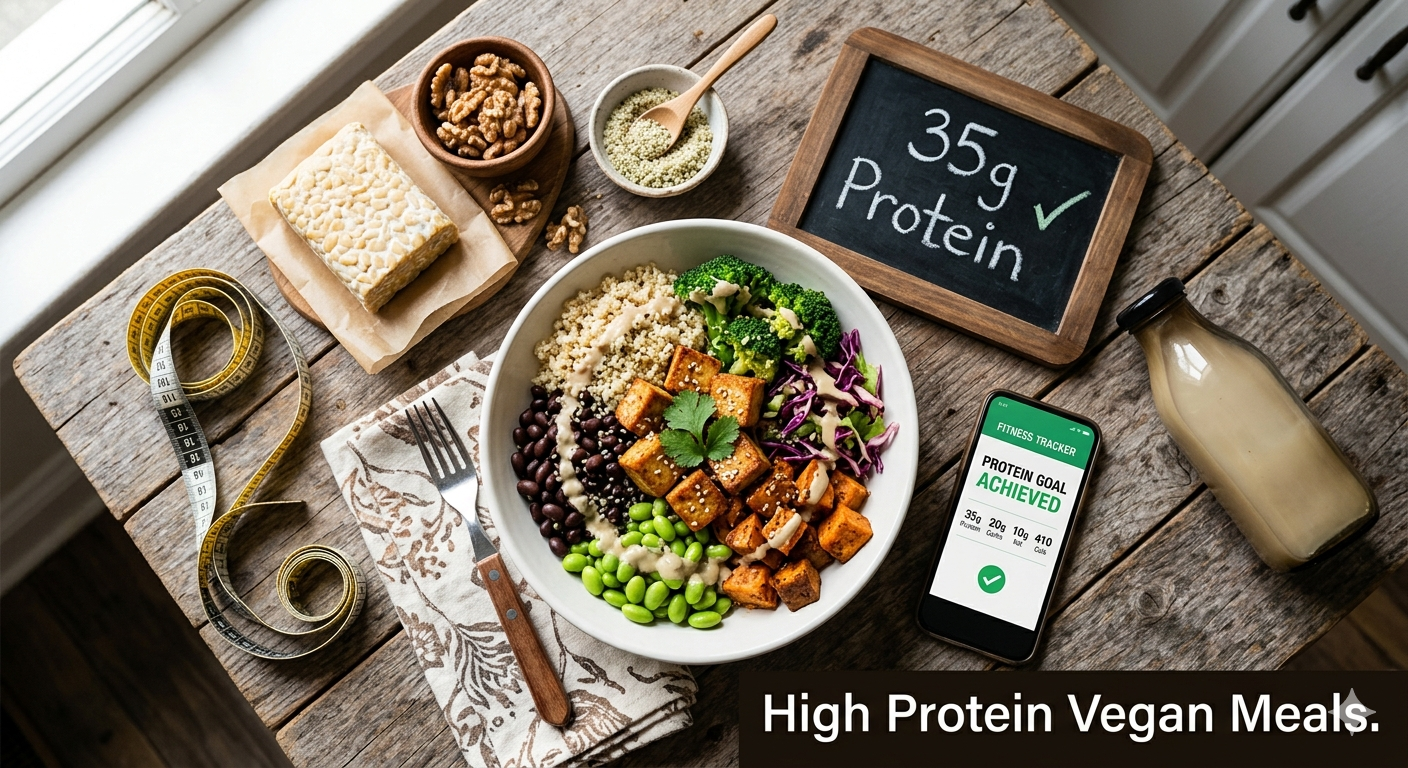
Think you can’t get enough protein on a vegan diet? Think again. Here are 7 high protein vegan meals with 25-40g of protein per serving. Plus, free tools to track your nutrition.
Let me tell you about the biggest myth I believed about vegan food.
I thought it was all salad, rice, and beans. Don’t get me wrong—I love beans. But after a few days of eating the same thing, I was hungry an hour later, craving sugar, and convinced that a plant-based diet “wasn’t for me.”
Then a friend who’s been vegan for years looked at my plate. “Where’s your protein?” she asked.
I pointed at the sad pile of chickpeas. She shook her head. “You need more. Way more.”
She was right. The moment I learned how to build high protein vegan meals—not just “vegan meals”—everything changed. My energy stabilized. My cravings disappeared. And I finally felt full after eating.
If you’re new to vegan eating, or if you’ve been struggling with hunger and low energy, this guide is for you. I’m sharing 7 high protein vegan meals that are easy, delicious, and actually satisfying.
Why High-Protein Vegan Meals Keep You Full Longer
If you’ve ever eaten a large bowl of pasta or a plate of plain rice and felt hungry again within an hour, you’ve experienced the problem: carbs alone don’t satisfy. But add protein (and fiber), and suddenly that same meal keeps you full for 3–4 hours.
This is not magic—it’s physiology. High-protein vegan meals work through multiple hunger-regulating mechanisms that animal-based proteins also trigger, but with the added benefit of plant fiber.
The bottom line: A vegan meal rich in protein and fiber increases satiety hormones, decreases hunger hormones, slows digestion, and stabilizes blood sugar—all of which translate to feeling full longer.
The Role of Protein in Satiety
Protein is the most satiating macronutrient. Pound for pound, protein suppresses hunger more effectively than carbohydrates or fats. Here’s exactly how it works inside your body.
3 Key Mechanisms
| Mechanism | What Happens | Effect on Hunger |
|---|---|---|
| Hormone changes | Protein increases PYY and GLP-1 (satiety hormones) while decreasing ghrelin (hunger hormone) | You feel full sooner and stay full longer |
| Slower gastric emptying | Protein takes longer to leave your stomach than carbs | Food sits in your stomach longer, physically keeping you full |
| Gluconeogenesis | Your body converts some protein into glucose slowly over hours | Steady blood sugar = fewer cravings between meals |
The Hormone Shift Explained Simply
Imagine your digestive system has two switches:
| Hormone | Role | Effect of High-Protein Meal |
|---|---|---|
| Ghrelin (hunger switch) | Tells brain “I’m hungry” | Levels drop significantly |
| PYY (fullness switch) | Tells brain “I’m full” | Levels rise 2–3x higher than after a low-protein meal |
| GLP-1 (appetite brake) | Slows digestion, reduces food intake | Stays elevated for 3–5 hours |
Real-world result: A high-protein vegan meal (e.g., tofu + lentils + quinoa) can reduce your next-meal calorie intake by 15–30% compared to a low-protein meal, simply because you’re less hungry.
Protein vs. Carbs vs. Fats for Satiety (Ranked)
| Macronutrient | Satiety Power | How Long Fullness Lasts (Typical) |
|---|---|---|
| Protein | Highest | 3–5 hours |
| Fiber-rich carbs | Medium-high | 2–4 hours |
| Healthy fats | Medium | 2–3 hours |
| Simple carbs (sugar, white flour) | Very low | 30–90 minutes |
Key insight: A meal with only carbs (even healthy ones like oatmeal) without protein will leave you hungry faster than the same meal with protein added (oatmeal + peanut butter + chia seeds).
How Fiber + Protein Boost Fullness
This is where plant-based eating has a unique advantage over animal-based protein. Most vegan protein sources naturally come packaged with fiber—something meat, eggs, and dairy completely lack.
The Synergy Effect: 1 + 1 = 3
| Alone | Together (Protein + Fiber) |
|---|---|
| Protein slows digestion | Fiber forms a gel-like mesh in your gut |
| Fiber adds bulk to food | That mesh traps protein, slowing digestion even further |
| Each works separately | Together, they physically and hormonally extend fullness |
4 Ways Fiber + Protein Work Together
1. Physical bulk in the stomach
- Fiber absorbs water and expands
- A meal with 20g protein + 10g fiber can double in volume inside your stomach
- Stretch receptors signal your brain “full” long before calories are absorbed
2. Delayed nutrient absorption
- Fiber acts like a net, trapping protein and carbs
- Glucose (from carbs) enters bloodstream slowly = no sugar crash
- Amino acids (from protein) release steadily = prolonged satiety signals
3. Gut microbiome production of satiety compounds
- Gut bacteria ferment fiber into short-chain fatty acids (SCFAs)
- SCFAs trigger release of PYY and GLP-1 (the same fullness hormones protein triggers)
- This second wave of satiety occurs 2–4 hours after eating
4. Reduced “energy gap” between meals
- Without fiber, a protein meal might keep you full for 3 hours
- With fiber, the same protein keeps you full for 4–5 hours
- That’s one less snack craving per day
Proof in Numbers: Fiber + Protein vs. Protein Alone
| Meal Type | Example | Fullness Duration | Hunger Rating (1–10, 3h later) |
|---|---|---|---|
| Protein alone | 100g tofu (12g protein, 0g fiber) | 2–3 hours | 7 (moderately hungry) |
| Carbs alone | 1 cup white rice (0g protein, 1g fiber) | 1–2 hours | 9 (very hungry) |
| Protein + Fiber | 100g tofu + 1 cup lentils (25g protein, 15g fiber) | 4–5 hours | 3 (still full) |
The takeaway: A vegan meal with beans, lentils, tofu, or whole grains naturally pairs protein with fiber. This is something no animal-based meal can replicate.
Best Plant-Based Protein Sources for Maximum Fullness
Not all vegan proteins are equal for satiety. The best options combine high protein with high fiber. Here’s how common sources rank.
Top 10 Vegan Foods for Satiety (Protein + Fiber Combo)
| Food | Serving | Protein | Fiber | Satiety Score (1–10) |
|---|---|---|---|---|
| Lentils | 1 cup cooked | 18g | 15g | 10/10 |
| Black beans | 1 cup cooked | 15g | 15g | 10/10 |
| Chickpeas | 1 cup cooked | 15g | 12g | 9/10 |
| Split peas | 1 cup cooked | 16g | 16g | 10/10 |
| Edamame | 1 cup shelled | 17g | 8g | 9/10 |
| Tempeh | 100g | 19g | 5g | 8/10 |
| Quinoa | 1 cup cooked | 8g | 5g | 7/10 |
| Tofu (firm) | 100g | 12-15g | 2g | 6/10 |
| Seitan | 100g | 25g | 1g | 5/10 |
| Peanut butter | 2 tbsp | 8g | 2g | 5/10 |
Note: Seitan is very high in protein but low in fiber. It’s still satiating, but pair it with fiber-rich vegetables or beans for maximum fullness.
How to Build a “Maximum Fullness” Vegan Meal
Use this simple formula:
Base (fiber-rich carb) + Protein (bean/lentil/tofu) + Vegetable (more fiber) + Fat (optional)
| Meal Example | Components | Protein | Fiber |
|---|---|---|---|
| Lentil soup | 1.5 cups lentils + carrots + celery + broth | 27g | 22g |
| Tofu + black bean bowl | 100g tofu + 1 cup black beans + 1 cup quinoa + broccoli | 32g | 20g |
| Chickpea pasta | 2 cups chickpea pasta + tomato sauce + spinach | 25g | 12g |
| Breakfast oatmeal | 1 cup oats + 2 tbsp peanut butter + 2 tbsp chia seeds + banana | 20g | 15g |
Practical Satiety Hacks for Vegan Eaters
| If You Eat… | Add This for Fullness… | Why |
|---|---|---|
| Tofu stir-fry | 1/2 cup edamame or chickpeas | Adds fiber without changing flavor much |
| Smoothie | 2 tbsp chia or flax seeds (soaked) | Seeds absorb liquid, expand in stomach |
| Pasta | Use red lentil or chickpea pasta instead of wheat | Triple the protein and fiber |
| Rice bowl | Swap white rice for quinoa or brown rice + add 1/2 cup beans | Slower digestion, stable energy |
| Salad | Add 1/2 cup beans or 100g baked tofu | Turns a lettuce snack into a meal |
| Snack apple | Add 1 tbsp peanut butter | Protein + fat slows fruit sugar absorption |
Foods That Trick You (Low Satiety Despite “Healthy” Label)
| Food | Why It’s Not Filling | Better Swap |
|---|---|---|
| Rice cakes | Almost no protein or fiber (1g protein, 0g fiber) | Lentil cakes or whole grain crackers + hummus |
| Corn chips (even “healthy” brands) | Low protein (2g), low fiber (1g) | Roasted chickpeas or edamame |
| Fruit juice (even cold-pressed) | No protein, no fiber (removed during juicing) | Whole fruit smoothie with seeds or protein powder |
| Vegan “chicken” nuggets (processed) | Moderate protein, zero fiber | Tempeh nuggets or bean-based patties |
| Coconut yogurt (plain) | 1-2g protein, 0g fiber | Soy yogurt (6-8g protein) + chia seeds |
Practical Summary: How to Use This Information
For breakfast: Eat protein + fiber (e.g., oatmeal + peanut butter + chia seeds) instead of just carbs (toast + jam). You’ll stay full until lunch.
For lunch: Make beans or lentils the star (e.g., lentil soup or bean burrito bowl). You won’t crave a 3pm snack.
For dinner: Pair tofu or tempeh with a fiber-rich grain (quinoa, brown rice) and vegetables. You’ll wake up less hungry.
For snacks: Choose protein + fiber combinations (apple + peanut butter, hummus + carrots, roasted chickpeas) instead of protein alone (protein bar) or fiber alone (rice cakes).
One Week Satiety Challenge
Try this for 7 days: At every meal, ensure you have at least 15g protein + 8g fiber (a typical “high satiety” threshold). Track how long you stay full.
| Meal | Minimum Target | Easy Example |
|---|---|---|
| Breakfast | 15g protein + 8g fiber | 1 cup oats (10g protein, 8g fiber) + 2 tbsp peanut butter (8g protein, 2g fiber) = 18g protein, 10g fiber |
| Lunch | 20g protein + 10g fiber | 1.5 cups lentil soup = 27g protein, 22g fiber |
| Dinner | 20g protein + 10g fiber | 150g tofu (18g protein, 2g fiber) + 1 cup quinoa (8g protein, 5g fiber) + broccoli = 26g protein, 10g+ fiber |
Expected result: After 3–4 days, you’ll notice fewer cravings, less snacking, and more stable energy between meals.
Final Takeaway
High-protein vegan meals keep you full longer not because of protein alone, but because plant proteins come packaged with fiber. Together, they slow digestion, increase satiety hormones, stabilize blood sugar, and physically fill your stomach. Beans, lentils, chickpeas, edamame, tofu, and quinoa are your best tools. Use them at every meal, and hunger between meals will dramatically decrease.
First, How Much Protein Do You Actually Need?
Let’s clear this up right now. The standard recommendation for a sedentary adult is 0.8 grams of protein per kilogram of body weight.
But if you’re active, trying to lose weight, or building muscle, you need more: 1.2 to 1.6 grams per kilogram.
For a 70kg (154lb) person:
- Minimum: 56g protein/day
- Active/weight loss: 84-112g protein/day
That’s not hard to reach on a vegan diet—you just need to know where to look.
The Best High Protein Vegan Foods (Your New Pantry Staples)
Before we get to the meals, here are the all-stars. Keep these in your kitchen.
| Food | Protein per 100g | Best For |
|---|---|---|
| Tofu (firm) | 8g | Stir-fries, scrambles, curries |
| Tempeh | 19g | Sandwiches, marinated & baked |
| Edamame | 11g | Snacks, salads, rice bowls |
| Lentils | 9g | Soups, curries, salads |
| Chickpeas | 7g | Curries, hummus, roasted |
| Black beans | 9g | Burgers, burritos, salads |
| Seitan | 25g | Stir-fries, sandwiches (if gluten is OK) |
| Quinoa | 4g | Salads, bowls, breakfast porridge |
| Hemp seeds | 31g | Smoothies, oatmeal, salads |
| Nutritional yeast | 8g per 2 tbsp | Sauces, “cheesy” flavor |
Pro Tip: Aim for 20-30g of protein per meal. That’s about a palm-sized portion of tofu, tempeh, or beans.
7 High Protein Vegan Meals (25-40g Protein Each)
1. Tofu Scramble with Black Beans (30g protein)
This is my go-to breakfast. It takes 10 minutes and keeps me full until lunch.
Ingredients:
- 1/2 block firm tofu (12g protein)
- 1/2 cup black beans (7g protein)
- 1 cup spinach
- 1 slice whole grain toast (4g protein)
- Nutritional yeast (2g protein)
- Turmeric, salt, pepper
Total protein: ~25g
How to make it: Crumble tofu into a hot pan. Add black beans, spinach, and spices. Cook for 5-7 minutes. Serve with toast and sprinkle nutritional yeast on top.
Calories: ~420 kcal
Protein: 25g
Prep time: 10 minutes
Real image (Pinterest style)
Imagine a vibrant, golden-yellow tofu scramble piled on rustic toast, with fresh spinach leaves and a sprinkle of red paprika. A half avocado sits on the side. Bright, cozy morning light.
Who is this for?
- Beginners who miss scrambled eggs
- Busy mornings (faster than oatmeal)
- Post-workout breakfast (25g protein to start muscle repair)
Comparison: Tofu vs. Lentils (for breakfast scramble)
| Aspect | Tofu Scramble | Lentil Scramble |
|---|---|---|
| Texture | Soft, egg-like, creamy | Firm, grainy, more “meaty” |
| Protein (per serving) | 25g | 22g |
| Cook time | 5-7 minutes | 15-20 minutes |
| Best for | Egg replacer, quick meals | Heartier, “sausage-style” |
| Verdict | ✅ Winner for breakfast | Better for lunch/dinner |
2. Lentil & Quinoa Power Bowl (35g protein)
This is my lunch almost every day. It’s meal-prep friendly and endlessly customizable.
Ingredients:
- 1 cup cooked lentils (18g protein)
- 1/2 cup cooked quinoa (4g protein)
- 1/2 cup edamame (6g protein)
- 2 tbsp hemp seeds (6g protein)
- Mixed greens, lemon juice, olive oil
Total protein: ~34g
How to make it: Cook a batch of lentils and quinoa on Sunday. Each day, toss them with edamame, hemp seeds, greens, and dressing.
Calories: ~550 kcal
Protein: 34g
Prep time: 15 minutes (or 5 minutes if grains pre-cooked)
Real image (Pinterest style)
A wide, shallow bowl with a base of mixed greens. Neat rows of lentils, fluffy quinoa, bright green edamame, and white hemp seeds. A lemon wedge and drizzle of olive oil. Overhead shot, natural light.
Who is this for?
- Meal preppers (make 5 bowls on Sunday)
- People who hate “sad salads” (this one is filling)
- Anyone with blood sugar swings (fiber + protein = steady energy)
Comparison: Lentils vs. Quinoa (for satiety)
3. Crispy Tofu & Broccoli Stir-Fry (32g protein
| Aspect | Lentils | Quinoa |
|---|---|---|
| Fiber per cup | 15g (very high) | 5g (moderate) |
| Protein per cup | 18g | 8g |
| Satiety score (1-10) | 10/10 | 7/10 |
| Best used as | Main protein & fiber base | Secondary grain + booster |
| Verdict | ✅ King of fullness | Great partner to lentils |
Recipe 3: Crispy Tofu & Broccoli Stir-Fry
This tastes like takeout but takes 20 minutes.
Ingredients:
- 1/2 block firm tofu (12g protein)
- 1 cup cooked edamame (6g protein)
- 2 cups broccoli
- 2 tbsp soy sauce (or tamari)
- 1 tsp sesame oil
- 1/2 cup cooked brown rice (2g protein)
- Sprinkle of sesame seeds
Total protein: ~32g
How to make it: Press tofu to remove water, cube it, and pan-fry until crispy. Add broccoli and edamame. Stir in soy sauce and sesame oil. Serve over rice.
Calories: ~480 kcal
Protein: 32g
Prep time: 20 minutes (includes tofu pressing)
Real image (Pinterest style)
Golden-brown crispy tofu cubes nestled among bright green broccoli florets and edamame, glistening with sesame-soy sauce. Served over a small mound of brown rice. Steam rising. Dark background for contrast.
Who is this for?
- Former takeout addicts (healthier + cheaper)
- Crispy texture lovers
- One-pan dinner people
Comparison: Tofu vs. Tempeh (for stir-fry)
| Aspect | Tofu (firm) | Tempeh |
|---|---|---|
| Protein per 100g | 12-15g | 19g |
| Texture after cooking | Crispy outside, soft inside | Dense, nutty, stays firm |
| Absorbs flavor? | Yes (like a sponge) | Partially |
| Best for | Stir-fries, scrambles, curries | Sandwiches, marinated & baked |
| Verdict | ✅ Better for crispy stir-fry | Better for burgers & bowls |
4. Chickpea & Spinach Coconut Curry (28g protein)
Comfort food, vegan style. Freezes beautifully.
Ingredients:
- 1 can chickpeas (15g protein)
- 1/2 block firm tofu (12g protein)
- 2 cups spinach
- 1 can coconut milk
- 2 tbsp curry powder
- 1/2 cup cooked quinoa (2g protein)
Total protein: ~29g
How to make it: Sauté onion and garlic. Add curry powder, coconut milk, chickpeas, and tofu. Simmer 10 minutes. Stir in spinach until wilted. Serve over quinoa.
Calories: ~510 kcal
Protein: 29g
Prep time: 25 minutes
Real image (Pinterest style)
A deep bowl of rich orange-red coconut curry, with visible chickpeas, cubes of tofu, and wilted spinach. Drizzle of coconut milk on top and fresh cilantro. Served with a side of fluffy quinoa. Cozy, rustic setting.
Who is this for?
- Cold day comfort food seekers
- Freezer meal preppers (double batch)
- People new to curry (mild, approachable)
Comparison: Chickpeas vs. Tofu (in curry)
| Aspect | Chickpeas in Curry | Tofu in Curry |
|---|---|---|
| Protein per serving | 15g | 12g |
| Fiber | 12g (high) | 2g (low) |
| Texture | Firm, pops in mouth | Soft, silky, absorbs flavor |
| Satiety | High | Medium |
| Verdict | ✅ Use both together for maximum fullness |
5. Black Bean & Walnut Burger (30g protein)
Yes, a veggie burger can be high protein. The secret is walnuts.
Ingredients:
- 1 can black beans (15g protein)
- 1/2 cup walnuts, ground (7g protein)
- 1/4 cup breadcrumbs
- 1 tbsp flaxseed + 3 tbsp water (flax egg)
- 1/2 cup cooked quinoa (4g protein)
- Whole grain bun (4g protein)
Total protein: ~30g
How to make it: Mash black beans. Add ground walnuts, breadcrumbs, flax egg, and quinoa. Form into patties. Pan-fry 5 minutes each side. Serve on a bun with lettuce and tomato.
Calories: ~590 kcal (with bun)
Protein: 30g
⏱️ Prep time: 30 minutes (makes 4 patties)
Real image (Pinterest style)
A hearty veggie burger on a whole grain bun, with lettuce, tomato, and red onion peeking out. A side of sweet potato fries and a small bowl of ketchup. Hand holding the burger. Outdoor picnic vibe.
Who is this for?
- Burger lovers going plant-based
- BBQs with skeptical meat-eaters (they won’t miss meat)
- Anyone tired of dry, crumbling veggie patties
Comparison: Homemade vs. Store-bought frozen vegan burger
| Aspect | Homemade Black Bean & Walnut | Store-bought (e.g., Beyond Burger) |
|---|---|---|
| Protein | 30g | 20g |
| Fiber | 12g | 2g |
| Ingredients | Whole foods | Processed pea protein, oils |
| Satiety | Very high | Medium |
| Cost per patty | ~$1.50 | ~3.50−4.00 |
| Verdict | ✅ Winner for fullness & budget | Convenient but less filling |
6. Peanut Butter & Banana Protein Smoothie (40g protein)
For days when you need breakfast in 2 minutes.
Ingredients:
- 1 scoop vegan protein powder (20g protein)
- 2 tbsp peanut butter (8g protein)
- 1 cup unsweetened soy milk (7g protein)
- 1 frozen banana (1g protein)
- 1 tbsp chia seeds (2g protein)
Total protein: ~38g
How to make it: Blend everything until smooth. Drink immediately.
Calories: ~460 kcal
Protein: 38g
⏱️ Prep time: 2 minutes
Real image (Pinterest style)
A tall glass of creamy beige smoothie, topped with a sprinkle of chia seeds, a few banana slices on the rim, and a straw. Peanut butter drizzle inside the glass. Background of rolled oats and a spoon. Bright, clean kitchen counter.
Who is this for?
- Mornings when you’re running late
- Post-gym muscle recovery (fastest protein)
- People who struggle to eat solid food early
Comparison: With protein powder vs. Without powder
| Aspect | With Vegan Protein Powder | Without Powder |
|---|---|---|
| Protein per smoothie | 38g | 18g |
| Calories | ~460 | ~380 |
| Satiety (1-10) | 9/10 | 6/10 |
| Best for | Athletes, high protein needs | Light breakfast, snack |
| Verdict | ✅ Yes for protein goals | Fine for non-athletes |
7. Red Lentil Pasta with Tomato “Meat” Sauce (35g protein)
Pasta night, but make it protein-packed.
Ingredients:
- 2 oz red lentil pasta (14g protein)
- 1/2 block crumbled tofu (12g protein)
- 1 cup marinara sauce
- 2 tbsp nutritional yeast (4g protein)
- 1/2 cup cooked lentils (9g protein)
Total protein: ~39g
How to make it: Cook lentil pasta. In a pan, crumble and brown tofu. Add marinara sauce and cooked lentils. Simmer. Pour over pasta and top with nutritional yeast.
Calories: ~580 kcal
Protein: 39g
Prep time: 20 minutes
Real image (Pinterest style)
A bowl of red lentil pasta twirled into a nest, topped with chunky tomato sauce with crumbled tofu “meat.” Fresh basil leaves and a sprinkle of nutritional yeast. A fork lifting a twirl. Warm, inviting lighting.
Who is this for?
- Pasta lovers who want to avoid blood sugar spikes
- Meat sauce fans transitioning to vegan
- High-protein dinner without meat substitutes
Comparison: Red lentil pasta vs. Regular wheat pasta
| Aspect | Red Lentil Pasta | Regular Wheat Pasta |
|---|---|---|
| Protein per serving | 14g | 7g |
| Fiber | 8g | 2g |
| Blood sugar impact | Low (slow carb) | Medium-High (can spike) |
| Satiety (1-10) | 9/10 | 4/10 |
| Taste/texture | Slightly nutty | Neutral, softer |
| Verdict | ✅ Far superior for fullness | OK once in a while |
Meal Prep Tips for High Protein Vegan Meals
Set aside 1 hour on Sunday to prep these components. Then building meals takes 5 minutes.
Prep these:
- Cook 2 cups of quinoa and 2 cups of brown rice
- Cook 2 cups of lentils
- Press and cube 2 blocks of tofu (store in water)
- Roast a tray of vegetables (broccoli, sweet potatoes, bell peppers)
- Make a batch of lentil soup or chickpea curry
- Portion out nuts, seeds, and protein powder into small containers
High Protein Vegan Meal Prep Sample Day (1500 calories, 100g protein)
| Meal | What to Eat | Protein |
|---|---|---|
| Breakfast | Tofu scramble + black beans + toast | ~25g |
| Lunch | Lentil & quinoa power bowl | ~34g |
| Snack | Protein smoothie (half batch) | ~20g |
| Dinner | Crispy tofu stir-fry with edamame | ~32g |
| Total | ~1500 calories | ~111g protein |
Track Your Nutrition with These Free Tools
Eating high protein is easier when you track what works for your body. These tools help you stay on top of your goals.
📊 Vitalis Dashboard – Track Your Daily Intake
Log your meals, protein intake, and calories. See how your body responds to different foods.
👉 Visit Your Vitalis Dashboard
🔥 RoutineFlow AI – Build Your Meal Prep Streak
Set daily reminders to prep your protein sources. Consistency is key.
👉 Start Your Streak with RoutineFlow AI
⚡ Streakify AI – Track Multiple Habits
Monitor your daily protein intake, meal prep days, and water consumption.
👉 Build Your Streak with Streakify AI
✅ Habit Tracker – Simple Daily Check-ins
Log your high protein meals with this easy-to-use habit tracker.
Keep You Exploring
- 7-Day Vegan Weight Loss Meal Plan – A complete week of plant-based meals.
- What to Eat for Breakfast to Feel Your Best All Day Long – More high protein breakfast ideas.
- High-Protein Smoothie: My 30-Day Results – My personal experiment with a daily protein smoothie.
- Beginner-Friendly Nutrition Tips for Home Fitness – Learn how to fuel your workouts.
Frequently Asked Questions
1. Can you build muscle on a vegan diet?
Absolutely. Many vegan athletes build significant muscle. The key is eating enough total protein and calories. Aim for 1.6g of protein per kg of body weight, spread across 3-4 meals.
2. Is soy bad for you?
No. This is a myth. Whole soy foods like tofu, tempeh, and edamame are linked to reduced cancer risk and improved heart health. Avoid highly processed soy isolates, but whole soy is excellent.
3. How do I get enough protein without protein powder?
Easily. A serving of tofu (12g), 1 cup of lentils (18g), and a handful of hemp seeds (10g) already puts you at 40g of protein. Whole foods work great.
4. What’s the best protein source on a vegan diet?
Tempeh is king – 19g of protein per 100g, plus probiotics. Seitan is even higher (25g) but contains gluten. Tofu, lentils, and edamame are also excellent.
5. Can I eat these meals if I’m gluten-free?
Yes. Skip the seitan and use gluten-free bread or skip the bun. Tofu, tempeh, lentils, chickpeas, quinoa, and rice are naturally gluten-free.
A Final Thought
Going vegan doesn’t mean giving up protein. It means learning a new way of eating—one that’s better for your body, better for the animals, and surprisingly delicious.
The 7 meals in this guide are my absolute favorites. They keep me full, energized, and satisfied. And they prove that high protein vegan food isn’t bland or boring. It’s vibrant, hearty, and full of life.
Start with one meal today. See how you feel tomorrow. Then try another.
Your body will thank you.
This article contains links to other pages on our site. We also offer free tools to support your health journey. Please consult your healthcare provider before making significant dietary changes.
💪 FITNESS DIGITAL PLANNER
workout routines · daily schedule · printable at home · weight lifting for women
“7-Day Fat Loss Accelerator” + Workout Tracker printable
🏋️♀️ Workout Routines (Home / Gym)
- ✓ Full Body Strength (30 min)
- ✓ Glutes & Core Shaper (25 min)
- ✓ Low Impact Cardio + HIIT
- ✓ Dumbbell Sculpt (women focus)
- ✓ Mobility & Active Recovery
- 🔥 Mon – Total body strength + core finisher
- 💨 Tue – Cardio intervals + lower body activation
- 💪 Wed – Upper body (back, shoulders, arms)
- 🍑 Thu – Glutes & leg day (light or heavy weights)
- 🧘 Fri – Yoga flow + core stability
- ⚡ Sat – Full body circuit (30s work / 15s rest)
- 🌿 Sun – Rest / walk / foam rolling
🏋️♀️ Weight Lifting Schedule for Women
| Day | Focus | Key Exercises |
|---|---|---|
| Monday | Lower Body | Goblet squats, Romanian deadlifts, walking lunges |
| Tuesday | Upper Body | Overhead press, bent-over rows, push-ups |
| Wednesday | Active Recovery | Core + glute bridges, planks, mobility |
| Thursday | Glutes + Hamstrings | Hip thrusts, sumo squats, kettlebell swings |
| Friday | Full Body Compound | Deadlifts, squats, rows |
| Saturday | Cardio & Sculpt | Dumbbell complexes + metabolic finisher |
| Sunday | Restorative | Stretching, foam rolling, mindful walk |
💡 Pro tip: 8–12 reps, 3 sets, progressive overload weekly.
📋 Exercise Plan & Habit Tracker
📌 Printable Weekly Workout Schedule – check & evolve
- Week 1: Foundation (3x full body, 2x cardio)
- Week 2: Increase weights / reps
- Week 3: Glutes focus + HIIT (4 days lifting)
- Week 4: Deload & mobility mastery
💎 YOUR DAILY FITNESS CHECKLIST
✔️ workout done ✔️ protein goal ✔️ hydration ✔️ steps
📝 Fitness Journal & Mindset Notes
🎉 PURCHASE SUCCESSFUL!
✅ Your Fitness Digital Planner is now UNLOCKED.
📥 Download starting automatically.
✨ Check your downloads folder.