
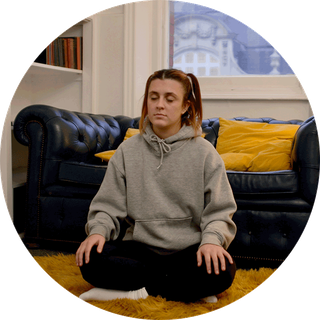
Learn how to start meditation for beginners with this simple daily routine. Reduce stress, calm anxiety, improve sleep, and feel more focused in just 5 minutes a day.
Think you can’t meditate because your mind is too busy? You’re exactly who this is for. Here’s a gentle, practical guide to starting a meditation practice—no chanting, no complicated poses, just real peace for real people.
Let me tell you about the first time I tried to meditate.
I sat on a cushion, crossed my legs, closed my eyes, and waited for the peace to descend. Instead, my brain threw a party. Random song lyrics. The thing I forgot to do at work. What I should have said in that conversation three years ago. Whether I’d remembered to turn off the oven. The song lyrics again.
After five minutes that felt like an hour, I opened my eyes, more stressed than when I’d started, and concluded what I’d suspected all along: I’m not the type of person who can meditate.
Sound familiar?
Here’s what took me years to learn: meditation isn’t about having no thoughts. It’s not about achieving some blissed-out state where your mind goes completely blank. That’s not meditation—that’s a coma.
Meditation is simply the practice of noticing when your mind has wandered and gently bringing it back. That’s it. The wandering is inevitable. The bringing back is the practice.
If your mind is busy, if you’re stressed, if you’ve got a thousand things on your to-do list—you’re exactly who meditation was designed for. Not the monks on mountaintops. You.
Let’s walk through how to start, together.
Meditation for Beginners: The Complete Guide to Start and Stick With It
What Is Meditation and How Does It Work?
Meditation is a mental practice where you train your attention and awareness to achieve a state of calm, clarity, and emotional balance. It is not about “emptying your mind” — it is about noticing your thoughts without getting caught up in them.
How It Works (Simple Explanation):
| What Happens in Your Brain | Effect |
|---|---|
| You focus on one thing (breath, sound, sensation) | Activates attention networks |
| You notice thoughts but don’t chase them | Reduces activity in “default mode network” (mind-wandering) |
| You return to focus again and again | Strengthens neural pathways for calm and focus |
| Stress hormones decrease | Cortisol levels drop within minutes |
Think of meditation like a workout for your brain. Instead of building muscles, you build focus, emotional regulation, and calm.
Benefits of Meditation for Beginners
| Benefit | How Soon You Notice It |
|---|---|
| Reduced stress | Within 1 session (5-10 minutes) |
| Less anxiety | 2-3 weeks of daily practice |
| Better sleep | 1-2 weeks |
| Improved focus | 2-4 weeks |
| Lower emotional reactivity | 4-6 weeks |
| Greater self-awareness | 2-3 months |
Scientific fact: Regular meditation has been shown to change brain structure — increasing gray matter in areas responsible for memory, empathy, and stress regulation.
How Meditation Helps Reduce Stress and Anxiety
| Stress Symptom | How Meditation Helps |
|---|---|
| Racing thoughts | Teaches you to observe thoughts without engaging |
| Fast heartbeat | Slows breathing rate, which lowers heart rate |
| Muscle tension | Body scan meditation releases physical tightness |
| Feeling overwhelmed | Creates mental space between stimulus and reaction |
| Sleep problems | Calms the nervous system before bed |
The key insight: Meditation doesn’t remove stress triggers — it changes your relationship to stress. You learn to respond instead of react.
Can Meditation Improve Sleep and Focus?
Sleep:
| Sleep Issue | Meditation Solution |
|---|---|
| Can’t fall asleep | Evening meditation calms racing thoughts |
| Wake up at night | Body scan helps you return to sleep |
| Light sleep | Regular practice improves sleep depth |
| Insomnia | 10-20 minutes of meditation before bed reduces symptoms by 50% (studies show) |
Focus:
| Focus Problem | Meditation Helps By |
|---|---|
| Easily distracted | Trains sustained attention |
| Forgetting tasks | Improves working memory |
| Mind wanders during work | Strengthens ability to return focus |
| Multitasking stress | Teaches single-tasking |
Result: After 8 weeks of daily 10-minute meditation, focus improves as much as 15-20%.
How to Start Meditation for Beginners (Step-by-Step)
The Simplest Method (No Experience Needed)
| Step | Action | Time |
|---|---|---|
| 1 | Sit comfortably. Back straight but not stiff. | 10 sec |
| 2 | Close your eyes gently. | 5 sec |
| 3 | Take 3 deep breaths (inhale nose, exhale mouth) | 15 sec |
| 4 | Let breathing return to normal. | 5 sec |
| 5 | Focus on the feeling of breath at your nostrils or belly. | Main part |
| 6 | When your mind wanders (it will), gently bring attention back to breath. | Repeat |
| 7 | After time is up, slowly open eyes. | 10 sec |
That’s it. You just meditated.
Best Time to Meditate for Beginners
| Time of Day | Pros | Cons | Best For |
|---|---|---|---|
| Morning (6-8 AM) | Quiet mind, sets tone for day, easier to form habit | May feel rushed | Most beginners |
| Lunch break | Breaks work stress, recharges energy | Can be interrupted | Office workers |
| Evening (before dinner) | Releases day’s tension, easier to relax | Tiredness may make you sleepy | People with stressful jobs |
| Before bed | Improves sleep, calms racing thoughts | May fall asleep (not bad!) | Insomnia sufferers |
Best advice for beginners: Meditate at the same time every day — morning is easiest for most people.
Simple 5-Minute Meditation Routine
This is perfect for absolute beginners.
| Minute | What to Do |
|---|---|
| Minute 1 | Sit comfortably. Take 4 slow deep breaths (inhale 4 sec, exhale 6 sec) |
| Minute 2 | Close eyes. Notice your body sitting — feel your feet on floor, hands on lap |
| Minute 3 | Focus on natural breath. Count each exhale: 1, 2, 3, 4, 5… then start over |
| Minute 4 | If thoughts appear, say “thinking” and return to breath counting |
| Minute 5 | Stop counting. Just feel breath. Slowly open eyes. |
Use a timer — your phone timer works fine (set a gentle alarm tone).
Morning Meditation vs Evening Meditation
| Aspect | Morning Meditation | Evening Meditation |
|---|---|---|
| Energy level | Fresh mind | May be tired |
| Best for | Setting intention, focus, productivity | Releasing stress, sleep preparation |
| Typical length | 5-10 minutes | 10-20 minutes |
| Technique | Breath focus, energizing | Body scan, relaxation |
| Challenge | Finding extra time in morning | Staying awake |
What to do: Start with morning meditation for 1-2 weeks to build habit. Then add evening if you want.
Easy Breathing Techniques for Beginners
These are simple and safe for anyone.
| Technique | How to Do It | Best Used For |
|---|---|---|
| Box breathing | Inhale 4 sec → Hold 4 sec → Exhale 4 sec → Hold 4 sec | Anxiety, stress |
| 4-7-8 breathing | Inhale 4 sec → Hold 7 sec → Exhale 8 sec | Sleep, deep relaxation |
| Counted exhale | Inhale normally → Exhale counting slowly (1 to 5) | Daily calm, focus |
| Belly breathing | Hand on belly → breathe so belly rises (not chest) | Beginners, grounding |
Tip: Use these breathing techniques any time — waiting in line, before a meeting, or when feeling stressed.
Common Meditation Mistakes Beginners Make
| Mistake | Why It Happens | Fix |
|---|---|---|
| Trying to stop thoughts | Misunderstanding meditation | Thoughts are normal. Just notice them and return to breath. |
| Expecting instant results | Impatience | Meditation is a skill — like learning guitar. Give it weeks. |
| Judging yourself | “I’m doing it wrong” | There is no “wrong.” If you noticed you wandered, that’s success. |
| Sitting uncomfortably | Forcing posture | Sit in a chair if needed. Comfort matters. |
| Meditating too long | Over-ambition | Start with 3-5 minutes. Increase slowly. |
| Irregular practice | No routine | Same time, same place every day — even 2 minutes counts. |
The #1 mistake: Giving up because “my mind is too busy.” That’s exactly why you need meditation.
How Long Should Beginners Meditate?
| Experience Level | Recommended Duration | Frequency |
|---|---|---|
| Week 1 | 3-5 minutes | Daily |
| Week 2-3 | 5-7 minutes | Daily |
| Week 4-6 | 7-10 minutes | Daily |
| Week 7-12 | 10-15 minutes | Daily |
| Experienced | 15-30 minutes | 5-6 days/week |
The rule: Better to meditate 2 minutes every day than 20 minutes once a week. Consistency > duration.
Guided Meditation vs Silent Meditation
| Aspect | Guided Meditation | Silent Meditation |
|---|---|---|
| How it works | You listen to a teacher’s voice | You meditate alone, no audio |
| Best for | Beginners, restless minds, specific goals | Experienced practitioners, deep practice |
| Tools needed | App (Calm, Headspace) or YouTube | Nothing (just timer) |
| Difficulty | Very easy | Moderate (requires self-discipline) |
| Cost | Free apps available | Free |
Recommendation for beginners: Start with guided meditation for first 2-4 weeks. Then try 5 minutes of silent meditation. Eventually, you’ll likely use both.
Free guided meditation apps:
- Insight Timer (free, thousands of sessions)
- UCLA Mindful (free, short guided meditations)
- YouTube search “10 minute guided meditation for beginners”
Meditation Tips for Busy People
| Problem | Solution |
|---|---|
| “No time” | 2-3 minutes is enough. Do it while coffee brews. |
| “I forget” | Tie meditation to existing habit: after brushing teeth, before shower |
| “Too noisy” | Use noise-canceling headphones or earplugs |
| “I fall asleep” | Meditate sitting up, not lying down. Morning is better. |
| “My mind races” | Try walking meditation (slowly walk and notice each step) |
| “I travel often” | Use same guided meditation app on phone anywhere |
The 2-minute rule: On your busiest day, just sit for 2 minutes. That counts. You’ll often stay longer once you start.
Create a Calm Meditation Space at Home
You don’t need a special room — just a small corner.
| Element | What to Use | Why |
|---|---|---|
| Seat | Chair, cushion, or folded blanket | Comfort keeps you consistent |
| Location | Same spot every day | Builds habit (associative memory) |
| Lighting | Natural light or soft lamp | Reduces harsh stimulation |
| Noise | Quiet or white noise machine | Minimizes distractions |
| Optional | Candle, plant, small object to look at | Anchors attention |
Minimalist setup (enough): A chair in your bedroom corner. That’s it.
First, Why Bother? What Science Actually Says
Before we get into the how, let’s talk about the why. Because if you’re busy—and who isn’t—you need a reason to add one more thing to your plate.
The research on meditation is genuinely impressive. Not airy-fairy, “feel the energy” stuff. Real, peer-reviewed science.
Studies show that regular meditation can:
- Reduce stress by lowering cortisol levels
- Decrease anxiety and improve mood
- Improve focus and attention span —even after just a few weeks
- Enhance emotional regulation , so you react less and respond more
- Lower blood pressure and support heart health
- Improve sleep quality
- Increase gray matter in brain regions associated with memory and learning
One landmark Harvard study found that after eight weeks of mindfulness meditation, participants showed measurable changes in brain regions associated with memory, sense of self, empathy, and stress .
Another study from Carnegie Mellon University found that just 25 minutes of mindfulness meditation for three consecutive days significantly reduced stress .
Meditation isn’t magic. It’s training. You’re training your brain to be less reactive, more focused, and more at ease. And like any training, it takes practice.
The Biggest Myth: “I Can’t Meditate Because My Mind Is Too Busy”
If you take nothing else from this article, take this: a busy mind is not a barrier to meditation. It’s the whole point.
Imagine you’re trying to get fit. You go to the gym for the first time, and you can barely lift the bar. Would you say, “I can’t exercise because I’m too weak”? No. You’d say, “I’m weak now, which is exactly why I need to exercise.”
Meditation is the same. If your mind is busy, scattered, anxious—that’s exactly why you need to practice. The busy-ness isn’t a sign you’re doing it wrong. It’s the raw material you’re working with.
The goal isn’t to have no thoughts. The goal is to notice when you’re caught up in thoughts and gently return to the present moment. Over and over. Thousands of times. That’s the practice.
So if you sat down to meditate and your mind went everywhere except where you wanted it to go: congratulations. You meditated.
How to Start: The Absolute Basic
You don’t need anything to meditate. No cushion, no app, no special clothing, no incense. You can meditate right now, exactly where you are.
Here’s a simple way to begin.
Find a comfortable position. You can sit on a chair with your feet flat on the floor. You can sit cross-legged on a cushion. You can lie down (though you might fall asleep). The only requirement is that your body is reasonably comfortable and alert.
Set a timer. Start small. Five minutes is perfect. Ten is great. You can always do more, but starting small makes it easier to stick with.
Close your eyes, or leave them slightly open with a soft gaze. Whatever feels comfortable.
Bring your attention to your breath. Don’t try to change it. Just notice it. The sensation of air moving in and out. The rise and fall of your chest or belly. The coolness of the inhale, the warmth of the exhale.
Your mind will wander. It will. Guaranteed. Within seconds, probably. When you notice that you’re thinking about something else—planning, remembering, worrying, analyzing—just gently notice that your mind has wandered, and bring your attention back to the breath.
Do this over and over. That’s it. That’s meditation.
When the timer goes off, open your eyes. Notice how you feel. You might feel calmer. You might feel more agitated. You might feel nothing at all. All of it is fine.
The Three Most Common Beginner Problems (And How to Solve Them)
Problem 1: “I Keep Getting Distracted”
Everyone does. Everyone. The most experienced meditators in the world still get distracted. The difference isn’t that they have fewer distractions. It’s that they’ve gotten better at noticing when they’ve wandered and coming back.
Every time you notice you’re distracted and bring your attention back, you’re doing a rep. Like a bicep curl for your brain. Each rep builds the muscle.
So instead of getting frustrated when you get distracted, think: “Ah, there’s another rep.”
Problem 2: “I Don’t Know If I’m Doing It Right”
If you’re sitting there, trying to pay attention to your breath, and gently bringing your attention back when it wanders—you’re doing it right.
There’s no special feeling you’re supposed to have. No mystical experience required. Just showing up and practicing is doing it right.
Problem 3: “I Get Too Sleepy”
This is incredibly common, especially if you’re tired (and who isn’t?). A few things can help:
- Meditate with your eyes slightly open, focused on a spot on the floor
- Sit up rather than lying down
- Meditate earlier in the day
- Splash cold water on your face beforehand
If you consistently fall asleep, your body might be telling you it needs more rest. Listen to that.
Different Ways to Meditate (Because One Size Doesn’t Fit All)
The breath-focused meditation I described is just one approach. There are many others. Experiment and find what works for you.
Body Scan Meditation
Lie down or sit comfortably. Slowly bring your attention to different parts of your body, starting at your toes and moving up to the top of your head. Notice sensations—warmth, coolness, tingling, pressure, nothing at all. This is especially good for relaxation and sleep.
Loving-Kindness Meditation
Silently repeat phrases offering goodwill to yourself and others. Start with yourself: “May I be happy. May I be healthy. May I be safe. May I live with ease.” Then extend to a loved one, then to someone neutral, then to someone difficult, then to all beings everywhere. This practice is powerful for cultivating compassion and reducing anger.
Walking Meditation
Walk slowly, paying attention to the physical sensations of each step. The feeling of your foot lifting, moving through the air, making contact with the ground. This is a great option if sitting still feels impossible.
Mindful Moments
You don’t need a formal session to meditate. You can do one-minute meditations throughout the day. While waiting for the kettle to boil, bring your attention to your breath. While stopped at a red light, notice your hands on the steering wheel. While brushing your teeth, feel the bristles and the taste of the toothpaste.
These micro-meditations build the same skills as longer sessions.
How to Make It Stick: Building a Habit That Lasts
Starting is easy. Sticking with it is hard. Here’s what helps.
Start stupidly small. Commit to two minutes a day. Anyone can do two minutes. When two minutes feels easy, go to five. When five feels easy, go to ten. The goal is consistency, not duration.
Attach it to something you already do. After you brush your teeth in the morning, meditate for two minutes. During your lunch break, do a five-minute body scan. Right before bed, sit with your breath for a few minutes. Habit stacking makes it easier to remember.
Use an app if it helps. Apps like Calm, Headspace, and Ten Percent Happier offer guided meditations that walk you through the process. They’re especially helpful for beginners. (And yes, some have free content.)
Don’t judge your sessions. Some days will feel peaceful. Some days will feel chaotic. Some days you’ll feel nothing at all. All of it is practice. All of it counts.
Forgive yourself when you miss days. You will miss days. Life happens. The key isn’t perfect attendance. It’s starting again. Always start again.
What You Might Notice Over Time
If you stick with this, even just a few minutes a day, things start to shift. Not overnight. But over time.
You might notice that you don’t react as quickly when something stressful happens. There’s a tiny pause—a moment of choice—between the trigger and your response.
You might notice that your mind wanders less during the day. That you’re more present in conversations. That you actually taste your food instead of inhaling it.
You might notice that you fall asleep more easily. That worries don’t spiral the way they used to. That you’re kinder to yourself when you make mistakes.
These aren’t dramatic transformations. They’re small, quiet shifts. But they add up. They change how you move through the world.
A Gentle Reminder
If you take nothing else from this article, take this:
You don’t need to be good at meditation. You just need to show up.
The mind wanders. That’s what minds do. The practice isn’t about stopping the wandering. It’s about noticing, and coming back, over and over, with kindness instead of judgment.
Every time you do that, you’re building something. A little more calm. A little more presence. A little more peace.
And that peace is always available. Not somewhere else, not in some future state when you finally get good at this. Right now, underneath all the noise, it’s already there.
Meditation is just learning to notice it.
Tools to Support Your Practice
If you’re building a meditation habit and want to support your overall wellness, sometimes a little data helps.
👉 Use Our Free Calorie Calculator
This simple tool uses the scientific Mifflin-St Jeor equation to estimate your Basal Metabolic Rate (BMR) and Total Daily Energy Expenditure (TDEE). Understanding your body’s needs can reduce stress around food—and less stress means more peace.
👉 Use Our Free Weight Loss & Fitness Calculator
This gives you a fuller picture—BMI, BMR, TDEE, daily target, and estimated timeline to your goal. Knowledge reduces uncertainty, and uncertainty is a major source of stress.
👉 Use Our Free Fitness Unit Converter
If you’re following workout plans from different countries, this tool instantly converts weight, height, distance, and pace. One less thing to think about.
A Supplement to Support Mental Clarity
If you’re finding that stress and mental fog are making it hard to even begin a meditation practice, some people find that targeted supplements can help support brain function and calm.
Pineal Guardian is designed to support cognitive function, mental clarity, and healthy sleep patterns—all of which make meditation easier. With ingredients traditionally used to support brain health, it’s one tool some readers add to their wellness routine.
👉 Check out Pineal Guardian here
The Genius Wave uses brainwave entrainment audio to help guide your brain into states of deep relaxation and focus. Some people use it as a gateway to meditation, especially when sitting in silence feels too challenging.
👉 Check out The Genius Wave here
This article contains affiliate links. If you purchase through these links, I may earn a commission at no extra cost to you. I only recommend products I genuinely believe in.
A Final Thought
Meditation isn’t about becoming a different person. It’s about becoming more fully yourself.
The busy mind, the stress, the endless to-do lists—those are part of you too. Meditation doesn’t ask you to get rid of them. It just asks you to notice them, with kindness, and come back to the present moment.
Over and over. Day after day.
That’s the practice. That’s the path. And you don’t need to be good at it to start.
You just need to start.
So sit for two minutes today. Notice your breath. Notice when your mind wanders. Bring it back. That’s it. You’re meditating.
Welcome to the practice.
🧘♀️ YOGA & WELLNESS PLANNER
10 pages bundle · daily rituals · mindful tracker · printable
Morning Yoga Flow
Evening Wind-Down
Daily Intention Setter
Hydration & Habit Tracker
Gratitude Log
Pose Library (10 asanas)
Weekly Wellness Schedule
Mindful Eating Check-in
Sleep & Energy Tracker
Monthly Reflection + Goals
📝 Wellness Journal Entry
Frequently Asked Questions About Meditation
Q1: Do I have to sit cross-legged on the floor?
No. Sit in a chair with feet flat on floor. Your back straight. Comfort is most important.
Q2: How do I know if I’m meditating correctly?
If you sat down, closed your eyes, and tried to focus on your breath (even for 1 minute) — you did it correctly. There’s no “wrong.”
Q3: What if I can’t stop thinking?
You aren’t supposed to stop thinking. You’re supposed to notice thoughts and gently return to breath. That’s the whole practice.
Q4: Can meditation be harmful?
For almost everyone, no. If you have severe trauma or PTSD, some meditation types might bring up difficult emotions. Start with very short sessions (2 minutes) or consult a therapist.
Q5: How soon will I see benefits?
- Immediately: Feeling calmer right after session
- 1-2 weeks: Better sleep, less stress reactivity
- 4-8 weeks: Improved focus, lower anxiety baseline
Q6: Can I meditate lying down?
Yes, but you may fall asleep. Use lying down for sleep meditation only. For alert meditation, sit up.
Q7: Do I need an app?
No. But apps help beginners stay consistent. Free apps are great.
Q8: Is meditation religious?
No. While meditation exists in many religious traditions, secular mindfulness meditation is purely a mental exercise — no beliefs required.
Q9: What’s the best time of day?
The best time is the time you will actually do. For most beginners, morning works best.
Q10: Can I meditate with music?
Yes — but use instrumental music without lyrics. Lyrics engage language centers and distract.
Final Thoughts: Start Small and Stay Consistent
| The Most Important Principles |
|---|
| 1. 2 minutes daily is better than 30 minutes weekly |
| 2. You cannot fail — if you sat and tried, you succeeded |
| 3. Wandering mind is normal — each return to breath is a rep |
| 4. No perfect posture needed — comfort keeps you coming back |
| 5. Results take weeks — trust the process, not immediate feelings |
Your First Week Plan:
| Day | Action | Time |
|---|---|---|
| Monday | Sit, close eyes, count 5 breaths | 1 min |
| Tuesday | Same + return to breath if distracted | 2 min |
| Wednesday | Use box breathing (4-4-4-4) | 3 min |
| Thursday | Focus on belly rising/falling | 3 min |
| Friday | Same as Thursday | 3 min |
| Saturday | Try a guided meditation (Insight Timer) | 5 min |
| Sunday | Silent breath focus | 5 min |
Remember: Meditation is not about becoming a different person. It’s about training your mind to be less reactive and more present — starting right where you are.
Start today. Not tomorrow. Not Monday. Right now. Take 3 deep breaths. That’s your first meditation.