
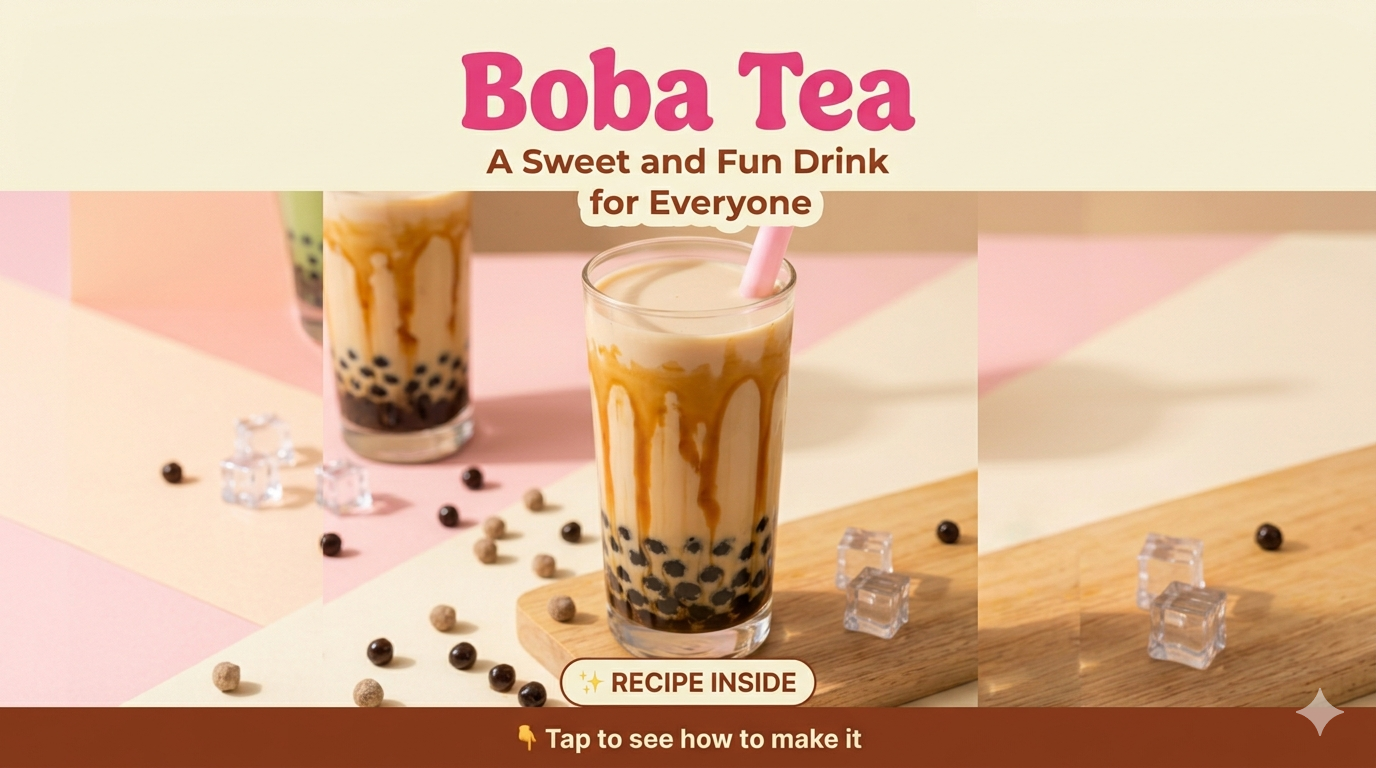
Bobs tea, also known as bubble tea, is a popular drink loved by people all around the world. It started in Taiwan and has become famous for its unique taste, chewy toppings, and colorful look. Bobs tea is usually made with tea. It also includes milk or fruit flavors, ice, and round chewy balls called bobs or tapioca pearls. It’s more than just a drink—it’s an experience.
This is an exhaustive, beginner-friendly guide covering everything you asked about boba tea — from its origins and taste to nutrition, homemade recipes, and why it became a global sensation.
The Ultimate Guide to Boba Tea: History, Flavors, Health & Everything You Need to Know
What Is Boba Tea and Why Is It So Popular?
Boba tea (also called bubble tea) is a Taiwanese tea‑based drink that typically contains chewy tapioca pearls (boba) at the bottom. It’s served hot or iced, shaken or blended, with endless flavor combinations.
Why is it so popular?
- Texture contrast: Creamy tea + chewy pearls = unique mouthfeel
- Customizable: You choose tea, sweetness, toppings, and ice level
- Instagram‑worthy: Colorful drinks, cute cups, fat straws
- Social ritual: Boba shops are hangout spots for teens and young adults
The History of Bubble Tea: From Taiwan to Global Trend
| Year | Milestone |
|---|---|
| 1980s | Invented in Taiwan – two tea shops claim origin (Chun Shui Tang & Han Lin Tea House) |
| 1990s | Spread to East Asia (China, Japan, South Korea) |
| 2000s | Arrived in the US & Europe via Asian immigrant communities |
| 2010–2020 | Exploded globally – dedicated boba chains (Gong cha, CoCo, Tiger Sugar) |
| 2024–2026 | Healthier options (low‑sugar, plant‑based, organic) dominate trends |
Fun fact: The “bubble” refers either to the tapioca pearls or the frothy bubbles shaken into the tea.
What Does Boba Tea Taste Like?
| Component | Taste & Texture |
|---|---|
| Tea base | Black tea (malty, bold), green tea (grassy, light), oolong (floral), or jasmine |
| Milk | Creamy, smooth, sometimes non‑dairy (soy, oat, almond) |
| Sweetener | Usually fruit syrup, brown sugar, or honey – sweetness level adjustable |
| Tapioca pearls | Mildly sweet, chewy/gummy (like a soft gummy candy), no strong flavor |
Overall experience: A sweet, creamy, milky tea with fun, chewy bites at the end of each sip.
Different Types of Bubble Tea You Should Try
| Type | Description | Best For |
|---|---|---|
| Classic Milk Tea | Black tea + milk + tapioca pearls | First‑timers |
| Fruit Tea | Green/black tea + fruit syrup (mango, passion fruit, strawberry) | Hot days, lighter taste |
| Brown Sugar Boba | Caramelized brown sugar syrup + fresh milk (no tea sometimes) | Sweet‑tooth lovers |
| Matcha Boba | Matcha green tea + milk + sweetener | Matcha fans |
| Smoothie / Slush | Blended ice + fruit + tea or milk | Thick, dessert‑like |
| Cheese Tea | Foamy salted cream cheese topping on tea | Savory‑sweet contrast |
Best Boba Tea Flavors for Beginners
If you’ve never had boba, start here:
| Flavor | Why It’s Good |
|---|---|
| Classic milk tea | Familiar, balanced, not too sweet |
| Taro milk tea | Nutty, vanilla‑like, naturally purple (fun color) |
| Thai milk tea | Spiced orange tea, very creamy – like a dessert |
| Mango green tea | Refreshing, fruity, less heavy |
Pro tip: Order 30–50% sugar for your first time (full sugar can be overwhelmingly sweet).
Milk Tea vs Fruit Tea: Which One Is Better?
| Aspect | Milk Tea | Fruit Tea |
|---|---|---|
| Base | Black/green tea + milk/cream | Tea + fruit puree/syrup |
| Calories | Higher (150–400 per cup) | Lower (80–250) |
| Texture | Creamy, rich | Light, refreshing |
| Best time | Cool weather, comfort drink | Summer, post‑workout |
| Toppings | Tapioca, pudding, red bean | Fruit jellies, aloe, popping boba |
Verdict: Neither is better – it’s personal preference. Milk tea = dessert drink. Fruit tea = thirst quencher.
What Are Tapioca Pearls Made Of?
| Ingredient | Source | Purpose |
|---|---|---|
| Tapioca starch | Extracted from cassava root | Main structure (chewy) |
| Brown sugar | Added for color and mild sweetness | Flavor + dark color |
| Water | Binds ingredients | Forms the dough |
| Caramel color (sometimes) | Additional darkening | Visual appeal |
Are they vegan? Yes – tapioca pearls are 100% plant‑based (no animal products).
How they’re made: Dough → rolled into small balls → boiled → soaked in sugar syrup.
Popular Boba Tea Toppings Explained
| Topping | Texture | Flavor | Best With |
|---|---|---|---|
| Tapioca pearls | Chewy, gummy | Mildly sweet | Milk tea, brown sugar |
| Popping boba | Pops in mouth, juice inside | Sweet fruit flavors | Fruit teas |
| Grass jelly | Soft, jelly‑like | Earthy, herbal | Milk tea (less sweet) |
| Aloe vera | Crisp, slightly crunchy | Neutral, refreshing | Fruit teas, green tea |
| Pudding | Soft, creamy | Vanilla/egg custard | Milk tea |
| Red bean | Soft, grainy, pasty | Sweet, nutty | Smoothies, milk tea |
| Coconut jelly | Firm, crunchy | Light coconut | Fruit teas |
Is Bubble Tea Healthy or Too Sugary?
| Health Aspect | Reality |
|---|---|
| Sugar content | High – one regular 500ml can have 40–70g sugar (10–17 teaspoons) |
| Calories | 300–600 per cup (toppings add extra) |
| Fat | Moderate (from milk/creamers) |
| Nutritional value | Low – mostly empty calories |
| Caffeine | Yes (tea base) – 30–70mg per cup |
Verdict: Bubble tea is a treat, not a health food. But you can make it healthier (see below).
How Many Calories Are in Boba Tea?
| Drink (500ml, regular sugar) | Calories (approx) |
|---|---|
| Classic milk tea + tapioca | 350–450 |
| Brown sugar boba milk | 400–550 |
| Fruit tea + popping boba | 200–300 |
| Matcha latte + boba | 380–480 |
| Cheese tea (no boba) | 250–350 |
Adding toppings adds 50–150 extra calories. Tapioca pearls are ~100 calories per 1/4 cup.
Low-Sugar & Healthier Bubble Tea Options in 2026
| Healthier Swap | How to Order |
|---|---|
| 30% sugar or less | Ask for “30% sugar” or “less sweet” |
| No sugar at all | “0% sugar” – get sweetness from fruit puree only |
| Plant‑based milk | Oat, almond, or soy milk instead of creamer |
| Skip toppings or choose aloe/coconut jelly | Lower calories than tapioca |
| Smaller size | Order medium (400ml) instead of large |
| Fresh fruit puree instead of syrups | Many shops now offer real fruit |
New 2026 trend: Many chains now offer “stevia‑sweetened” or “keto‑friendly” boba with natural sweeteners.
Why Gen Z Loves Bubble Tea So Much
| Reason | Explanation |
|---|---|
| Instagram‑worthy | Colorful drinks, cute cups, aesthetic straws |
| Customizable | Total control over flavor, sweetness, toppings – very Gen Z |
| Affordable luxury | $5–7 feels special, but not too expensive |
| Social experience | Boba shops are third spaces (not home, not school/work) |
| Texture novelty | Chewy pearls are fun and unexpected |
| Nostalgia + trend | Grew up with boba, now it’s a lifestyle |
Most Popular Bubble Tea Trends Right Now
| Trend | Why It’s Hot |
|---|---|
| Brown sugar boba | Caramelized syrup lines the cup – great for photos |
| Matcha bob | Green color + earthy flavor + wellness halo |
| Cheese tea | Savory‑sweet foam topping (unexpected, addictive) |
| Fruit popping boba | Bursting juice balls (fun to eat) |
| Vegan & dairy‑free | Oat milk boba is everywhere |
| Low‑sugar / keto | Stevia, monk fruit, no syrup |
| DIY boba kits | Make at home (2025–2026 boom) |
Brown Sugar Boba vs Classic Milk Tea
| Feature | Brown Sugar Boba | Classic Milk Tea |
|---|---|---|
| Sweetener | Brown sugar syrup (caramelized) | Simple syrup or cane sugar |
| Milk | Usually fresh milk (no tea sometimes) | Tea + milk or creamer |
| Taste | Deep caramel, richer | Balanced, more tea forward |
| Looks | Brown sugar streaks on cup | Solid tan/beige |
| Calories | Higher (more sugar) | Moderate |
Which to pick? Brown sugar for a dessert drink. Classic milk tea for an everyday boba.
Matcha Boba Tea: Why It Keeps Trending
| Reason | Why It Works |
|---|---|
| Color | Vibrant green – extremely photogenic |
| Health halo | Matcha is perceived as healthy (antioxidants) |
| Earthy + sweet | Balance of bitter matcha and sweet milk/syrup |
| Caffeine boost | More caffeine than regular green tea |
| Vegan friendly | Pairs well with oat/almond milk |
Best order: Matcha latte with 50% sugar + tapioca pearls or coconut jelly.
Best Fruit Bubble Tea Flavors for Summer
| Flavor | Pair With | Best Topping |
|---|---|---|
| Mango | Green tea or slush | Popping boba (mango) or aloe |
| Passion fruit | Green tea | Passion fruit popping boba |
| Strawberry | Black tea or lemonade | Strawberry jelly |
| Lychee | Jasmine green tea | Lychee popping boba |
| Peach | Oolong tea | Aloe vera |
Pro tip: Order fruit teas with 0–30% sugar – the fruit puree already adds sweetness.
Can You Make Bubble Tea at Home?
Yes – absolutely. It’s cheaper, healthier, and fun.
What You Need:
- Tapioca pearls (buy dried from Asian grocery or Amazon)
- Tea bags (black, jasmine, or green)
- Milk (dairy or plant‑based)
- Sweetener (brown sugar, honey, simple syrup)
- Wide straws (boba straws)
Easy Homemade Boba Tea Recipe
Time: 20–25 minutes.
Cost per serving: ~$1–2 (versus $6–7 at shops).
Common Mistakes People Make When Ordering Boba Tea
| Mistake | Fix |
|---|---|
| Ordering full sugar | Start at 50% – you can always go sweeter next time |
| Not shaking the drink | Shake well so syrup doesn’t sit at the bottom |
| Drinking too fast | Sip slowly – pearls need chewing |
| Choosing wrong toppings | Tapioca for milk tea; popping boba for fruit tea |
| Forgetting the wide straw | Regular straws can’t pick up pearls |
Best Boba Tea Combinations You Need to Try
| Combo | Why It’s Great |
|---|---|
| Classic milk tea + tapioca | The OG – never wrong |
| Matcha latte + red bean | Japanese‑inspired, earthy + sweet |
| Thai milk tea + tapioca | Spiced orange tea – tastes like dessert |
| Mango green tea + aloe | Refreshing, light, healthy‑ish |
| Brown sugar boba + pudding | Double sweetness, very rich |
| Taro milk tea + coconut jelly | Nutty + crunchy contrast |
Is Boba Tea Good for Weight Loss?
| Short answer | No – not really. |
|---|
Why not?
- High in sugar and calories (300–600 per cup)
- Low in protein and fiber
- Tapioca pearls are pure starch
But if you love boba while losing weight:
- Order 0% sugar (sweetness from fruit only)
- Choose fruit tea over milk tea
- Skip tapioca → use aloe or coconut jelly
- Get small size (400ml)
- Drink once a week as a treat, not daily
Better choice: Homemade boba with stevia, low‑fat milk, and less pearls.
Vegan & Dairy‑Free Bubble Tea Options
| Dairy Ingredient | Vegan Swap |
|---|---|
| Milk / creamer | Oat, soy, almond, or coconut milk |
| Honey (in syrup) | Maple syrup, agave, or brown sugar syrup |
| Cheese foam | Vegan cheese foam (some shops offer) |
| Pudding topping | Skip or use coconut jelly |
All standard tapioca pearls are vegan (no gelatin).
Vegan‑friendly chains: Cha Time, CoCo Fresh, Gong cha (ask for non‑dairy milk).
Why Bubble Tea Is More Than Just a Drink
| Cultural Aspect | Meaning |
|---|---|
| Community | Boba shops are gathering spots for friends, study groups, first dates |
| Self‑expression | Customizing your drink shows personality (sweetness, toppings, tea type) |
| Nostalgia | For Gen Z and Millennials, boba = teenage memories |
| Globalization | A Taiwanese invention that became a worldwide language |
| Comfort ritual | The act of sipping and chewing is almost meditative |
Boba tea is not merely a beverage – it’s a lifestyle, a social signal, and a comfort object.
Final Thoughts: Should You Try Boba Tea?
| You’ll love boba if… | You might not like it if… |
|---|---|
| You enjoy sweet, creamy drinks | You dislike sweet beverages |
| You like interesting textures (chewy, gummy) | You prefer smooth, uniform drinks |
| You want a fun, customizable experience | You only drink water/black coffee |
| You’re looking for a treat, not a health drink | You’re on a strict low‑sugar diet |
My advice:
Yes – absolutely try it at least once. Start with a classic milk tea, 50% sugar, regular tapioca. Go with a friend. Take a photo. Sip slowly. You might just discover your new favorite guilty pleasure.
Quick Reference Card
| Your Question | Short Answer |
|---|---|
| Best for first‑timer | Classic milk tea, 50% sugar, tapioca |
| Healthiest option | Fruit tea, 0% sugar, aloe vera |
| Most popular topping | Tapioca pearls (original) |
| Vegan? | Yes – ask for plant milk |
| Calories in regular cup | 300–550 |
| Can I make at home? | Yes – cheap and easy |
| Good for weight loss? | No – treat only |
| Why Gen Z loves it | Custom, social, Instagram‑ready |
Boba Tea: A Sweet and Fun Drink for Everyone
Boba tea has taken the world by storm. But what exactly is it? Where did it come from? And how can you enjoy it without the sugar overload? Here’s everything you need to know about this playful drink.
Let me tell you about the first time I tried boba.
I was in my mid-twenties, wandering through a neighborhood I didn’t know, when I passed a tiny shop with a line out the door. Through the window, I could see people drinking from cups with enormous straws, chewing on something while they sipped. I watched a teenager take a photo of her drink before even tasting it, tilting the cup so the camera could capture the dark pearls clustered at the bottom.
I was confused. And intrigued.
I joined the line, ordered something called “brown sugar milk tea with tapioca pearls,” took my first sip, and immediately understood what all the fuss was about. The creamy sweetness. The robust tea flavor underneath. And those pearls—chewy, bouncy, somehow satisfying in a way I couldn’t explain.
That was over a decade ago. Today, boba tea is everywhere. From London to Los Angeles, Toronto to Manchester, you can find a bubble tea shop on nearly every high street. The global bubble tea market is projected to reach nearly $5 billion by 2032 . It’s not just a drink anymore. It’s a cultural phenomenon.
If you’ve been curious about boba but don’t know where to start—or if you’re already a fan and want to understand what’s actually in your cup—this guide is for you.
First, What Actually IS Boba?
Let’s clear up the terminology first, because it can get confusing.
Boba technically refers to the little chewy pearls at the bottom of the drink . They’re also called tapioca pearls, or sometimes just “the bubbles” in bubble tea. But over time, people started using “boba” to refer to the entire drink itself .
So if someone says “Let’s get boba,” they mean the whole experience—tea, milk, sweetness, and those delightful chewy pearls.
The drink was born in Taiwan in the 1980s, and like any good origin story, there’s some debate about exactly who invented it . What’s not debated is that it emerged from a fascinating bit of food history. Long before boba became a global trend, Taiwanese households would make tiny pearls from sweet potato or tapioca starch and drop them into sugar water as a folk remedy for heat stroke . Those pearls were small and clear.
In the 1980s, someone had the brilliant idea to make the pearls bigger, roll them in brown sugar (which gives them their dark caramel color), and drop them into milk tea. The rest is history .
What’s Actually in Your Cup?
A standard boba milk tea is made from just a few simple ingredients :
Brewed tea – Usually black tea, though green tea, jasmine, and oolong are also popular. The tea provides the foundation and brings antioxidants called polyphenols, which help protect your cells from damage .
Milk or non-dairy creamer – Traditional recipes often used non-dairy creamer, but these days you can find boba made with fresh milk, condensed milk, or plant-based alternatives like oat, almond, or coconut milk .
Sweetener – Sugar, brown sugar syrup, honey, or flavored syrups. This is where most of the calories come from.
Tapioca pearls – Made from tapioca starch extracted from the cassava root, a tropical tuber native to South America that made its way to Asia centuries ago . The starch is mixed with water and brown sugar, then rolled into those familiar little balls .
The pearls themselves are almost pure starch. A typical serving (about 50 grams of dried pearls) contains mostly carbohydrates with minimal protein or fiber .
The Boba Experience: Why People Love It
Here’s the thing about boba that’s hard to explain until you’ve tried it: it’s not just a drink. It’s an activity.
There’s the anticipation of choosing your flavor from a menu that often runs into the dozens. The thrill of watching them seal your cup with that plastic film. The satisfying thwack of the giant straw punching through. The decision of whether to shake first or just dive in.
Then there’s the texture. The pearls are chewy—not hard, not soft, but somewhere in between, with a bounciness that Taiwanese foodies call “Q” (pronounced like “cue”). It’s the same texture you find in mochi or certain noodles, and it’s oddly addictive .
You sip, and you chew. You get tea, and you get a snack. It’s two experiences in one.
For younger generations—Gen Z especially—boba has become something of a trademark drink . It’s photogenic. It’s customizable. It’s fun. And in a world where experience matters as much as taste, boba delivers.
The Health Picture: The Good and The Not-So-Good
Okay, let’s address the elephant in the room. Is boba actually healthy?
Like most delicious things, the answer is complicated.
The Good News
The tea base itself brings genuine health benefits. Black and green teas contain antioxidants called polyphenols, which research suggests might lower the risk of cancer, diabetes, and heart disease . If you’re drinking boba made with real brewed tea, you’re getting some of those benefits.
Calcium is another potential plus. An 8-ounce serving of boba can provide around 250 milligrams of calcium, depending on the milk used . That’s good for your bones.
The tapioca pearls also contain small amounts of minerals like iron, zinc, copper, and manganese—though the quantities are too small to make a significant difference in your diet .
The Not-So-Good News
The main concern with boba is sugar. And it’s a big concern.
A typical 16-ounce serving of bubble tea can contain more added sugar than the entire daily recommended allowance . One analysis found a 490-milliliter serving (about 16.5 ounces) contained nearly 36 grams of added sugar . The American Heart Association recommends no more than 25 grams per day for women and 36 grams for men.
The University of Connecticut’s nutrition analysis of a standard boba tea shows 248 calories, 56 grams of carbohydrates, and nearly 29 grams of sugar in a single serving . Another popular brand’s canned version contains 162 calories and 28 grams of sugar .
The pearls themselves add to the sugar load. They’re typically soaked in sugar syrup after cooking, which means you’re drinking some of that sweetness with every chew .
Too much added sugar increases your risk of obesity, type 2 diabetes, and heart disease . The Philippine National Nutrition Council notes that while boba does offer some calcium and minerals, the high sugar content is a significant health concern, especially for people with diabetes or heart conditions .
The Constipation Question
There’s also some concern about guar gum, a fiber sometimes added to tapioca pearls to help them hold together. Guar gum expands when it comes into contact with water, and consuming too much can potentially lead to constipation . This isn’t a problem for most people drinking boba occasionally, but it’s worth knowing.
How to Enjoy Boba Without Overdoing It
The good news is that you don’t have to give up boba entirely. You just need to be smart about it.
1. Watch the Sugar
Most boba shops let you customize your sugar level. If you’re used to “regular” or “100%,” try stepping down to “75%” or “50%.” Many shops even offer “30%” or “less sugar” options . Your taste buds will adjust faster than you think.
2. Choose Your Toppings Wisely
Tapioca pearls aren’t the only topping out there. Some shops offer fruit jellies, popping boba (little spheres that burst with juice), or pudding. While none of these are sugar-free, some may be lighter than the classic pearls .
You can also simply ask for fewer pearls. Every shop I’ve been to is happy to accommodate.
3. Consider the Milk
Non-dairy milks like almond, oat, or soy typically have fewer calories than whole milk, though this varies by brand and preparation . If you’re lactose intolerant or just watching calories, plant-based options are worth exploring.
4. Make It an Occasion, Not a Daily Habit
The Philippine National Nutrition Council suggests that for healthy individuals, enjoying boba about once a week, alongside a balanced diet and regular exercise, is reasonable . For people with diabetes or heart conditions, they recommend being especially mindful.
Boba is a treat. Treats are best enjoyed as treats.
5. Try Making It at Home
Making boba at home gives you complete control over what goes into your cup. You can adjust the sweetness, choose your milk, and even experiment with different tea bases .
The pearls take some practice to get right—they need to be boiled for 20-30 minutes, then soaked in sugar syrup—but the result is worth it . Plus, there’s something satisfying about sipping a drink you made yourself.
The Global Love Affair With Boba
Boba’s journey from Taiwanese novelty to global phenomenon is remarkable.
In the United States, boba started gaining traction in the late 1990s, when Taiwanese tea chains opened shops and introduced Americans to those chewy brown pearls in sweet milk tea . By the 2000s, it had become a staple of Asian-American culture. Today, it’s everywhere, with the US market projected to reach $875 million by 2032 .
Canada and the UK have seen similar growth, driven by younger demographics and the expansion of premium tea chains . In the UK, tea remains the nation’s favorite beverage, and bubble tea has found a natural home alongside traditional cups .
In China, the ready-to-drink tea market—including bubble tea—is enormous, with a retail sales value of over 143 billion yuan in 2023 . And in Southeast Asia, countries like Indonesia and Vietnam have embraced boba with enthusiasm. Indonesia actually ranks first in Southeast Asia for bubble milk tea demand .
What’s driving this growth? Taste, for one thing. Younger consumers consistently say they drink tea because they enjoy the flavor, not just because it’s healthy . Boba delivers on flavor in a big way, with endless combinations and the visual appeal that social media loves.
Popular Flavors to Try
If you’re new to boba, the menu can be overwhelming. Here are some classics to start with :
Brown Sugar Milk Tea – The pearls are soaked in thick, toasted brown sugar syrup before being added to creamy milk tea. The result is sweet, rich, and visually striking—the syrup often streaks down the inside of the cup like tiger stripes.
Jasmine Milk Tea – A floral, fragrant option that’s less heavy than the brown sugar version. It’s refreshing and lighter on the palate.
Taro Milk Tea – Taro is a root vegetable with a sweet, nutty flavor and a beautiful purple color. This one’s a favorite for its mild sweetness and creamy texture.
Fruit Teas – These skip the milk entirely, using fruit juice or puree instead. Mango, passion fruit, and strawberry are popular choices. They’re often brighter and more refreshing than milk-based options.
Matcha Milk Tea – For green tea lovers, matcha adds an earthy depth and vibrant green color. It pairs beautifully with the creamy sweetness of milk.
FAQ About Boba Tea: Everything You Need to Know
What is the difference between boba and bubble tea?
There is no difference. The terms are used interchangeably.
| Term | Meaning |
|---|---|
| Boba | Slang for tapioca pearls (chewy balls) – also used to describe the drink itself |
| Bubble tea | The actual name of the drink (refers to the frothy bubbles shaken into the tea OR the tapioca pearls) |
| Boba tea | Same as bubble tea |
| Bubble milk tea | Same drink, emphasizing milk + tea |
In short: All mean the same drink. “Boba” is more common in the US. “Bubble tea” is more common internationally.
Does bubble tea contain caffeine?
Yes – most bubble tea contains caffeine, because it’s made with real tea leaves.
| Tea Base | Caffeine Level (per 500ml) | Notes |
|---|---|---|
| Black tea | 40–70 mg | Most common (classic milk tea) |
| Green tea | 30–50 mg | Lighter, grassier flavor |
| Oolong tea | 35–55 mg | Floral, between black and green |
| Jasmine tea | 25–40 mg | Fragrant, mild |
| Matcha | 50–80 mg | Higher because whole leaf powder |
| Fruit tea | 15–40 mg | Depends on tea base used |
| Herbal / caffeine‑free | 0 mg | Ask for rooibos or honeybush base |
Caffeine‑free options:
- Request no tea (just milk + syrup + toppings) – called “milk base”
- Choose herbal tea (chamomile, peppermint, rooibos) if the shop offers it
Comparison: A cup of coffee has ~95 mg caffeine. Boba tea has less than coffee.
Is boba tea safe for kids?
Yes, in moderation – but with important precautions.
| Age Group | Safety Tips |
|---|---|
| Toddlers (under 4) | Avoid – tapioca pearls are a choking hazard due to size and chewiness |
| Children (4–7) | Supervise closely. Cut pearls? Not practical. Choose no pearls (jelly or aloe instead) |
| Kids (8+) | Generally safe, but limit sugar (order 30% sugar or less) |
| Teens | Safe, but encourage low‑sugar options (healthier habits) |
Other considerations for kids:
- Caffeine: Can cause jitters, sleep issues. Choose caffeine‑free base.
- Sugar: One regular boba = 40–70g sugar (daily limit for a child is ~25g). Order 30% sugar or share one drink between two kids.
Best kid‑friendly order: Caffeine‑free fruit tea, 30% sugar, no tapioca pearls (choose aloe or coconut jelly instead).
Why are tapioca pearls chewy?
The chewiness comes from tapioca starch (extracted from cassava root) and the cooking process.
| Factor | Why It Creates Chewiness |
|---|---|
| Tapioca starch | High in amylopectin (a type of starch) – becomes gelatinous and elastic when cooked |
| Boiling + simmering | Hydrates the starch, creating a gel network |
| Sugar soak | After cooking, pearls sit in sugar syrup, keeping them moist and soft |
| No gelatin | Tapioca pearls are vegan – the chew is from starch, not animal products |
Texture comparison:
Soft gummy candy < Tapioca pearls < Regular gummy bears (tapioca is slightly firmer and more bouncy).
Fun fact: Freshly cooked pearls are warm and very soft. As they cool or sit in the drink, they become firmer and chewier.
Which bubble tea flavor is most popular?
| Rank | Flavor | Why People Love It |
|---|---|---|
| #1 | Classic milk tea | Simple, balanced, familiar – the gateway boba |
| #2 | Brown sugar boba | Caramelized sweetness, Instagram‑worthy tiger stripes |
| #3 | Taro milk tea | Naturally purple, nutty vanilla flavor – visually fun |
| #4 | Thai milk tea | Spiced orange tea, very creamy – like a dessert |
| #5 | Matcha latte | Earthy + sweet, green color, health halo |
| #6 | Mango green tea | Top fruit flavor – refreshing, tropical |
Regional differences:
- USA: Brown sugar boba and taro are extremely popular
- Taiwan: Classic milk tea and oolong tea remain #1
- Japan: Matcha boba dominates
- Southeast Asia: Fruit teas with popping boba are huge
Timeless winner: Classic milk tea with tapioca pearls has never gone out of style.
Can bubble tea be made without milk?
Yes – absolutely. Many bubble teas are naturally dairy‑free.
| Milk‑Free Options | Description |
|---|---|
| Fruit tea | Tea + fruit syrup/puree + ice – no milk at all |
| Herbal tea boba | Rooibos or peppermint tea + sweetener + toppings |
| Clear tea | Jasmine green tea, oolong, or black tea served straight (like iced tea with pearls) |
| Slush / smoothie (water‑based) | Blended ice + fruit + tea – no milk |
| The “milk base” (no tea) | Just milk/creamer + syrup + pearls (creamy but caffeine‑free) |
If you still want a creamy drink without cow’s milk:
Most boba shops offer oat, almond, soy, or coconut milk as a substitute.
Pro tip: When ordering, say “No milk – use oat milk instead” or “Make it a fruit tea.”
What is the healthiest bubble tea option?
There is no “healthy” boba tea – but you can make it healthier by choosing wisely.
| Healthier Choice | Why It’s Better | How to Order |
|---|---|---|
| Lowest calories | Fruit tea (no milk) + no toppings | “Passion fruit green tea, 30% sugar, no pearls” |
| Lowest sugar | 0% added sugar (sweetness from fruit only) | “Mango green tea, 0% sugar, add aloe” |
| Lowest fat | No milk, no creamer | “Jasmine green tea, 30% sugar, no milk” |
| Lowest carbs | Skip tapioca (carbs) + 0% sugar | “Black tea, 0% sugar, add grass jelly” |
| Vegan / plant‑based | Oat milk + fruit puree | “Matcha latte, oat milk, 30% sugar, no toppings” |
The Healthiest Possible Boba Order (Example)
| Component | Choice |
|---|---|
| Tea base | Green tea or jasmine (less processing, some antioxidants) |
| Milk | None (or unsweetened oat milk) |
| Sweetener | 0–30% sugar – or ask for stevia/monk fruit |
| Toppings | Aloe vera or coconut jelly (lowest calories) |
| Size | Small (400ml) |
Estimated nutrition for the healthiest option (400ml fruit tea, 30% sugar, aloe):
~80–120 calories, ~10–15g sugar, 0g fat.
Compare to regular boba: 350–550 calories, 40–70g sugar. Big difference.
Quick Summary Table
| Question | Short Answer |
|---|---|
| Boba vs bubble tea? | Same thing – interchangeable names |
| Caffeine? | Yes – 30–70mg per cup (less than coffee) |
| Safe for kids? | Yes, but avoid pearls for under 4 (choking hazard) and limit sugar |
| Why chewy? | Tapioca starch + cooking process creates gel texture |
| Most popular flavor? | Classic milk tea (worldwide) |
| Can it be milk‑free? | Yes – fruit teas, clear teas, or plant milk |
| Healthiest option? | Fruit tea, 0–30% sugar, aloe vera, small size |
Final Tip for New Drinkers
Start with:
Classic milk tea, 50% sugar, regular tapioca pearls, regular ice.
After one drink, you’ll know if you want sweeter, less sweet, different tea, or different toppings.
Enjoy your boba journy
A Final Thought
Boba tea is many things. It’s a treat. It’s a cultural touchstone. It’s a photo opportunity. It’s a way to connect with friends over something playful and delicious.
It’s not health food. But it doesn’t have to be. The key, as with so many things in life, is balance.
Enjoy your boba. Savor those chewy pearls. Take the photo if you want. But maybe order the half-sugar version. Maybe make it a weekly ritual instead of a daily one. Maybe try making it at home and see how your own version turns out.
The beauty of boba is that it’s endlessly adaptable. You can make it fit your life, your taste, and your health goals. That’s why it’s captured the hearts—and straws—of millions of people around the world.
So go ahead. Find a shop. Order something that sounds good. And when that giant straw breaks through the seal and you get your first sip of sweet, creamy tea with a mouthful of chewy pearls, you’ll understand.
Boba isn’t just a drink. It’s an experience. And now you’re part of it.
Tools to Support Your Wellness Journey
If you’re enjoying treats like boba while also trying to stay on top of your health, sometimes a little data helps.
👉 Use Our Free Calorie Calculator
This simple tool uses the scientific Mifflin-St Jeor equation to estimate your Basal Metabolic Rate (BMR) and Total Daily Energy Expenditure (TDEE). It can help you understand approximately how many calories you need—useful for fitting treats like boba into your day without derailing your goals.
👉 Use Our Free Weight Loss & Fitness Calculator
This gives you a fuller picture—BMI, BMR, TDEE, daily target, and estimated timeline to your goal. A helpful way to check in with where you are.
👉 Use Our Free Fitness Unit Converter
If you’re following recipes for homemade boba from different countries, this tool instantly converts weight, height, distance, and pace.
A Supplement to Support Metabolic Health
If you’re concerned about blood sugar regulation and metabolic health—especially with treats like boba in your life—some people find that targeted supplements can help support healthy glucose metabolism.
GlucoTonic combines natural ingredients like Eleuthero, Gymnema, and African Mango, traditionally used to support healthy blood sugar levels and energy. While no supplement replaces a balanced diet, some readers find it a helpful addition to their wellness routine.
This article contains affiliate links. If you purchase through these links, I may earn a commission at no extra cost to you. I only recommend products I genuinely believe in.