
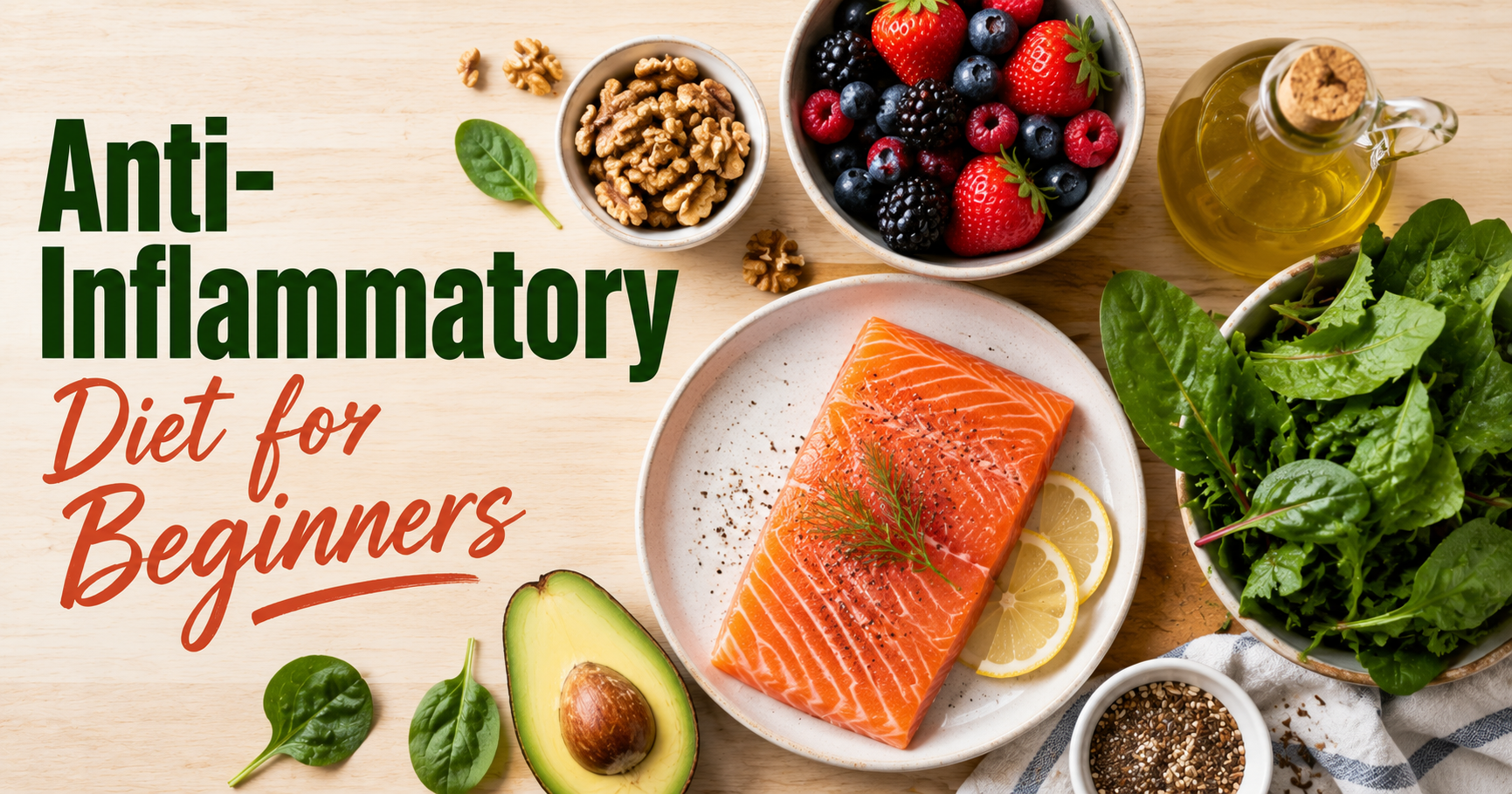
New to the anti-inflammatory diet? This beginner’s guide breaks down exactly what to eat, what to avoid, and how to start today — no complicated rules, no perfection required.
If the words “anti-inflammatory diet” make you picture a complicated meal plan full of foods you’ve never heard of, take a breath — it’s actually one of the simplest, most forgiving ways of eating there is.
There’s no calorie counting. No banned food list you have to memorize overnight. No expensive supplements required. At its core, the anti-inflammatory diet is just a shift toward whole, colorful, real foods — and away from the ultra-processed stuff that tends to leave you feeling tired, puffy, or achy.
Here’s everything you need to know to get started this week, not “someday.”
Let me tell you about the moment I first heard about anti-inflammatory eating.
I was complaining to a friend about my constant fatigue, achy joints, and the brain fog that made afternoons a struggle. She looked at me and said, “Have you ever thought about what you’re eating?” I shrugged. “I eat pretty healthy,” I said.
But the more I learned, the more I realized I was fueling my body with foods that were quietly fanning the flames of inflammation. And I wasn’t alone. Many of the conditions that worry us most as we age—heart disease, type 2 diabetes, some cancers, and certain types of arthritis—share one thing in common: chronic, low-grade inflammation .
The good news? You don’t need a complicated “miracle diet” to push inflammation in a healthier direction. Research points to the same simple pattern: more whole plant foods, healthy fats, and less processed food .
If you’re new to this, don’t worry. Think of it less as a restrictive “diet” and more as a lifestyle shift . It’s about making simple swaps—white bread for whole grains, processed meats for oily fish, crisps for a handful of nuts .

First, What Is Chronic Inflammation? Really
Inflammation itself isn’t the enemy — it’s actually your body’s natural defense system, kicking in when you get a cut or catch a cold. That’s acute inflammation, and it’s supposed to happen.
The problem is chronic inflammation — low-grade inflammation that sticks around for months or years, often without an obvious symptom. Over time, this “silent inflammation” has been linked to joint pain, fatigue, digestive issues, skin problems, and a higher long-term risk for conditions like heart disease and type 2 diabetes.
The good news: diet is one of the most powerful and accessible tools for managing it.
Inflammation is your body’s natural response to illness or injury. When you cut your finger or catch a cold, your immune system sends out inflammatory cells to heal the damage. That’s acute inflammation—and it’s a good thing.
But when inflammation lingers for months or years, it becomes chronic. This type of inflammation can smolder without obvious symptoms, gradually damaging tissues and blood vessels . It’s linked to a range of health concerns, from heart disease and type 2 diabetes to joint pain, brain fog, and even cognitive decline .
Registered dietitian Shannon Roque explains: “While short-term inflammation isn’t necessarily dangerous, it can become detrimental to your health if it turns chronic, leading to symptoms like brain fog, bloating, fatigue, joint pain and more” .
The Basic Idea (In One Sentence)
Eat more whole, colorful, minimally processed foods rich in omega-3s and antioxidants — and eat less refined sugar, refined carbs, and heavily processed food.
That’s genuinely the whole philosophy. Everything else is just detail.
Love This Soup? Build a Full 12-Week Anti-Inflammatory Routine
Stop juggling recipes, grocery lists and notes in different places. The 12-Week Anti-Inflammatory Life System Dashboard puts your meal plan, shopping lists and symptom tracking in one easy dashboard.
- ✔ Structured 12-week food-focused plan
- ✔ Recipe database and weekly shopping lists
- ✔ Symptom tracker with progress dashboard
- ✔ PDF progress summary and CSV export
- ✔ Your entries stay private in your browser
Get the 12-Week Dashboard – $29 →
Instant digital download • Not medical advice
Want a Beginner-Friendly Anti-Inflammatory Eating Guide?
“The Anti-Inflammatory Diet Guide Without Experience” is a 6-chapter digital eBook (PDF + EPUB) that explains inflammation basics, foods to favor and limit, and includes a 30-day meal plan.
- ✔ 6 chapters in plain language
- ✔ 30-day meal plan included
- ✔ PDF + EPUB, instant access
- ✔ 60-day money-back guarantee
Disclosure: this is an affiliate link. If you buy through it, I may earn a commission at no extra cost to you. For general education only, not medical advice.
Want more than one recipe? Get weekly shopping lists, a recipe database and a symptom tracker in our 12-week dashboard.
Foods to Build Your Plate Around
You don’t need to eat all of these every day. Think of this as your rotating toolkit.
Fatty fish — salmon, sardines, mackerel, and trout are rich in omega-3 fatty acids, one of the most well-studied anti-inflammatory nutrients. Aim for 2–3 servings a week if you eat fish.
Berries — blueberries, strawberries, and blackberries are packed with antioxidants called anthocyanins, which give them their color and their anti-inflammatory punch.
Leafy greens — spinach, kale, and collards are loaded with vitamins and plant compounds that support your body’s natural defense against inflammation.
Olive oil — especially extra virgin — is a cornerstone of the Mediterranean diet, which is one of the most researched anti-inflammatory eating patterns.
Nuts and seeds — walnuts, chia seeds, and flaxseeds offer plant-based omega-3s along with healthy fats and fiber.
Turmeric and ginger — these spices contain compounds (like curcumin in turmeric) that have been studied for their anti-inflammatory effects.
Fermented foods — yogurt, kefir, kimchi, and sauerkraut support gut health, which is closely tied to how much inflammation your body carries overall.
Foods to Start Cutting Back On
You don’t need to eliminate these overnight — just start noticing them and gradually reducing how often they show up.
- Refined sugar (soda, candy, sweetened drinks)
- White bread, white rice, and refined pasta
- Fried foods
- Processed meats (bacon, sausage, deli meat)
- Trans fats (margarine, packaged baked goods)
- Excess alcohol
(If you want the full breakdown of why each of these matters and what to swap them for, check out our companion guide: [15 Foods to Avoid on an Anti-Inflammatory Diet].)
Your First Week: A Simple Starting Plan
You don’t need a rigid meal plan to start. Instead, try this simple framework for your first 7 days:
Days 1–2: Just notice. Don’t change anything yet — just pay attention to how often the “avoid” foods show up in your day. Awareness is the real first step.
Days 3–4: Swap breakfast. Trade sugary cereal or a pastry for oats with berries, or eggs with sautéed greens.
Days 5–6: Add one fish meal. Work in a serving of salmon, sardines, or another fatty fish.
Day 7: Add color to one plate. Build one meal around at least three different colored vegetables.
That’s it. Small, stackable wins — not an overnight overhaul.
The Anti-Inflammatory Diet: A Lifestyle, Not a Restrictive Diet
The anti-inflammatory diet isn’t a weight-loss plan like Atkins or keto. It’s a way of eating that emphasises whole, unprocessed foods known for their inflammation-fighting properties .
“An anti-inflammatory diet is actually not a diet at all in the clinical sense, but a style of eating,” says registered dietitian Beth Warren. “It is one of the best ways to reduce chronic inflammation” .
Three of the most common anti-inflammatory eating patterns are the Mediterranean diet, the DASH diet, and vegetarian or vegan lifestyles . These focus on minimally processed, nutrient-dense whole foods while limiting more refined and inflammatory options .
Anti-Inflammatory Foods to Eat
Dietitians agree that the foundation of an anti-inflammatory diet is whole, minimally processed foods. “Whole plant foods provide important micronutrients and healthy omega fats, which are critical for reducing inflammation,” says Dr. Kristi Artz, vice president of UH Connor Whole Health .
Fill your plate with these anti-inflammatory powerhouses:
Fruits and Vegetables
“Look out for foods high in phytonutrients, or foods that are deep in color like blueberries, tomatoes and leafy greens,” says Shannon Roque . Also eat foods high in antioxidants, such as vitamin C- and E-rich foods like citrus and oily fish .
Healthy Fats
Heart-healthy fats like walnuts, olive oil, and avocados are staples. Aim for a balance of good fats, particularly omega-3 fatty acids, while eliminating as many sources of trans-fatty acids as possible .
Lean Protein
Include fish (especially oily fish like salmon, mackerel, and sardines), chicken, and plant-based protein sources . Fatty fish provide omega-3s, which have potent anti-inflammatory effects .
Legumes, Nuts, and Seeds
Lentils, chickpeas, beans, almonds, walnuts, chia seeds, and flaxseeds are excellent choices .
Whole Grains
Brown rice, quinoa, and oats provide fiber and nutrients that support gut health .
Spices and Herbs
Turmeric, ginger, and cinnamon have potent anti-inflammatory effects. Research has found that around one teaspoon of spice a day can have a meaningful impact . “This is thanks to their abundance of phytonutrients, including polyphenols, which are antioxidant, anti-inflammatory and feed the microbiome,” explains nutritional therapist Alexa Mullane .
Turmeric and ginger can add flavor and variety to everyday meals. For an easy way to include these ingredients, try our healthy turmeric mango smoothie.
Inflammatory Foods to Limit or Avoid
While no single food will cause inflammation on its own, regularly eating these can promote inflammation and may be harder to digest .
Foods to avoid on an anti-inflammatory diet:
- Refined carbohydrates like white bread, pastries, and chips
- Fried foods
- Processed meats like bacon, sausage, and bologna
- Red meats
- Sugary drinks and foods high in added sugar [citation:2, 11]
- Trans fats and excessive saturated fats
- Alcohol
Also watch out for refined vegetable oils like sunflower and rapeseed oil, which are rich in omega-6 fatty acids that promote inflammation when consumed in high amounts relative to omega-3s .
Getting Started: Practical Tips
Start with what you already like. “We use the word ‘diet,’ but it’s really a lifestyle shift,” says Shannon Roque. “We need to meet folks where they are and make it make sense for them. If someone isn’t an adventurous cook, made-from-scratch meals might not be a good place to start” .
Make simple swaps. Swap white bread and pasta for whole grains and legumes. Replace processed meats with oily fish. Trade crisps for a handful of mixed nuts. Cut back on fried foods, sugary snacks, and alcohol .
Think small meals. “Avoiding a huge insulin spike should be on your mind when creating an anti-inflammatory diet, which means smaller meals more frequently,” says registered dietitian Scott Keatley. “Six small meals per day should be the goal” .
Be patient. Changing your diet is just one tool in your toolbox. You can also lower inflammation by getting good sleep, lowering stress, maintaining a healthy weight, staying active, and stopping smoking .
Remember: it’s not about perfection. “It takes time and effort to navigate through these changes,” says Shannon Roque. “But the end reward is great” .
How Long Until You See Results?
Symptoms of inflammation may ease quickly, but it can take up to six months of commitment to lifestyle changes before you’ll start to see tangible differences in medical tests . Be kind to yourself—every small step counts.
Common Beginner Mistakes (And How to Avoid Them)
Trying to change everything at once. This is the fastest way to quit by day 3. Pick one or two changes and let them become habits before adding more.
Thinking one “bad” meal ruins everything. It doesn’t. This is a long-term pattern, not a strict all-or-nothing plan. One meal out with friends isn’t going to undo weeks of good habits.
Overcomplicating meals. You don’t need fancy recipes. A piece of salmon, roasted vegetables, and olive oil is a complete anti-inflammatory meal — and it takes 20 minutes.
Ignoring sleep and stress. Diet is powerful, but chronic stress and poor sleep also drive inflammation. Small improvements in both areas amplify what your diet changes are already doing.
The Bottom Line
You don’t need to be a nutrition expert or overhaul your kitchen overnight to start eating in a way that supports your body instead of working against it. Start with one swap this week. Add color to one plate. Notice how you feel after two weeks of small changes — most people find that’s more motivating than any strict rule ever was.
Frequently Asked Questions
1. Is the anti-inflammatory diet the same as the Mediterranean diet?
They’re very similar. Both emphasize whole foods, healthy fats, fish, and plant-based eating. The Mediterranean diet is often recommended for anti-inflammatory eating because it’s the least restrictive of the options .
2. Can I still eat bread?
Yes, but choose whole grain options instead of refined white bread. Whole grains provide fiber that supports gut health and can help reduce inflammation .
3. What are the best spices for inflammation?
Turmeric, ginger, cinnamon, and nutmeg have potent anti-inflammatory effects. Try adding them to sauces, porridge, granola, or smoothies for an easy anti-inflammatory boost .
4. What about eggs and dairy?
Individual responses vary. Pay attention to how your body reacts to different foods. As one reviewer of an anti-inflammatory cookbook wisely noted: “Different items are inflammatory to different people. You need to pay attention to your body and see how your body reacts to certain foods” .
5. Do I need to take supplements?
An anti-inflammatory diet emphasizes getting nutrients from food first. However, some people may benefit from supplements like omega-3s or vitamin D. Consult your healthcare team before starting any supplements.
How long before I notice a difference?
Some people report feeling less bloated or more energized within 1–2 weeks, while measurable changes in inflammatory markers typically take 4–8 weeks of consistent eating patterns
This article contains general information and is not medical advice. Always consult a healthcare professional before starting a new diet plan, especially if you have existing health conditions.
Want a simple plant-based meal plan? Try our 7-day vegan meal plan for weight loss.
1 thought on “Anti-Inflammatory Diet for Beginners: The Simple, No-Stress Guide”