
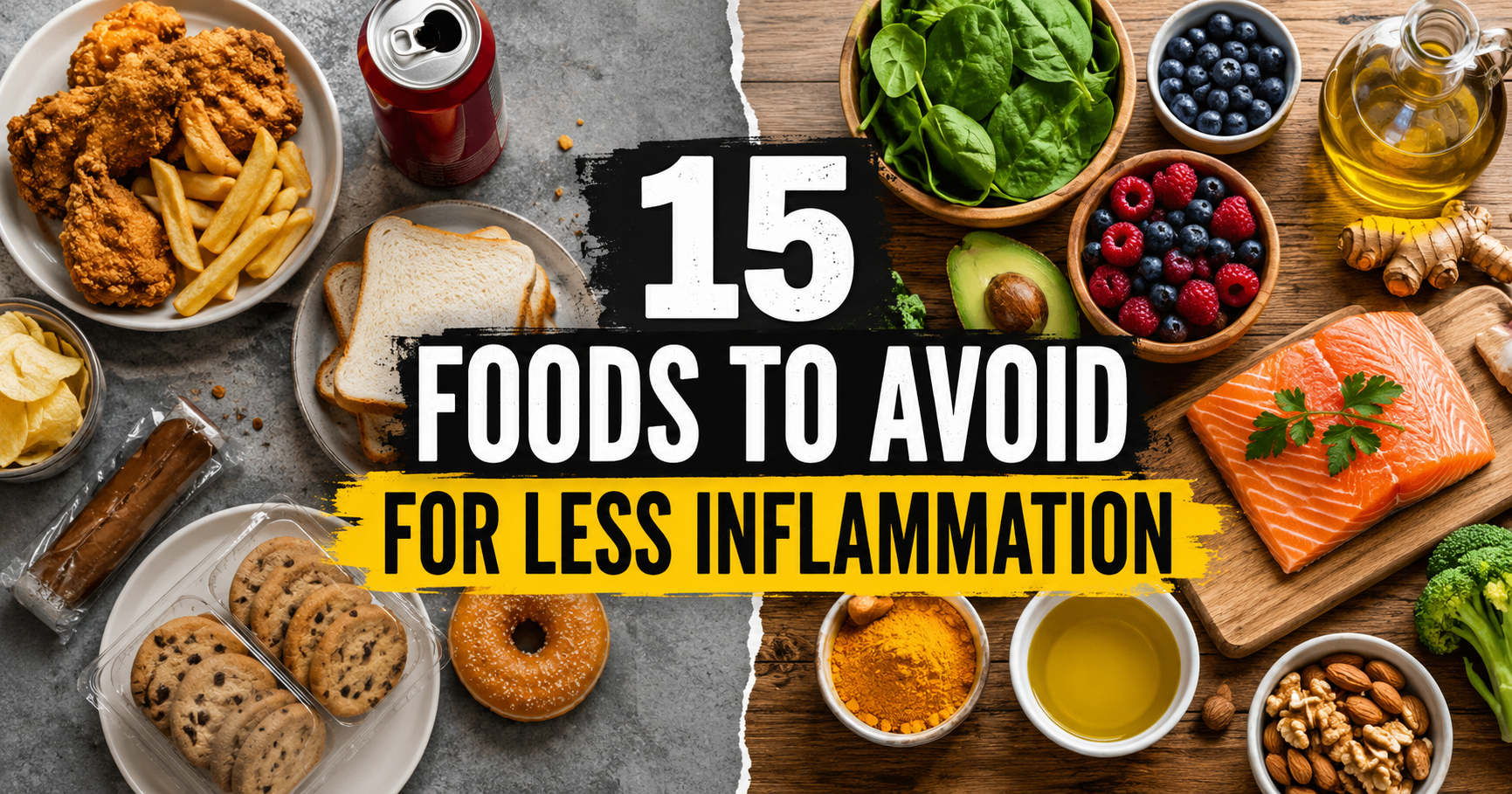
Discover the 15 foods that trigger inflammation in your body and learn simple, science-backed swaps to reduce joint pain, fatigue, and bloating — starting today.

Let’s be honest for a moment. Most of us have felt it. The brain fog that rolls in by mid-afternoon. The stubborn joint ache that makes you feel older than you are. The bloating that seems to appear from nowhere.
These aren’t just random annoyances; they can be whispers of something deeper: chronic inflammation . For years, I thought feeling a little “off” was just part of getting older. Then I discovered how much of that feeling was coming directly from my plate.
The good news is, what we eat has a powerful influence on this internal fire. An anti-inflammatory diet is less about strict rules and more about a lifestyle shift—nourishing your body with whole, nutrient-dense foods and gently moving away from the processed ones that can be our biggest triggers . Here’s a look at 15 common foods that research shows can fuel inflammation, and why.
If your joints ache more than they used to, your energy crashes by 2 PM, or you just feel “puffy” no matter what you do, your grocery list might be the culprit.
Chronic low-grade inflammation — sometimes called “silent inflammation” — has been linked to everything from joint pain and fatigue to heart disease, diabetes, and skin issues like eczema and psoriasis. The frustrating part? A lot of the foods driving it are hiding in plain sight, marketed as “convenient,” “low-fat,” or even “healthy.”
Below are the 15 biggest inflammatory offenders, why they cause problems in your body, and what to swap them for instead. No extreme diets, no giving up food joy — just small, doable changes.
Love This Soup? Build a Full 12-Week Anti-Inflammatory Routine
Stop juggling recipes, grocery lists and notes in different places. The 12-Week Anti-Inflammatory Life System Dashboard puts your meal plan, shopping lists and symptom tracking in one easy dashboard.
- ✔ Structured 12-week food-focused plan
- ✔ Recipe database and weekly shopping lists
- ✔ Symptom tracker with progress dashboard
- ✔ PDF progress summary and CSV export
- ✔ Your entries stay private in your browser
Get the 12-Week Dashboard – $29 →
Instant digital download • Not medical advice
Want a Beginner-Friendly Anti-Inflammatory Eating Guide?
“The Anti-Inflammatory Diet Guide Without Experience” is a 6-chapter digital eBook (PDF + EPUB) that explains inflammation basics, foods to favor and limit, and includes a 30-day meal plan.
- ✔ 6 chapters in plain language
- ✔ 30-day meal plan included
- ✔ PDF + EPUB, instant access
- ✔ 60-day money-back guarantee
Disclosure: this is an affiliate link. If you buy through it, I may earn a commission at no extra cost to you. For general education only, not medical advice.
Want more than one recipe? Get weekly shopping lists, a recipe database and a symptom tracker in our 12-week dashboard.
1. Refined Sugar (Soda, Candy, Sweetened Coffee Drinks)
Refined sugar spikes your blood sugar quickly, which triggers your body to release inflammatory messengers called cytokines. Over time, regularly high blood sugar contributes to elevated CRP (C-reactive protein), a key marker doctors use to measure inflammation in the body.
Swap it for: Fresh fruit, sparkling water with a splash of juice, or naturally sweetened options using dates or a small amount of honey.
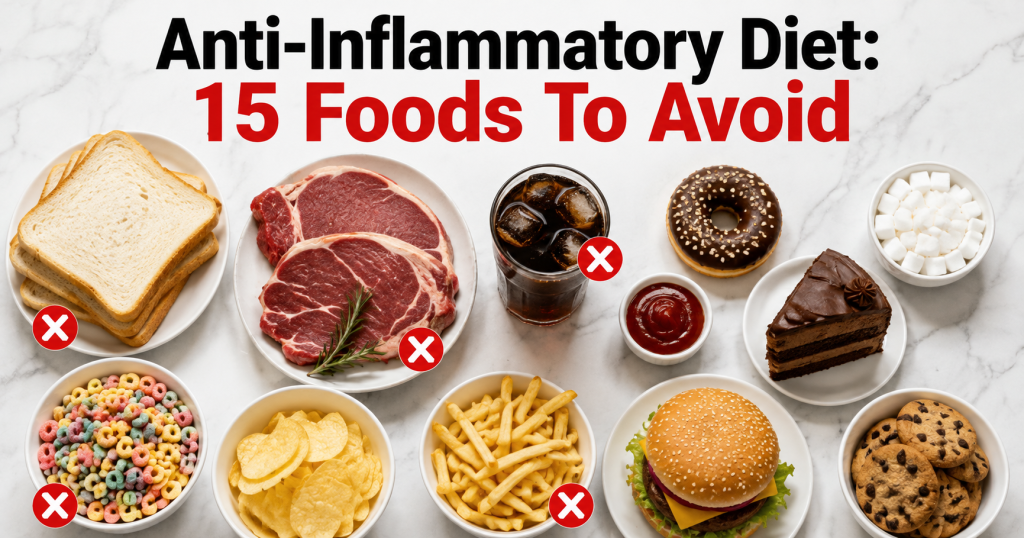
2. White Bread, White Rice, and Refined Pasta
Refined carbohydrates digest fast, spike blood sugar, and behave a lot like sugar once they hit your bloodstream. Regularly eating heavily refined grains has been associated with higher inflammatory markers compared to whole grains.
Swap it for: Whole wheat bread, brown rice, quinoa, or oats.
3. Fried Foods
Frying at high heat creates compounds called advanced glycation end products (AGEs), which trigger oxidative stress and inflammation in the body. The oils used for frying are often reused multiple times, making the problem worse.
Swap it for: Air-fried, baked, or roasted versions of your favorite foods.
4. Processed Meats (Bacon, Sausage, Deli Meat, Hot Dogs)
Processed meats are typically high in sodium, preservatives (like nitrates), and saturated fat — all of which have been linked to increased inflammation and higher risk of chronic disease with regular consumption.
Swap it for: Grilled chicken, turkey, or plant-based proteins like lentils and chickpeas.
5. Margarine and Foods with Trans Fats
Trans fats are one of the most well-documented inflammatory dietary triggers. They’re often found in margarine, packaged baked goods, and anything listing “partially hydrogenated oil” on the label. Many countries have restricted trans fats specifically because of their impact on heart health and inflammation.
Swap it for: Real butter (in moderation) or extra virgin olive oil.
Trans fats are the “double whammy” of the fat world. They not only promo
6. Industrial Seed Oils (Corn, Soybean, and Vegetable Oil in Excess)
These oils are high in omega-6 fatty acids. Some omega-6 is necessary, but the modern diet tends to have far more omega-6 than omega-3, and that imbalance is associated with a more inflammatory internal environment.
Swap it for: Extra virgin olive oil, avocado oil, or cooking with nuts and seeds in moderation.
7. Microwave Popcorn
This one surprises people. Many microwave popcorn bags are lined with chemicals, and the “butter flavoring” often contains diacetyl and trans fats — a combination that’s harder on your body than plain popcorn suggests.
Swap it for: Air-popped popcorn with olive oil and sea salt.
8. Non-Dairy Coffee Creamer
Most powdered and liquid coffee creamers are made primarily from partially hydrogenated oils, sugar, and artificial additives — not dairy or cream at all, despite the branding.
Swap it for: Real milk, oat milk, or a splash of coconut cream.
9. Refrigerated Dough (Biscuits, Rolls, Cookie Dough)
These products typically combine refined flour, added sugar, and trans fats in one convenient package — a triple hit for inflammation.
Swap it for: Homemade versions using whole wheat flour, or check labels for trans-fat-free brands.
10. Excess Red Meat
Occasional red meat isn’t the enemy, but regularly eating large portions has been linked to higher inflammatory markers, particularly when it’s a processed or well-done, charred preparation.
Swap it for: Smaller portions of lean cuts, balanced with more fish and plant-based protein through the week.
11. Alcohol (In Excess)
Moderate alcohol affects everyone differently, but regular heavy drinking is strongly linked to gut inflammation, liver stress, and elevated inflammatory markers throughout the body.
Swap it for: Sparkling water with citrus, herbal mocktails, or simply cutting back frequency rather than eliminating entirely.
12. Artificial Sweeteners (in Some People)
Research is mixed here, but some studies suggest artificial sweeteners may negatively affect gut bacteria diversity in certain people, which is closely tied to inflammation levels throughout the body.
Swap it for: Small amounts of natural sweeteners like maple syrup or monk fruit, used sparingly.
13. Sugary Cereal and Granola Bars
Marketed as “quick breakfast” or “healthy snack” options, many of these are little more than sugar and refined grain wrapped in health-conscious packaging.
Swap it for: Steel-cut oats topped with fruit and nuts, or a homemade granola with less added sugar.
14. Excessive Table Salt / High-Sodium Packaged Foods
High sodium intake has been linked to inflammatory changes in the immune system, particularly affecting a type of immune cell involved in autoimmune-related inflammation.
Swap it for: Fresh herbs, garlic, lemon, and spices to flavor food instead of salt-heavy seasoning blends.
15. Ultra-Processed “Diet” and “Low-Fat” Packaged Foods
When fat is removed from processed foods, sugar and additives are often added back in to preserve taste and texture — meaning many “diet” and “low-fat” products are actually more inflammatory than their regular counterparts.
Swap it for: Whole, minimally processed foods where you can recognize every ingredient on the label.
Commercial Baked Goods
Beyond trans fats, commercially produced cakes, pies, cookies, and brownies are often loaded with refined sugars, refined flour, and unhealthy fats—a recipe for inflammation .
Certain “Healthy” FODMAPs (for some)
For a subset of people with IBS, SIBO, or IBD, even healthy foods high in FODMAPs (Fermentable Oligo-, Di-, and Monosaccharides and Polyols) can trigger digestive inflammation and symptoms . High-FODMAP foods include:
- Garlic and onions
- Wheat
- Legumes (beans, lentils, soybeans)
- Certain fruits (like apples and cherries)
High-Oxalate Foods (for some)
For individuals with a history of kidney stones or certain digestive disorders that affect nutrient absorption, oxalates can be problematic .
Common sources: Green leafy vegetables, soy products, almonds, potatoes, and beets .
Nightshade Vegetables (for some)
For a small number of people, particularly those with inflammatory conditions like rheumatoid arthritis, nightshade vegetables may exacerbate symptoms .
The main offenders: Tomatoes, potatoes, bell peppers, and eggplant .
Partially Hydrogenated Oils
This is another name for trans fats. You’ll see this in ingredient lists on packaged foods. To avoid them, simply stay clear of any food that lists “partially hydrogenated oil” as an ingredient .
The Bottom Line: A Simple Shift
The goal isn’t perfection, but progress. Start by making simple swaps: choose whole grains instead of white bread, berries instead of a sweet dessert, and incorporate more anti-inflammatory foods like leafy greens, fatty fish (rich in omega-3s), and healthy fats like avocado and olive oil .
Reducing chronic inflammation isn’t just about avoiding pain; it’s about protecting your long-term health from conditions like heart disease, diabetes, and arthritis . If you’re considering making a significant change, speaking with your healthcare provider can help you craft a plan that’s right for you .
Frequently Asked Questions
How long does it take to reduce inflammation through diet? Some research suggests inflammatory markers like CRP can begin improving within 4–8 weeks of consistent dietary changes, though individual results vary based on starting health status and consistency.
Can I still eat these foods occasionally? Yes. An anti-inflammatory approach is about overall pattern, not perfection. Occasional treats are unlikely to undo a generally anti-inflammatory diet.
What foods should I eat more of to fight inflammation? Fatty fish, berries, leafy greens, olive oil, nuts, turmeric, and fermented foods like yogurt and kimchi are among the most well-supported anti-inflammatory foods.
This article is for informational purposes only and is not a substitute for medical advice. If you’re managing a chronic inflammatory condition, talk to your doctor or a registered dietitian before making major dietary changes.