
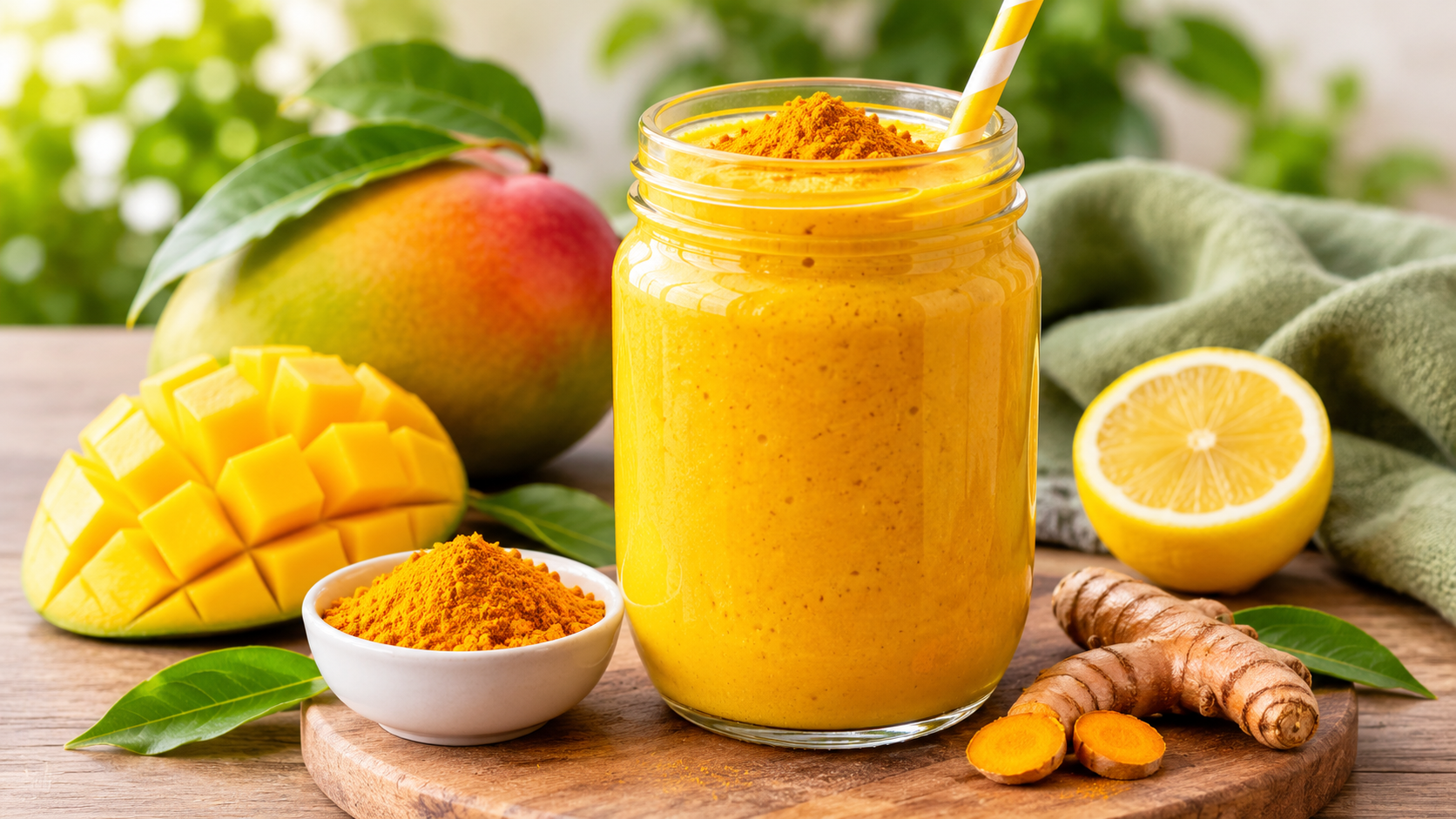
Make this delicious mango turmeric smoothie with fresh mango, turmeric, ginger, and simple ingredients. An easy, refreshing drink with a tropical flavor that’s perfect for your daily routine.
Written by Kalsoom Khan, Founder & Wellness Content Creator, FitHealthyMind,
Looking for a refreshing smoothie that combines tropical mango with the natural goodness of turmeric and ginger? This Mango Turmeric Smoothie is an easy, 5-minute drink made with simple plant-based ingredients.
Sweet mango, warming ginger, turmeric and a pinch of black pepper create a naturally golden smoothie that’s delicious for breakfast or an afternoon snack. It also provides vitamin C, fiber and plant-based antioxidants as part of a balanced diet.
Whether you’re exploring anti-inflammatory eating or simply want a colorful addition to your daily routine, this easy recipe is a great place to start.
Why Mango and Turmeric Make a Delicious Smoothie Combination
Mango and turmeric are a classic pairing in many food traditions, including South Asian cooking, where sweet fruit and warm spices often appear together. In a smoothie, they work well for simple reasons of taste and texture:
- Mango is naturally sweet and creamy. Ripe or frozen mango blends into a thick, silky base without needing much added sugar.
- Turmeric adds an earthy warmth and golden color. A small amount gives gentle spice without overpowering the fruit.
- Ginger adds brightness. Its fresh, zesty bite balances the sweetness.
- A pinch of black pepper rounds out the flavor and, as explained below, is traditionally paired with turmeric.
- Creamy ingredients carry the spices. Yogurt, milk or coconut milk help the flavors blend smoothly.
The result tastes like a tropical lassi with a little spice, and the color alone makes it a cheerful way to start the day.
Recipe Card
Creamy Mango Turmeric Smoothie
| Detail | Info |
|---|---|
| Prep time | 5 minutes |
| Cook time | None |
| Total time | 5 minutes |
| Servings | 2 (about 2 cups / 480 ml total) |
| Course | Breakfast, snack, drink |
| Diet notes | Vegetarian; easily made vegan, dairy-free and gluten-free (check labels) |
Health Benefits of Mango, Turmeric and Ginger
Here is what is known about each ingredient. These are descriptions of nutrients and general research on the ingredients, not claims that this smoothie treats or prevents any health condition. Amounts in a single smoothie are modest, and individual needs vary.
Mango: Vitamin C and Beta-Carotene
Mango is a source of vitamin C, and its orange-yellow flesh contains carotenoids such as beta-carotene, which the body can convert into vitamin A. According to USDA nutrient data, one cup of mango pieces provides roughly 60 milligrams of vitamin C, which is a large share of the daily value for most adults, along with some fiber and folate. Exact values vary with the fruit, so check the USDA FoodData Central database for details.
Vitamin C is needed for normal growth and tissue repair and acts as an antioxidant in the body, according to the National Institutes of Health Office of Dietary Supplements. Vitamin A supports normal vision and immune function. Eating a variety of fruit and vegetables is part of standard healthy eating advice in both the USA and UK.
Mango also contains natural sugars. Whole fruit comes with fiber, but blended fruit is easier to drink quickly, so portion size matters, especially for people monitoring blood sugar.
Turmeric: Understanding Curcumin
Turmeric is a golden-yellow spice made from the root of Curcuma longa. Its main active compound is curcumin, which has been widely studied in laboratories and in clinical trials. A few important points:
- Culinary turmeric contains only a small percentage of curcumin by weight. A pinch or half teaspoon in a smoothie gives far less than the concentrated doses used in many studies.
- Curcumin is poorly absorbed on its own. Research has described curcumin as having low bioavailability, meaning that the body absorbs and keeps little of it.
- Evidence from human studies is limited and mixed. According to the National Center for Complementary and Integrative Health (NCCIH), there is not enough high-quality evidence to support using turmeric or curcumin to treat specific health conditions, and studies often use supplements rather than food amounts.
- Safety: Turmeric as a food spice is generally considered safe. NCCIH notes that high-dose turmeric supplements can cause side effects such as stomach upset, and that there have been rare reports of liver problems linked to turmeric supplements.
In short, turmeric makes a smoothie tasty, colorful and a nice part of a varied diet. It should not be treated as a medicine.
Ginger: Flavor and Antioxidants
Ginger root has a warm, zesty flavor and has been used in cooking and traditional medicine for centuries. It contains natural plant compounds, including gingerols, which have antioxidant properties in laboratory studies. Research suggests ginger may help ease nausea for some people, for example in pregnancy or after chemotherapy when used under medical guidance, but it has not been proven to treat other conditions, and studies often use higher amounts than food. NCCIH describes ginger as generally safe in food amounts, with possible mild side effects such as heartburn or stomach upset at higher doses.
In this smoothie, ginger is mainly there for flavor and freshness.
Black Pepper: Why It Is Included
Black pepper contains piperine. In a small, widely cited human study from 1998, adding piperine to curcumin increased how much curcumin appeared in the blood. That is why turmeric and black pepper are often paired in recipes and supplements. Two cautions apply:
- That study used a specific supplement-level dose of curcumin and piperine. We do not know how much a pinch of pepper changes absorption from a smoothie.
- Piperine can also affect how the body processes some medicines. If you take regular medication, ask your pharmacist or doctor before regularly adding large amounts of black pepper or supplements that contain piperine.
A pinch of black pepper is mostly there for flavor and as a traditional pairing.
Chia Seeds: An Optional Fiber Boost
Chia seeds are small seeds that absorb liquid and become gel-like. They provide fiber, plant-based omega-3 fats (ALA) and some minerals. Adding a tablespoon makes the smoothie slightly thicker and more filling. To help prevent choking and digestive discomfort, let chia seeds soak in the liquid for about 5 minutes or blend them thoroughly, and drink plenty of fluid when you eat more fiber. Chia is optional, and anyone with swallowing difficulties or digestive conditions should check with a healthcare professional first.
How to Make Mango Turmeric Smoothie Step by Step
Step 1: Choose Your Mango
Ripe mango gives the best flavor. A ripe mango yields slightly when pressed and smells sweet near the stem. Frozen mango chunks are a convenient year-round option and make the smoothie thicker and colder without ice.
Step 2: Prep the Spices
Use ground turmeric for the easiest option, or peel a small piece of fresh turmeric root (it stains skin and countertops, so consider gloves). Grate fresh ginger finely so it blends smoothly.
Step 3: Add Liquids First
Pour milk and yogurt into the blender first. Liquid at the bottom helps the blades work and prevents the mango from sticking.
Step 4: Add Mango, Spices and Optional Extras
Add the mango, turmeric, ginger, black pepper and chia seeds (if using).
Step 5: Blend Until Silky
Blend on high for 45 to 60 seconds. Stop and scrape down the sides if needed. For a thinner smoothie, add a splash more milk.
Step 6: Taste and Adjust
If your mango is not very sweet, add a teaspoon of honey, maple syrup or a soaked date. If it tastes flat, add a squeeze of lemon. If the spice is too strong, add more mango or yogurt.
Step 7: Serve Right Away
Pour into glasses. A sprinkle of chia seeds or a thin slice of mango on top makes it look special.
Tips for the Best Creamy Mango Smoothie
- Use frozen mango. It gives the thickest, creamiest result without watering the smoothie down with ice.
- Add a creamy ingredient. Yogurt, coconut milk or a few spoonfuls of silken tofu make the texture silky. A little healthy fat also helps carry the flavor of the spices.
- Start with less turmeric. Half a teaspoon is plenty. Too much can taste bitter or chalky.
- Blend the spices thoroughly. Fine grating and a high-speed blend prevent gritty bits.
- Do not skip the pinch of pepper or the squeeze of lemon. They brighten and balance the flavor.
- Soak chia first. Five minutes in the milk prevents clumping.
- Mind the sweetness. Ripe mango is often sweet enough. Taste before adding sweetener.
- Protect your blender and counters. Turmeric stains plastic and fabric, so rinse the blender right after use.
- Watch portions. A smoothie is a convenient way to eat fruit, but it is easy to drink more than you would eat. UK guidance (NHS) says smoothies count as at most one portion of your 5 A DAY, however much you drink, because blending releases sugars from the fruit.
Easy Mango Turmeric Smoothie Variations
Vegan and Dairy-Free
Use oat, almond, soy or coconut milk and a plant-based yogurt. Check labels to confirm they are fortified and free of added sugar if that matters to you.
Protein-Boosted
Add a scoop of protein powder, a spoonful of nut butter, silken tofu, or use Greek yogurt or skyr. This makes the smoothie more filling.
Tropical Mango-Pineapple
Swap half the mango for pineapple chunks and use coconut water or coconut milk for a vacation-style drink.
Mango Turmeric Lassi
Use a full cup of plain yogurt and a little milk, add a pinch of cardamom, and skip the ginger for a classic lassi-style drink.
Green Golden Smoothie
Add a handful of baby spinach. The mango and turmeric mask the taste and the color becomes a warm green-gold.
Lower-Sugar Version
Use 1 cup of mango, add a handful of cucumber or cauliflower florets (frozen) and extra ginger, and use unsweetened milk. This lowers the sugar and calories while keeping the flavor. Anyone managing diabetes should ask their healthcare team about suitable portions.
Spicy Kick
Add a tiny pinch of cayenne or extra fresh ginger.
Kid-Friendly Version
Use a smaller pinch of turmeric, skip the pepper and ginger if kids do not like heat, and serve it as a “sunshine smoothie”. Check with your pediatrician about suitable ingredients for babies and toddlers.
Smoothie Bowl
Use less milk to make it thicker, pour into a bowl and top with sliced fruit, toasted coconut, seeds or granola.
Nutrition Information
Exact nutrition depends on your mango, milk, yogurt and extras, so treat any numbers as estimates. As a rough guide, a serving made with mango, milk and yogurt provides a moderate number of calories, natural sugars from the fruit, some protein from the dairy or plant-based milk, and vitamin C from the mango.
For accurate calories, carbohydrates, sugar, fiber and vitamin content, enter your exact ingredients into a nutrition calculator or the USDA FoodData Central database, and publish those calculated values on your recipe card.
Nutrition information describes what the food contains. It is not a claim about medical effects.
Who Should Be Careful With Turmeric?
Cooking amounts of turmeric are safe for most people. Higher amounts, especially from supplements, can matter for some. Talk to your doctor or pharmacist before using turmeric regularly or in supplement form if you:
- Take blood thinners or have a bleeding disorder. Turmeric may affect clotting, and ginger may too at higher doses.
- Have gallbladder disease or bile duct problems. Turmeric may stimulate bile flow, and doctors often advise caution.
- Have a history of kidney stones. Turmeric contains oxalates, which can contribute to some kidney stones.
- Take diabetes medicines. Turmeric, ginger and mango all may affect blood sugar, so monitor as advised.
- Have iron deficiency or take iron supplements. Some research suggests turmeric may reduce iron absorption.
- Have liver disease or take medicines that affect the liver. NCCIH notes rare reports of liver problems with turmeric supplements.
- Are pregnant or breastfeeding. Normal food amounts are generally considered fine, but avoid medicinal doses or supplements unless your healthcare provider says otherwise.
- Are scheduled for surgery. Tell your surgeon about turmeric and other supplements you use.
- Take regular medicines. Turmeric and black pepper (piperine) may interact with some medicines.
- Have allergies or sensitivities to mango, spices or ingredients such as dairy or seeds. People who are sensitive to poison ivy may sometimes react to mango peel and sap, so peel mango before eating.
If you notice stomach pain, rash, swelling, yellowing of the skin or eyes, dark urine, or unusual symptoms, stop and seek medical advice.
Why Most “Anti-Inflammatory” Smoothies Don’t Actually Work
Turmeric is everywhere right now — lattes, capsules, smoothies. But there’s a problem most recipes get wrong: curcumin, the active anti-inflammatory compound in turmeric, is poorly absorbed by the body on its own. Studies show that pairing turmeric with black pepper (specifically its compound piperine) can significantly increase curcumin absorption. Skip the black pepper, and you’re mostly wasting the turmeric.
This recipe fixes that. It’s built around one core principle: bioavailability first, flavor second — though it happens to taste incredible too, thanks to sweet mango balancing the earthy turmeric and warming ginger.
The Anti-Inflammatory Science, Ingredient by Ingredient
Turmeric – Contains curcumin, one of the most researched natural anti-inflammatory compounds, linked to reduced markers of oxidative stress and joint discomfort.
Black Pepper – Its piperine content is scientifically shown to dramatically boost curcumin absorption in the body — this is the single most important “hack” in any turmeric recipe.
Ginger – Contains gingerol, a compound with anti-inflammatory and antioxidant effects, and it’s also well known for easing digestive discomfort and nausea.
Mango – A natural source of vitamin C and beta-carotene, both of which support the body’s antioxidant defenses, plus it makes the smoothie naturally sweet without added sugar.
Almond Milk – A light, dairy-free base that carries the fat-soluble curcumin better than water alone, since curcumin absorbs more effectively in the presence of fat.
Love This Soup? Build a Full 12-Week Anti-Inflammatory Routine
Stop juggling recipes, grocery lists and notes in different places. The 12-Week Anti-Inflammatory Life System Dashboard puts your meal plan, shopping lists and symptom tracking in one easy dashboard.
- ✔ Structured 12-week food-focused plan
- ✔ Recipe database and weekly shopping lists
- ✔ Symptom tracker with progress dashboard
- ✔ PDF progress summary and CSV export
- ✔ Your entries stay private in your browser
Get the 12-Week Dashboard – $29 →
Instant digital download • Not medical advice
Want a Beginner-Friendly Anti-Inflammatory Eating Guide?
“The Anti-Inflammatory Diet Guide Without Experience” is a 6-chapter digital eBook (PDF + EPUB) that explains inflammation basics, foods to favor and limit, and includes a 30-day meal plan.
- ✔ 6 chapters in plain language
- ✔ 30-day meal plan included
- ✔ PDF + EPUB, instant access
- ✔ 60-day money-back guarantee
Disclosure: this is an affiliate link. If you buy through it, I may earn a commission at no extra cost to you. For general education only, not medical advice.
Want more than one recipe? Get weekly shopping lists, a recipe database and a symptom tracker in our 12-week dashboard.
Anti-Inflammatory Turmeric Mango Smoothie Recipe
Prep time: 5 minutes | Serves: 1 | Diet: Vegan, gluten-free, dairy-free, refined-sugar-free
Ingredients
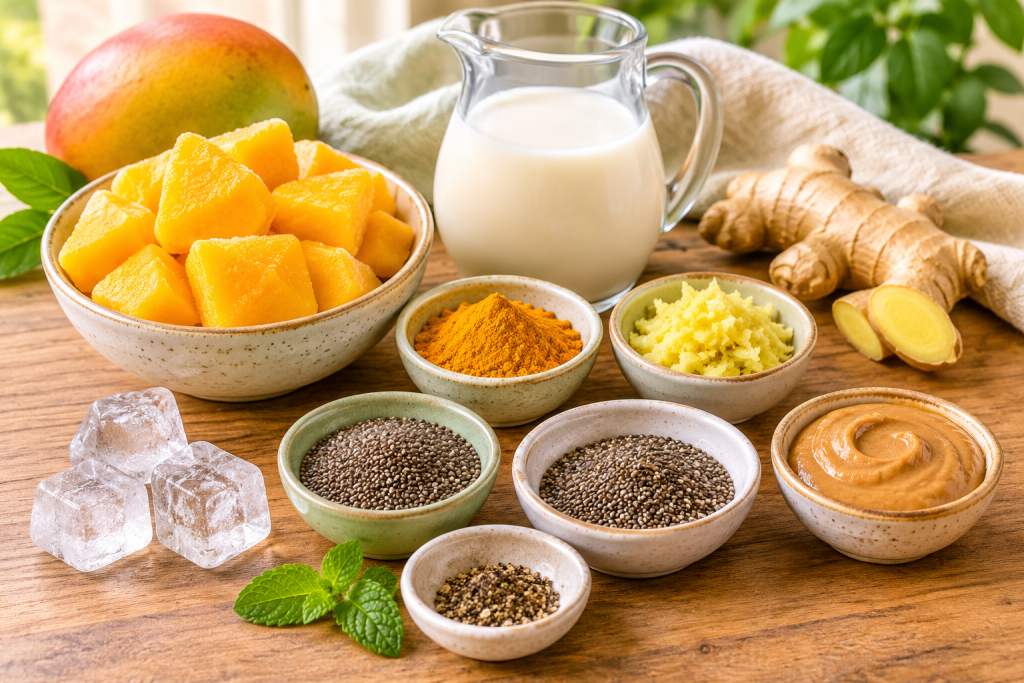
- 1 cup frozen mango chunks
- 1 cup unsweetened almond milk
- ½ teaspoon ground turmeric (or 1-inch fresh turmeric root)
- ½ teaspoon fresh grated ginger
- 1 pinch black pepper (do not skip — this is the absorption key)
- Optional: 1 tsp almond butter for healthy fats and creaminess
- Optional: ½ tsp honey alternative (maple syrup) if you prefer it sweeter
- Optional Add-Ins for Extra Creaminess and Fiber
- 1 teaspoon chia seeds (optional): Adds fiber and plant-based omega-3 fats.
- 1 tablespoon almond butter (optional): Adds healthy fats and makes the smoothie creamier.
- 3–4 ice cubes (optional): Creates a colder, thicker and more refreshing texture.
Instructions
- Add almond milk to the blender first for smoother blending.
- Add frozen mango, turmeric, ginger, and black pepper.
- Blend on high for 45–60 seconds until fully smooth and golden.
- Taste and adjust — add almond butter for creaminess or a touch of maple syrup for sweetness.
- Pour into a glass and serve immediately, ideally with a light dusting of turmeric or cinnamon on top for presentation.
- How to Make Mango Turmeric Smoothie
- Peel and chop the fresh mangoes.
- Add mango, fresh turmeric, lemon juice and water to a blender.
- Add optional chia seeds and almond butter if desired.
- Add 3–4 ice cubes for a thicker, chilled texture.
- Blend until completely smooth and creamy.
- Pour into a glass and enjoy immediately.
Nutrition (approximate, per serving)
- Calories: ~190
- Protein: 3g
- Fiber: 4g
- Vitamin C: ~70% DV
- Sugar: naturally occurring only, no refined sugar
Best Time to Drink It for Inflammation Support
Many people find it most effective in the morning or post-workout, when the body’s inflammatory response from daily stress or exercise is highest. Consistency matters more than timing — drinking it 4–5 times a week shows more benefit than a single glass.
3 Easy Variations
- Extra Anti-Inflammatory Boost: Add a small piece of fresh turmeric root instead of powder for a stronger effect.
- Protein-Packed Version: Add a scoop of unflavored or vanilla plant protein for a post-workout recovery drink.
- Golden Milk Smoothie Bowl: Use less almond milk, blend thicker, and top with granola, chia seeds, and coconut flakes for an Instagram-ready bowl.
Frequently Asked Questions
Why does this recipe include black pepper in a smoothie? Black pepper contains piperine, which research shows can significantly increase how much curcumin (turmeric’s active compound) your body actually absorbs. Without it, most of the turmeric in your smoothie passes through largely unused.
Can I use fresh turmeric instead of powder? Yes — a 1-inch piece of fresh turmeric root works well and can taste slightly more vibrant. Peel it before blending, and wear gloves if you’re sensitive to staining, since turmeric stains easily.
Is this smoothie safe to drink every day? For most healthy adults, yes. If you’re on blood thinners or have gallbladder issues, check with your doctor first, since turmeric in concentrated amounts can interact with certain medications.
Will this smoothie cure my inflammation or arthritis? No single food or drink cures a medical condition. This smoothie is a supportive, food-based habit that may help reduce dietary inflammatory load as part of a broader lifestyle approach — not a replacement for medical treatment.
Can I meal-prep this smoothie? Freeze pre-portioned bags with mango, turmeric, ginger, and pepper measured out. On smoothie day, just add almond milk and blend — saves time without losing freshness.
Turn This Into a Full Anti-Inflammatory Lifestyle, Not Just One Smoothie
One golden smoothie is a great start — but real inflammation relief comes from a system, not a single recipe. Our Anti-Inflammatory Life System Dashboard gives you a complete 30-day framework: daily meal templates, symptom tracking, trigger-food logs, and a personalized reset plan — everything this smoothie is just the first step toward.
Medical Disclaimer
This article is for general educational purposes only and is not medical advice. It does not diagnose, treat, cure or prevent any condition. Nutrition information describes the content of foods and is not a claim that any food or recipe has a medical effect. Research on turmeric, curcumin and ginger is ongoing, and evidence in people is limited. Always consult a qualified healthcare professional, pharmacist or registered dietitian before making changes to your diet or using turmeric, ginger or other supplements, especially if you are pregnant or breastfeeding, have a medical condition, take medication, or are scheduled for surgery. If you have allergies or sensitivities, check ingredient labels. Nutrition values are estimates and vary by ingredient and brand.
Final Thoughts: Enjoy This Golden Mango Smoothie
A mango turmeric smoothie is a simple, colorful way to enjoy fruit and spices in one glass. It is quick to make, easy to customize, and full of flavor. Use ripe or frozen mango for creaminess, a small amount of turmeric and ginger for warmth, and a pinch of black pepper for a traditional touch.
Enjoy it as part of a varied, balanced diet, and remember that it is a food, not a treatment. If you have a health condition or take medication, talk to your healthcare provider about the ingredients that suit you.
Want more simple, healthy recipes? Explore the Healthy Recipes section of FitHealthyMind.com
1 thought on “Mango Turmeric Smoothie Recipe -Healthy & Refreshing”