
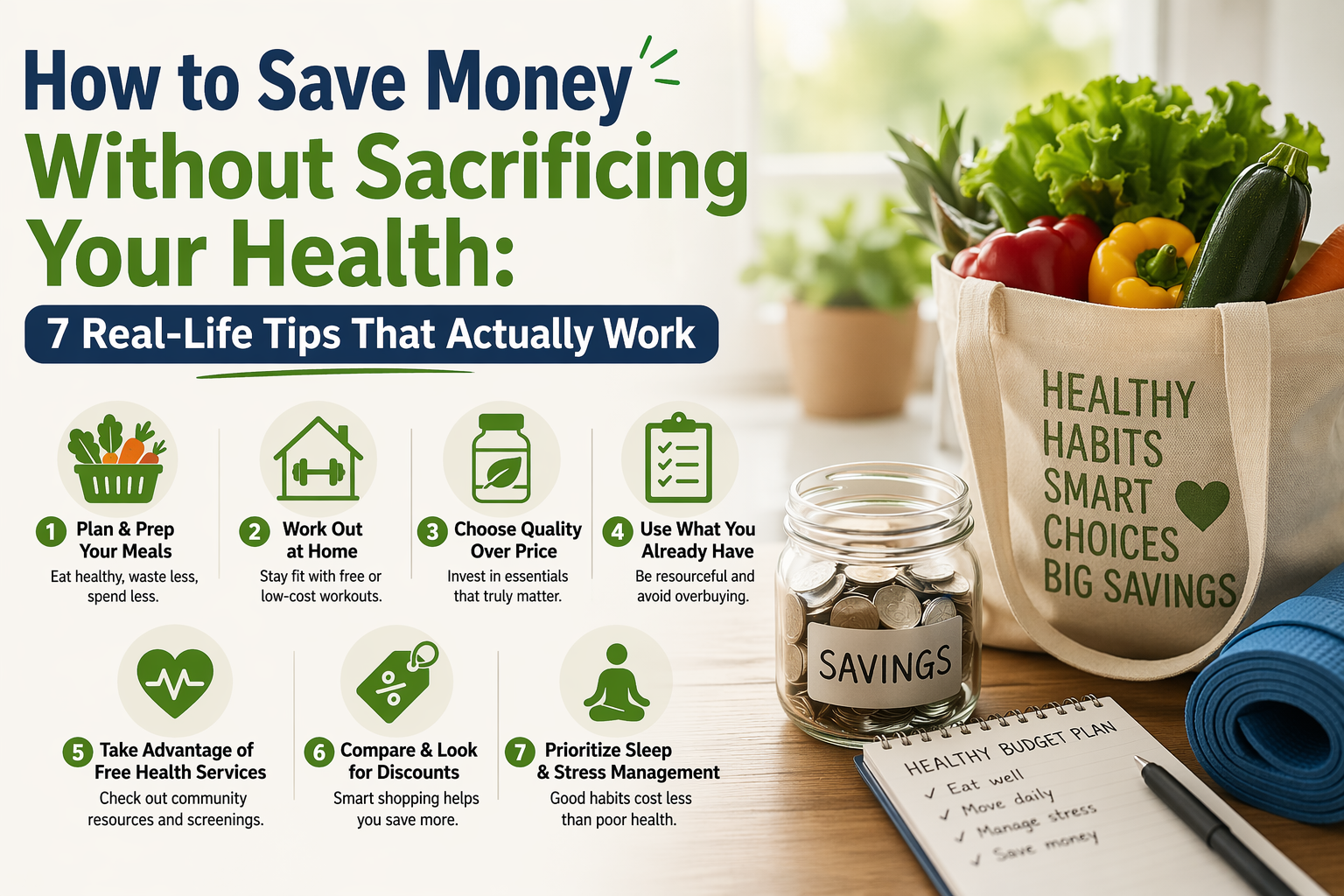
Discover practical ways to save money while staying healthy. From grocery hacks to free fitness tips, learn how to protect your wallet and your well-being in the US, UK, and Canada.
Let’s be honest—times are tough right now.
Whether you’re in New York, London, or Toronto, you’ve probably noticed your bills creeping up while your paycheck stays the same. The instinct might be to cut corners. Maybe skip the gym membership. Buy cheaper, processed food. Delay that doctor’s appointment.
But here’s the truth no one tells you: cutting health costs often leads to much bigger bills later.
The good news? You don’t have to choose between your bank account and your body. After talking to real people across the US, UK, and Canada who’ve mastered this balancing act, I’ve gathered seven practical strategies that protect both your health and your wallet.
Why “Being Cheap” Usually Backfires
Before we dive into the tips, let’s understand a simple human truth.
When money gets tight, we look for quick savings. A £2 loaf of white bread seems smarter than a £3 whole grain loaf. Skipping the £40 monthly gym membership feels like a win.
But here’s what actually happens:
- Poor food choices lead to low energy, brain fog, and eventually, doctor visits
- No physical activity leads to weight gain, back pain, and health conditions
- Skipping preventative care leads to emergency room bills that are 10 times higher
The goal isn’t to be cheap. It’s to be smart with your money while being kind to your body.
Tip 1: Master the Art of Smart Grocery Shopping
Food is our biggest daily expense and our biggest health lever. You don’t need to buy expensive “superfoods” to eat well. Shop the Perimeter, Skip the Middle
In every grocery store from Manchester to Montreal, the layout is the same. The fresh food—produce, meat, dairy—lives on the outside edges. The processed, expensive, less healthy stuff lives in the middle aisles.
Do 80% of your shopping on the perimeter. Your heart and your wallet will thank you.
🔥 Advanced Joint Support
Support healthy joints, reduce discomfort & improve mobility naturally
Embrace Frozen Fruits and Vegetables
Here’s a secret nutritionists don’t shout loud enough: frozen is often fresher than fresh.
Those “fresh” green beans traveled hundreds of miles over several days. Frozen vegetables are picked at peak ripeness and flash-frozen within hours. They cost 30-50% less and last months instead of days.
Cook Once, Eat Twice (or Three Times)
Cooking every single night is exhausting and expensive. You end up ordering takeaway when you’re tired.
Instead, practice “batch cooking.” Make a big pot of chili, soup, or curry on Sunday. Eat it Monday. Freeze portions for next week. You save money, time, and your sanity.
Tip 2: Move Your Body Without Paying a Dime
Gym memberships in cities like London and New York can cost over $100 a month. But your body doesn’t know if you’re in a fancy gym or your living room.
Use What You Already Have
Your body is a piece of gym equipment. It’s called bodyweight training.
Push-ups, squats, lunges, planks, and burpees require zero equipment and zero money. A 20-minute bodyweight workout can be just as effective as an hour in the gym if you do it right.
Walk Like Your Grandparents Did
Before cars and buses, humans walked. Everywhere.
Walking is the most underrated exercise on the planet. It’s free, low-impact, and scientifically proven to improve heart health, mood, and longevity.
Try this: Get off the bus one stop early. Park at the far end of the car park. Take a 15-minute walk after dinner. It adds up.
YouTube is Your Free Personal Trainer
There are thousands of free workout videos on YouTube. Yoga, HIIT, strength training, dance—it’s all there.
Some of the best free channels include:
- Yoga with Adriene (great for beginners)
- FitnessBlender (no-nonsense workouts)
- The Body Coach TV (Joe Wicks, perfect for UK audiences)
Tip 3: Rethink Your Drink
This one simple change can save you hundreds of pounds or dollars a month while dramatically improving your health.
The Expensive Habit You Don’t Notice
A daily coffee shop latte costs between $3-5. Do that five days a week, and you’re spending $60-100 a month. That’s $720-1,200 a year.
A daily soda or energy drink? Same story. Empty calories, empty wallet.
The Simple, Healthy Swap
Water is free (or nearly free) from your tap. In the UK and Canada, tap water is among the safest in the world. In the US, it’s highly regulated.
Add a squeeze of lemon or a few mint leaves if you want flavor. Make your coffee at home. Buy a reusable water bottle.
Your savings: Potentially over $1,000 a year. Your health: Better hydration, less sugar, better sleep.
Tip 4: Prevent Problems Before They Start
This is the most important tip for anyone in the US, UK, or Canada with a tight budget.
The “Pay Now or Pay Later” Truth
Healthcare systems work differently in each country. The NHS in the UK is “free at point of use,” but waiting lists can be long. In the US, a single emergency room visit can bankrupt you. In Canada, you wait for non-emergencies.
In all three countries, prevention is cheaper than treatment.
Small Actions That Prevent Big Bills
- Get your sleep: Poor sleep leads to weak immunity, weight gain, and illness.
- Manage stress: Chronic stress leads to high blood pressure and heart disease. Free stress management? Deep breathing. A walk. Talking to a friend.
- Stay up to date on free screenings: The NHS offers free blood pressure checks at many pharmacies. Many US states offer free health fairs. Use them.
Tip 5: Cook Like Your Grandmother
Before the age of convenience foods, people cooked from scratch. They were healthier and spent less of their income on food.
The Three-Ingredient Rule
A healthy meal doesn’t need twenty exotic ingredients. It needs:
- A protein (beans, eggs, chicken, lentils)
- A vegetable (fresh or frozen)
- A carbohydrate (rice, potatoes, pasta)
That’s it. A bean and vegetable soup with a potato on the side costs pennies and feeds a family.
Learn to Love Leftovers
In the US and UK, we throw away an astonishing amount of food—around £60-80 per month for the average family.
That’s like taking cash from your wallet and putting it directly in the bin.
Strategy: “Eat what you buy” week. For one week, commit to eating everything in your fridge and cupboards before buying more. You’ll get creative, waste less, and save money.
Tip 6: Build a Community, Not Just a Budget
This might sound soft, but it’s pure practicality.
The Power of “We”
Trying to stay healthy alone is hard. Trying to save money alone is also hard.
But when you involve others, magic happens.
Real-World Ideas That Work
- Start a walking group with neighbors or coworkers. Free accountability.
- Do a meal swap with a friend. You make a big pot of soup, they make a big pot of chili. Swap half. Now you both have two meals for the price of one.
- Share bulk buys. Costco and other bulk stores offer great prices, but the portions are huge. Split a bulk buy with a friend.
Tip 7: Track Your Progress (Without Obsessing)
Finally, you need to know if your efforts are working. But tracking doesn’t mean weighing yourself daily or counting every penny obsessively.
Use Simple Tools
Our bodies and our budgets respond to attention.
👉 Use Our Free Weight Loss & Fitness Calculator
This simple tool helps you understand your body’s needs without complicated math. It calculates your daily calorie needs based on your unique stats using the scientific Mifflin-St Jeor equation. It’s completely free, and it helps you align your food choices with your health goals.
Check In, Don’t Stress Out
Once a week, check two things:
- How do you feel? (Energy, mood, sleep)
- How does your bank account feel? (Did you stick to your food budget?)
Adjust as needed. Be kind to yourself.
🌿 Moringa Supplement
100% pure organic superfood — 90+ nutrients, 46 antioxidants, 27 vitamins
Frequently Asked Questions
Is it really cheaper to eat healthy?
Yes, if you do it right. A bag of rice, dried beans, and frozen vegetables costs less than a bag of chips, frozen pizza, and soda. The key is cooking from scratch.
How can I exercise without a gym membership?
Bodyweight exercises, walking, running, YouTube workouts, and community sports are all completely free. You truly don’t need a gym.
What’s the biggest money-waster on health?
Bottled water and daily coffee shop drinks are at the top. Also, paying for gym memberships you don’t use. Cancel what you don’t actually attend.
How do I handle cravings for expensive, unhealthy food?
Plan for them. Allow yourself one treat per week. When you deny yourself completely, you’re more likely to binge. Also, drink water first—thirst often feels like hunger.
Conclusion: You Deserve Both Health and Wealth
Here’s the truth I want you to walk away with:
You don’t have to choose between your health and your money.
The world tries to tell you that wellness is expensive—that you need fancy gyms, organic everything, and expensive supplements. But that’s just marketing.
Real health is simple. It’s walking. It’s cooking. It’s sleeping. It’s community. And all of those things are either free or very cheap.
Start with one tip from this list. Just one. Master it. Then add another.
Your body and your bank account will thank you. And in a year, you’ll look back and realize that the best investment you ever made was in yourself—without going broke in the process.
🌿 Advanced Memory Formula
11 powerful nutrients to support memory, focus & brain health as you age