
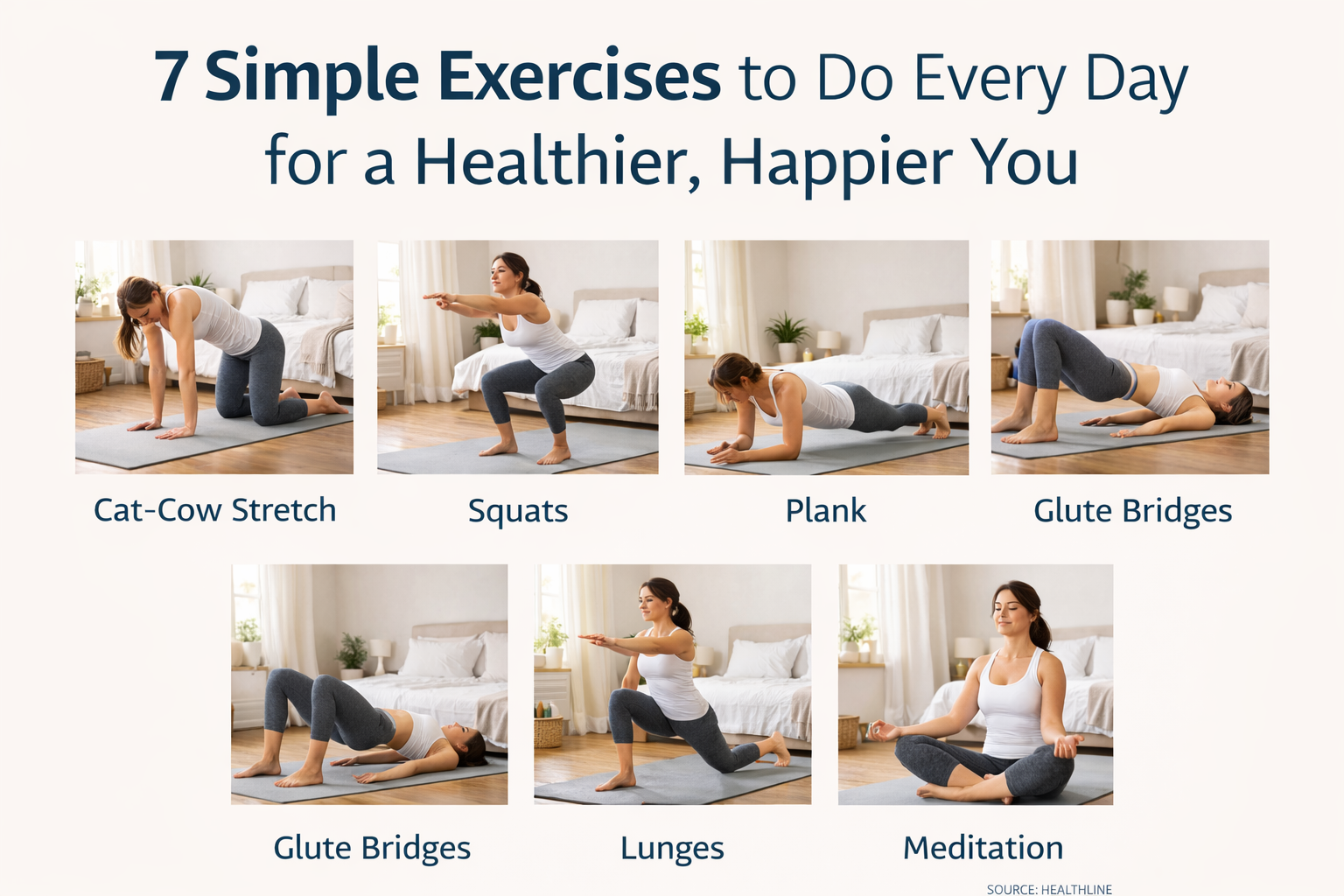
Not sure what to do after waking up? Try these 7 simple morning exercises for energy, strength and flexibility. No equipment, just 15 minutes.
By FitHealthyMind.com Editorial Team | Reading time: about 15 minutes
What should you do right after waking up if you want better fitness? The best answer is a short, gentle routine that wakes up your joints, raises your heart rate slowly, and builds strength without needing a gym.
This guide shares 7 simple morning exercises you can do at home in about 15 minutes, with clear steps, beginner modifications, and a few safety tips. You will also learn when to eat, how long to exercise, and how to turn this into a habit that lasts.
Quick answer: The 7 best morning exercises after waking up are: (1) overhead reach and side bend, (2) cat-cow, (3) bodyweight squats, (4) incline or knee push-ups, (5) glute bridges, (6) bird dog or plank, and (7) marching or jumping jacks. Start with mobility, then strength, then light cardio.
Why Exercise First Thing in the Morning?
Morning exercise is popular for good reasons. Even a short session can change how your day feels, and it removes the most common obstacle to working out: running out of time or energy later.
It Helps You Be Consistent
By mid-afternoon, work, family, and unexpected tasks often take over. If exercise happens first, nothing can get in the way. Many people find that morning workouts are the easiest to turn into a daily habit.
It Can Boost Energy and Focus
Gentle movement increases blood flow and encourages deeper breathing. Many people feel more alert and ready after a short routine, even before their first coffee. Individual experiences vary.
It Supports Mood
Regular physical activity is associated with better mood and lower stress. A few minutes of movement can set a calmer, more positive tone for your day.
It Eases Morning Stiffness
After hours of lying down, your joints and muscles may feel tight. Mobility exercises and light movement help you feel looser and move more comfortably.
It Builds Strength and Fitness Over Time
Working out each morning adds up. Health organizations such as the World Health Organization recommend adults aim for at least 150 minutes of moderate activity per week, plus muscle-strengthening exercises on two or more days. A short daily routine helps you work toward those targets.
Before You Start: Safety and Setup
Talk to a Professional if Needed
If you have a medical condition, an injury, joint or heart concerns, or are pregnant, speak with your healthcare provider before starting a new exercise routine. This article is educational and is not personal medical advice.
Wake Up Your Body Gently
Your body is cooler and stiffer right after you wake. Spend a minute walking around, drinking water, and taking a few slow breaths before the first exercise.
What You Need
- A clear space about the size of a yoga mat
- A mat, towel, or carpet (optional)
- Comfortable clothes and supportive shoes or bare feet on a non-slip surface
- A glass of water
- A timer (optional)
Intensity Guide
Aim for a 4 to 6 out of 10 effort. You should be able to speak in short sentences. If you feel sharp pain, chest pain, severe dizziness, or unusual shortness of breath, stop and seek medical advice.
The 7 Best Morning Exercises After Waking Up
The exercises move from gentle mobility to strength to light cardio, so your body warms up progressively.
Track Your Daily Habits With Streakify AI
Stop guessing what works. Track your daily routines, build powerful streaks and stay consistent with a clean, modern habit tracker made for fitness, wellness and self-improvement.
- ✔ Editable HTML planner
- ✔ Printable and mobile friendly
- ✔ Instant digital download
- ✔ No subscription required
One-time purchase • Instant access
Want to see real progress? Track your daily habits and build streaks with Streakify AI, our premium habit tracker.
Download the Free Printable Habit Tracker
Start building healthy habits today. Print it, hang it up and tick off each day. No sign-up needed.
Want streaks, tracking and more? Try Streakify AI Premium.
1. Overhead Reach and Side Bend
Targets: Shoulders, spine, sides of the torso
How to do it:
- Stand with feet hip-width apart.
- Inhale and raise both arms overhead.
- Press your palms together or interlace your fingers.
- Exhale and lean gently to the right. Return to center and lean left.
- Repeat 5 times each side, moving slowly with your breath.
Why it helps: This classic wake-up move lengthens the whole body and encourages deeper breathing.
Beginner tip: Keep your hips level and your shoulders relaxed.
2. Cat-Cow
Targets: Spine, neck, core
How to do it:
- Start on hands and knees, wrists under shoulders and knees under hips.
- Inhale and let your belly drop as you lift your chest (cow).
- Exhale and round your spine toward the ceiling (cat).
- Repeat slowly for 8 to 10 rounds.
Why it helps: It loosens a stiff back and prepares your spine for the exercises ahead.
Beginner tip: Pad your knees with a folded towel if needed.
3. Bodyweight Squats
Targets: Quads, glutes, hamstrings, core
How to do it:
- Stand with feet slightly wider than hip-width and toes turned out a little.
- Push your hips back and bend your knees as if sitting into a chair.
- Keep your chest lifted and your knees in line with your toes.
- Press through your heels to stand.
- Do 10 to 12 repetitions.
Why it helps: Squats train the largest muscles in your lower body and mirror everyday movements like standing up from a chair.
Beginner tip: Squat down to a chair and lightly tap it, then stand.
4. Incline or Knee Push-Ups
Targets: Chest, shoulders, triceps, core
How to do it:
- Place your hands on a sturdy counter, bench, or the floor, slightly wider than shoulder-width.
- Keep your body in a straight line from head to heels (or knees).
- Lower your chest toward your hands, then press back up.
- Do 6 to 10 repetitions.
Why it helps: Push-ups build upper-body strength and core stability with no equipment.
Beginner tip: The higher the surface, the easier the exercise. Start high and work your way down.
5. Glute Bridges
Targets: Glutes, hamstrings, lower back, core
How to do it:
- Lie on your back with knees bent and feet flat, hip-width apart.
- Press through your heels and lift your hips until your body forms a line from shoulders to knees.
- Squeeze your glutes for a second, then lower slowly.
- Do 10 to 15 repetitions.
Why it helps: Many of us sit for long periods, which can leave the glutes underused. Bridges wake them up and support your hips and lower back.
Beginner tip: Keep your ribs down and avoid arching your lower back at the top.
6. Bird Dog (or Plank)
Targets: Core, back, glutes, shoulders
How to do it (bird dog):
- Start on hands and knees.
- Extend your right arm forward and left leg back, keeping your hips level.
- Hold for 2 to 3 seconds, then return and switch sides.
- Do 6 to 8 repetitions per side.
Plank option: Hold a forearm or knee plank for 15 to 30 seconds, keeping a straight line from head to hips to knees or heels.
Why it helps: A strong core supports your posture and protects your back.
Beginner tip: Move slowly and focus on stability rather than speed.
7. Marching in Place or Jumping Jacks
Targets: Heart, lungs, legs, full body
How to do it:
- March in place, lifting your knees comfortably and swinging your arms.
- For more challenge, step wide side to side while raising your arms overhead, or do jumping jacks.
- Continue for 45 to 60 seconds.
Why it helps: Light cardio gets your heart rate up and finishes your routine with an energy boost.
Beginner tip: Choose the low-impact marching version if you have sensitive knees or joints.
Your 15-Minute Morning Workout (Full Routine)
Use this table as a quick reference.
| Order | Exercise | Reps or Time | Rest |
|---|---|---|---|
| 1 | Overhead Reach and Side Bend | 5 per side | None |
| 2 | Cat-Cow | 8 to 10 rounds | None |
| 3 | Bodyweight Squats | 10 to 12 | 30 sec |
| 4 | Incline or Knee Push-Ups | 6 to 10 | 30 sec |
| 5 | Glute Bridges | 10 to 15 | 30 sec |
| 6 | Bird Dog (or Plank) | 6 to 8 per side (or 20 sec) | 30 sec |
| 7 | Marching or Jumping Jacks | 45 to 60 sec | 30 sec |
How to progress: Complete the circuit once in your first week. In week two, do two rounds. In weeks three and four, add a few repetitions or try a harder variation.
Short on time? Do the 5-minute version: Overhead Reach, Cat-Cow, Squats, and Marching.
Quick Cool-Down
Finish with 2 to 3 minutes of gentle stretching and slow breathing.
- Child’s pose: 30 seconds
- Standing forward fold with soft knees: 20 seconds
- Chest opener (hands clasped behind back): 20 seconds
- Deep breathing: 5 slow breaths
7-Day Morning Exercise Plan
- Day 1: Exercises 1 to 4, one round
- Day 2: Exercises 4 to 7, one round
- Day 3: Full routine, one round
- Day 4: Active rest: a 10-minute walk and gentle stretching
- Day 5: Full routine, two rounds if comfortable
- Day 6: Full routine, one round plus a 10-minute walk
- Day 7: Rest or light movement. Note how your energy and strength feel compared with Day 1.
Tip: Rate your energy from 1 to 10 each morning. Tracking makes progress visible.
Should You Eat or Drink Before a Morning Workout?
Water First
You may be slightly dehydrated after sleeping. A glass of water before exercise is a simple, helpful habit.
Eating Before Exercise
For a short, gentle routine like this one, many people feel fine exercising before breakfast. If you feel lightheaded or low on energy, try a small snack such as a banana, a few dates, or a slice of toast 20 to 30 minutes before.
After Your Workout
Have a balanced breakfast with protein, whole grains, fruit, or vegetables. Examples include eggs and whole-grain toast, oatmeal with nuts and berries, or yogurt with fruit.
Coffee or Tea
Caffeine can help some people feel more alert, while others feel jittery on an empty stomach. Do what feels comfortable for you.
If you have diabetes or another medical condition that affects blood sugar, ask your healthcare provider how to time food and exercise.
Morning vs. Evening Workouts
There is no single best time to exercise. The best time is the one you will do consistently.
| Factor | Morning | Evening |
|---|---|---|
| Consistency | Fewer interruptions | More chances of skipping |
| Energy | May feel stiffer at first | Body is usually warmer |
| Stress | Starts the day calm | Helps release daily stress |
| Sleep | Rarely affects sleep | Very intense workouts late may affect sleep for some people |
If you are not a morning person, begin with just 5 minutes and build slowly.
Common Morning Workout Mistakes
Skipping the Warm-Up
Jumping straight into hard exercise while stiff can increase the chance of strain. Start with mobility and light movement.
Going Too Hard Too Soon
Morning exercise should energize you, not exhaust you. Keep the intensity moderate, especially in the first weeks.
Forgetting to Hydrate
Drink water before and after your routine.
Sacrificing Form for Speed
Slow, controlled repetitions are safer and more effective than rushing.
Not Getting Enough Sleep
Exercise is not a replacement for rest. Most adults need around 7 or more hours of sleep. Going to bed earlier makes morning workouts far easier.
Expecting Overnight Results
Many people notice better energy and mood within a couple of weeks, while strength and fitness gains build over several weeks. Be patient.
Doing Nothing on Low-Energy Days
On tired days, do a shorter version instead of skipping completely. Five minutes is still a win.
How to Build a Morning Exercise Habit
- Prepare the night before. Lay out your clothes and mat.
- Keep it small. Commit to 5 minutes at first. Most days you will continue.
- Anchor it to an existing habit. For example: wake up, drink water, then exercise.
- Go to bed on time. Sleep is the foundation of morning energy.
- Put your alarm across the room. Getting up to turn it off breaks inertia.
- Track your streak. Cross off each completed day on a calendar.
- Make it enjoyable. Use upbeat music or a favorite podcast.
- Be flexible. If you miss a day, restart the next morning without guilt.
Modifications for Different Needs
If You Have Sensitive Joints
Choose low-impact versions: marching instead of jumping, chair squats instead of full squats, and incline push-ups against a wall.
If You Are Very Stiff
Spend extra time on cat-cow and overhead reaches, and keep movements small at first.
If You Have Limited Space
All these exercises fit in a small area. Do them beside your bed if necessary.
If You Are Older or Returning After a Break
Start slowly, hold a sturdy chair or wall for balance, and consult your doctor if unsure.
If You Want More of a Challenge
Add a second or third round, slow the tempo, add pauses at the bottom of squats, use dumbbells or resistance bands, or try full push-ups and planks.
Introduction
7 Simple Exercises to Do Every Day for a Healthier You
If you want to feel energized throughout the day, try these 7 simple exercises after waking up in the morning. No equipment needed, no gym required – just 10 minutes of gentle movement that will transform how you feel.
In today’s fast-paced lifestyle, staying fit and active has become more important than ever. Long working hours, excessive screen time, and lack of physical activity have led to common problems like weight gain, low energy, and other health issues.
The good news is that you don’t need to spend hours in the gym to stay healthy. Just 15–20 minutes of daily exercise can make a significant difference in your physical and mental well-being.
Simple bodyweight exercises can easily be done at home without any expensive equipment. If you stay consistent, even a short daily workout routine can deliver long-term health benefits.
Let me ask you something.
When was the last time you moved your body just because it felt good?
Not because you were trying to burn calories. Not because you were punishing yourself for that extra slice of pizza. Just… moved. Because it felt like the most natural thing in the world.
If you’re struggling to remember, you’re not alone. Somewhere between desk jobs, family obligations, and the endless scroll on our phones, we forgot that our bodies were designed to move. Every single day.
The good news? It doesn’t take much to remind them.
You don’t need a gym membership. You don’t need expensive equipment. You don’t even need much time. What you need is a handful of simple movements that work with your body, not against it.
These seven exercises are the ones I’d teach my own grandmother. The ones I’d recommend to a busy parent in London, a stressed office worker in Toronto, or a retiree in Florida who just wants to keep up with their grandkids.
They’re safe. They’re effective. And best of all, they feel good.
Let’s walk through them together.
A quick note before we start: Listen to your body. If something hurts (not just aches, but actually hurts), ease up. This isn’t about pushing through pain. It’s about building a relationship with your body that lasts a lifetime.
1. The Cat-Cow Stretch: Wake Up Your Spine
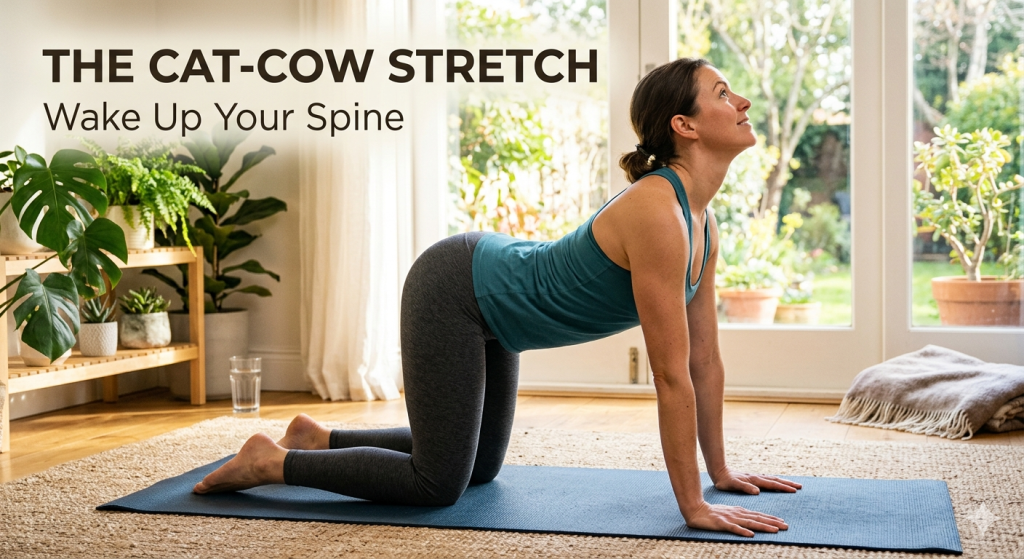
Let’s start on the floor, on all fours. This is where we begin most mornings in my house, and honestly, it’s the best way to greet the day.
Find a soft surface—a carpet, a yoga mat, even a towel will do. Get on your hands and knees, with your wrists directly under your shoulders and your knees under your hips. Let your back be neutral, like a table.
Now, take a slow breath in.
As you inhale, let your belly drop toward the floor. Lift your chin and your chest, let your tailbone point up toward the ceiling. This is the “cow” part. Feel the front of your body open up.
Then, exhale slowly.
Round your spine toward the ceiling like an angry cat. Tuck your chin toward your chest, tuck your tailbone under, and let your back create a beautiful arc. Feel the stretch along your entire back.
Move slowly between these two positions, letting your breath guide you. Inhale, cow. Exhale, cat.
Do this five or six times, and I promise you, your spine will thank you. After a night of sleeping or a day of sitting, this movement brings life back to your back. It releases tension, improves flexibility, and just feels… right.
2. The Glute Bridge: Wake Up Your Backside
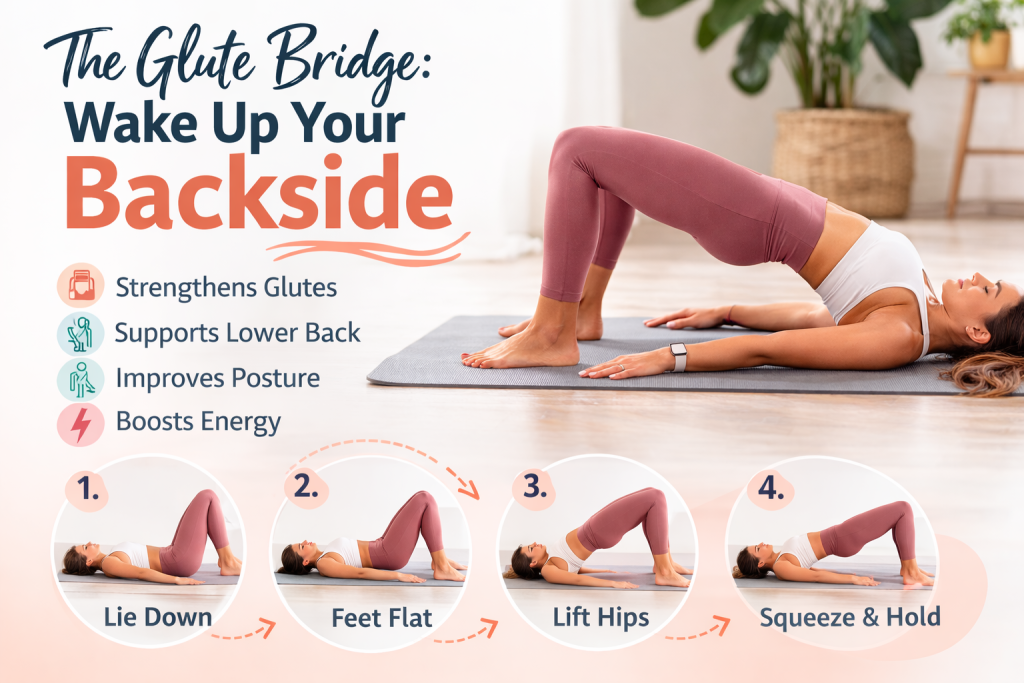
Now roll onto your back. Bend your knees and plant your feet flat on the floor, about hip-width apart. Let your arms rest alongside your body, palms facing down.
This next one is for all of us who sit too much.
Press through your feet and lift your hips toward the ceiling. Really squeeze your glutes—the muscles in your backside—at the top. Your body should form a straight line from your shoulders to your knees.
Hold for a second. Feel that? That’s your body remembering how to use muscles that spend all day compressed in a chair.
Then lower back down with control.
Here’s the thing about glutes: they’re the biggest, strongest muscles in your body. When they’re weak, your lower back takes the hit. Your knees take the hit. Everything hurts more than it should.
Do ten of these, nice and slow. On the last one, hold at the top for five seconds and just breathe. Your body is stronger than you think.
3. The Bird-Dog: Balance and Stability
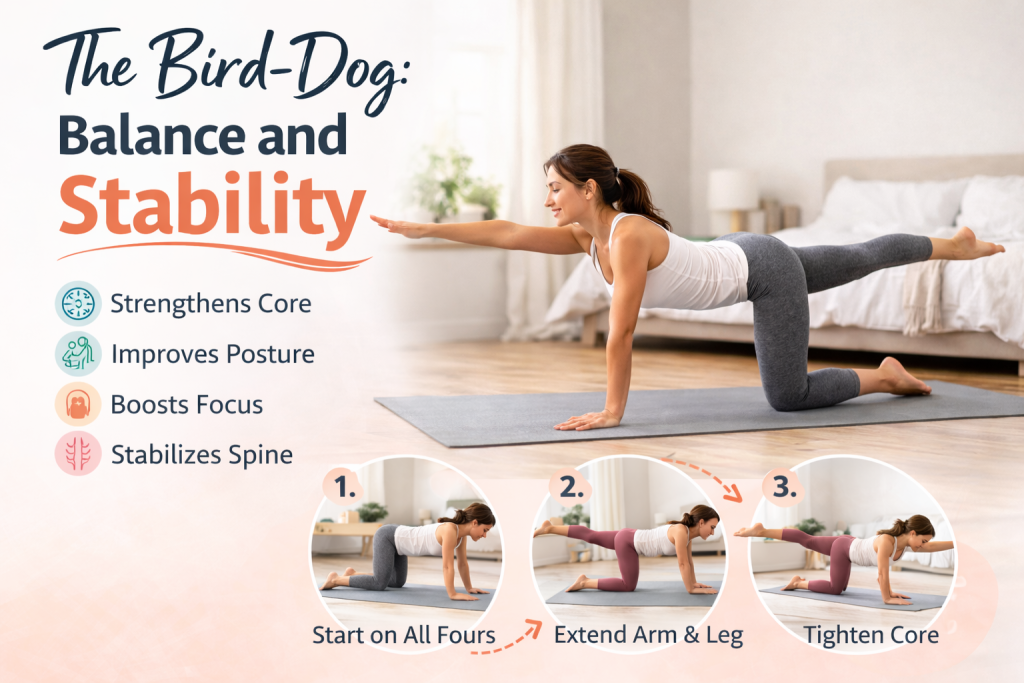
Stay on your hands and knees for this one, back in that tabletop position.
This exercise looks simple, but it’s sneaky hard. And that’s exactly why we need it.
Slowly reach your right arm straight out in front of you, while simultaneously extending your left leg straight back. Keep your hips level. Don’t let them tilt open. Imagine you’re balancing a cup of tea on your lower back.
Pause here for a moment. Feel the muscles in your core and back working to keep you steady.
Then, with control, bring your elbow and knee back in to touch beneath your belly. Then extend again.
Do this five times on one side, then switch to the other arm and leg.
What’s beautiful about this movement is that it teaches your body to work as one unit. Your back, your core, your glutes, your shoulders—all communicating, all coordinating. This is how we move through life. Not in isolation, but together.
4. The Wall Angel: Open Your Chest
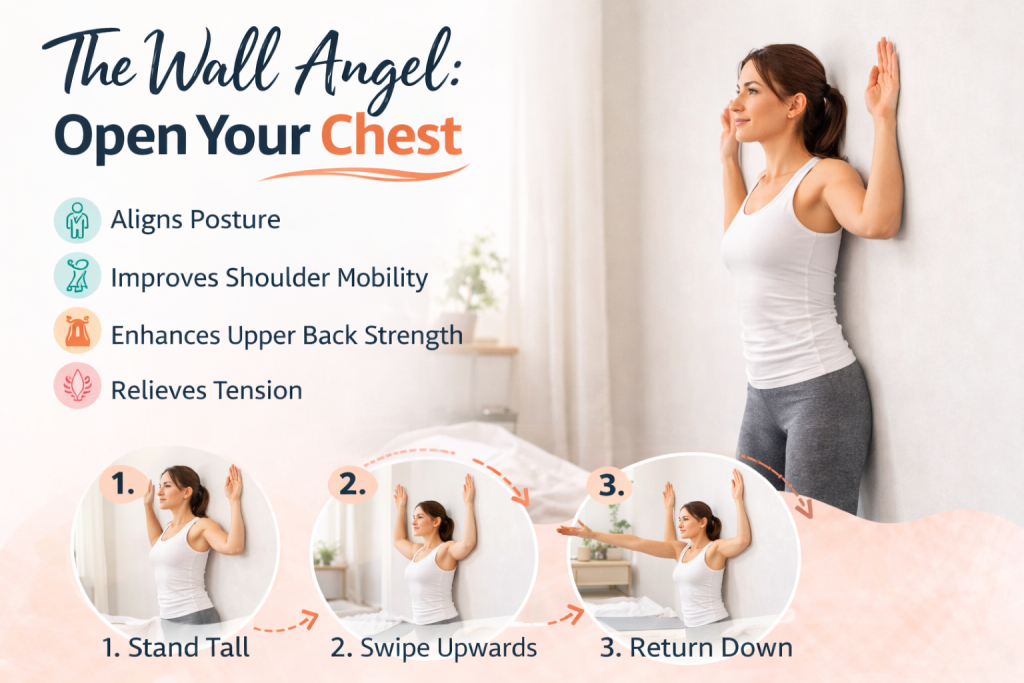
Okay, stand up for this one. Find a wall.
Stand with your back against it, feet slightly away from the wall. Press your lower back into the wall if you can. Now bring your arms up to a goalpost position—elbows bent at 90 degrees, backs of your hands against the wall.
Here’s where it gets real.
Slowly slide your arms up the wall as high as you can without letting your lower back peel away. Keep your wrists, elbows, and the backs of your hands in contact with the wall the whole time.
Then slide them back down.
If this feels impossible, you’re not alone. Years of hunching over phones and computers have made our chests tight and our upper backs weak. This exercise gently reverses that damage.
Do this eight times, going only as high as you can while staying in contact with the wall. Over time, you’ll go higher. Your shoulders will thank you, and you might even find yourself standing a little taller throughout the day.
5. The Bodyweight Squat: The Most Natural Movement
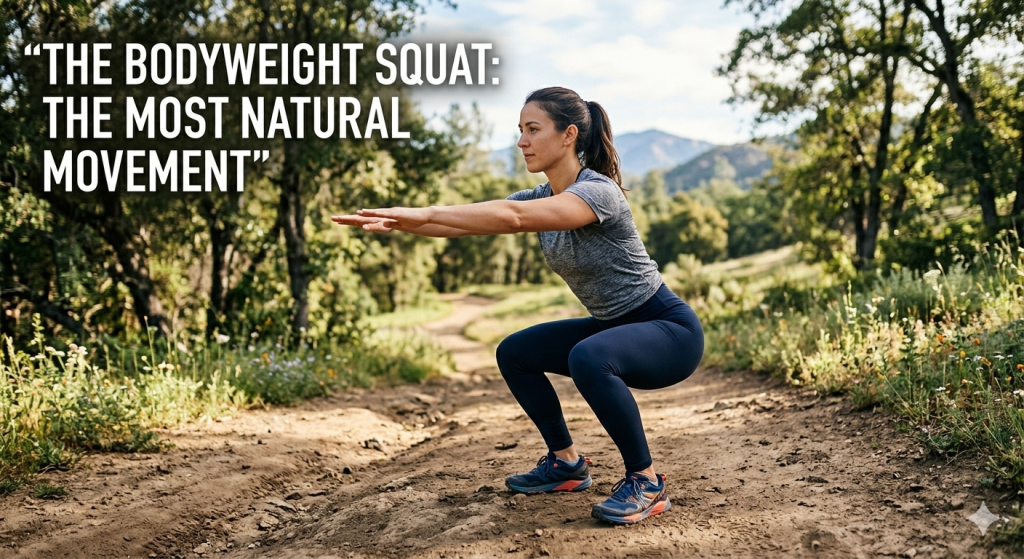
Step away from the wall and stand with your feet about shoulder-width apart, toes turned slightly out.
The squat is the most fundamental human movement. It’s how we sit, how we rise, how we play with kids, how we garden. And yet, so many of us have lost the ability to do it well.
Lower yourself down as if you’re sitting in an invisible chair. Keep your chest up, your weight in your heels. Go as deep as you comfortably can—even if that’s just a few inches.
Then drive through your heels to stand back up.
If you need to hold onto something for balance, do it. A doorframe, a counter, the back of a sturdy chair. There’s no shame in support.
Do ten of these, focusing on moving slowly and with control. Feel your thighs and glutes working. Feel your ankles and hips bending. This is movement the way it was meant to be.
Frequently Asked Questions
What exercises should I do right after waking up?
Gentle mobility moves such as overhead reaches and cat-cow, followed by simple strength exercises like squats, push-ups, and glute bridges, and finishing with light cardio such as marching or jumping jacks. The routine above combines all of these in about 15 minutes.
Is it good to exercise right after waking up?
For most healthy people, yes, as long as you warm up gently and keep the intensity moderate. Drink some water first and listen to your body.
How long should a morning workout be?
Ten to twenty minutes is plenty for most beginners. Even five minutes is beneficial if you are short on time.
Is it better to exercise before or after breakfast?
Both are fine. Many people prefer light exercise before breakfast, while others prefer a small snack first. Choose what feels best, and speak with a healthcare professional if you have blood sugar concerns.
Can morning exercise help me lose weight?
It can support weight management as part of a healthy lifestyle that includes balanced eating and enough sleep. Morning exercise does not guarantee weight loss on its own, and results vary.
How many days a week should I do morning exercises?
Three to five days a week is a good target for most people, with rest or light activity days in between. Some people enjoy gentle movement every day.
Do I need equipment for morning exercises?
No. All 7 exercises in this guide use only your bodyweight. A mat and a sturdy chair or counter can make them more comfortable.
What if I feel dizzy when I exercise in the morning?
Slow down, sit, and drink water. Rise slowly from lying or bending positions. If dizziness continues or is severe, stop exercising and consult a healthcare professional.
How long until I see results?
Many people notice better energy and mood within a couple of weeks. Strength and fitness improvements often become noticeable in four to eight weeks, depending on consistency.
Should I stretch before or after exercise?
Use gentle dynamic movements, like the first two exercises in this routine, before you begin. Save longer static stretches for the cool-down.
Is morning exercise better than evening exercise?
Neither is universally better. Morning workouts may be easier to stick with, while evening workouts may feel easier on a warmer body. The best time is the one you will actually do.
Can I do these exercises if I am not a morning person?
Yes. Start with a very short routine, go to bed a little earlier, and increase gradually. Your body adapts to a new routine over a few weeks.
Final Thoughts
You do not need a gym, expensive equipment, or an hour of free time to improve your fitness. These 7 morning exercises after waking up take about 15 minutes, build mobility, strength, and stamina, and help you start each day with energy and intention.
Start with the 5-minute version if you need to, follow the 7-day plan, and build up gradually. Consistency matters far more than intensity. Tomorrow morning, take a sip of water, roll out your mat, and begin with the first exercise.
Want more simple fitness and wellness guides? Explore FitHealthyMind.com for beginner workouts, stretching routines, and healthy habits you can start at home.
Disclaimer: This article is for general educational purposes only and does not replace advice from a qualified healthcare professional. Consult your doctor before starting any new exercise program, especially if you have a medical condition, an injury, or are pregnant.