
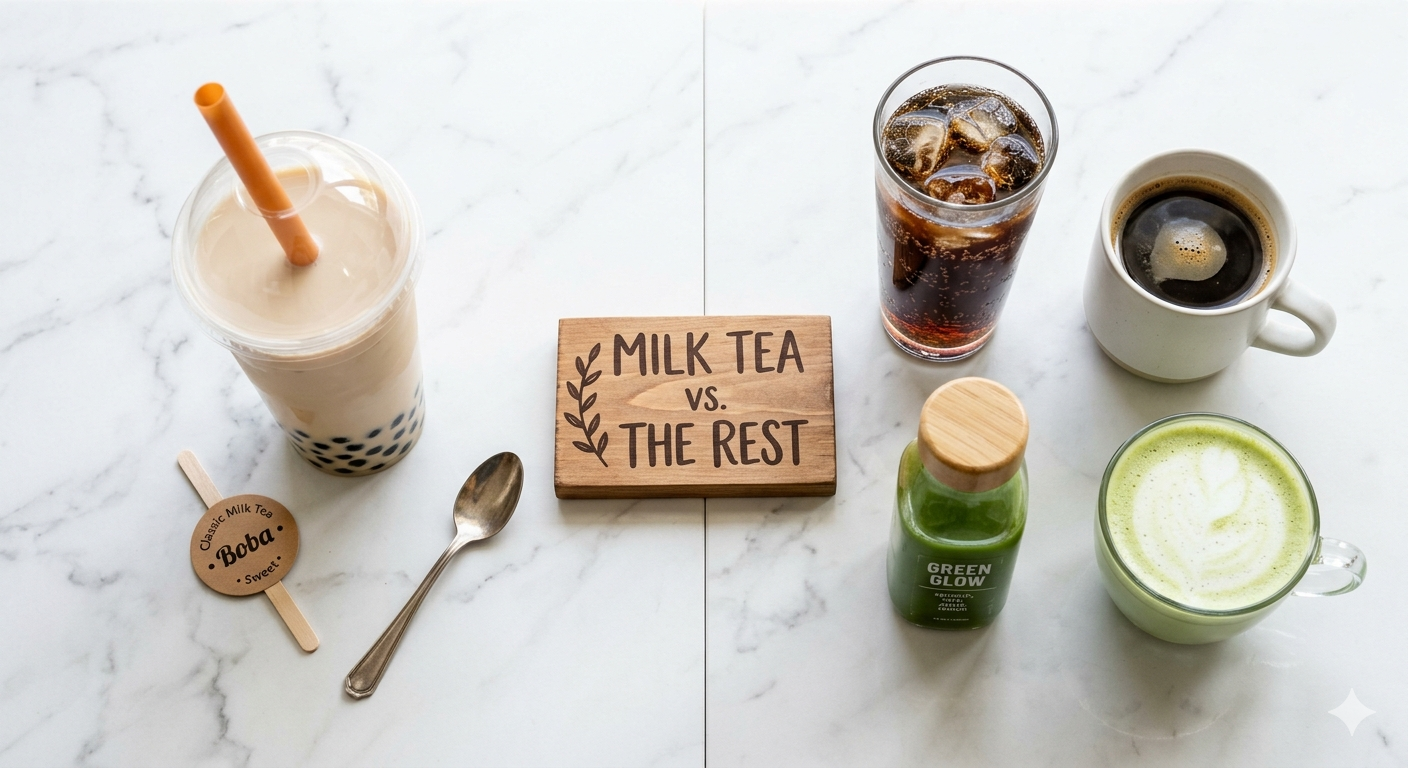
Love milk tea but worried about its health impact? Compare milk tea with soda, coffee, green juice, and matcha. Plus, get tips to enjoy it smarter—and free tools to track your health.
Let me tell you about my drink order shame.
I love milk tea. The creamy sweetness, the chewy pearls, that moment when the giant straw breaks through the plastic seal—it’s pure joy. But for the longest time, I felt guilty ordering it. I’d see the green juice crowd with their smug, glowing skin, and I’d wonder if my boba habit was slowly sabotaging my health.
Then I started digging into the data. Is milk tea really worse than that double-shot caramel latte? What about a can of soda, or that fancy matcha latte everyone orders? And is there a way to enjoy milk tea without the side of guilt?
Here’s what I discovered. The answer isn’t a simple “good” or “bad.” It’s about context, choices, and what you’re comparing it to.
First, What’s Actually in Your Cup?
To compare milk tea to other drinks, we need a baseline. A standard 16-ounce (grande) milk tea with tapioca pearls typically contains:
| Nutrient | Amount |
|---|---|
| Calories | ~300-450 |
| Sugar | 30-50g |
| Caffeine | 50-100mg |
| Fat | 5-15g |
| Protein | 2-8g |
The wide range depends on the type of milk (whole milk, non-dairy creamer, oat milk), the amount of sweetener, and whether you add pearls.
Two big things to note:
- The sugar is significant. The American Heart Association recommends no more than 25g per day for women and 36g for men. One milk tea can blow past your entire daily allowance.
- The tea brings real benefits. Real brewed tea contains antioxidants called flavonoids, which research suggests can lower the risk of heart disease and certain cancers.
So, milk tea isn’t a “health drink.” But is it worse than the alternatives? Let’s look.
The Shockingly Honest Comparison: Milk Tea vs. 5 Popular Beverages
Let’s stack them up side-by-side, based on a standard “as-purchased” serving from a typical shop.
| Beverage (16 oz) | Approx. Calories | Approx. Sugar | Key Pros | Key Cons |
|---|---|---|---|---|
| Milk Tea (with pearls) | 300-450 | 30-50g | Contains tea antioxidants; source of calcium if made with milk | Very high in added sugar and calories; pearls are pure starch |
| Soda (Coke/Pepsi) | 200 | 44g | None | Liquid sugar, zero nutrients, linked to metabolic disease |
| Frappuccino / Caramel Latte | 350-500 | 40-60g | Source of calcium & protein from milk | Essentially a dessert; very high in sugar and calories |
| Green Juice (Pressed) | 150-250 | 20-40g | Rich in vitamins, minerals, and antioxidants | Often high in natural sugar (fructose), zero protein, no satiety |
| Matcha Latte (with oat milk) | 250-350 | 25-45g | High in antioxidants (EGCG), provides calm focus | Can be high in sugar depending on preparation; expensive |
| Black Coffee (plain) | 5 | 0g | Antioxidants, zero calories, improves focus | Can cause jitters; no nutrients |
The Verdict: A standard milk tea is not the worst choice on this list—it’s roughly comparable to a sugary coffee drink. But it’s also not a “smart” choice compared to plain coffee or unsweetened tea. The key difference? Customization.
The Winner: Why Milk Tea Has a Secret Advantage Over Soda and Juice
Unlike a can of Coke or a pre-bottled Frappuccino, milk tea is customizable.
- You can ask for “30% sugar” or “less sugar.” Most shops let you do this. Your taste buds will adjust in a week.
- You can choose your milk. Switch from non-dairy creamer (which has trans fats) to fresh milk, or even unsweetened oat milk.
- You can go light on the pearls. Ask for half the usual serving of tapioca pearls, or swap them for a lower-calorie topping like grass jelly (herbal jelly) or aloe vera.
This ability to tweak the recipe means you can turn milk tea from a sugar bomb into a reasonable treat. You can’t do that with a bottle of Snapple or a Naked Juice.
The “Golden Rule” for Enjoying Milk Tea
Alright, after all this research, here is my personal, two-part “golden rule” for enjoying milk tea without guilt:
Rule 1: Make it an “80/20” drink. If you’re drinking milk tea every day, switch to a “lean” version (see tips below). If you’re having a “full-sugar, full-pearl” version, make it a once-a-week treat.
Rule 2: Track it like a meal. A 400-calorie milk tea is a meal’s worth of energy. Don’t drink it “on top of” your normal eating. Have it instead of a snack, or account for it in your daily food log.
How to Order a “Lean” Milk Tea (Your New Default)
Want the flavor without the sugar crash? Use these scripts at the counter:
The “Lean” Order:
“I’ll have a medium [Black/Jasmine] milk tea with 30% sugar, regular milk, half pearls, and no additional syrup.”
The “Green” Order (Lowest Calorie):
“I’ll have a medium green tea with zero sugar, light oat milk, and grass jelly instead of pearls.”
You’ll save 150-200 calories and cut sugar by over half.
Track Your Progress with These Free Tools
Enjoying treats like milk tea is all about balance. These tools help you stay on top of your overall health without giving up the things you love.
📊 Vitalis Dashboard – Track Your Daily Intake
Log your meals, drinks, steps, and sleep. See how one milk tea fits into your daily calorie and sugar goals.
👉 Visit Your Vitalis Dashboard
🔥 RoutineFlow AI – Build Healthy Habits
Set a daily reminder to drink water before your milk tea, or track your “treat day” streaks. Small reminders, big results.
👉 Start Your Streak with RoutineFlow AI
⚡ Streakify AI – Track Multiple Habits
Monitor your daily sugar intake, water consumption, and even how often you choose the “lean” milk tea option.
👉 Build Your Streak with Streakify AI
✅ Habit Tracker – Simple Daily Check-ins
Log your drinks and meals with this easy-to-use habit tracker. See your progress over time and celebrate the small wins.
Keep You Exploring
- Is Milk Tea Good for You? A Real Look at the Benefits (and the Bits to Watch) – A deeper dive into the pros and cons of this popular drink.
- What Happens to Your Body When You Drink Lemon Water Every Morning? – Discover a simple, zero-calorie morning ritual to support your health.
- What to Eat for Breakfast to Feel Your Best All Day Long – Learn how to start your day for stable energy, so you don’t crash and crave sugary drinks.
Frequently Asked Questions
1. Is milk tea worse for you than soda?
A standard milk tea is similar to soda in sugar content, but milk tea has some advantages: it provides tea antioxidants and (if made with milk) a bit of protein and calcium. The key difference is that you can customize milk tea’s sugar level—you can’t do that with a can of Coke.
2. Can I drink milk tea every day?
You can, but choose a “lean” version (30% sugar, light milk, half pearls). If you drink a full-sugar version daily, the sugar and calories will add up quickly. Treat the full version as a once-a-week indulgence.
3. Is boba healthy without the pearls?
Yes, significantly more so. The tapioca pearls are mostly starch and sugar. Removing them cuts about 100-150 calories and 15-20g of sugar. You’ll still get the creamy tea experience without the extra carbs.
4. What’s the healthiest milk choice for milk tea?
Unsweetened oat milk is a great all-rounder (creamy, lower calories, usually fortified with vitamins). Fresh whole milk adds protein and calcium but more calories. Avoid non-dairy creamer – it often contains trans fats and added sugar.
5. Can I make a healthy milk tea at home?
A Final Thought
Milk tea is not a health food. But it doesn’t have to be the enemy, either. The evidence is clear: a standard boba tea is nutritionally similar to many sweet coffee drinks and is better than soda in terms of offering some nutritional value. Its real power is its customizability.
If you’re tired of feeling guilty about your drink order, take control. Order the “lean” version. Make it your new default. Track it with our free tools so it fits into your bigger picture. You can absolutely have your boba and drink it, too.
Here’s to a lighter, smarter, still-delicious boba. Cheers.
This article contains links to other pages on our site. We also offer free tools to support your health journey. Please consult your healthcare provider before making significant dietary changes.