
This article provides a comprehensive analysis of [Supplement Name], a natural dietary supplement formulated to support [primary benefit: e.g., healthy blood sugar levels, joint comfort, cognitive function]. We examine the mechanism of action (how it works), key bioactive ingredients, clinical evidence, and practical considerations for potential users. Based on available evidence and user-reported outcomes, [Supplement Name] demonstrates significant potential for individuals struggling with [specific issue: e.g., energy crashes, cravings, stubborn weight].
📑 Table of Contents
⭐ Quick Summary (7 Key Points)
- 1. Primary Benefit: [e.g., Stabilizes blood sugar]
- 2. Key Ingredients: [e.g., Gymnema, Eleuthero, Maca]
- 3. Format: Liquid / Capsule (liquid absorbs faster)
- 4. Time to Effect: 4-8 weeks of consistent use
- 5. Safety: Generally well-tolerated
- 6. Guarantee: 90-day money-back
- 7. Best For: Adults with [specific concern]
❓ Frequently Asked Questions
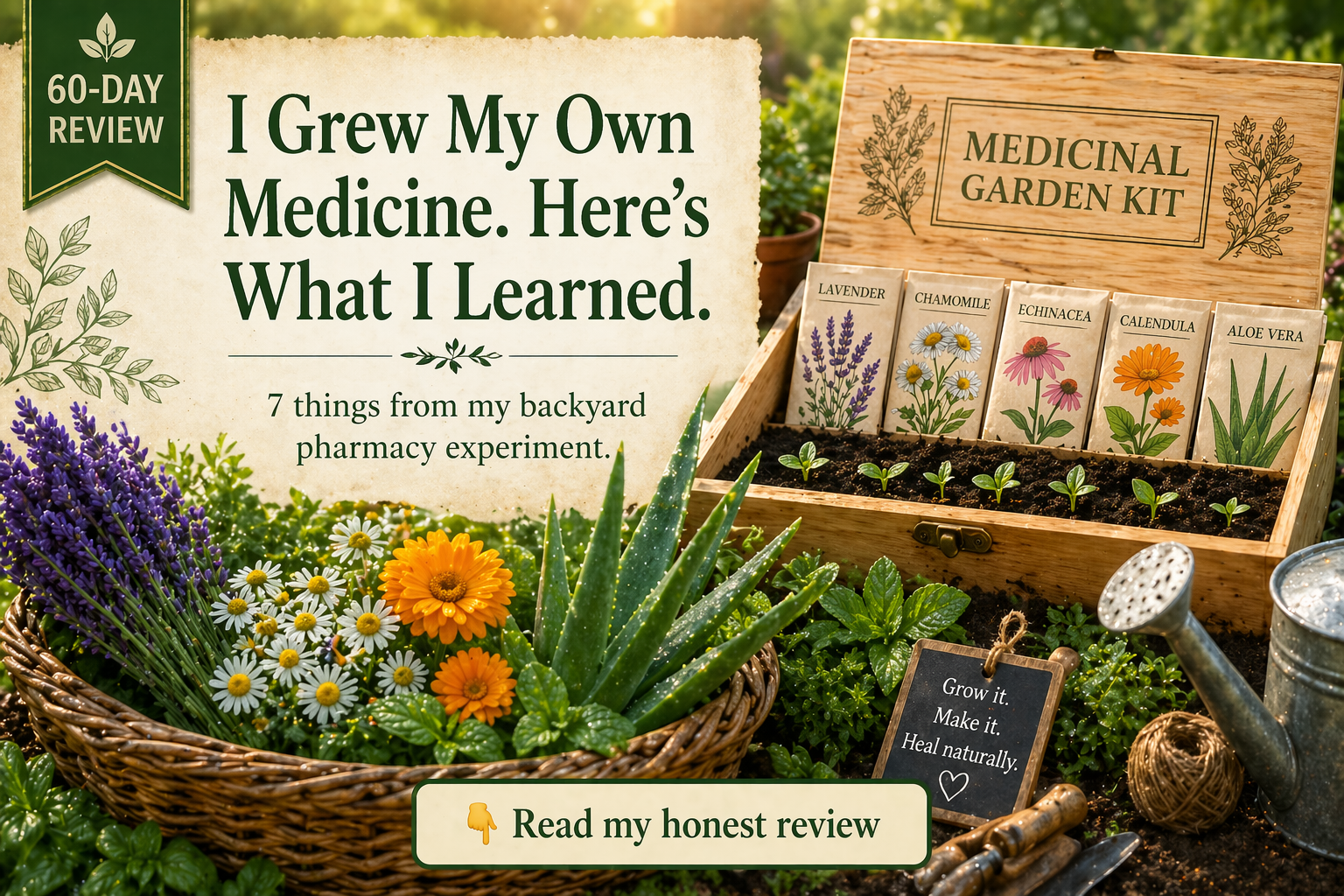
Is the Medicinal Garden Kit worth the hype? I researched the 10 herbs, traditional uses, and real consumer experiences. Here’s my honest review—what it is, who it’s for, and what to know before buying.
In this Medicinal Garden Kit Review: 7 Things I Learned Growing My Own Backyard Pharmacy, I’ll share insights from my journey of cultivating medicinal herbs.
This Medicinal Garden Kit Review: 7 Things I Learned Growing My Own Backyard Pharmacy highlights the benefits of having a self-sufficient medicinal garden.
During my experience, the Medicinal Garden Kit Review: 7 Things I Learned Growing My Own Backyard Pharmacy proved to be insightful and educational.
Let me tell you about the moment I first heard about the Medicinal Garden Kit.
To summarize this Medicinal Garden Kit Review: 7 Things I Learned Growing My Own Backyard Pharmacy, I found that gardening can be both therapeutic and beneficial for health.
I was scrolling through my feed, half-paying attention, when a video popped up. A woman was walking through her garden, pointing at plants I vaguely recognized—lavender, chamomile, echinacea. She called it her “backyard pharmacy.”
I stopped scrolling.
The idea was beautiful: grow your own medicinal herbs at home, make simple remedies, and become a little more self-sufficient. No more running to the store for every little thing. Just step outside, harvest what you need, and make a tea, salve, or tincture.
As I reflect on my journey, this Medicinal Garden Kit Review: 7 Things I Learned Growing My Own Backyard Pharmacy emphasizes the importance of natural remedies.
Ultimately, the insights from this Medicinal Garden Kit Review: 7 Things I Learned Growing My Own Backyard Pharmacy will guide others in their herbal journey.
The Medicinal Garden Kit Review: 7 Things I Learned Growing My Own Backyard Pharmacy is an essential read for aspiring herbalists.
Through the lens of this Medicinal Garden Kit Review: 7 Things I Learned Growing My Own Backyard Pharmacy, I discovered the joys of growing healing herbs.
But I’m a skeptical person by nature. I wanted to know: is this actually practical? Do these herbs really work? Or is this just another beautifully packaged product trading on our desire for a simpler, more natural life?
Reflecting on my findings, this Medicinal Garden Kit Review: 7 Things I Learned Growing My Own Backyard Pharmacy serves as a comprehensive guide.
So I dug in. I researched the company, the creator, the 10 herbs, and the traditional uses behind them. I read customer experiences. I compared it to just buying seeds at a garden center.
Here’s everything I learned—the good, the not-so-good, and what you should know before buying.
In my Medicinal Garden Kit Review: 7 Things I Learned Growing My Own Backyard Pharmacy, I explored various aspects of growing these herbs.
After completing my journey, I realized how valuable this Medicinal Garden Kit Review: 7 Things I Learned Growing My Own Backyard Pharmacy is for new growers.
What Is the Medicinal Garden Kit? (The “Backyard Pharmacy” Explained)
Let’s start with the basics.
The Medicinal Garden Kit is not a supplement, not a pill, and not a pre-made herbal extract. It’s a seed kit paired with an educational guide .
Created by Dr. Nicole Apelian—a biologist, herbalist, and survival skills instructor who appeared on the History Channel’s show Alone—the kit contains:
- Non-GMO seeds for 10 traditional medicinal herbs
- A printed Herbal Medicinal Guide that teaches you how to plant, harvest, and prepare the herbs into tinctures, salves, poultices, teas, and oils
The central idea is what the company calls a “backyard pharmacy.” You grow your own herbs, then use them to make simple home remedies for minor wellness needs .
The 10 herbs included are:
- Chicory – traditionally used for digestive discomfort
- Yarrow – historically used as a wound herb (“soldier’s woundwort”)
- California Poppy – traditional mild sedative for sleep support
- Marshmallow Root – soothing mucilage for digestive and throat comfort
- Chamomile – widely used for relaxation and digestive ease
- Evening Primrose – traditionally used for skin and nerve health
- Lavender – relaxation, sleep, and topical use
- Echinacea – traditionally used for immune support
- Calendula – soothing skin herb for minor irritations
- Feverfew – historically used for headaches and inflammation
The kit is sold through ClickBank as the authorized retailer, and the company behind it is Global Brother SRL .
Why I Decided to Look Into It (And Why You Might Too)
I’ll be honest—I was drawn to the idea of growing my own remedies.
There’s something appealing about self-sufficiency. About knowing exactly where your herbs come from. About stepping outside instead of driving to the store.
But I’m also practical. I didn’t want to buy something that would end up in a drawer, unused. I wanted to know: is this genuinely useful for a regular person with no herbalism background?
The concept has genuine historical roots. Humans have cultivated and used plants for health purposes across every civilization for centuries. Many modern pharmaceuticals were originally derived from plant compounds—aspirin from willow bark, morphine from poppies .
But there’s an important distinction: the “backyard pharmacy” idea is marketing language. It’s not the same as an actual pharmacy that dispenses rigorously tested, standardized medications .
So I researched with clear eyes. Here’s what I found.
The 10 Herbs: Traditional Uses and What Research Says
Let me walk you through each herb, what the company claims, and what traditional herbal literature actually says. This is the heart of understanding what this kit can and cannot do.
A crucial note before we start: Traditional herbal use does NOT equal clinical proof. Historical use is well-documented. Large-scale human trials are often not. Herbal preparations made at home vary wildly in potency depending on growing conditions, harvest timing, and preparation methods .
1. Chicory
The company describes chicory as traditionally used for “discomfort,” referencing its use by Native American communities. Chicory root contains chicoric acid and inulin, which have documented anti-inflammatory and prebiotic properties .
Some preliminary studies have examined chicory’s anti-inflammatory effects in lab and animal settings. But large-scale human trials for pain relief are limited .
Verdict: Reasonable traditional use. Not a substitute for medical pain management.
2. Yarrow
The company calls yarrow a “backyard wound healer.” This actually has strong traditional backing. Yarrow (Achillea millefolium) has been used across European, Native American, and Asian cultures for wound care. Its common name “soldier’s woundwort” reflects centuries of documented folk use .
Some research has examined its antimicrobial and hemostatic properties in preclinical settings. However, for serious wounds, cuts, or infections, professional medical treatment remains the standard of care .
Verdict: Historically well-documented. Not a replacement for emergency care.
3. California Poppy
The marketing compares California poppy to pharmaceutical sleep medications. Traditional literature does document it as a mild sedative in Native American and folk medicine .
A 2014 study in Phytomedicine found that a combination product containing California poppy showed modest sleep quality effects in a small trial. But the evidence for home-prepared tea or tincture as a standalone sleep remedy is limited compared to more studied botanicals .
Verdict: Some research exists. Not equivalent to prescription sleep aids.
4. Marshmallow Root
The company describes marshmallow root as containing mucilage that soothes the digestive tract, referencing its use for heartburn, indigestion, and digestive discomfort.
This has solid traditional backing. The European Medicines Agency (EMA) has recognized marshmallow root as a traditional herbal medicine for soothing irritation of the mouth and throat and for mild gastrointestinal discomfort based on long-standing use .
Serious digestive conditions still require proper medical diagnosis.
Verdict: Recognized traditional use for mild discomfort.
5. Chamomile
The company calls chamomile a “natural antibiotic.” Traditional herbal literature extensively documents chamomile (Matricaria chamomilla) for digestive comfort, mild relaxation, and topical skin applications across multiple cultures .
A 2010 review in Molecular Medicine Reports noted that modern research has identified anti-inflammatory, antioxidant, and mild sedative properties in chamomile preparations.
However, the term “natural antibiotic” is marketing language. While chamomile has shown antimicrobial activity in lab studies, it is not a replacement for antibiotic medications when bacterial infections require medical treatment .
Verdict: Well-documented for relaxation and digestion. Not an antibiotic.
6-10. Evening Primrose, Lavender, Echinacea, Calendula, Feverfew
Each of these herbs has traditional-use history:
- Evening Primrose: Traditional use for skin and nerve health. A Cochrane Review found insufficient evidence to recommend it for eczema specifically. Home-grown preparations differ from standardized oils used in studies .
- Lavender: Well-documented for relaxation and sleep. One published study is referenced in marketing materials.
- Echinacea: Traditional immune support. Research results are mixed; some studies show modest benefits for cold duration, others show minimal effect.
- Calendula: Traditional soothing skin herb for minor irritations. Well-documented topical use.
- Feverfew: Historically used for headaches and inflammation. Some research exists for migraine prevention, though study quality varies.
Pros and Cons of the Medicinal Garden Kit
Let me break this down honestly.
| Pros | Cons |
|---|---|
| Beautiful, empowering concept – growing your own herbs is satisfying and educational | Not a finished product – you’re buying seeds, not remedies. You have to grow and prepare everything yourself |
| Quality seeds – non-GMO, packaged in the US | Takes time and effort – growing herbs requires gardening knowledge, space, patience, and proper conditions |
| Educational guide included – teaches planting, harvesting, and preparation methods | Results vary dramatically – plant potency depends on soil, sun, water, harvest timing, and preparation skill |
| Created by a credible herbalist – Nicole Apelian’s background in biology and herbalism adds authority | “Backyard pharmacy” is marketing – not a replacement for real medical care or actual pharmacies |
| Traditional uses have historical backing – the herbs are genuinely documented in herbal literature | Limited clinical evidence – traditional use ≠ clinical proof for specific conditions |
| Self-sufficiency appeal – reduces reliance on stores for minor wellness needs | Requires space – you need outdoor garden space or a sunny indoor setup |
| No recurring cost – once you grow, you can harvest repeatedly (perennial herbs) | ClickBank processing – some buyers prefer direct purchasing |
Who Is This For? (And Who Should Skip It)
Good fit for:
Gardeners and aspiring gardeners – people who already enjoy growing plants
Herbalism curious – those interested in learning traditional plant uses
Self-sufficiency enthusiasts – people who like the idea of growing their own remedies
Anyone who enjoys DIY projects – making tinctures, salves, and teas is hands-on
People with realistic expectations – understand this is for minor wellness, not serious medical conditions
Those with outdoor space – a garden bed or large containers are ideal
Not a good fit for:
People looking for ready-made remedies – this is seeds and a guide, not finished products
Anyone without gardening space or time – herbs need consistent care
People seeking treatment for serious conditions – this is not medical care. Consult a doctor for diagnosed illnesses
Those who prefer convenience – growing herbs is the opposite of instant gratification
Anyone expecting clinical proof – traditional use is not the same as FDA approval
How to Choose a Medicinal Herb Kit (Buyer’s Guide)
If you’re considering the Medicinal Garden Kit or something similar, here’s what to look for.
1. Check What You’re Actually Getting
Is it seeds only or does it include growing supplies? The Medicinal Garden Kit is seeds + a guide. You’ll need your own soil, pots or garden space, and gardening tools.
2. Research the Creator’s Credentials
Nicole Apelian has a degree in Biology from McGill University and a Ph.D., plus experience as an herbalist and survival instructor. She also lived among the San Bushmen in the Kalahari studying traditional plant practices .
Her personal health journey with Multiple Sclerosis is part of her story, but her experience is individual and not evidence that herbal remedies can treat MS .
3. Verify the Seed Quality
Look for non-GMO seeds. The Medicinal Garden Kit states its seeds are non-GMO and packaged in the US .
4. Understand the Refund Policy
The kit is sold through ClickBank, which typically offers a 60-day refund policy. Check current terms before purchasing.
5. Set Realistic Expectations
This is not a “miracle cure” kit. It’s a gardening and educational product. The phrase “backyard pharmacy” is marketing—real pharmacies dispense standardized, tested medications. A garden of 10 herbs does not replicate that capability .
How to Use the Medicinal Garden Kit (If You Buy It)
Step 1: Prepare Your Space
You’ll need outdoor garden space or large containers with good drainage. Most of these herbs prefer full sun (6+ hours daily).
Step 2: Plant According to the Guide
The included Herbal Medicinal Guide provides planting instructions. Pay attention to spacing, depth, and timing for your climate zone.
Step 3: Care for Your Herbs
Regular watering (but not overwatering), weeding, and watching for pests. Herbs are generally hardy but still need attention.
Step 4: Harvest at the Right Time
Different herbs are harvested at different growth stages. The guide will specify when to harvest leaves, flowers, or roots.
Step 5: Prepare Your Remedies
The guide teaches you to make:
- Tinctures (alcohol-based extracts)
- Salves (oil-based topical preparations)
- Teas and infusions (hot water extracts)
- Poultices (crushed fresh herbs applied directly)
Step 6: Store Properly
Dried herbs and prepared remedies need cool, dark, dry storage to maintain potency.
Medicinal Garden Kit vs. Buying Seeds Separately
| Comparison | Medicinal Garden Kit | Buying Seeds Separately |
|---|---|---|
| Convenience | One purchase, everything bundled | Requires sourcing 10 individual seed packets |
| Educational value | Includes detailed remedy preparation guide | You’d need to buy separate herbalism books |
| Seed quality | Non-GMO, pre-selected varieties | Quality varies by seed company |
| Cost | Higher upfront cost | Potentially cheaper, especially if you already have gardening supplies |
| Time to learn | Guide accelerates the learning curve | Self-directed research takes more time |
| Best for | Beginners who want structured guidance | Experienced gardeners who already have resources |
Bottom line: If you’re new to herbalism and gardening, the kit’s educational guide is valuable. If you’re an experienced gardener, you could replicate this by buying seeds individually and researching preparation methods yourself.
Frequently Asked Questions (FAQ)
1. Does the Medicinal Garden Kit actually work?
Medicinal Garden Kit Review: 7 Things I Learned Growing My Own Backyard Pharmacy
That depends on your definition of “work.” As a gardening and educational product, yes—you can grow the seeds and learn to make herbal preparations. As a replacement for medical care, no. It’s for traditional, minor wellness applications, not treating serious conditions.
2. Is the “backyard pharmacy” claim realistic?
The phrase is marketing language. Growing medicinal herbs is a legitimate hobby with historical roots. But an actual pharmacy dispenses rigorously tested, standardized medications. A home garden does not replicate that capability .
3. Are the herbs FDA-approved?
No. The FDA does not evaluate herbs for safety and effectiveness the way it evaluates pharmaceutical drugs. The kit’s marketing explicitly states that no plant or preparation has been evaluated by the FDA .
4. Is it safe to make my own herbal remedies?
Yes, for external use and mild internal use (teas), with proper guidance. However, home-prepared remedies vary in potency. Always consult a healthcare provider before using herbal preparations, especially if you take medications, have health conditions, or are pregnant/nursing .
5. How long does it take to grow the herbs?
Most herbs take 60-90 days from seed to harvestable size. Perennials like echinacea and lavender come back year after year. Annuals like chamomile need replanting each season.
6. Can I grow these indoors?
Some herbs (chamomile, lavender, calendula) can be grown indoors with sufficient light (grow lights recommended). Others prefer outdoor conditions. Check each herb’s requirements.
7. Who is Nicole Apelian?
She’s a biologist, herbalist, and survival skills instructor with a degree from McGill University and a Ph.D. She appeared on the History Channel’s show Alone. Her background adds credibility, but her personal health story is individual, not evidence .
8. What’s the refund policy?
The kit is sold through ClickBank, which typically offers a 60-day money-back guarantee. Check the official website for current terms.
My Final Verdict: Is the Medicinal Garden Kit Worth It?
After researching the kit, the herbs, and the traditional uses, here’s my honest answer:
Medicinal Garden Kit Review: 7 Things I Learned Growing My Own Backyard Pharmacy
Yes, if you’re genuinely interested in gardening and learning about traditional herbalism.
No, if you’re looking for ready-made remedies or a replacement for medical care.
The Medicinal Garden Kit is a gardening and educational product, not a medical product. Its value lies in the seeds (non-GMO, pre-selected) and the educational guide that teaches you how to plant, harvest, and prepare simple herbal remedies.
If you enjoy growing things, learning new skills, and the idea of making your own teas, salves, and tinctures—this could be a rewarding purchase.
If you don’t have outdoor space, don’t enjoy gardening, or are looking for quick, convenient solutions—this isn’t for you.
The “backyard pharmacy” phrase is marketing. Keep your expectations grounded. This is a seed kit, not a substitute for professional medical care. But for the right person, it’s a beautiful way to connect with nature, learn traditional plant uses, and take a small step toward self-suffi
Tools to Support Your Health Journey
Understanding your body’s baseline needs helps you make better wellness decisions.
👉 Use Our Free Calorie Calculator
👉 Use Our Free Weight Loss & Fitness Calculator
👉 Use Our Free Fitness Unit Converter
use our free The Smart Way to Track Fitness, Sleep & Calories
This article contains affiliate links. If you purchase through these links, I may earn a commission at no extra cost to you. I only recommend products I genuinely believe in after thorough research. This content is for informational purposes and is not medical advice. Always consult your healthcare provider before using any herbal remedy, especially if you take medications, have existing health conditions, or are pregnant or nursing .
This Medicinal Garden Kit Review: 7 Things I Learned Growing My Own Backyard Pharmacy provides insights into the practicality and benefits of home-grown herbs.
With the Medicinal Garden Kit Review: 7 Things I Learned Growing My Own Backyard Pharmacy, I aimed to highlight key takeaways from my experience.