
Been on keto for a while? Discover why your blood sugar now spikes dramatically after eating carbs, the science behind it, and a safe, gentle plan to restore your metabolic flexibility.
You’ve been on keto for a while. You’re proud of your progress. But something has you worried.
Last weekend, you decided to take a break. You had a small slice of birthday cake. Or a modest serving of pasta. Nothing crazy.
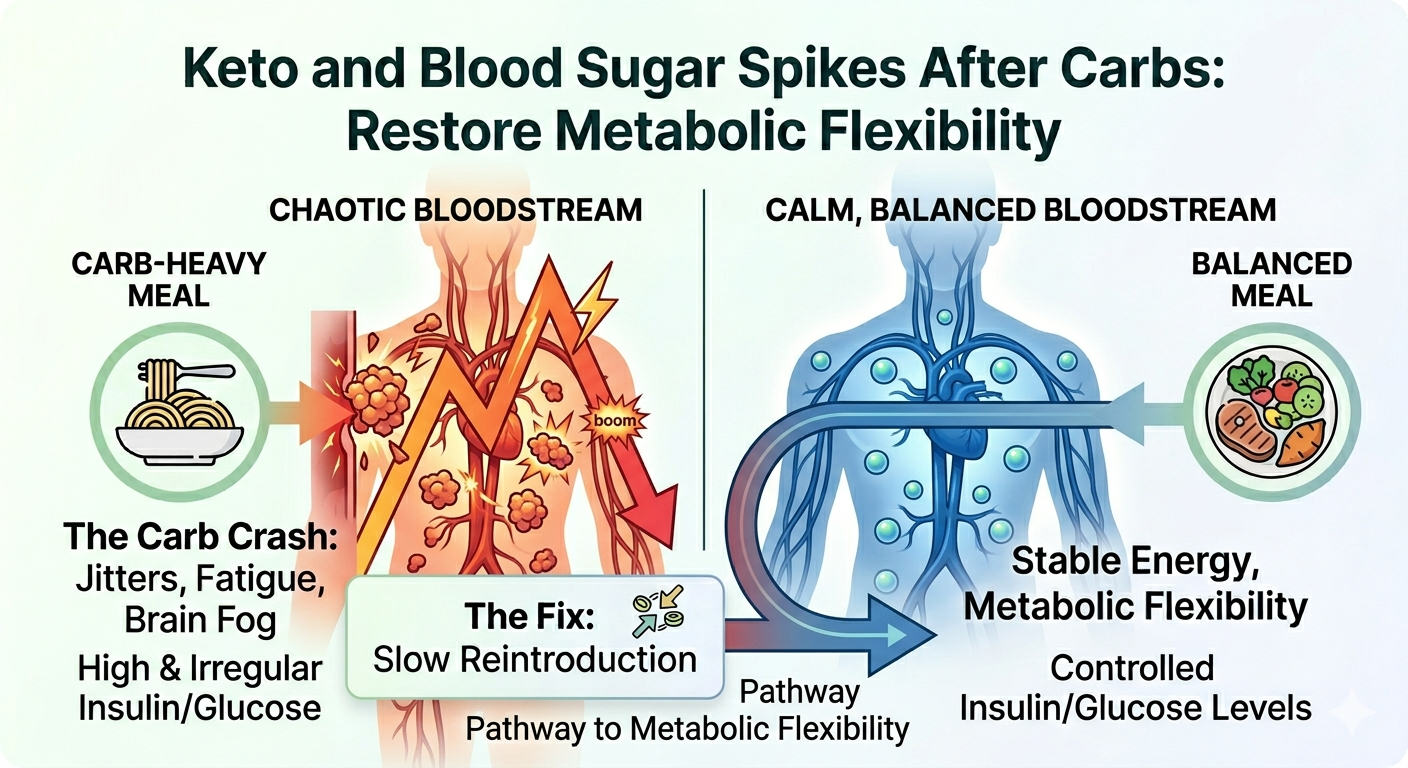
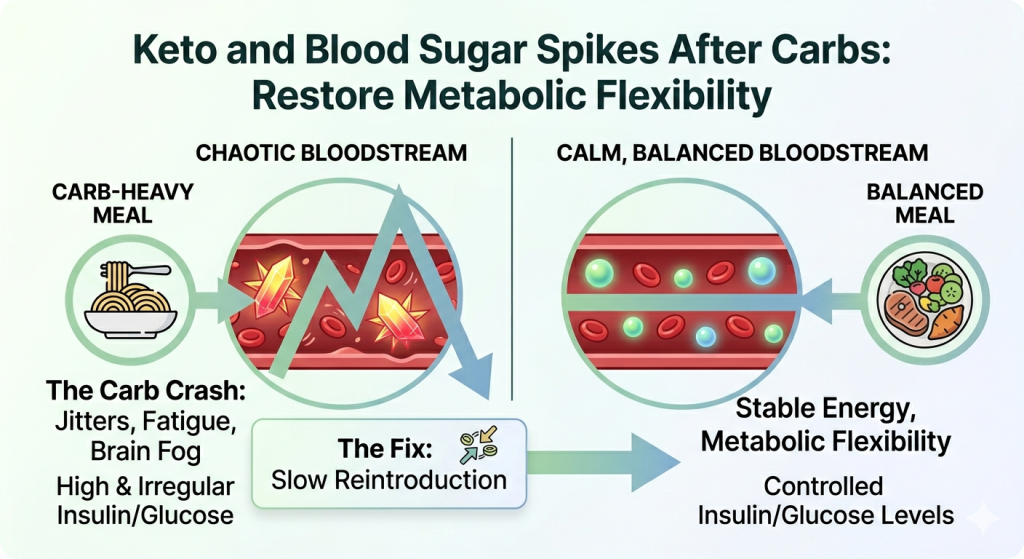
An hour later, your heart was racing. You felt jittery, anxious, and exhausted. Your energy crashed. The “carb coma” hit you like a truck.
If this sounds familiar, you’re not alone. And you’re not broken. Your body is just doing what any finely-tuned machine would do after running on a completely different fuel source for months.
This is the “keto carb shock.” And understanding why it happens is the first step to taking back control.
First, Let’s Rewind: What Happens to Your Body on Keto?
To understand why your body overreacts to carbs, you have to understand what changed while you were on keto.
A standard ketogenic diet severely restricts carbohydrates, typically to under 50 grams per day. Without glucose from carbs, your liver starts converting fat into fatty acids and then into ketone bodies. These ketones become your brain and body’s primary fuel source.
This state is called ketosis.
While in ketosis, your body undergoes several key adaptations:
- Insulin levels drop dramatically. Insulin is the hormone that tells your cells to take in glucose from your bloodstream. With little glucose coming in, your pancreas produces very little insulin .
- Your cells become more insulin sensitive. This is usually a good thing. It means that when insulin does appear, your cells respond quickly and efficiently to clear glucose from the blood .
- Your pancreas downregulates insulin secretion. Your body thinks, “Hey, we don’t need much insulin anymore,” and reduces its production capacity.
- Your muscles store less glycogen (stored carbs). Your glycogen tanks are nearly empty, and your muscles have downregulated the enzymes needed to store and use glucose efficiently.
These adaptations are perfect for surviving on a low-carb diet. But they set the stage for a dramatic reaction when carbs suddenly return.
The Science of the “Carb Shock”: What’s Actually Happening Inside You
Imagine your metabolism is a factory. For months, you’ve been running it on diesel fuel (ketones). You’ve shut down the equipment that processes gasoline (glucose). The workers who handle gasoline have been reassigned.
Now, imagine you suddenly dump a tanker truck full of gasoline into your diesel factory.
That’s what happens when you eat a high-carb meal after strict keto.
Here’s the step-by-step breakdown of the chaos:
Step 1: The Flood of Glucose
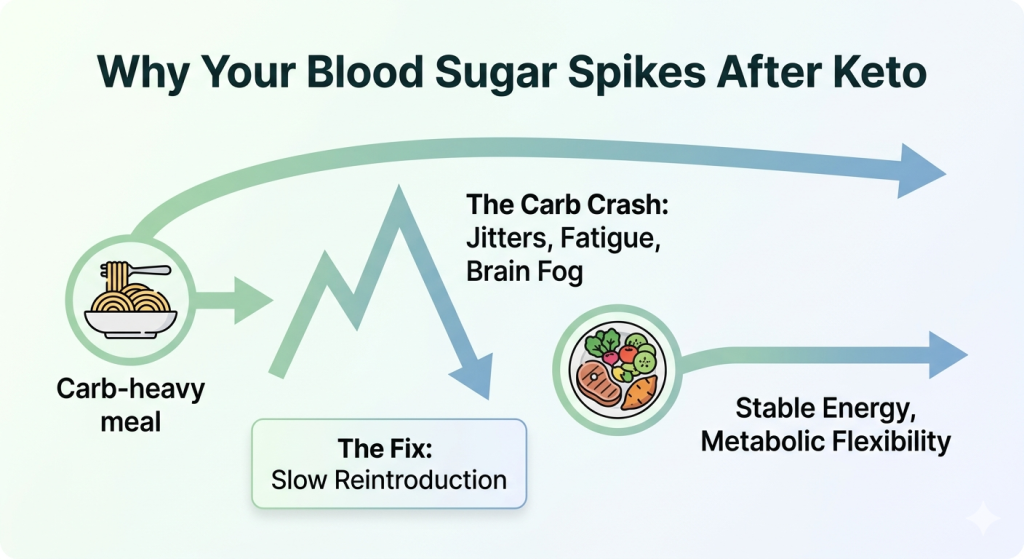
You eat a meal with significant carbs. Your digestive system breaks them down into simple sugars, primarily glucose, which enters your bloodstream.
Step 2: The Delayed Insulin Response
Your body sees the rising blood sugar and signals your pancreas to release insulin. But here’s the problem: your pancreas has gotten out of practice. It’s been producing very little insulin for months. Its response is sluggish and inefficient .
Step 3: The Sky-High Spike
Because the insulin isn’t arriving fast enough, blood sugar levels can spike much higher and faster than they would in someone who eats carbs regularly.
Step 4: The “Super-Response”
Eventually, the insulin does arrive. But now, your cells are super-sensitive to it (a result of your keto-adapted state). They grab glucose with incredible efficiency. The insulin also tells your liver to stop producing its own glucose and start storing it. This “super-response” can cause blood sugar to crash dramatically after the initial spike .
This entire process—delayed insulin release followed by an oversensitive reaction—is why you experience the jitters, fatigue, brain fog, and intense hunger shortly after a high-carb meal. It’s not just in your head. It’s a real physiological event.
What This Doesn’t Mean (Let Go of the Fear)
This physiological reaction is temporary and reversible. It does not mean:
- You’ve permanently “broken” your metabolism. Your body is incredibly adaptable.
- You can never eat carbs again. You absolutely can.
- You have diabetes or prediabetes. This is a temporary state of physiological insulin resistance, not a disease state.
The fear of this reaction is what keeps many people trapped on keto, even when they want to leave. They’re terrified of the carb crash.
But knowledge is power. Now that you understand why it happens, you can create a plan to fix it.
Your 3-Step Plan to Restore Metabolic Flexibility (Without the Scary Spikes)
You don’t have to live in fear of carbs. Here is a gentle, effective plan to reintroduce them, retrain your pancreas, and restore your body’s ability to handle glucose smoothly.
Step 1: The Slow Roll (Start with “Carb Add-Backs”)
Your body needs a gentle wake-up call, not a fire alarm. For the first 1-2 weeks, you’re not going to “eat carbs.” You’re going to add back small portions of healthy, complex carbs to your existing keto framework.
What to do:
- Start with 10-15 grams of net carbs per day.
- Choose fiber-rich sources: berries, broccoli, avocado, nuts, seeds.
- Eat these carbs with protein and fat to further slow glucose absorption.
Example: Add a handful of blueberries to your morning eggs and bacon. Add a side of roasted broccoli to your dinner.
Why this works: The fiber and fat slow the release of glucose, giving your pancreas a gentle, manageable signal to wake up and produce insulin.
Step 2: Strategic Reintroduction (Focus on Timing and Type)
After a week or two, your body will start to adapt. Now you can be more strategic.
What to do:
- Increase carb intake by 5-10 grams per week. Go from 15g to 25g to 35g.
- Time your carbs around your workouts. This is a game-changer. When you exercise, your muscles are like a sponge for glucose, sucking it out of your bloodstream to replenish their glycogen stores .
- Prioritize starchy vegetables and legumes. Think sweet potatoes, carrots, beans, and lentils. Save white rice and bread for later.
Example: Have a small sweet potato with your post-workout chicken and veggies.
Step 3: Track and Trust Your Body
This is the most important step. Pay attention to how you feel.
What to do:
- Notice your energy levels an hour after eating. Do you feel stable or do you crash?
- Notice your hunger cues. Are you getting hungry again soon after a meal?
- Use our free tools to track your progress. (See the section below.)
The goal isn’t to eat a certain number of carbs. The goal is to feel good.
Track Your Transition with These Smart Tools
Exiting keto and restoring metabolic flexibility is a journey, not a single event. Use these free tools to monitor your progress, build new habits, and make your transition smooth and successful.
📊 Vitalis Dashboard – Track Your Energy & Blood Sugar
Log your daily meals, track your energy levels after eating, and see your progress over time. This dashboard puts everything in one place—steps, sleep, calories, and your transition journey.
👉 Visit Your Vitalis Dashboard
🧠 RoutineFlow AI – Build Your New Eating Streak
Consistency is medicine. Use RoutineFlow AI to set a daily reminder for your new eating habits, track your streak, and celebrate your wins.
👉 Start Your Streak with RoutineFlow AI
🥗 Meal Planner + Calories – Plan Your Carb Reintroduction
Stopping keto doesn’t mean you stop planning. Use the Meal Planner to build balanced, delicious meals that slowly reintroduce healthy carbs without the guesswork.
💧 Daily Detox Challenge – Support Your Body’s Reset
Transitioning off keto can feel stressful for your body. Gentle daily detox habits—like drinking more water, eating whole foods, and reducing processed sugar—lower your body’s inflammatory load.
👉 Join the Daily Detox Challenge
🎯 FocusForge – Build the Habit
Building a new way of eating is hard. FocusForge helps you stay accountable, track your daily food choices, and build the discipline to show up for yourself every day.
👉 Build Your Habit with FocusForge
While you’re here, check out these related articles to support your journey:
- Keto Exit Strategy: How to Stop Keto Safely Without Gaining Weight – A complete 4-week plan for transitioning off keto smoothly.
- What Happens to Your Body When You Drink Lemon Water Every Morning? – Discover a simple morning ritual to support your body’s natural detox processes.
- Beginner-Friendly Nutrition Tips for Home Fitness – Learn how to fuel your body for movement, not just weight loss.
- The Top Diet Plan to Reduce Belly Fat Naturally in 2026 – A broader look at sustainable, science-backed weight management.
Frequently Asked Questions
1. Is this “carb shock” dangerous?
For a healthy person, no. It’s uncomfortable, but not dangerous. The blood sugar spike and crash are temporary. However, if you have diabetes or another metabolic condition, consult your doctor before making any significant dietary changes.
2. How long does it take for my body to adjust back to carbs?
This varies from person to person. Most people feel significantly better after 2-4 weeks of slowly reintroducing carbs. Full metabolic flexibility can take 1-3 months.
3. Will I gain weight when I start eating carbs again?
You will gain water weight (2-5 pounds) as your glycogen stores refill. This is normal and healthy. You will NOT gain fat if you transition slowly and eat a balanced diet.
4. Can I ever eat sugar or refined carbs again?
Yes. But treat them as treats, not staples. Your body will likely always be more sensitive to them. A slice of birthday cake is fine. A daily soda is not.
5. How do I know my new diet is working?
You feel good. Your energy is stable. You sleep well. You’re not obsessed with food. You can eat a meal without fear of a crash. That’s success.
My Final Advice
The fear of the “carb crash” is real. It’s kept many people trapped on a diet they no longer want to be on. But you don’t have to be afraid anymore.
Your body is not broken. It’s just highly adapted. And just as it adapted to keto, it can adapt back to a balanced diet. It just needs time and a gentle touch.
Start with a handful of blueberries. Then a small sweet potato. Then some beans. Go slow. Pay attention. Trust the process.
You are in control. Not the fear.
This article contains links to other pages on our site. We also offer free tools to support your health journey. Please consult your healthcare provider before making significant dietary changes, especially if you have a pre-existing medical condition.