
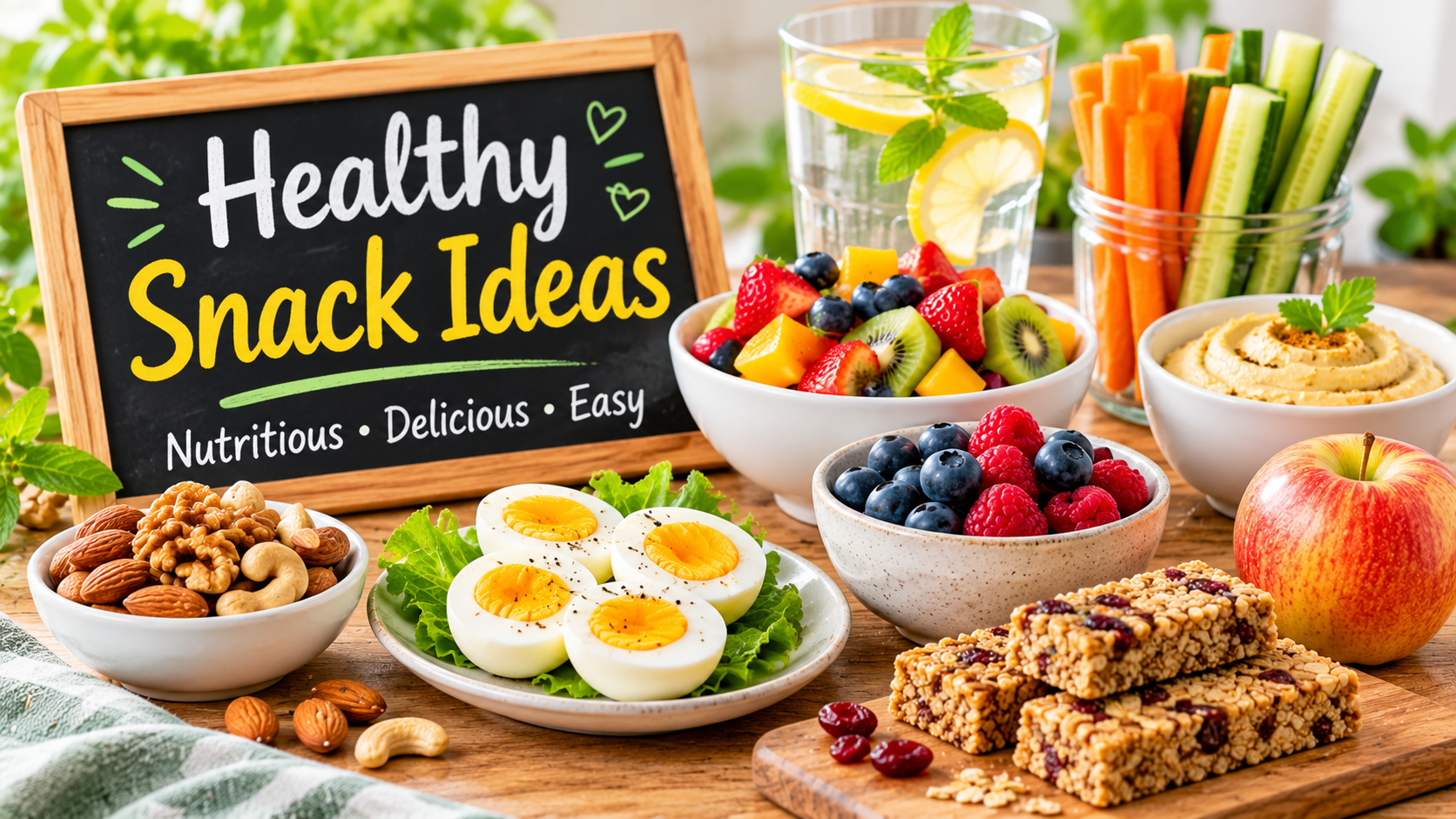
100+healthy snack ideas for energy , weight loss & busy days : a 5-part snack formula , label – reading tips , 10 easy recipes & a 14-day reset challenge
Written by Kalsoom Khan, Founder & Wellness Content Creator, FitHealthyMind, on November 17, 2026
Last updated: November 2026 | Reading time: about 100 minutes (use the table of contents to jump to the section you need)
Editorial note: this guide is educational and is not medical advice. If you have a medical condition such as diabetes or kidney disease, a food allergy, a history of disordered eating, are pregnant or are planning snacks for young children, speak to a doctor or registered dietitian for personalised advice.
It is 3:30 in the afternoon. Your energy has dipped, your stomach is growling and the vending machine, the biscuit tin or the drive-through is calling your name. A few minutes later you have eaten something sweet, salty or crunchy, felt great for ten minutes and then felt worse than before.
Sound familiar?
Here is the good news. Snacking is not the enemy. For many people, a well-chosen snack steadies energy, tames hunger before dinner and adds fibre, protein and vitamins that meals alone may miss. The trouble is that most snacks sold as “healthy” are not, and most of us reach for a snack only when we are tired, stressed or in a rush, with nothing good within reach.
This guide fixes that. It gives you:
- A simple formula for building a healthy snack in under two minutes
- More than 100 healthy snack ideas, sorted by type, goal and situation
- Honest label-reading tips so you are not fooled by “healthy” packaging
- Easy homemade recipes that cost less than packaged snacks
- Plans for weight loss, energy, protein, heart health and busy schedules
- Safety guidance for kids, allergies and special diets
- A simple system to plan and track your snacks, so healthy choices become automatic
If you are searching for healthy snack ideas, you probably want:
- Quick options you can grab in a minute or two
- Snacks that keep you full, not ones that make you hungrier an hour later
- Ideas for weight loss, energy or blood sugar balance
- Healthy snacks for work, school, travel and late nights
- Budget-friendly choices that do not require special ingredients
- Kid-friendly snacks that are safe and tasty
- A way to avoid mindless snacking
In this guide you will learn:
- What makes a snack healthy, and a five-part formula for building one
- How many calories, how much protein and how much sugar to aim for
- 100+ ideas: fruit, vegetable, protein, crunchy, sweet, savoury, no-cook and more
- Healthy snacks for weight loss, energy, heart health, vegans, low-carb eaters and athletes
- Snacks for the office, school, travel, studying, movie night and late evenings
- Ten easy homemade snack recipes
- How to read labels and spot “healthy” snacks that are not
- How to meal-prep snacks for the week and stop mindless eating
- How to use a digital planner to plan and track your snacks
- Answers to 50 common questions
We wrote it the way a friendly dietitian-minded coach would explain it: practical, encouraging and honest.
Quick promise: we will not tell you that any single food burns fat, that you must snack or must not snack or that certain foods are “bad.” We will give you a flexible framework and be honest about what the evidence does and does not show.
Get Your Free Weekly Meal Planner!
Make your transition from keto to balanced eating easier. Organize your weekly meals and build healthier food habits with our free printable planner.
⬇ Download FREE Meal Planner PDF
Free PDF Download • Weekly Meal Planning
Quick Answer: What Is a Healthy Snack?
Short answer: a healthy snack is a small portion of nutrient-rich food that combines fibre, protein or healthy fat, is low in added sugar and sodium and fits your hunger and your day. Whole or minimally processed foods such as fruit, vegetables, nuts, yoghurt, eggs, beans and whole grains usually fit best.
The Five-Part Snack Formula
| Part | What to aim for | Examples |
|---|---|---|
| 1. Real food first | Whole or lightly processed | Fruit, vegetables, nuts, yoghurt, eggs, beans |
| 2. Fibre | Helps you feel full | Fruit with skin, vegetables, whole grains, beans, seeds |
| 3. Protein or healthy fat | Slows hunger | Greek yoghurt, nuts, nut butter, cheese, hummus, eggs |
| 4. Low added sugar and salt | Fewer energy crashes, kinder to your heart | Unsweetened options; check labels |
| 5. Sensible portion | Satisfying but not a second meal | About 100 to 250 calories for most adults |
Two Quick Pairings You Can Remember
- Carb plus protein or fat: apple and peanut butter, whole-grain crackers and cheese, banana and a handful of almonds.
- Crunch plus creaminess: carrots and hummus, cucumber and tzatziki, celery and nut butter.
These combinations give you something to chew, something to fill you and something that tastes good, which makes them easier to stick with.
Key Takeaways (Read This If You Read Nothing Else)
- Healthy snacks are built, not bought. Combine fibre with protein or healthy fat and keep added sugar and salt low.
- Whole foods usually win. Fruit, vegetables, nuts, yoghurt, eggs and beans are cheaper and more filling than most packaged “healthy” bars and chips.
- “Healthy” labels can mislead. A consumer-group investigation in the UK found some snacks marketed as healthy were high in sugar, fat or salt, so read the label.
- Aim for roughly 100 to 250 calories for most adults, adjusting for hunger, size and activity. These are practical starting points, not strict rules.
- Watch added sugar. The American Heart Association suggests no more than about 25 grams a day for most women and children over 2 and about 36 grams for most men. Many “healthy” snacks use a big chunk of that.
- Sodium adds up. US dietary guidelines advise less than 2,300 mg a day for most adults, and savoury snacks can be high.
- Plan ahead. Having healthy snacks washed, portioned and visible makes the healthy choice the easy choice.
- Listen to hunger. Snack when you are hungry, not just bored, stressed or tired. Pause and check in first.
- Safety first for children. Whole nuts, whole grapes and some other foods can be choking hazards for young children, and allergies need care.
- Tracking helps. A simple planner or tracker shows which snacks keep you full and which leave you hungry.
How We Researched This Guide (Our Method and Its Limits)
What we did
- Reviewed the US Dietary Guidelines for Americans, 2020 to 2025, for limits on added sugars, saturated fat and sodium and the emphasis on nutrient-dense foods.
- Checked the American Heart Association’s daily added sugar recommendations.
- Looked at consumer reporting on “healthy” snacks that are high in sugar, fat or salt, and at research summaries on snack foods, fullness and weight.
- Built practical ideas and recipes using standard nutrition principles: fibre, protein, healthy fats and portion size.
- Separated what the evidence supports from common sense and marketing.
What we did not do
- We did not invent testimonials or “I lost 20 pounds snacking this way” stories.
- We did not claim any snack burns fat, detoxes the body or cures a condition.
- We did not test every product or recipe in a lab. Calorie and nutrient numbers are approximate and vary by brand and portion size, so always check the label.
Limits you should know about
- Some research sources could not be opened during our work because of access limits, so we avoid quoting details from them and mark general statements as general.
- A newer edition of the US Dietary Guidelines (2025 to 2030) exists. We reference the 2020 to 2025 numbers we could read, and we suggest checking the current edition for any changes.
- Nutrition numbers are estimates. Brands, ripeness and portion sizes vary.
- Individual needs differ. Age, size, activity, health conditions and medicines change what suits you.
Who Is This Guide For?
This guide is for you if you:
- Get hungry between meals and want better choices than chips or sweets
- Feel an afternoon slump and want steady energy
- Are trying to manage your weight without feeling deprived
- Have a busy schedule and need quick, portable ideas
- Are a parent looking for kid-friendly snacks
- Want budget-friendly, real-food options
- Like to plan and track your habits
It is not a replacement for personalised medical or dietary advice, especially if you have diabetes, kidney disease, allergies or a history of disordered eating.
Should You Snack at All?
The honest answer: it depends on you.
Reasons People Snack
| Reason | Is it helpful? |
|---|---|
| Genuine hunger between meals | Yes, a snack can bridge the gap |
| Long gap before the next meal | Often helpful |
| Before or after exercise | May help energy or recovery |
| Higher energy needs (growing children, active people, some older adults) | Often useful |
| Boredom, stress or habit | Pause first; consider a non-food response |
| Seeing or smelling food | A cue, not necessarily hunger |
When Skipping Snacks Is Fine
If you eat balanced meals at sensible times and are not hungry in between, you do not need to snack. There is no rule that says you must eat six times a day. Snacking is a tool, not a requirement.
The Snack Hunger Check
Before you reach for food, ask yourself:
- Am I physically hungry? (Empty stomach, low energy, difficulty concentrating)
- When was my last meal?
- Am I thirsty? (A glass of water can help.)
- Am I bored, stressed or tired? (A short walk, stretch or break may help more.)
- If I am hungry, what would feel satisfying?
If you are hungry, eat. A well-chosen snack is a perfectly healthy part of your day.
The Healthy Snack Blueprint: How to Build a Snack in Two Minutes
You do not need a recipe. You need a pattern. Once you learn it, you can build thousands of snacks from whatever is in your kitchen.
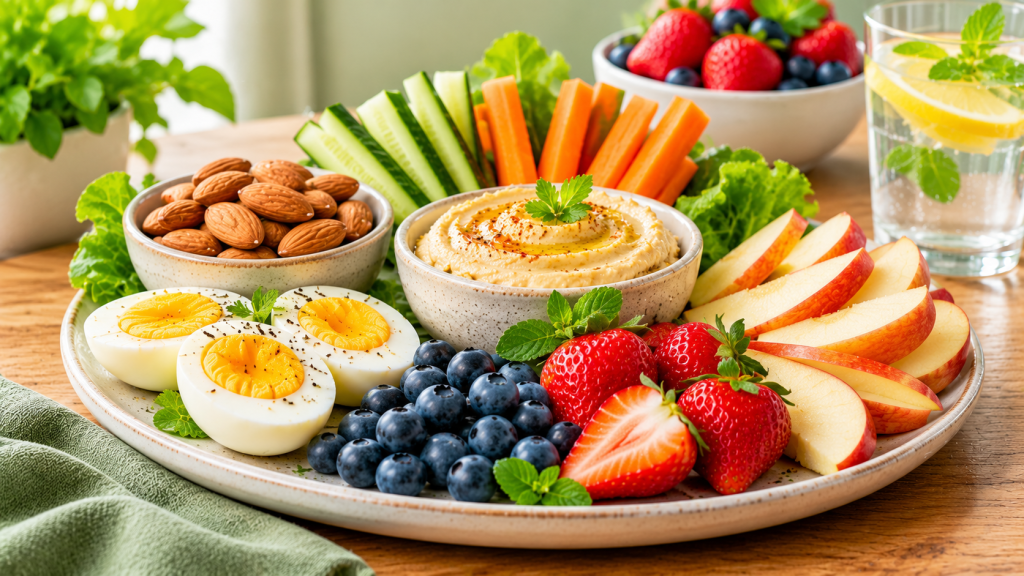
Step 1: Start With a Base (Fibre-Rich Real Food)
| Base | Examples |
|---|---|
| Fruit | Apple, pear, berries, orange, banana, grapes, melon, kiwi |
| Vegetables | Carrots, cucumber, peppers, celery, cherry tomatoes, snap peas, broccoli, radishes |
| Whole grains | Whole-grain crackers, oats, popcorn, whole-wheat toast, rice cakes |
| Legumes | Chickpeas, edamame, lentils, beans |
Step 2: Add Protein or Healthy Fat
| Add-on | Examples |
|---|---|
| Dairy or alternatives | Greek yoghurt, cottage cheese, cheese, kefir, fortified soy yoghurt |
| Eggs | Hard-boiled egg, egg muffin |
| Nuts and seeds | Almonds, walnuts, peanuts, pistachios, pumpkin seeds, sunflower seeds |
| Spreads | Peanut or almond butter, hummus, guacamole, tahini |
| Fish and meat | Tuna on crackers, turkey roll-ups, smoked salmon |
| Plant proteins | Tofu cubes, roasted chickpeas, edamame |
Step 3: Add Flavour Without Overdoing Sugar and Salt
| Flavour | Examples |
|---|---|
| Spices | Cinnamon, paprika, cumin, chilli, turmeric |
| Herbs and citrus | Lemon juice, mint, parsley, basil |
| A little sweetness | A drizzle of honey, a few dates, a piece of dark chocolate |
| Crunch | Seeds, nuts, crushed whole-grain cereal |
Step 4: Check the Portion
| Snack size | Approximate calories | Good for |
|---|---|---|
| Mini snack | 50 to 100 | Light hunger, small appetites, bridging a short gap |
| Standard snack | 100 to 200 | Most adults between meals |
| Substantial snack | 200 to 300 | Long gaps, active days, athletes, growing teens |
These are practical starting points, not rules. If you are very active, larger or hungrier, you may need more. If a snack regularly replaces a meal, plan a proper meal instead.
Quick Formula Examples
| Base | Plus | Result | Approximate calories |
|---|---|---|---|
| Apple | Peanut butter (1 tablespoon) | Apple with peanut butter | About 190 |
| Carrot sticks | Hummus (2 tablespoons) | Veggies and hummus | About 100 |
| Berries (1 cup) | Greek yoghurt (3/4 cup, plain) | Berry yoghurt bowl | About 150 |
| Whole-grain crackers (5) | Cheese (1 slice) | Cheese and crackers | About 150 |
| Banana | Almonds (small handful) | Banana and almonds | About 200 |
Calories are rough estimates and vary by brand, size and ripeness. Check labels.
What the Numbers Mean: Calories, Protein, Fibre, Sugar and Sodium
You do not need to count everything, but knowing the rough targets helps you judge snacks quickly.
Calories
For most adults, a snack of about 100 to 250 calories fits comfortably into the day. Your needs depend on age, size, sex, activity and goals. If you are trying to lose weight, smaller snacks (100 to 150 calories) built around vegetables, fruit and protein may help. If you are very active, you may need more.
Protein
Protein helps you feel full and supports muscle. A snack with about 5 to 15 grams of protein is a practical target for many people, especially between meals. Examples: Greek yoghurt, cottage cheese, eggs, edamame, nuts, tuna, cheese.
Fibre
Fibre slows digestion and adds bulk. Aim for 2 to 5 grams or more in a snack where possible. Fruit with skin, vegetables, whole grains, beans, nuts and seeds are good sources. Increase fibre gradually and drink water.
Added Sugar
| Guideline | Source |
|---|---|
| Less than 10 percent of daily calories from added sugars for ages 2 and older | US Dietary Guidelines for Americans, 2020 to 2025 |
| About 25 grams (6 teaspoons) a day for most women and children over 2 | American Heart Association |
| About 36 grams (9 teaspoons) a day for most men | American Heart Association |
Please check the current edition of the US guidelines, since a newer edition has been published.
Why it matters for snacks: a single flavoured yoghurt, granola bar or sweet drink can contain a large share of a day’s added sugar. Natural sugars in whole fruit and plain dairy come with fibre, water or protein and are generally not the concern. Look for “added sugars” on the Nutrition Facts label in the US, or check the ingredients list and sugar per 100 g in the UK.
Sodium (Salt)
US dietary guidelines advise less than 2,300 mg of sodium a day for most adults. Savoury snacks such as chips, pretzels, seasoned nuts, crackers, jerky and cheese can add up quickly. Choose unsalted or lightly salted versions and compare brands.
Saturated Fat
US guidelines suggest keeping saturated fat below 10 percent of calories. Some snacks, such as pastries, creamy dips and some bars, can be high. Nuts and seeds contain mostly unsaturated fats, but they are calorie-dense, so portions matter.
The Nutrient-Dense Idea
The US Dietary Guidelines emphasise that most daily calories (about 85 percent) should go to nutrient-dense foods, leaving roughly 15 percent for added sugars, saturated fat and alcohol if consumed. Snacks are a perfect place to add nutrient-dense foods you might otherwise miss, such as fruit, vegetables, beans, nuts and dairy.
A Quick Reference Table
| Nutrient | A practical snack target |
|---|---|
| Calories | About 100 to 250 for most adults |
| Protein | About 5 to 15 g |
| Fibre | About 2 to 5 g or more |
| Added sugar | As low as possible; aim for 5 g or less where practical |
| Sodium | Under about 200 mg where practical |
| Fat | Mostly unsaturated (nuts, seeds, olive oil, avocado) |
These are rules of thumb for everyday snacking, not medical prescriptions.
How to Read a Snack Label in 30 Seconds
Packaged snacks can be convenient. Use this quick routine to pick better ones.
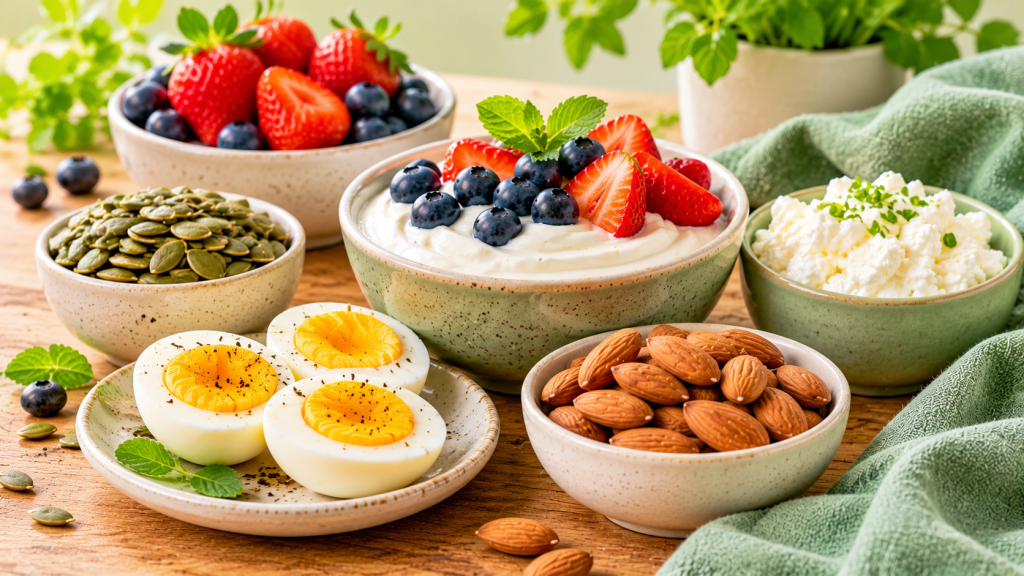
Step 1: Ignore the Front of the Pack
Words like “natural,” “wholesome,” “protein,” “high fibre,” “no added sugar,” “baked,” “gluten-free” and “plant-based” are marketing. Turn the pack over.
Step 2: Check the Serving Size
Many packs contain two or more servings. If you will eat the whole bag, double the numbers.
Step 3: Scan Five Numbers
| Check | Look for |
|---|---|
| Calories per serving | Fits your snack range |
| Added sugars | Low; under about 5 g if possible |
| Sodium | Lower is better |
| Fibre | Higher is better |
| Protein | Helpful for fullness |
Step 4: Read the Ingredient List
Ingredients are listed from most to least by weight. Look for:
- Whole foods first (nuts, oats, fruit, seeds)
- Sugar by other names: syrup, nectar, concentrate, maltodextrin, dextrose, honey, cane juice
- Refined flours and oils high on the list
- A short list you can recognise
Step 5: Watch for “Health Halo” Traps
| Product | Why it can mislead |
|---|---|
| Granola and cereal bars | Often high in added sugar and low in protein |
| Flavoured yoghurts and yoghurt pots | May contain as much sugar as dessert |
| Vegetable or “veggie” crisps | May be as high in fat and salt as regular crisps |
| Dried fruit and fruit snacks | Concentrated sugar; easy to overeat |
| Protein bars | Some are essentially candy bars with added protein |
| Smoothies and juices | Liquid sugar with little fibre |
| “Baked” or “light” chips | May still be high in salt and refined starch |
| Trail mix with chocolate or candy pieces | Calorie-dense and sugary |
| Rice cakes and puffed snacks | Low in fibre and protein unless paired with a topping |
A consumer organisation in the UK reported that some snacks marketed as healthy contained high levels of sugar, fat or salt, which is a good reason to compare labels instead of trusting claims.
Step 6: Compare Two Products
Pick two similar items, compare added sugar, sodium, fibre and protein per serving or per 100 g, then choose the better one. Over weeks, this habit makes a real difference.
Traffic-Light Labels (UK) and Nutrition Facts (US)
| Region | Tip |
|---|---|
| UK | Front-of-pack traffic lights: choose more greens and ambers, fewer reds for fat, saturated fat, sugars and salt |
| US | Use the “% Daily Value” column: 5 percent or less is low, 20 percent or more is high for a nutrient |
| Elsewhere | Check the nutrition panel per 100 g and per serving |
A Quick Note on Ultra-Processed Snacks
Many packaged snacks are “ultra-processed,” meaning they contain ingredients and additives you would not use in a home kitchen. Research linking high intake of ultra-processed foods with poorer health is largely observational, and not every processed food is unhealthy. Some, such as plain yoghurt, canned beans, whole-grain bread or frozen fruit, are useful. A practical approach: choose mostly whole or minimally processed snacks, and enjoy the occasional packaged treat without guilt.
100+ Healthy Snack Ideas by Type
Here is the heart of the guide. All calorie figures are rough estimates for typical portions and vary by brand and size. Check labels.
Fruit-Based Snacks (Sweet, Fresh and Fibre-Rich)
| # | Snack | Why it works | Approx. calories |
|---|---|---|---|
| 1 | Apple slices with peanut butter | Fibre plus protein and fat | 190 |
| 2 | Banana with a small handful of almonds | Carbs for energy, fat and protein for staying power | 200 |
| 3 | Berries with plain Greek yoghurt | Protein and antioxidants | 150 |
| 4 | Orange and a few walnuts | Vitamin C plus healthy fat | 150 |
| 5 | Pear with a slice of cheese | Sweet and savoury | 170 |
| 6 | Frozen grapes | Cold, sweet and slow to eat | 60 |
| 7 | Watermelon cubes with feta and mint | Hydrating, refreshing | 90 |
| 8 | Kiwi and cottage cheese | Vitamin C and protein | 130 |
| 9 | Mango slices with lime and chilli | Bright flavour, lots of vitamins | 100 |
| 10 | Baked apple with cinnamon | Warm and comforting | 100 |
| 11 | Banana “ice cream” (frozen banana blended) | Creamy dessert style with no added sugar | 105 |
| 12 | Dates stuffed with almond butter (2) | Sweet treat; mind the portion | 180 |
| 13 | Fruit salad with a spoon of yoghurt | Easy and colourful | 120 |
| 14 | Dried apricots (4) with a few pistachios | Fibre and iron; dried fruit is concentrated | 160 |
| 15 | Strawberries dipped in a little dark chocolate | A treat with fruit | 120 |
Vegetable-Based Snacks (Crunchy, Light and Filling)
| # | Snack | Why it works | Approx. calories |
|---|---|---|---|
| 16 | Carrot sticks with hummus | Fibre and plant protein | 100 |
| 17 | Cucumber slices with tzatziki | Cooling and low calorie | 60 |
| 18 | Celery with almond or peanut butter | Classic crunch | 120 |
| 19 | Cherry tomatoes with mozzarella balls | Protein and flavour | 120 |
| 20 | Bell pepper strips with guacamole | Vitamin C and healthy fat | 130 |
| 21 | Snap peas with a yoghurt-herb dip | Sweet crunch | 80 |
| 22 | Roasted broccoli florets with lemon | Warm and savoury | 70 |
| 23 | Baked sweet potato rounds with cinnamon | Fibre and natural sweetness | 130 |
| 24 | Radishes with butter and salt (a little) | A French-style classic | 60 |
| 25 | Avocado half with lemon and pepper | Healthy fats; filling | 160 |
| 26 | Cabbage or lettuce wraps with tuna salad | Low carb | 150 |
| 27 | Kale chips baked with olive oil | Crispy, light | 80 |
| 28 | Cucumber “sandwiches” with cream cheese and smoked salmon | Elegant and quick | 110 |
| 29 | Edamame in the pod with sea salt | Protein and fibre | 120 |
| 30 | Pickled vegetables with cheese | Tangy; watch sodium | 100 |
Protein-Packed Snacks (To Keep You Full)
| # | Snack | Why it works | Approx. calories |
|---|---|---|---|
| 31 | Hard-boiled egg with pepper | About 6 g protein, portable | 75 |
| 32 | Greek yoghurt with a drizzle of honey and nuts | Protein and crunch | 180 |
| 33 | Cottage cheese with pineapple or tomato | High protein, sweet or savoury | 130 |
| 34 | String cheese with an apple | Easy on the go | 160 |
| 35 | Turkey and cheese roll-ups | Low carb, high protein | 120 |
| 36 | Tuna on whole-grain crackers | Protein and omega-3 | 170 |
| 37 | Roasted chickpeas | Crunchy plant protein | 130 |
| 38 | Tofu cubes with soy and sesame | Plant protein | 100 |
| 39 | Skyr or high-protein yoghurt with berries | Thick and filling | 140 |
| 40 | Egg muffin (mini frittata) | Make ahead | 90 |
| 41 | Smoked salmon on cucumber rounds | Omega-3 and protein | 90 |
| 42 | Lentil salad cup | Fibre and protein | 150 |
| 43 | Protein smoothie (milk or soy milk, fruit, yoghurt) | Drinkable snack | 200 |
| 44 | Beef or turkey jerky (low sodium) | Portable; check salt and sugar | 80 |
| 45 | Peanut butter on a rice cake | Light base plus protein | 150 |
Nuts, Seeds and Healthy Fats (Small Portions, Big Satisfaction)
| # | Snack | Why it works | Approx. calories |
|---|---|---|---|
| 46 | A small handful of almonds (about 23, 1 oz) | Vitamin E, fibre, protein | 165 |
| 47 | Walnuts (about 14 halves) | Plant omega-3 | 185 |
| 48 | Pistachios in the shell | Shelling slows you down | 160 |
| 49 | Pumpkin seeds (pepitas) | Magnesium and zinc | 150 |
| 50 | Sunflower seed butter on celery | Nut-free option | 130 |
| 51 | Homemade trail mix (nuts, seeds, a few raisins) | Control the sugar | 180 |
| 52 | Chia pudding (small) | Fibre and omega-3 | 150 |
| 53 | Olives (a small handful) | Healthy fat; watch salt | 60 |
| 54 | Avocado toast mini (half slice) | Fibre and fat | 120 |
| 55 | Nut butter and banana “sushi” rolls | Fun for kids | 170 |
Portion tip: nuts and seeds are healthy but dense in calories. Pre-portion into small containers instead of eating from the bag.
Crunchy and Salty Snacks (Satisfy the Chips Craving)
| # | Snack | Why it works | Approx. calories |
|---|---|---|---|
| 56 | Air-popped popcorn with olive oil and herbs | Whole grain, high volume | 100 (3 cups) |
| 57 | Roasted chickpeas with paprika | Crunch with fibre and protein | 130 |
| 58 | Whole-grain crackers with hummus | Filling | 150 |
| 59 | Baked sweet potato fries | Savoury and sweet | 140 |
| 60 | Seaweed snacks | Light and salty | 30 |
| 61 | Cucumber chips with a pinch of salt and chilli | Low calorie | 40 |
| 62 | Crispy kale chips | Light crunch | 80 |
| 63 | Roasted edamame | Crunchy and protein-rich | 130 |
| 64 | Lightly salted nuts | Satisfying; watch portion | 170 |
| 65 | Whole-wheat pita chips baked at home | Control oil and salt | 120 |
Sweet Snacks That Do Not Wreck Your Day
| # | Snack | Why it works | Approx. calories |
|---|---|---|---|
| 66 | Dark chocolate (a small square or two) with almonds | A treat with fibre and fat | 150 |
| 67 | Greek yoghurt with cocoa and berries | Dessert-like | 150 |
| 68 | Overnight oats in a small jar | Fibre; make ahead | 200 |
| 69 | Baked cinnamon apple chips | Crispy, no added sugar | 70 |
| 70 | Frozen yoghurt bark with berries | Cold treat | 90 |
| 71 | Banana and peanut butter quesadilla (half) | Warm and indulgent | 180 |
| 72 | Chia pudding with berries | Creamy | 150 |
| 73 | Energy bites (oats, nut butter, dates) | Make ahead | 90 each |
| 74 | Cottage cheese with cinnamon and apple | Protein-rich sweet | 140 |
| 75 | Hot cocoa made with milk and unsweetened cocoa | Warm comfort | 130 |
Warm and Comforting Snacks (For Cold Days and Evenings)
| # | Snack | Why it works | Approx. calories |
|---|---|---|---|
| 76 | Small bowl of lentil or vegetable soup | Filling and warming | 120 |
| 77 | Miso soup with tofu | Light; watch sodium | 60 |
| 78 | Warm oatmeal with cinnamon and a spoon of nut butter | Fibre | 200 |
| 79 | Baked sweet potato with a spoon of yoghurt | Comforting | 150 |
| 80 | Scrambled egg in a whole-wheat wrap (half) | Protein | 150 |
| 81 | Herbal tea with a small piece of fruit | Calming | 60 |
| 82 | Roasted chickpea and vegetable cup | Savoury | 150 |
| 83 | Warm milk with cinnamon | Soothing before bed | 100 |
No-Cook and 60-Second Snacks
| # | Snack |
|---|---|
| 84 | Apple plus cheese slice |
| 85 | Banana plus nut butter spoon |
| 86 | Yoghurt plus berries |
| 87 | Hummus plus cut vegetables |
| 88 | Cottage cheese plus fruit |
| 89 | Handful of nuts plus a clementine |
| 90 | Whole-grain cracker plus tuna pouch |
| 91 | Boiled egg (pre-made) |
| 92 | Cheese plus cherry tomatoes |
| 93 | Peanut butter on a rice cake |
| 94 | Edamame (frozen, microwaved) |
| 95 | Overnight oats from the fridge |
| 96 | Dates plus almond |
| 97 | Cucumber plus tzatziki |
| 98 | Avocado with lemon and salt |
| 99 | Smoothie (blend in two minutes) |
| 100 | Trail mix you prepared on Sunday |
| 101 | Frozen grapes |
| 102 | Turkey roll-ups |
| 103 | Roasted chickpeas from a jar you made earlier |
Snack Pairing Cheat Sheet
| If you crave… | Try… |
|---|---|
| Sweet | Fruit plus yoghurt, dates with nut butter, dark chocolate with nuts |
| Salty and crunchy | Popcorn, roasted chickpeas, seaweed, lightly salted nuts |
| Creamy | Greek yoghurt, avocado, hummus, cottage cheese |
| Chewy | Dried fruit (small portion), jerky, energy bites |
| Cold | Frozen grapes, yoghurt bark, banana ice cream |
| Warm | Soup, oatmeal, baked sweet potato |
| Something filling | Egg, cottage cheese, nuts, hummus and veg |
Healthy Snacks for Weight Loss (Without Feeling Deprived)
Snacks do not cause weight gain or weight loss on their own. What matters is total calories over the day and whether your snacks keep you full or leave you hungry. Snacks that combine protein, fibre and water-rich volume tend to be more satisfying per calorie than refined, low-fibre, sugary options.
The Weight-Management Snack Rules
| Rule | How to do it |
|---|---|
| Aim for 100 to 150 calories | A small, satisfying portion |
| Build around protein and fibre | Eggs, yoghurt, cottage cheese, vegetables, fruit, beans |
| Choose volume | Vegetables, berries and popcorn give a lot to eat for few calories |
| Pre-portion | Put a serving in a bowl or container, not the whole bag |
| Sit down and eat slowly | Mindful eating helps you notice fullness |
| Plan, do not improvise | Decide your snack before hunger peaks |
| Drink water | Thirst can feel like hunger |
| Do not “save” all your calories for snacks | Eat regular balanced meals |
20 Weight-Friendly Snacks Under About 150 Calories
| Snack | Approx. calories |
|---|---|
| Cucumber slices with tzatziki | 60 |
| Hard-boiled egg | 75 |
| 1 cup berries | 70 |
| Carrots with 2 tbsp hummus | 100 |
| Air-popped popcorn (3 cups) | 100 |
| Greek yoghurt (3/4 cup, plain) with cinnamon | 100 |
| Cottage cheese (1/2 cup) | 90 |
| Apple with 1 tsp peanut butter | 120 |
| Celery with 1 tbsp almond butter | 110 |
| Cherry tomatoes with 1 mozzarella ball | 100 |
| Edamame (1/2 cup shelled) | 100 |
| Turkey roll-ups (3) | 100 |
| Orange and a few almonds | 130 |
| Seaweed snacks | 30 |
| Roasted chickpeas (1/4 cup) | 130 |
| Pear slices | 100 |
| Frozen grapes (1 cup) | 100 |
| Bell pepper with 2 tbsp guacamole | 90 |
| Smoked salmon on cucumber (3 rounds) | 80 |
| Small bowl of vegetable soup | 100 |
What the Research Says
Research reviews on snack foods and fullness generally find that the type of snack matters more than whether you snack. Higher-protein and higher-fibre snacks tend to improve fullness, while refined, sugary snacks are less filling. Study results vary and many are short-term, so treat these as practical tendencies, not guarantees.
Weight-Loss Snack Mistakes
| Mistake | Fix |
|---|---|
| “Healthy” snacks in big portions | Nuts, dried fruit and granola are healthy but calorie-dense; measure them |
| Liquid calories | Juices and sweet coffees do not fill you; choose water or unsweetened drinks |
| Eating straight from the bag | Portion into a bowl |
| Skipping meals then overeating snacks | Eat balanced meals |
| Snacking while distracted | Eat without screens |
| “Diet” snacks that are highly processed | Choose whole foods most of the time |
| Rewarding workouts with large snacks | A workout burns less than most people think; refuel sensibly |
Healthy Snacks for Steady Energy (Beat the Afternoon Slump)
If you feel sleepy or foggy around 3 p.m., a snack with slow-release carbohydrate plus protein or fat can help many people. Poor sleep, dehydration and long gaps between meals are also common causes of low energy.
Energy Snack Formula
Complex carbohydrate (fibre-rich) + protein or healthy fat = steadier energy.
| Energy snack | Why it works |
|---|---|
| Apple with peanut butter | Fibre plus fat and protein |
| Greek yoghurt with berries and oats | Protein and slow carbs |
| Whole-grain toast with avocado | Fibre and healthy fat |
| Banana with almonds | Quick and lasting energy |
| Hummus with whole-grain crackers | Complex carbs and protein |
| Oatmeal cup | Slow-release carbs |
| Trail mix (nuts, seeds, a few raisins) | Energy dense; keep portions small |
| Cottage cheese with fruit | Protein plus natural sugar |
| Hard-boiled egg and an orange | Protein plus vitamin C |
| Roasted chickpeas and an apple | Fibre and crunch |
Habits That Support Afternoon Energy
- Do not skip lunch, and include protein, fibre and vegetables.
- Drink water through the day.
- Take a short walk or stretch break.
- Get daylight.
- Watch caffeine late in the day, since it can disturb sleep.
- Sleep enough, because no snack beats rest.
If you feel unusually tired most of the time, speak to a doctor, as fatigue can have medical causes.
High-Protein Snacks (For Fullness, Muscle and Busy Days)
| Snack | Approx. protein | Notes |
|---|---|---|
| Greek yoghurt (3/4 cup, plain nonfat) | 15 to 17 g | Add fruit |
| Cottage cheese (1/2 cup) | 12 to 14 g | Sweet or savoury |
| Hard-boiled egg | 6 g | Portable |
| Two hard-boiled eggs | 12 g | A mini meal |
| Edamame (1/2 cup shelled) | 9 to 10 g | Fibre too |
| Almonds (1 oz) | 6 g | Portion carefully |
| Peanut butter (2 tbsp) | 7 to 8 g | Watch added sugar and salt |
| Tuna pouch (3 oz) | 15 to 20 g | Pair with crackers |
| Turkey roll-ups (3 slices) | 10 g | Check sodium |
| String cheese | 6 to 8 g | Easy |
| Tofu cubes (1/2 cup) | 10 g | Plant based |
| Roasted chickpeas (1/2 cup) | 6 to 7 g | Crunchy |
| Skyr (3/4 cup) | 15 to 18 g | Thick and creamy |
| Lentil salad (1/2 cup) | 9 g | Fibre rich |
| Milk or soy milk (1 cup) | 7 to 8 g | Drink or smoothie base |
Protein values are approximate and vary by product.
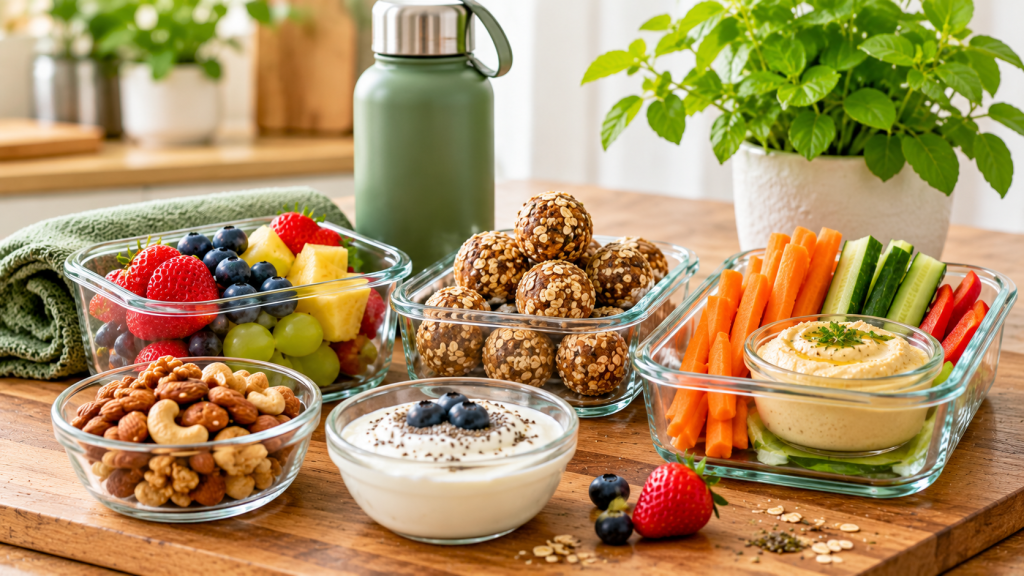
Protein Powders and Bars: Are They Needed?
Most people can get enough protein from food. Powders and bars can be convenient, but many bars are high in added sugar, sugar alcohols and calories. If you use them, check the label for protein, added sugar and ingredient quality, and prefer products with short, understandable ingredient lists. People with kidney disease should talk to their doctor before raising protein intake.
Heart-Healthy Snacks
For heart health, the emphasis is on fibre, unsaturated fats, vegetables and fruit, and low sodium and saturated fat.
| Snack | Why it fits |
|---|---|
| Unsalted nuts (almonds, walnuts) | Unsaturated fat and fibre |
| Apple or pear with a spoon of nut butter | Fibre |
| Oatmeal with berries | Soluble fibre |
| Hummus with vegetables | Plant protein and fibre |
| Avocado on whole-grain toast | Unsaturated fat |
| Salmon or sardines on whole-grain crackers | Omega-3 fats |
| Edamame (unsalted or lightly salted) | Plant protein |
| Berries with plain yoghurt | Antioxidants |
| Air-popped popcorn (light salt) | Whole grain |
| Fruit and a few seeds | Simple and fresh |
Heart-Smart Tips
- Choose unsalted or lightly salted nuts and crackers.
- Limit processed meats such as salami and many jerkies, which are often high in salt.
- Watch cheese portions, as cheese can be high in saturated fat and sodium.
- Read labels for sodium.
- If you have heart disease, high blood pressure or high cholesterol, follow your clinician’s advice.
Snacks for Blood Sugar Awareness (General Information, Not Medical Advice)
Many people want snacks that avoid big spikes and crashes. In general, pairing carbohydrate with protein, fat and fibre slows digestion and tends to be gentler than eating refined carbohydrate alone.
| Snack | Why it may be gentler |
|---|---|
| Apple with peanut butter | Fibre and fat slow absorption |
| Greek yoghurt with berries | Protein and fibre |
| Nuts (small portion) | Fat, fibre and protein |
| Carrots with hummus | Low carbohydrate and high fibre |
| Cottage cheese with tomato | Protein-rich |
| Hard-boiled egg | No carbohydrate |
| Whole-grain crackers with cheese | Mixed nutrients |
| Chia pudding (unsweetened) | Fibre |
Important: if you have diabetes or prediabetes, or take medicines that affect blood sugar, your snacks, timing and carbohydrate amounts should be planned with your doctor, diabetes educator or dietitian. Do not change medicines or diet based on a general article.
Snacks for Gut Health and Fibre
Most adults eat less fibre than recommended. Adding fibre-rich snacks gradually, together with water, can help.
| Snack | Fibre source |
|---|---|
| Raspberries or pears | Fruit fibre |
| Chia pudding | Soluble fibre |
| Oatmeal or overnight oats | Beta-glucan |
| Hummus with vegetables | Legume fibre |
| Popcorn | Whole grain |
| Almonds or pistachios | Nut fibre |
| Plain yoghurt or kefir with fruit | Fermented dairy plus fibre |
| Roasted chickpeas | Legume fibre |
| Avocado | Fibre and fat |
| Sauerkraut or kimchi (small portion) | Fermented foods; watch sodium |
Tip: increase fibre slowly to avoid gas and bloating. If you have digestive conditions, ask your clinician about suitable foods.
Pre- and Post-Workout Snacks
| When | Aim | Examples |
|---|---|---|
| 30 to 60 minutes before a workout | Easy-to-digest carbohydrate, little fibre or fat | Banana, toast with honey, a small yoghurt, dates |
| After a workout | Carbohydrate plus protein | Chocolate milk, Greek yoghurt with fruit, a smoothie, egg and toast, cottage cheese with fruit |
| Long or intense sessions | More carbohydrate and fluid | Follow a sports dietitian’s advice |
If you are exercising lightly (a walk or our 7-minute morning workout), you often do not need a special snack. Eat when you feel hungry.
Late-Night and Evening Snacks
A light snack before bed can help if you are truly hungry. A very heavy or spicy snack close to bedtime can disturb sleep for some people.
| Snack | Notes |
|---|---|
| Small bowl of oatmeal or cereal with milk | Comforting |
| Banana with a spoon of peanut butter | Easy |
| Plain yoghurt with berries | Light |
| Whole-grain toast with a little cheese | Savoury |
| Warm milk or a herbal tea with a small piece of fruit | Calming |
| A few nuts and a small piece of fruit | Quick |
| Cottage cheese with cinnamon | Protein |
Tips: choose smaller portions, avoid caffeine and large amounts of sugar late and brush your teeth afterwards to mark the end of eating.
Plant-Based and Vegan Snacks
| Snack | Protein or key nutrient |
|---|---|
| Roasted chickpeas | Protein and fibre |
| Hummus with vegetables | Protein |
| Edamame | Complete plant protein |
| Tofu cubes or baked tofu bites | Protein |
| Nuts and seeds | Fat, protein, minerals |
| Chia pudding with plant milk | Omega-3 and fibre |
| Peanut butter on rice cakes | Protein |
| Fortified soy yoghurt with berries | Protein, calcium |
| Energy bites with oats and dates | Energy |
| Fruit with almond butter | Fibre and fat |
| Lentil salad cups | Protein and iron |
| Guacamole with vegetables | Healthy fat |
Nutrient note: if you eat a fully plant-based diet, make sure you have a reliable source of vitamin B12 and consider calcium, vitamin D, iodine and omega-3 sources.
Low-Carb and Keto-Friendly Snacks
| Snack | Why it fits |
|---|---|
| Hard-boiled eggs | Almost no carbohydrate |
| Cheese cubes and olives | Low carb |
| Cucumber with cream cheese and smoked salmon | Low carb |
| Almonds, pecans or walnuts | Low net carbs |
| Celery with nut butter | Low carb |
| Avocado with lemon and salt | Low carb |
| Turkey roll-ups with cheese | Low carb |
| Pork rinds (occasional) | Zero carb but high in sodium and fat |
| Cottage cheese with a few berries | Moderate protein |
| Chia pudding made with unsweetened milk | Fibre |
If you follow a ketogenic diet, check labels carefully for hidden carbohydrate, and see our guide to leaving keto gradually if you plan to reintroduce carbohydrate.
Gluten-Free and Dairy-Free Snacks
| Need | Ideas |
|---|---|
| Gluten-free | Fruit, vegetables with hummus, nuts, popcorn, rice cakes with nut butter, yoghurt with berries, boiled eggs. Check labels for oats and processed foods if you have coeliac disease |
| Dairy-free | Fruit with nut butter, hummus and veg, roasted chickpeas, trail mix, coconut yoghurt or fortified soy yoghurt, avocado toast |
| Nut-free | Seeds, sunflower seed butter, hummus, fruit, popcorn (for older children and adults), cheese, yoghurt |
Healthy Snacks for Real-Life Situations
The best snack is the one that fits where you are. Here are ideas and practical tips for common situations.
At the Office or Working From Home
The challenge: boredom, stress, free biscuits in the kitchen and long meetings.
| Snack | Why it works at work |
|---|---|
| Small bag of nuts and a piece of fruit | No fridge needed |
| Greek yoghurt cup (keep in the office fridge) | Protein |
| Hummus and carrot sticks | Crunchy and tidy |
| Whole-grain crackers and cheese | Easy |
| Hard-boiled eggs (prepared at home) | Portable protein |
| Popcorn (air-popped) in a container | Light and satisfying |
| Trail mix portioned in small bags | Easy to grab |
| Banana or apple | No prep |
| Overnight oats in a jar | Make ahead |
| Roasted chickpeas | Desk-friendly crunch |
Office tips
- Keep a “snack drawer” stocked with healthy, shelf-stable options such as nuts, whole-grain crackers, tuna pouches and unsweetened oatmeal cups.
- Keep a water bottle visible and refill it often.
- Plan your snack time, for example 10:30 a.m. and 3:30 p.m., instead of grazing all day.
- Move away from the desk while you eat, even for five minutes.
- Use the office fridge for yoghurt, cut vegetables and hummus.
- Bring a treat on purpose if you enjoy one, so it is a choice instead of a reaction.
For Kids and Teens (After School and Beyond)
Children often have small stomachs and big energy needs, so snacks can fill gaps between meals. Offer nutritious options at regular times, and let children decide how much to eat from what you offer.
| Snack | Notes |
|---|---|
| Sliced apple with sunflower seed butter or peanut butter (if no allergy) | Spread thinly |
| Yoghurt with berries | Calcium and protein |
| Cheese cubes (small) and whole-grain crackers | Easy |
| Hummus with soft vegetable sticks | Fibre |
| Banana “sushi” rolls | Fun |
| Mini egg muffins | Protein |
| Smoothies with spinach and fruit | Hidden greens |
| Air-popped popcorn (for older children) | Whole grain |
| Fruit kebabs | Visual appeal |
| Oat energy bites (nut-free version) | School-friendly if nut-free |
| Quesadilla triangles with beans and cheese | Filling |
| Frozen yoghurt tubes or banana pops | Cool treat |
Safety for young children
| Concern | Guidance |
|---|---|
| Choking hazards | Whole nuts, whole grapes, popcorn, hard raw vegetables, large chunks of cheese or meat and sticky spoonfuls of nut butter can be choking hazards for young children. Cut grapes lengthwise, grate or cook hard vegetables, spread nut butter thinly and always supervise eating |
| Allergies | Check school allergy rules and read labels. If your child has a diagnosed allergy, follow your doctor’s plan |
| Early allergen introduction | Ask your paediatrician about the right way and time to introduce common allergens |
| Sitting while eating | Children should sit while eating, not run or lie down |
| Sweet drinks | Offer water or milk instead of juice and soda |
Family-friendly planning: if you plan snacks for the whole household, a family wellness tracker can help you organise meals, snacks and routines. You will find ours in the planner section.
For Teenagers
Teens often have bigger appetites and busy schedules. Keep an easy, visible stock of fruit, yoghurt, nuts, cheese, wholegrain crackers, hummus, eggs and leftovers. Involve them in choosing and prepping snacks. Avoid labelling foods as “good” or “bad,” and encourage listening to hunger. If you are worried about a teenager’s relationship with food, speak with a doctor.
For Travel and Road Trips
| Snack | Why it travels well |
|---|---|
| Nuts and seeds (portioned) | Shelf-stable |
| Whole fruit (apples, bananas, clementines) | Natural packaging |
| Whole-grain crackers and cheese sticks | Easy |
| Dried fruit (small portion) | Light |
| Roasted chickpeas | Crunchy |
| Jerky (low sodium) | Protein |
| Sandwich halves or wraps | Filling |
| Hard-boiled eggs (if cooled) | Protein |
| Oat bars (homemade) | Energy |
| Carrots and snap peas in a cool bag | Crunchy |
| Water bottle | Essential |
Travel tips
- Pack snacks before you leave so you are not stuck with petrol-station options.
- Use a small cooler for yoghurt, cheese and eggs, and keep perishable foods cold.
- Check airline rules about liquids and spreads in hand luggage.
- Wash fruit before you go.
- Stop and stretch instead of eating out of boredom.
For Studying or Screen Time
Snacks during study sessions should keep you alert without a sugar crash.
| Snack | Why |
|---|---|
| Berries and nuts | Brain-friendly staples |
| Dark chocolate (small square) and almonds | Treat with fibre |
| Apple and peanut butter | Steady energy |
| Greek yoghurt | Protein |
| Whole-grain toast with avocado | Filling |
| Popcorn | Light |
| Banana | Quick energy |
| Water or herbal tea | Hydration |
Tip: put your snack into a bowl instead of eating straight from the packet while working. It makes it easier to notice when you are full.
For Movie Night and Social Events
You do not need to give up fun foods. A few swaps keep the evening enjoyable:
| Instead of… | Try… |
|---|---|
| Large bag of chips | Air-popped popcorn with olive oil, paprika or nutritional yeast |
| Sugary sweets | Frozen grapes, berries with dark chocolate or fruit skewers |
| Creamy dips with chips | Hummus, guacamole or yoghurt dip with vegetables and baked pita |
| Candy | Dates stuffed with almond butter |
| Soda | Sparkling water with fruit slices |
| Whole bag of nuts | Small bowls to share |
Party tip: eat a balanced meal or small snack before you go so that you are not ravenous when you arrive, and fill a small plate instead of grazing from the table.
For Hiking, Sport and Outdoor Days
| Snack | Why |
|---|---|
| Trail mix | Energy dense |
| Banana | Potassium and quick carbohydrate |
| Nut butter sandwich or wrap | Sustained energy |
| Dried fruit and nuts | Light |
| Energy bites or oat bars | Portable |
| Boiled potatoes with salt (for long efforts) | Carbohydrate and sodium |
| Water and electrolyte drink if sweating a lot | Hydration |
For Night-Shift Workers
| Tip | Details |
|---|---|
| Aim for a main meal and two snacks | Keep a rhythm |
| Choose protein and fibre snacks | Greek yoghurt, nuts, fruit, hummus |
| Avoid heavy, sugary snacks late in the shift | They can worsen energy dips |
| Limit caffeine late in the shift | Protect your sleep |
| Pack your food | Vending machines are the biggest trap |
For Older Adults
| Consideration | Snack ideas |
|---|---|
| Appetite may be smaller | Nutrient-dense options: yoghurt, cheese, nut butter on toast, eggs, soups |
| Protein needs may be higher | Cottage cheese, Greek yoghurt, eggs, tuna, milk, lentils |
| Chewing or swallowing difficulty | Soft options such as smoothies, yoghurt, mashed avocado, soft fruit |
| Blood pressure | Watch sodium |
| Medicines | Ask your doctor or pharmacist about food interactions |
For Pregnancy and Breastfeeding
Nutritional needs and food safety rules change during pregnancy and breastfeeding. This guide is general. Please follow your doctor’s or midwife’s advice about foods to avoid, supplements and portions, and ask whether specific snacks, such as soft cheeses, deli meats, raw or undercooked eggs and certain fish, are appropriate for you.
Snack Ideas by Time of Day
| Time | Goal | Ideas |
|---|---|---|
| Mid-morning | Bridge breakfast and lunch | Yoghurt with fruit, boiled egg and orange, nuts and an apple |
| Early afternoon | Prevent the slump | Hummus and veggies, cottage cheese and fruit, whole-grain toast with avocado |
| Late afternoon | Stop pre-dinner overeating | Apple and peanut butter, cheese and crackers, edamame |
| After dinner | Satisfy a sweet craving | Berries and yoghurt, dark chocolate and almonds, baked apple |
| Before bed | Light and calming | Banana, warm milk, small oatmeal |
Snacks by Budget
| Budget tip | Ideas |
|---|---|
| Cheapest staples | Bananas, apples, carrots, oats, eggs, peanut butter, popcorn kernels, dried beans |
| Buy in bulk | Oats, nuts, seeds, dried chickpeas (roast at home) |
| Use frozen | Berries, edamame, mixed vegetables |
| Make your own | Hummus, trail mix, energy bites, popcorn |
| Compare per-serving cost | Single-serve packs cost more than bulk |
| Seasonal produce | Cheaper and tastier |
A Cost Comparison (Illustrative)
| Snack | Typical cost per serving (varies widely by region) |
|---|---|
| Homemade popcorn | Very low |
| Banana or apple | Low |
| Homemade hummus and carrots | Low |
| Hard-boiled egg | Low |
| Packaged protein bar | Higher |
| Individual snack packs of nuts | Higher than buying in bulk |
Prices differ by country and store, so compare locally.
10 Easy Homemade Healthy Snack Recipes
Homemade snacks usually cost less than packaged ones and let you control sugar and salt. Nutrition numbers are approximate estimates and depend on your ingredients.
Recipe 1: No-Bake Oat Energy Bites
Makes: about 16 bites | Time: 10 minutes plus chilling | Approx. per bite: 90 calories
| Ingredient | Amount |
|---|---|
| Rolled oats | 1 cup |
| Peanut or almond butter | 1/2 cup |
| Honey or maple syrup | 1/4 cup |
| Ground flaxseed or chia seeds | 2 tablespoons |
| Dark chocolate chips (optional) | 2 tablespoons |
| Vanilla and a pinch of salt | To taste |
Method
- Mix all ingredients in a bowl until sticky.
- Chill for 20 to 30 minutes.
- Roll into small balls.
- Store in the fridge for up to a week or freeze for up to three months.
Tips: use sunflower seed butter for a nut-free version. Keep portions to one or two bites.
Recipe 2: Crispy Roasted Chickpeas
Makes: about 4 servings | Time: 35 minutes | Approx. per serving: 130 calories
| Ingredient | Amount |
|---|---|
| Canned chickpeas, drained and rinsed | 1 can (about 400 g) |
| Olive oil | 1 tablespoon |
| Smoked paprika, cumin or cinnamon | 1 teaspoon |
| Salt | A pinch |
Method
- Heat the oven to about 200°C (400°F).
- Dry the chickpeas thoroughly with a towel.
- Toss with oil, spices and salt.
- Roast for 25 to 30 minutes, shaking the tray halfway, until crisp.
- Cool before storing in an open container (sealed containers make them soften).
Variations: sweet version with cinnamon and a touch of maple syrup.
Recipe 3: Smooth Hummus (Classic)
Makes: about 1 1/2 cups | Time: 10 minutes | Approx. per 2 tablespoons: 70 calories
| Ingredient | Amount |
|---|---|
| Canned chickpeas, drained | 1 can |
| Tahini | 3 tablespoons |
| Lemon juice | 3 tablespoons |
| Garlic | 1 small clove |
| Olive oil | 2 tablespoons |
| Cold water | 2 to 4 tablespoons |
| Salt and cumin | To taste |
Method
- Blend chickpeas, tahini, lemon juice and garlic until crumbly.
- Add olive oil and cold water gradually while blending until smooth.
- Season and taste.
- Serve with vegetables or whole-grain pita. Keeps in the fridge for about 4 days.
Recipe 4: Greek Yoghurt Berry Bark
Makes: about 8 pieces | Time: 10 minutes plus freezing | Approx. per piece: 60 calories
| Ingredient | Amount |
|---|---|
| Plain Greek yoghurt | 2 cups |
| Honey | 1 to 2 tablespoons |
| Berries | 1 cup |
| Chopped nuts or seeds (optional) | 2 tablespoons |
Method
- Line a tray with baking paper.
- Mix yoghurt and honey and spread about 1 cm thick.
- Scatter berries and nuts on top.
- Freeze for 2 to 3 hours, then break into pieces.
- Store in the freezer in a sealed container.
Recipe 5: Apple “Nachos”
Makes: 2 servings | Time: 5 minutes | Approx. per serving: 200 calories
| Ingredient | Amount |
|---|---|
| Apples, thinly sliced | 2 |
| Peanut or almond butter, warmed | 2 tablespoons |
| Chopped nuts or seeds | 1 tablespoon |
| Dark chocolate chips | 1 tablespoon |
| Cinnamon | A pinch |
Method: arrange apple slices on a plate, drizzle with warmed nut butter and sprinkle toppings. Serve right away.
Recipe 6: Mini Egg Muffins
Makes: 12 muffins | Time: 25 minutes | Approx. per muffin: 60 calories
| Ingredient | Amount |
|---|---|
| Eggs | 8 |
| Chopped spinach, peppers or tomatoes | 1 1/2 cups |
| Grated cheese (optional) | 1/2 cup |
| Salt, pepper and herbs | To taste |
Method
- Heat the oven to 180°C (350°F) and grease a 12-hole muffin tin.
- Beat eggs with seasoning and divide the vegetables and cheese among the holes.
- Pour in the egg mixture.
- Bake for 15 to 20 minutes until set.
- Cool and refrigerate for up to 4 days, or freeze.
Recipe 7: Overnight Oats Jar
Makes: 1 serving | Time: 5 minutes plus overnight | Approx.: 250 calories
| Ingredient | Amount |
|---|---|
| Rolled oats | 1/3 cup |
| Milk or plant milk | 1/2 cup |
| Plain yoghurt | 1/4 cup |
| Chia seeds | 1 teaspoon |
| Berries or chopped fruit | 1/2 cup |
| Cinnamon | A pinch |
Method: mix everything in a jar, refrigerate overnight and top with fruit in the morning. Make a small jar as a snack or a larger jar for breakfast.
Recipe 8: Baked Sweet Potato Rounds
Makes: 4 servings | Time: 30 minutes | Approx. per serving: 110 calories
| Ingredient | Amount |
|---|---|
| Sweet potatoes, sliced into thin rounds | 2 medium |
| Olive oil | 1 tablespoon |
| Cinnamon or paprika | 1 teaspoon |
| Salt | A pinch |
Method: toss slices with oil and spices, spread in a single layer and bake at 200°C (400°F) for 20 to 25 minutes, turning once. Top with Greek yoghurt or hummus.
Recipe 9: Air-Popped Popcorn With Flavour Twists
Makes: 2 to 3 servings | Time: 5 minutes | Approx. per 3 cups: 100 calories
| Base | Amount |
|---|---|
| Popcorn kernels | 1/4 cup |
Flavour ideas
| Style | Toppings |
|---|---|
| Savoury | A little olive oil, nutritional yeast, a pinch of salt |
| Spicy | Smoked paprika, chilli flakes |
| Sweet | Cinnamon and a tiny drizzle of honey |
| Herby | Rosemary or oregano with olive oil |
Method: pop the kernels in an air popper or a covered pot with a little oil, then season while warm.
Recipe 10: Creamy Chia Pudding
Makes: 2 servings | Time: 5 minutes plus 2 hours or overnight | Approx. per serving: 180 calories
| Ingredient | Amount |
|---|---|
| Chia seeds | 1/4 cup |
| Milk or plant milk | 1 cup |
| Vanilla | 1/2 teaspoon |
| Maple syrup or honey (optional) | 1 teaspoon |
| Berries or mango | 1/2 cup |
Method: whisk chia, milk and flavourings, wait 10 minutes, whisk again and refrigerate for at least 2 hours. Top with fruit.
Homemade Trail Mix Template
| Component | Choose | Portion per serving |
|---|---|---|
| Nuts | Almonds, walnuts, cashews | 2 tablespoons |
| Seeds | Pumpkin, sunflower | 1 tablespoon |
| Dried fruit | Raisins, cranberries, apricots | 1 tablespoon |
| Crunch | Whole-grain cereal, popcorn | 2 tablespoons |
| Treat | Dark chocolate chips | 1 teaspoon |
Mix a batch, portion into small bags and keep one in your bag or desk.
Storage and Food Safety Tips
| Food | Storage |
|---|---|
| Cut fruit and vegetables | Airtight container in the fridge, 2 to 4 days |
| Hummus and dips | Fridge, about 4 days; use a clean spoon |
| Hard-boiled eggs | Fridge, up to a week in the shell |
| Egg muffins | Fridge, 4 days; freezer, 2 months |
| Energy bites | Fridge, a week; freezer, 3 months |
| Roasted chickpeas | Room temperature, 2 to 3 days in an open container for best crunch |
| Yoghurt bark | Freezer, 2 months |
| Overnight oats | Fridge, 3 to 4 days |
| Nuts and seeds | Cool, dry place; fridge or freezer for long storage to avoid rancidity |
| Cooked rice-based snacks | Cool quickly and refrigerate; do not leave out |
Food-safety basics: wash hands and produce, keep cold foods cold, do not leave perishable snacks out for more than about two hours (one hour in hot weather), and throw away food that smells or looks off.
The Weekly Snack Prep Plan (45 Minutes on Sunday)
You can set up a week of healthy snacks in under an hour.
| Step | Task | Time |
|---|---|---|
| 1 | Wash and chop vegetables (carrots, cucumber, peppers, celery) and store in containers | 10 min |
| 2 | Boil a batch of eggs (6 to 12) | 12 min (mostly hands-off) |
| 3 | Make hummus or a yoghurt dip | 10 min |
| 4 | Portion nuts, seeds and trail mix into small bags | 5 min |
| 5 | Wash and portion fruit (grapes, berries) | 5 min |
| 6 | Mix a batch of energy bites or overnight oats | 10 min |
| 7 | Label containers and place snacks at eye level | 3 min |
The “Snack Station” Idea
| Where | What to keep |
|---|---|
| Fridge eye level | Cut vegetables, hummus, yoghurt, boiled eggs, cheese sticks |
| Counter | A bowl of fruit |
| Pantry | Nuts, whole-grain crackers, popcorn kernels, oatmeal cups, tuna pouches |
| Freezer | Frozen berries, edamame, yoghurt bark |
| Bag or desk | One portioned snack for emergencies |
Put healthy snacks where you see them first, and put sweets and chips higher up or further away. Small changes in visibility often change what we eat.
A Healthy Snack Shopping List
| Category | Items |
|---|---|
| Fruit | Apples, bananas, berries, oranges, grapes, pears, kiwi |
| Vegetables | Carrots, cucumbers, peppers, celery, cherry tomatoes, snap peas, avocados |
| Protein | Eggs, Greek yoghurt, cottage cheese, cheese sticks, tuna pouches, tofu, turkey slices |
| Legumes | Canned or dried chickpeas, lentils, edamame |
| Nuts and seeds | Almonds, walnuts, pistachios, pumpkin seeds, chia, flax |
| Spreads | Peanut, almond or sunflower seed butter, hummus, guacamole ingredients |
| Grains | Oats, popcorn kernels, whole-grain crackers, rice cakes |
| Treats | Dark chocolate, dates, cinnamon |
| Drinks | Sparkling water, herbal teas |
Mindful Snacking: How to Stop Eating on Autopilot
Most unhelpful snacking is not about hunger. It is about habit, emotion and environment. The skills below help you snack on purpose.
Physical Hunger vs Other Triggers
| Trigger | What it feels like | What may help |
|---|---|---|
| Physical hunger | Builds gradually; stomach growling, low energy, difficulty concentrating; open to many foods | Eat a balanced snack |
| Thirst | Vague “I need something” | Drink a glass of water, wait ten minutes |
| Boredom | Sudden urge when idle; specific to crunchy or sweet foods | A short walk, a stretch, a call, a task |
| Stress or anxiety | A craving for comfort food, often sweet or salty | Slow breathing, a short walk, talking to someone |
| Tiredness | Wanting sugar or caffeine for a quick lift | A short rest, daylight, water, a protein snack |
| Habit or time cue | “It is 4 p.m., so I snack” | Decide in advance whether you need it |
| Environmental cue | Seeing or smelling food, or people eating nearby | Move out of sight, plan your snack |
| Social pressure | Eating because others are | Take a small portion; it is fine to say no |
The 5-Minute Pause
When the urge hits:
- Pause and take three slow breaths.
- Ask: “Am I physically hungry?” (Scale of 1 to 10, where 1 is starving and 10 is stuffed. Aim to snack at about 3 or 4.)
- Drink a glass of water and wait a few minutes.
- If you are hungry, choose a planned snack.
- If you are not, do something else for five minutes. If the urge persists, you can still choose a small portion without guilt.
Eating Mindfully: A Simple Practice
| Step | How |
|---|---|
| Plate it | Put a portion in a bowl or on a plate instead of eating from the package |
| Sit down | Eat at a table, not in the car or in front of the fridge |
| Remove distractions | Turn off the TV and put the phone down for the few minutes you eat |
| Slow down | Put the food down between bites |
| Notice | Look at, smell and taste the first bite |
| Check in | Halfway through, ask how hungry you still are |
| Finish and move on | Put the rest away and do something else |
Cravings: Normal, Not Evil
Cravings are common, and they are not a moral failure. Some tips:
- Do not ban foods. Strict rules often lead to rebound overeating. Allow yourself small portions of foods you enjoy.
- Eat regular balanced meals. Skipping meals makes strong cravings more likely.
- Include protein and fibre in meals and snacks.
- Sleep enough. Short sleep tends to increase appetite and cravings for many people.
- Manage stress with movement, breathing, hobbies or talking.
- Wait ten to fifteen minutes before acting on an urge. Many cravings fade.
- Choose a “good enough” snack instead of aiming for perfect.
Emotional Eating: Gentle Strategies
If you often eat to cope with feelings, you are not alone, and this is human. Some gentle ideas:
| Strategy | Example |
|---|---|
| Name the feeling | “I feel stressed and tired” |
| Offer yourself comfort without food | A warm shower, music, a walk, a call to a friend |
| Delay and decide | Set a ten-minute timer |
| Keep emotionally satisfying but balanced options | Warm oatmeal, hot chocolate made with milk, a small square of dark chocolate |
| Practise self-compassion | One snack does not undo your day |
| Seek support | Talk to a professional if emotional eating feels out of control or distressing |
If you have a history of disordered eating, or if food feels frightening or all-consuming, please speak to a doctor or a mental health professional. This guide is not designed to treat eating disorders, and portion and tracking tools can be unhelpful for some people.
Portion Control Without Obsession
| Tip | How |
|---|---|
| Use your hand | A fist is roughly a cup; a cupped palm is roughly a handful of nuts or a snack portion; a thumb is roughly a tablespoon of nut butter |
| Choose small containers | Pre-portion nuts, trail mix and crackers |
| Use smaller plates and bowls | Small tricks help |
| Check the serving size on packages | Many contain more than one portion |
| Eat the volume foods first | Vegetables, fruit and popcorn fill the plate |
Hand-Portion Guide for Snacks
| Food | Roughly |
|---|---|
| Nuts and seeds | One cupped handful (about 1 oz or 28 g) |
| Nut butter | 1 to 2 tablespoons (thumb size) |
| Cheese | 1 to 1.5 oz (about two thumbs, or a few dice-sized cubes) |
| Dried fruit | A small handful (about 2 tablespoons) |
| Fresh fruit | One medium piece or a cupped handful of berries |
| Raw vegetables | As many as you like |
| Popcorn | 3 cups popped |
| Hummus or dip | 2 tablespoons |
| Yoghurt | A small pot or about 3/4 cup |
Common Snack Traps and How to Escape Them
| Trap | Why it happens | Escape |
|---|---|---|
| Eating straight from the bag | You lose track | Portion into a bowl |
| Snacking while cooking | Tasting adds up | Chew gum, drink water or plan a small snack beforehand |
| “Just one” turns into many | Highly palatable foods are hard to stop | Choose a portion before you start |
| Snacking at the screen | Distracted eating | Plate it, pause the show, eat, then watch |
| Shopping hungry | Impulse buys | Eat first; use a list |
| Giving up after one slip | All-or-nothing thinking | Resume at the next meal |
| “Healthy” halo overeating | Believing a food is free | Healthy foods still have calories |
| Skipping lunch | Evening raiding | Eat regular meals |
| Keeping tempting food visible | Easy access | Store out of sight; keep fruit visible |
| Buying family-size snacks | Big bags encourage big portions | Buy single servings or portion at home |
How Often Should You Snack?
There is no universal answer. Some people do well with three meals and no snacks, others with three meals and one or two snacks, and some with smaller, more frequent meals. What matters most is total quality and quantity of food, your hunger and your lifestyle.
| Style | Who it may suit |
|---|---|
| No snacks | People who feel satisfied after meals and have regular schedules |
| One planned snack | People with a long gap between lunch and dinner |
| Two snacks | Active people, growing children, people with big appetites, some older adults |
| Frequent small meals | People with certain medical needs or digestive issues, under guidance |
If you have diabetes, a digestive condition or another medical condition, follow your care team’s advice about meal and snack timing.
How to Know Whether a Snack Is Working for You
| Question | A good sign |
|---|---|
| Do I feel satisfied for 2 to 3 hours? | Yes |
| Is my energy steady? | Yes, no crash |
| Do I reach dinner calm, not ravenous? | Yes |
| Do I feel comfortable, not stuffed or sluggish? | Yes |
| Is it sustainable and enjoyable? | Yes |
If not, adjust: add protein or fibre, change the portion or change the timing.
Plan and Track Your Snacks: How a Digital Planner Makes Healthy Snacking Automatic
Knowing what to eat is not the hard part. The hard part is having it ready at 3:30 p.m. when you are tired. A simple plan and a tracker solve both problems.
Why Planning and Tracking Help
| Benefit | How it helps |
|---|---|
| Fewer impulse choices | You decide when you are calm, not when you are starving |
| A shopping list that matches your plan | Less waste, less money spent on snacks you do not need |
| Pattern spotting | You notice which snacks keep you full and which leave you hungry |
| Awareness without obsession | A light tracker builds awareness more than strict rules |
| Habit building | Ticking a box rewards consistency |
| Motivation | Seeing a week of good choices feels good |
| Family organisation | Everyone knows what is available |
Research on goal pursuit generally finds that monitoring progress can support follow-through, though the effect varies from person to person. Tracking is a tool to support you, not a test to pass. If counting or tracking food feels stressful or triggers unhealthy thoughts, skip food tracking and track habits instead, or speak with a professional.
What to Track (Keep It Light)
| Item | How to record it |
|---|---|
| Planned snack | Write it in the day before |
| Time | Roughly |
| Hunger before (1 to 10) | Helps you spot true hunger |
| Fullness after (1 to 10) | Shows whether the snack worked |
| Energy two hours later (1 to 5) | Reveals what keeps you steady |
| Water | Glasses |
| Notes | Craving, mood, what you would do differently |
| Weekly wins | Number of planned snacks eaten |
Free Starter Snack Tracker
Copy this table into a notebook or notes app:
| Date | Time | Snack | Hunger (1 to 10) | Fullness 30 min after (1 to 10) | Energy 2 hrs later (1 to 5) | Notes |
|---|---|---|---|---|---|---|
Sunday review questions
- Which snacks kept me full the longest?
- Which left me hungry again quickly?
- When did I snack out of boredom or stress?
- What did I run out of?
- What will I buy and prep for next week?
An Option for a Fuller System: The 90-Day Fitness & Wellness Habit Tracker Dashboard
If you would like a ready-made digital system to plan habits and see your progress, we created the 90-Day Fitness & Wellness Habit Tracker Dashboard. You can use it to track your snack plan alongside water, movement, sleep and mood, so you see how everything connects.
Disclosure: this is our own product, and we earn revenue if you buy it. You do not need it to follow this guide, and the free tracker above works well too.
How it can support your healthy snacking
| Feature | How it helps with snacks |
|---|---|
| Daily habit tracking | Tick “planned my snack,” “drank water” and “moved today” |
| 90-day view | A long enough window to build lasting habits |
| Fitness and wellness sections | See how snacks, sleep and movement affect energy and mood |
| Progress overview | Visual streaks and completion rate |
| Reflection prompts | Weekly check-ins to adjust your plan |
Price: $19 90-Days Habit Tracker
Please check the features and price on the product page. This description is general.
A Planner for the Whole Family
If you plan snacks and meals for children or a household, our Family Wellness Dashboard ($10) may suit you better. It is designed to help families organise routines and habits in one place. You can find it at fithealthymind.com/product/family-wellness-dashboard.
Disclosure: this is also our own product.
How to Use a Planner With This Guide
- Sunday: choose five to seven snacks from this guide and add them to your plan.
- Sunday: write a shopping list and do a 45-minute snack prep.
- Each day: tick whether you ate your planned snack and note hunger and energy.
- Midweek: adjust if you ran out or got bored.
- Weekend: review your notes and pick next week’s snacks.
- Every month: note which snacks became your favourites.
A Sample Weekly Snack Plan (Illustration Only)
| Day | Mid-morning | Afternoon | Evening (if hungry) |
|---|---|---|---|
| Mon | Greek yoghurt with berries | Apple and peanut butter | Warm milk with cinnamon |
| Tue | Hard-boiled egg and orange | Hummus and carrots | Small bowl of oatmeal |
| Wed | Banana and almonds | Cottage cheese and pineapple | Berries |
| Thu | Overnight oats jar | Roasted chickpeas | Plain yoghurt |
| Fri | Pear and cheese | Edamame | Dark chocolate and a few nuts |
| Sat | Smoothie | Popcorn | Fruit salad |
| Sun | Yoghurt bark | Veggies and guacamole | Herbal tea and fruit |
This sample plan is a made-up example. Adjust for your tastes, needs and allergies.
A Hypothetical Example of Using a Tracker (Not a Real Person)
To show how it works, imagine someone who notes that on days they ate a biscuit at 3 p.m. their energy rating two hours later was around 2 out of 5, while on days they ate Greek yoghurt with berries or an apple with peanut butter it was around 4. After two weeks, they swap the biscuit for a planned alternative and keep biscuits for a weekend treat. This is an illustration of how a simple log can reveal patterns. Real results vary from person to person.
The 14-Day Healthy Snack Reset Challenge
Try this gentle two-week challenge. The goal is not perfection. It is building awareness and a few lasting habits.
Week 1: Set Up and Notice
| Day | Task |
|---|---|
| 1 | Check your snack habits: write what you normally eat, when and why |
| 2 | Do a fridge and pantry check; move healthy snacks to eye level |
| 3 | Buy or prep fruit, vegetables and one protein snack |
| 4 | Try the “5-Minute Pause” before your next snack |
| 5 | Swap one packaged snack for a whole-food snack |
| 6 | Try one new recipe from this guide |
| 7 | Weekly review: what worked? |
Week 2: Build Habits
| Day | Task |
|---|---|
| 8 | Plan the week’s snacks in your planner |
| 9 | Do the 45-minute Sunday prep (or a mini version) |
| 10 | Eat one snack mindfully (plated, seated, no screen) |
| 11 | Compare two labels in the store |
| 12 | Try a protein-and-fibre snack at your usual slump time |
| 13 | Pack a snack for the day ahead so you are never caught hungry |
| 14 | Review: choose three snacks to keep and one habit to continue |
Day 14 Review
| Question | Your answer |
|---|---|
| Which snacks did I enjoy the most? | |
| Which kept me full the longest? | |
| What was my biggest trigger for unplanned snacking? | |
| What worked for planning and prepping? | |
| What will I keep doing? | |
| What one change will I make next? |
Building a Snack Habit That Lasts
| Principle | How to apply it |
|---|---|
| Make it easy | Keep healthy snacks washed, portioned and visible |
| Make it obvious | Put a fruit bowl on the counter and cut vegetables at eye level in the fridge |
| Make it satisfying | Choose snacks you actually enjoy |
| Make it routine | Plan snack times, such as 10:30 and 3:30 |
| Plan for obstacles | Keep a backup snack in your bag, car or desk |
| Be flexible | Occasional treats are part of a healthy relationship with food |
| Reward yourself | Celebrate small wins |
| Never miss twice | If you slip, return to your plan at the next snack |
If you want to add movement to your routine, try our 7-minute morning workout for energy. It pairs well with a simple snack plan.
Snack Aisle Deep Dive: What to Buy and What to Skip
You will not always have time to cook. Here is how to choose better versions of popular packaged snacks. Approximate figures are typical ranges, so check each label.
Nuts and Seeds
| Option | Pros | Watch for |
|---|---|---|
| Raw or dry-roasted unsalted nuts | Simple, unsaturated fat, fibre | Calorie dense; portion matters |
| Lightly salted nuts | Tasty | Sodium |
| Honey-roasted or candied nuts | Sweet treat | Added sugar |
| Mixed nuts with dried fruit | Convenient | Sugar and calories add up |
| Seed mixes (pumpkin, sunflower) | Minerals | Salt |
Tip: one small handful is about 1 ounce (28 g), roughly 160 to 190 calories for most nuts.
Yoghurt and Dairy Snacks
| Option | Pros | Watch for |
|---|---|---|
| Plain Greek or skyr | High protein, low sugar | Plain taste; add fruit and cinnamon |
| Plain regular yoghurt | Calcium | Lower protein |
| Flavoured yoghurt | Convenient | Often 12 to 20 g or more of sugar per pot |
| Kefir (plain) | Fermented, drinkable | Sweetened versions |
| Cottage cheese | Protein | Sodium varies; choose lower-sodium versions |
| String cheese or cheese cubes | Portable protein | Sodium and saturated fat; watch portions |
| Dairy-free yoghurts | Options for allergy or preference | Choose unsweetened and fortified varieties with protein if you need it |
Tip: mix plain yoghurt with a spoon of the flavoured one, or add your own fruit.
Bars (Granola, Protein, Fruit and Nut)
| Bar type | Often | Check |
|---|---|---|
| Granola bars | High in sugar and refined carbs | Aim for under 8 g added sugar and at least 3 g fibre |
| Protein bars | Range from helpful to candy bar-like | Check added sugar, sugar alcohols (can upset digestion), fibre and ingredient quality |
| Fruit and nut bars (dates, nuts) | Short ingredient lists | Natural sugar and calorie dense |
| Cereal bars | Often low in protein | Choose high-fibre options |
| Chocolate-coated bars | Treat | Sugar and saturated fat |
Bar buying rule of thumb: look for at least 3 g of fibre, 5 to 10 g of protein, under about 8 g of added sugar, and an ingredient list you recognise. Treat bars as backup, not daily staples.
Chips, Crisps and Crackers
| Option | Notes |
|---|---|
| Regular potato chips | High in fat and salt; fine as an occasional treat in a measured portion |
| “Baked” or “light” chips | May be lower in fat but not always lower in salt |
| Vegetable chips | May be as high in fat and salt as potato chips |
| Popcorn (air-popped or lightly oiled) | Whole grain; choose light salt |
| Whole-grain crackers | Choose short ingredient lists and lower sodium |
| Seaweed snacks | Light; watch sodium |
| Roasted chickpea snacks | Protein and fibre; check salt |
| Rice cakes | Light but low in protein and fibre; add a topping |
| Pretzels | Mostly refined carbohydrate and salt |
Dried Fruit and Fruit Snacks
| Option | Notes |
|---|---|
| Plain dried fruit (apricots, raisins, mango) | Concentrated sugar and calories; keep to about 2 tablespoons |
| Fruit leather and gummies | Often added sugar and little fibre |
| Freeze-dried fruit | Crunchy; check for added sugar |
| Fruit cups in juice or syrup | Choose fruit in water or its own juice |
| Fresh fruit | Best choice most of the time |
Dips and Spreads
| Option | Pros | Watch for |
|---|---|---|
| Hummus | Plant protein, fibre | Oil and sodium; compare brands |
| Guacamole | Healthy fats | Portion size; sodium |
| Tzatziki | Cool, protein from yoghurt | Check sodium |
| Salsa | Low calorie | Sodium |
| Nut butters | Protein and healthy fats | Choose ones with just nuts and a little salt; avoid added sugar and palm oil if possible |
| Creamy dips and ranch | Tasty | High in fat and sodium; use sparingly |
Drinks as Snacks
| Drink | Notes |
|---|---|
| Water, sparkling water | Best everyday choices |
| Unsweetened tea or coffee | Fine in moderation; watch caffeine late |
| Milk or fortified plant milk | Protein and calcium; choose unsweetened plant milks |
| Smoothies | Can be nutritious or sugary; build with vegetables, protein and a portion of fruit |
| Fruit juice | Concentrated sugar with little fibre; small portions |
| Energy drinks and soda | High in sugar and often caffeine; limit |
| “Protein shakes” | Check sugar and protein |
Meat, Fish and Alternative Snacks
| Option | Notes |
|---|---|
| Jerky | Protein-rich but often high in sodium and sometimes sugar |
| Tuna or salmon pouches | Protein and omega-3; check sodium |
| Deli meat roll-ups | Processed; choose lower-sodium and enjoy occasionally |
| Hard-boiled eggs | Excellent |
| Tofu or tempeh snacks | Plant protein |
A Quick “Swap” Table
| Instead of | Try |
|---|---|
| Flavoured yoghurt (20 g sugar) | Plain Greek yoghurt with fruit and cinnamon |
| Candy bar | Dates with almond butter, or dark chocolate with nuts |
| Chips | Air-popped popcorn, roasted chickpeas |
| Sweet granola bar | Homemade oat energy bites |
| Fruit juice | Whole fruit or water with fruit |
| Biscuits | Whole-grain toast with nut butter or fruit and yoghurt |
| Soda | Sparkling water with a splash of juice |
| Cheese puffs | Roasted edamame, crunchy chickpeas |
| Ice cream | Frozen banana “ice cream” or frozen yoghurt bark |
| Large coffee drink with syrup | Smaller coffee with milk and cinnamon |
Understanding Claims on Snack Packaging
| Claim | What it usually means |
|---|---|
| “Natural” | Loosely defined; does not guarantee low sugar or salt |
| “Low fat” | May be higher in sugar |
| “Sugar free” | May contain sweeteners or sugar alcohols; can affect digestion |
| “No added sugar” | May still contain natural sugar from fruit juice concentrate |
| “High protein” | Check the grams, not just the label |
| “Good source of fibre” | Usually at least a set threshold; check actual grams |
| “Whole grain” | Check the ingredient list; whole grain should be the first ingredient |
| “Made with real fruit” | May contain little fruit |
| “Gluten free” | Not automatically healthier |
| “Plant based” | Not automatically healthier |
| “Keto” | Low carb, but not necessarily nutritious |
| “Organic” | Describes how it was grown, not its sugar, fat or salt |
Serving-Size Tricks
Manufacturers choose serving sizes. A bag with “2.5 servings” can be eaten in one sitting, so multiply the numbers. Always compare per 100 g when you compare brands, and look at the per-serving amount for what you will actually eat.
Safety First: Allergies, Special Diets and Medical Conditions
Snacks are everyday food, but a few situations call for extra care.
Food Allergies and Intolerances
| Issue | Guidance |
|---|---|
| Diagnosed food allergy | Follow your doctor’s or allergist’s plan; read every label; do not rely on “may contain” guesses |
| Common allergens | Milk, eggs, peanuts, tree nuts, soy, wheat, fish, shellfish and sesame are among the common ones, though lists vary by country |
| Cross-contact | Shared equipment can transfer allergens; check labels and ask |
| School and workplace rules | Many schools restrict nuts; check before packing snacks |
| Intolerances (such as lactose) | Choose lactose-free dairy or alternatives; some people tolerate yoghurt and hard cheese better than milk |
| Coeliac disease | Choose certified gluten-free snacks and check oats |
If you suspect an allergy, speak to a doctor. Do not self-diagnose and do not eliminate foods without guidance, especially for children.
Choking Safety for Young Children
| Food | Safer preparation |
|---|---|
| Whole grapes, cherry tomatoes, olives | Cut lengthwise, then again, to remove round shapes |
| Nuts and large seeds | Avoid whole nuts for young children; use thinly spread nut butter or ground nuts |
| Popcorn | Usually avoided for young children |
| Raw hard vegetables and apple pieces | Grate, steam until soft or slice very thin |
| Sticky nut butter spoonfuls | Spread thinly on bread or fruit |
| Hot dogs, sausages, cheese chunks | Cut lengthwise and into small pieces |
| Hard sweets and chewy lollies | Avoid for young children |
Always supervise children while they eat, make sure they sit, and learn basic first aid for choking. Your paediatrician or local health service can advise on age-appropriate foods.
Diabetes and Blood Sugar Conditions
If you have diabetes, prediabetes or take glucose-lowering medicine:
- Plan snacks with your care team. Carbohydrate amounts, timing and medicine need to match.
- Know how to treat low blood sugar, which sometimes needs fast-acting carbohydrate, not a protein snack.
- Check labels for total carbohydrate, not just sugar.
- Do not change your medicines or diet because of a general article.
Kidney Disease
People with chronic kidney disease may need to limit protein, potassium, phosphorus or sodium. Some popular snacks, such as nuts, dairy, bananas, potatoes, tomatoes and processed foods, can be an issue. Ask a kidney dietitian before changing snacks.
High Blood Pressure and Heart Conditions
Watch sodium, saturated fat and added sugar. Choose unsalted nuts, fruit, vegetables, plain yoghurt and whole grains, and follow your clinician’s advice.
Digestive Conditions (IBS, Crohn’s, Reflux and Others)
Fibre, fat, spicy foods and some sugars can trigger symptoms for some people. Ask your doctor or a dietitian about snacks that suit your condition, and consider keeping a symptom diary.
Medicines and Food
Some medicines interact with foods, such as grapefruit, high-vitamin-K greens with warfarin or high-potassium foods with certain blood pressure medicines. Ask your pharmacist if you take regular medicines.
Eating Disorders and Difficult Relationships With Food
If food tracking, portion rules or calorie numbers trigger anxiety, guilt or restriction, skip the numbers in this guide and speak to a doctor or a mental health professional. Snacking itself is a normal, healthy part of eating. If you or someone you know shows signs of disordered eating, professional support is important, and early help makes a real difference.
Pregnancy and Breastfeeding
Needs and food safety guidance change. Ask your midwife or doctor about foods to limit or avoid, and about supplements.
Older Adults and Poor Appetite
If appetite is small, choose nutrient-dense snacks (yoghurt, nut butter, eggs, soups, smoothies). Unintentional weight loss or a sudden loss of appetite should be checked by a doctor.
Myths and Facts About Snacking
Myth 1: “Snacking Is Bad for You”
Fact: snacking is neither good nor bad on its own. Choices, portions and your overall pattern matter more than the label “snack.”
Myth 2: “You Need to Eat Every Two to Three Hours to Boost Metabolism”
Fact: there is no strong evidence that frequent small meals meaningfully boost metabolism. Eat in a pattern that suits your hunger and life.
Myth 3: “Fruit Is Bad Because of Sugar”
Fact: whole fruit contains fibre, water and nutrients, and it is associated with good health. The sugar concern is mainly about added sugars and juices.
Myth 4: “Nuts Make You Fat”
Fact: nuts are calorie dense, so large amounts add up, but a moderate handful is a satisfying, nutritious snack. Many studies link regular nut intake with good health, although those findings are observational.
Myth 5: “Fat-Free or Low-Fat Snacks Are Healthier”
Fact: some low-fat products add sugar or starch to compensate. Check the whole label.
Myth 6: “Gluten-Free, Vegan or Organic Snacks Are Automatically Healthy”
Fact: these labels describe ingredients or farming, not overall nutrition. A gluten-free cookie is still a cookie.
Myth 7: “Eating After 8 p.m. Always Causes Weight Gain”
Fact: what matters is total intake and quality. Late-night eating is often associated with extra calories and poor choices, so a small planned snack is fine for hungry people.
Myth 8: “You Must Burn Off Snacks With Exercise”
Fact: exercise is great for health, but treating food as something to “earn” or “burn off” can create an unhealthy relationship with eating.
Myth 9: “Protein Bars Are a Healthy Snack”
Fact: some are, and some are essentially candy bars. Read the label.
Myth 10: “Detox Snacks and Teas Cleanse Your Body”
Fact: your liver and kidneys do the detoxing. No snack or tea “detoxes” the body, and some products contain laxatives or high caffeine.
When to Talk to a Professional About Your Snacking
| Situation | Who to consult |
|---|---|
| Constant hunger, unusual thirst or frequent urination | Doctor (possible medical cause) |
| Unexplained weight loss or gain | Doctor |
| Binge eating, secretive eating, intense guilt or restriction | Doctor or mental health professional |
| Diabetes, kidney disease or other conditions | Registered dietitian or specialist |
| Child’s picky eating or growth concerns | Paediatrician |
| Food allergy symptoms (hives, swelling, breathing difficulty) | Emergency services; allergist afterwards |
| Digestive symptoms after snacks | Doctor or dietitian |
| Wanting a personalised plan | Registered dietitian |
A registered dietitian can tailor a plan to your health, culture, budget and tastes, and many people find even one or two sessions helpful.
Frequently Asked Questions: 50 Answers About Healthy Snacks
Section 1: The Basics
1. What counts as a healthy snack?
A healthy snack is a small portion of nutrient-rich food that combines fibre with protein or healthy fat and is low in added sugar and sodium. Whole or minimally processed foods such as fruit, vegetables, nuts, yoghurt, eggs, beans and whole grains usually fit best.
2. What are the best healthy snacks overall?
Good everyday choices include apple with peanut butter, Greek yoghurt with berries, hummus with vegetables, hard-boiled eggs, nuts, cottage cheese with fruit, edamame and air-popped popcorn. The “best” snack is the one that suits your hunger, tastes and day.
3. How many calories should a snack have?
For most adults, about 100 to 250 calories is a practical range. Smaller people or those trying to lose weight may prefer 100 to 150, while very active people and growing teens may need more. These are starting points, not strict rules.
4. How much protein should a snack have?
Aiming for about 5 to 15 grams of protein helps many people feel fuller. Greek yoghurt, cottage cheese, eggs, edamame, nuts and tuna all fit.
5. Is snacking bad for you?
Not on its own. Snacking can help when you are truly hungry or have a long gap between meals. The quality, portion and reason for the snack matter more than the act of snacking.
6. Should I snack between meals?
Only if you are hungry or have a long gap, high energy needs or a medical reason. If you feel satisfied between balanced meals, you do not need snacks.
7. What is the healthiest snack for the afternoon slump?
Pair slow-release carbohydrate with protein or fat, such as an apple with peanut butter, Greek yoghurt with berries or hummus with whole-grain crackers. Also check sleep, water, lunch quality and caffeine timing.
8. What should I eat if I am hungry between meals but want to lose weight?
Choose volume and protein: vegetables with hummus, a boiled egg, berries with yoghurt, cottage cheese, edamame or popcorn. Pre-portion the food and eat it slowly at a table.
9. Are fruits a healthy snack even though they contain sugar?
Yes. Whole fruit comes with fibre, water and nutrients, and it is part of healthy eating patterns. The sugar concern is mainly about added sugars and juices.
10. Are nuts healthy snacks?
Yes, in sensible portions. Nuts provide unsaturated fat, protein, fibre and minerals, but they are calorie dense. A small handful (about 1 ounce) is a common portion.
Section 2: Choosing and Buying
11. How do I know if a packaged snack is healthy?
Turn the pack over. Check serving size, calories, added sugar, sodium, fibre and protein, and read the ingredient list for whole foods and a short list of recognisable ingredients. Ignore front-of-pack claims.
12. How much added sugar is too much?
The American Heart Association suggests no more than about 25 grams (6 teaspoons) a day for most women and children over 2, and about 36 grams (9 teaspoons) for most men. US dietary guidelines advise less than 10 percent of calories from added sugars.
13. How much sodium should I watch for?
US dietary guidelines advise less than 2,300 mg of sodium per day for most adults. Chips, pretzels, jerky, seasoned nuts, crackers and cheese can add up, so compare labels and choose lower-salt versions.
14. Are granola bars healthy?
Some are, but many are high in added sugar and low in protein. Look for bars with at least 3 grams of fibre, a few grams of protein and low added sugar, and treat them as backup, not a daily staple.
15. Are protein bars a good snack?
Some are useful when you need convenience, but many resemble candy bars. Check added sugar, sugar alcohols, fibre and ingredients. Whole foods like yoghurt, eggs and nuts are usually cheaper and just as filling.
16. Are rice cakes a healthy snack?
They are light and low in calories, but they are low in fibre and protein on their own. Top them with nut butter, avocado, hummus or cottage cheese to make a more satisfying snack.
17. Is popcorn a healthy snack?
Air-popped popcorn is a whole grain and gives you a big volume for few calories. Keep added butter, oil and salt modest, and avoid heavily flavoured or sweetened versions.
18. Are vegetable chips healthier than potato chips?
Not necessarily. Many are made with similar oils and salt and have little extra fibre. Compare labels, or choose whole vegetables with dip.
19. Is dried fruit a healthy snack?
It contains fibre and nutrients, but it is concentrated in sugar and calories and is easy to overeat. Keep to a small portion (about 2 tablespoons) and pair with nuts.
20. Are smoothies a healthy snack?
They can be, if built with vegetables, protein (yoghurt, milk, or tofu) and a portion of fruit. Large, sweetened or juice-based smoothies can have as much sugar as a dessert.
Section 3: Goals and Diets
21. What are good healthy snacks for weight loss?
Choose low-calorie, high-volume, protein-rich options such as cucumber with tzatziki, a boiled egg, berries with yoghurt, carrots and hummus, edamame, popcorn and cottage cheese. Plan portions and pay attention to hunger.
22. What are good snacks for energy?
Combine fibre-rich carbohydrate with protein or fat: apple with peanut butter, banana with almonds, Greek yoghurt with berries and oats, or whole-grain toast with avocado. Sleep and water matter too.
23. What are good high-protein snacks?
Greek yoghurt, cottage cheese, eggs, edamame, tuna, turkey roll-ups, tofu, roasted chickpeas, nuts and nut butter, string cheese and skyr.
24. What are good snacks for people with diabetes?
General principles include pairing carbohydrate with protein, fat and fibre. But plans should be personalised with your care team, since medicines, carbohydrate amounts and timing matter.
25. What are good vegan snacks?
Hummus with vegetables, roasted chickpeas, edamame, nuts and seeds, fruit with nut butter, chia pudding, fortified soy yoghurt with berries, energy bites and baked tofu bites.
Section 4: Situations
26. What are good snacks for work?
Choose portable, low-mess options such as nuts and fruit, Greek yoghurt, hummus with vegetables, boiled eggs, whole-grain crackers with cheese, popcorn and overnight oats. Keep non-perishable choices in a drawer.
27. What are good snacks for kids?
Sliced fruit with nut or seed butter (if no allergy), yoghurt with berries, cheese and whole-grain crackers, hummus with soft vegetables, mini egg muffins and smoothies. Prepare foods safely for the child’s age.
28. What are good snacks for toddlers?
Soft, age-appropriate options such as yoghurt, mashed avocado, soft fruit pieces, steamed vegetable sticks and thinly spread nut butter on toast (if appropriate and your paediatrician agrees). Cut round foods lengthwise and supervise.
29. What are good snacks for teenagers?
Teens often need more energy, so offer filling options such as yoghurt with granola and fruit, nut butter sandwiches, smoothies, cheese and crackers, eggs, hummus and leftovers.
30. What are good snacks for a road trip?
Nuts, whole fruit, whole-grain crackers, cheese sticks (cooled), hard-boiled eggs, jerky, trail mix and cut vegetables in a cooler. Pack before you leave.
31. What should I eat before a workout?
Something light and easy to digest, 30 to 60 minutes before: a banana, toast with honey, a small yoghurt or dates. For short light workouts you may not need anything.
32. What should I eat after a workout?
Carbohydrate plus protein: chocolate milk, Greek yoghurt with fruit, a smoothie, eggs on toast or cottage cheese with fruit.
33. What can I eat late at night?
A small, light snack if you are hungry, such as a banana, plain yoghurt with berries, a small bowl of oatmeal or warm milk. Avoid large, spicy, sugary or caffeinated snacks close to bed.
34. What are good snacks for movie night?
Air-popped popcorn with herbs, frozen grapes, fruit skewers, hummus with vegetables and baked pita, or a small bowl of mixed nuts. Portion into bowls instead of eating from a bag.
35. What are good snacks for studying?
Berries and nuts, apple with peanut butter, Greek yoghurt, whole-grain toast with avocado, popcorn and plenty of water.
Section 5: Habits and Cravings
36. How do I stop mindless snacking?
Plate your food, sit down, remove distractions, pause for five minutes to check whether you are hungry, drink water and plan your snacks in advance. Keep tempting foods out of sight.
37. Why do I crave sweet snacks in the afternoon?
Possible reasons include long gaps since lunch, a low-protein lunch, poor sleep, stress, dehydration or habit. Try a balanced lunch, a planned protein-and-fibre snack, water and a short walk.
38. How do I handle emotional eating?
Name the feeling, delay for ten minutes, offer yourself comfort without food (a walk, shower, music, a call), keep balanced comfort options available and be kind to yourself. If it feels out of control, seek professional support.
39. Is it okay to eat chocolate or chips sometimes?
Yes. A healthy relationship with food includes enjoying treats in reasonable portions. Pair them with a balanced meal or snack, and avoid labelling foods as “good” or “bad.”
40. How can I make healthy snacks cheaper?
Buy staples like oats, bananas, apples, carrots, eggs, popcorn kernels and dried chickpeas, use frozen fruit and vegetables, buy in bulk, make your own hummus and trail mix and avoid single-serve packages.
Section 6: Prep, Safety and Health
41. How do I prep healthy snacks for the week?
Spend 45 minutes on the weekend washing and chopping vegetables, boiling eggs, making a dip, portioning nuts and fruit and mixing a batch of energy bites or overnight oats. Store them at eye level.
42. How long do homemade snacks last?
Cut vegetables and fruit usually last 2 to 4 days in the fridge, hummus about 4 days, hard-boiled eggs up to a week, egg muffins 4 days and energy bites about a week. Freeze some for longer.
43. Are there snacks to avoid with food allergies?
Always avoid your specific allergens and check labels for cross-contact. Follow your allergist’s plan and ask about school or workplace rules.
44. Are healthy snacks safe for toddlers?
Some are, if prepared safely. Whole nuts, whole grapes, popcorn, raw hard vegetables and chunks of cheese or meat can be choking hazards for young children. Cut, grate or cook appropriately, supervise and ask your paediatrician.
45. Can snacks cause bloating?
Some can, especially high-fibre foods if you increase fibre suddenly, sugar alcohols, certain fruits or dairy for people with lactose intolerance. Increase fibre gradually and drink water, and speak to a doctor if symptoms persist.
Section 7: Planner, Tracking and Next Steps
46. Should I track my snacks?
Light tracking of planned snacks, hunger, fullness and energy can reveal patterns without obsessing over numbers. If tracking food triggers stress or unhealthy thoughts, skip it and track habits instead, or speak with a professional.
47. What is the 90-Day Fitness & Wellness Habit Tracker Dashboard?
It is a digital planner from FitHealthyMind designed to help you track daily habits, such as planned snacks, water, movement, sleep and mood, over 90 days. It is our own product, and you do not need it to follow this guide.
48. Is there a planner for families?
Yes. Our Family Wellness Dashboard ($10) helps families organise routines and habits, which can include meal and snack planning. You can find it at fithealthymind.com/product/family-wellness-dashboard. It is also our own product.
49. Do I need a dietitian?
Not for everyday healthy snacking, but a registered dietitian can be very helpful if you have a medical condition, allergies, a history of disordered eating, complex goals or just want a plan tailored to you.
50. What is the single best tip for healthier snacking?
Plan ahead. Keep washed, portioned fruit, vegetables, protein and nuts where you can see and grab them, and decide your snack before you are starving. Healthy choices are easiest when they are the easy choices.
Healthy Snacks From Around the World
Many traditional cuisines already have wonderful snacks that are nutritious, affordable and delicious. Here are ideas from several food cultures, with tips to keep them balanced. Calorie figures are rough estimates and vary widely by recipe.
South Asian Snacks (Pakistan, India, Bangladesh, Sri Lanka and Beyond)
South Asian snacking offers plenty of legumes, vegetables, yoghurt, spices and fruit. The main watch-outs are deep-fried snacks and very sweet treats, which are best as occasional foods.
| Snack | Why it works | Tips |
|---|---|---|
| Chana chaat (chickpea salad with onion, tomato, cucumber, lemon and spices) | Fibre and plant protein | Go light on added salt and chutney sugar |
| Roasted chana (roasted chickpeas) | Crunchy, protein-rich | Choose plain or lightly spiced |
| Fruit chaat (mixed fruit with lemon and a pinch of chaat masala) | Vitamins and fibre | Skip added sugar; a little spice is enough |
| Cucumber or carrot raita (yoghurt dip) | Protein and probiotics | Use plain yoghurt |
| Sprouts salad (moong sprouts, onion, tomato, lemon) | Fibre and protein | Sprouts need food-safety care; cook lightly if you are in a high-risk group |
| Roasted makhana (fox nuts) | Light, crunchy | Roast with a little ghee or oil and spices |
| Masala corn (steamed with lemon and spices) | Whole grain | Go easy on butter |
| Dahi with fruit | Protein and calcium | Unsweetened yoghurt |
| Dates with almonds | Natural sweetness, fibre | Keep to 2 to 3 dates |
| Besan chilla (savoury gram flour pancake with vegetables) | Plant protein | Cook with little oil |
| Boiled eggs with chaat masala | Protein | Simple and cheap |
| Plain lassi or salted lassi | Protein and hydration | Avoid sugary versions |
| Steamed or baked samosa-style fillings (vegetable or lentil) in wholemeal wraps | A lighter take | Skip deep frying most days |
| Dhokla (steamed fermented snack) | Lighter than fried snacks | Watch added sugar and oil in the tempering |
| Peanuts roasted in the shell | Protein and healthy fat | Portion carefully |
Balance tip: enjoy pakoras, samosas, jalebi and other fried or sweet favourites as occasional treats, in small portions, and pair them with fresh vegetables or fruit.
Mediterranean and Middle Eastern Snacks
| Snack | Why it works |
|---|---|
| Hummus with vegetables or whole-grain pita | Plant protein and fibre |
| Labneh or strained yoghurt with cucumber and olive oil | Protein and probiotics |
| Olives and a small piece of cheese | Healthy fats |
| Baba ganoush with vegetable sticks | Eggplant-based dip |
| Stuffed vine leaves (a few) | Fibre and flavour; watch salt |
| Tabbouleh in lettuce cups | Herbs and vegetables |
| Roasted nuts and dates | Energy |
| Falafel baked instead of fried | Plant protein |
| Fresh figs with walnuts | Sweet and crunchy |
| Lentil soup (small bowl) | Warming and filling |
East and Southeast Asian Snacks
| Snack | Why it works |
|---|---|
| Edamame with sea salt | Plant protein |
| Seaweed snacks | Light and crunchy |
| Rice paper rolls with vegetables and herbs | Fresh and light |
| Steamed dumplings (small portion) with vegetables | Savoury; watch sauce sodium |
| Fresh fruit platters | Hydrating |
| Tofu with soy and sesame | Plant protein |
| Roasted sweet potato | Fibre and natural sweetness |
| Miso soup | Light; sodium is high |
| Sliced cucumber with a little chilli and lime | Refreshing |
Latin American Snacks
| Snack | Why it works |
|---|---|
| Jicama or cucumber with lime and chilli | Crunchy and low calorie |
| Guacamole with vegetables | Healthy fats |
| Black bean and cheese quesadilla on a corn tortilla (half) | Fibre and protein |
| Fruit with lime and Tajín-style seasoning | Sweet and tangy |
| Elote-style corn (lighter) | Use less mayonnaise and cheese |
| Pico de gallo with baked tortilla chips | Fresh and flavourful |
| Plantain slices baked | Fibre and potassium |
African and Caribbean Snacks
| Snack | Why it works |
|---|---|
| Roasted groundnuts (peanuts) | Protein and healthy fat |
| Roasted plantain (not deep fried) | Fibre |
| Fresh mango, pineapple and papaya | Vitamins |
| Bean cakes (baked) | Plant protein |
| Sweet potato wedges | Fibre |
| Coconut chunks (small portion) | Fats; calorie dense |
European and North American Classics
| Snack | Why it works |
|---|---|
| Oatcakes with cheese or nut butter | Whole grain |
| Apple slices with cheddar | Sweet and savoury |
| Cottage cheese with fruit | Protein |
| Peanut butter celery sticks | Classic crunch |
| Whole-grain toast with avocado or beans | Filling |
| Hard-boiled eggs with pepper | Simple protein |
| Popcorn | Whole grain |
| Greek yoghurt with berries | Protein |
How to Lighten Traditional Snacks
| Tip | How |
|---|---|
| Bake, steam, roast or air-fry instead of deep-frying | Cuts a lot of fat |
| Measure oil and ghee | A teaspoon or two goes far |
| Use more vegetables and legumes | Adds fibre and protein |
| Choose whole-grain wraps or flours | More fibre |
| Control the sweet | Use fruit and spices instead of syrups |
| Serve smaller portions on a plate | Avoid eating from a large bowl |
| Keep traditional treats for celebrations | Enjoy them fully, without guilt |
Seasonal Snack Ideas
Eating with the seasons tends to be cheaper and tastier, and it adds variety.
Spring
| Snack | Notes |
|---|---|
| Strawberries with yoghurt | In season in many places |
| Snap peas and radishes with dip | Crunchy |
| Asparagus roasted with lemon | Warm |
| Cucumber and mint water | Refreshing |
Summer
| Snack | Notes |
|---|---|
| Watermelon with feta and mint | Hydrating |
| Frozen grapes and berries | Cooling |
| Peaches or mangoes with cottage cheese | Sweet |
| Gazpacho shots | Light |
| Frozen yoghurt bark | Treat |
| Corn on the cob (light butter) | Seasonal |
| Cold cucumber raita | Cooling |
Autumn
| Snack | Notes |
|---|---|
| Apple slices with nut butter and cinnamon | Classic |
| Roasted pumpkin seeds | Crunchy |
| Baked pears with yoghurt | Warm |
| Pumpkin spice oatmeal (using real pumpkin and spice) | Comforting |
| Roasted chestnuts (small portion) | Seasonal |
| Sweet potato rounds | Fibre |
Winter
| Snack | Notes |
|---|---|
| Warm lentil or vegetable soup | Comforting |
| Oranges and clementines | Vitamin C |
| Baked apples with cinnamon | Cosy |
| Hot cocoa made with milk and unsweetened cocoa | Warm |
| Roasted root vegetables | Savoury |
| Warm spiced milk | Calming |
| Dates and nuts | Energy |
Festivals, Holidays and Fasting Periods
During festivals and fasting periods such as Ramadan, snacks and meals follow different rhythms. If you break a fast, many people start with water and dates, then eat a balanced meal with protein, vegetables and whole grains, avoiding very heavy fried food at first. Include fluids and fibre, and keep celebratory sweets in small portions. If you have a medical condition or take medicines, ask your clinician how to adapt eating and medicine timing during fasting.
The Great Snack Makeover: 25 Easy Swaps
You do not have to give up the snacks you enjoy. Small swaps often keep the satisfaction and improve the nutrition. Figures are rough estimates.
| # | Instead of | Try | What changes |
|---|---|---|---|
| 1 | Flavoured yoghurt cup | Plain Greek yoghurt with berries | Much less added sugar, more protein |
| 2 | Potato chips (large bag) | Air-popped popcorn with olive oil and paprika | Whole grain, bigger volume, less fat |
| 3 | Candy bar | Dates with almond butter | Fibre and unsaturated fat |
| 4 | Sweet granola bar | Oat energy bites | You control sugar |
| 5 | Fruit juice | Whole orange | Fibre and fullness |
| 6 | Soda | Sparkling water with citrus | No added sugar |
| 7 | Biscuits with tea | Whole-grain toast with nut butter, or fruit | More fibre and protein |
| 8 | Ice cream | Frozen banana blended with cocoa | Natural sweetness |
| 9 | Cheese puffs | Roasted edamame or chickpeas | Protein and fibre |
| 10 | Creamy dip with chips | Hummus with carrot and cucumber | Fibre and protein |
| 11 | Cookies | Baked apple with cinnamon and a few nuts | Fibre |
| 12 | Pretzels | Whole-grain crackers with hummus or cheese | Fibre and protein |
| 13 | Fruit snacks (gummies) | Fresh grapes or berries | Real fruit and fibre |
| 14 | Sweetened latte | Smaller latte with cinnamon, or tea | Fewer calories and sugar |
| 15 | Chocolate milk drink | Milk with a spoon of unsweetened cocoa | Control the sugar |
| 16 | Pastry | Oatmeal with fruit | More fibre |
| 17 | French fries | Baked sweet potato wedges | More fibre and vitamins |
| 18 | Cereal bar | Banana with peanut butter | Whole foods |
| 19 | Crackers with processed cheese spread | Whole-grain crackers with real cheese and tomato | Better quality |
| 20 | Protein bar with long ingredient list | Greek yoghurt and nuts, or boiled eggs | Cheaper, whole foods |
| 21 | Trail mix with candy | Nuts, seeds and a few raisins | Less sugar |
| 22 | Instant noodles as a snack | Small bowl of vegetable soup | Less sodium, more fibre |
| 23 | Milkshake | Smoothie with milk, fruit and oats | More fibre, less sugar |
| 24 | White bread toast with jam | Whole-grain toast with ricotta and fruit | Protein and fibre |
| 25 | Jerky with high sodium | Tuna pouch or hard-boiled egg | Lower sodium |
How to Do a Snack Makeover in 15 Minutes
| Step | What to do |
|---|---|
| 1. List your top five snacks | Be honest |
| 2. Check labels for sugar, salt and fibre | Use the 30-second routine |
| 3. Choose one to swap | Do not change everything at once |
| 4. Pick a replacement from the table above | Choose something you like |
| 5. Buy it and place it at eye level | Make it easy |
| 6. Try it for two weeks | Give it a fair chance |
| 7. Keep the swap if it works | Move to the next one |
A 4-Week Healthy Snack Plan With Weekly Focus
This longer plan builds on the 14-day challenge. Each week adds one habit.
Week 1: Foundations
| Focus | Details |
|---|---|
| Awareness | Note what, when and why you snack |
| Environment | Move healthy foods to eye level |
| Shopping | Buy fruit, vegetables, yoghurt, eggs and nuts |
| Prep | Wash and portion fruit and vegetables |
| Check-in | Rate hunger before and after |
Sample snacks: apple and peanut butter, yoghurt and berries, hummus and veggies.
Week 2: Protein and Fibre
| Focus | Details |
|---|---|
| Add protein to every snack | Eggs, yoghurt, cheese, nuts, hummus |
| Add fibre | Fruit with skin, vegetables, whole grains |
| Try two recipes | Energy bites, roasted chickpeas |
| Label check | Compare two packaged snacks |
Sample snacks: boiled eggs, cottage cheese with fruit, roasted chickpeas, edamame.
Week 3: Mindful Snacking
| Focus | Details |
|---|---|
| The 5-minute pause | Before each unplanned snack |
| Plate your food | Sit and eat without screens at least once a day |
| Hunger scale | Snack at about 3 or 4 out of 10 |
| Trigger notes | Record when you snack out of boredom or stress |
| Non-food comfort | Try a walk or a call instead once or twice |
Week 4: Make It Automatic
| Focus | Details |
|---|---|
| Plan the week | Write snacks in your planner |
| Weekly prep | Use the 45-minute Sunday prep |
| Backup snack | Keep one in your bag and one at your desk |
| Treat plan | Choose when you will enjoy a favourite treat |
| Review | Pick the snacks and habits to keep |
Monthly Review Questions
| Question | Your answer |
|---|---|
| Which snacks did I enjoy and repeat? | |
| What kept me full the longest? | |
| What was my biggest challenge? | |
| What worked for planning and prep? | |
| How is my afternoon energy? | |
| What will I do next month? |
Printable Snack Cards
Card 1: The Five-Part Snack Formula
| Part | Question to ask |
|---|---|
| 1. Real food | Is it mostly whole or minimally processed? |
| 2. Fibre | Does it have fruit, vegetables, whole grains or beans? |
| 3. Protein or healthy fat | Will it keep me full? |
| 4. Low added sugar and salt | Did I check the label? |
| 5. Portion | Is it a snack-sized amount? |
Card 2: The Hunger Check
| Step | Action |
|---|---|
| 1 | Pause and breathe |
| 2 | Rate hunger from 1 to 10 |
| 3 | Drink water |
| 4 | Choose a planned snack if hungry |
| 5 | If not hungry, do something else for five minutes |
Card 3: The 30-Second Label Check
| Check | Aim |
|---|---|
| Serving size | How many servings in the pack? |
| Added sugar | As low as possible |
| Sodium | Lower is better |
| Fibre | Higher is better |
| Protein | Helps fullness |
| Ingredients | Short, recognisable list |
Card 4: Emergency Snack Kit (For Bag, Car or Desk)
| Item | Why |
|---|---|
| Portion of nuts or trail mix | Shelf stable |
| Piece of fruit (apple or banana) | No prep |
| Whole-grain crackers or oat bar (homemade) | Filling |
| Tuna or nut butter pouch | Protein |
| Bottle of water | Hydration |
Glossary: Plain-English Definitions
| Term | Meaning |
|---|---|
| Added sugars | Sugars and syrups added to food during processing or preparation, not those naturally in fruit or milk |
| Complex carbohydrate | Carbohydrate that digests more slowly, found in whole grains, beans and vegetables |
| Fibre | The part of plant foods that you do not fully digest; helps fullness and digestion |
| Glycaemic response | How quickly a food raises blood sugar |
| Hunger scale | A 1 to 10 scale for judging physical hunger and fullness |
| Mindful eating | Eating with attention to hunger, taste and fullness |
| Nutrient-dense | Rich in vitamins, minerals and other nutrients relative to calories |
| Portion | The amount you choose to eat |
| Serving | A standard amount listed on a food label |
| Sodium | The part of salt that matters for blood pressure; listed on labels |
| Ultra-processed food | Industrially made foods with ingredients and additives not usually used at home |
| Unsaturated fat | Heart-friendlier fats found in nuts, seeds, olive oil, avocado and fish |
| Saturated fat | Fats found in butter, cheese, fatty meats and many baked goods that are best kept in moderation |
10 More Healthy Snack Recipes (Savoury, Sweet and Make-Ahead)
Here are ten more easy ideas for when you want variety. Numbers are approximate and depend on brands and portions.
Recipe 11: Lemon-Herb Cottage Cheese Dip
Makes: about 1 1/2 cups | Time: 5 minutes | Approx. per 1/4 cup: 50 calories
| Ingredient | Amount |
|---|---|
| Cottage cheese | 1 1/2 cups |
| Lemon juice and zest | 1 small lemon |
| Chopped fresh herbs (chives, dill or parsley) | 2 tablespoons |
| Garlic powder, pepper | To taste |
Method: blend or mash until as smooth as you like, season and chill. Serve with cucumber, carrot, pepper strips or whole-grain crackers. It gives you a protein-rich dip for very few calories.
Recipe 12: Baked Apple Chips
Makes: 3 servings | Time: about 2 hours (mostly hands-off) | Approx. per serving: 70 calories
| Ingredient | Amount |
|---|---|
| Crisp apples, cored and sliced very thin | 2 |
| Cinnamon | 1 teaspoon |
Method: heat the oven to 100°C (about 210°F), lay slices on lined trays, sprinkle cinnamon and bake for about 1 1/2 to 2 hours, flipping once, until dry and slightly crisp. They crisp more as they cool. Store in an airtight container.
Recipe 13: Peanut Butter Banana Bites
Makes: about 12 bites | Time: 10 minutes plus freezing | Approx. per bite: 50 calories
| Ingredient | Amount |
|---|---|
| Banana, sliced into rounds | 1 large |
| Peanut butter (or sunflower seed butter) | 2 tablespoons |
| Dark chocolate (optional, melted) | 1 tablespoon |
Method: spread a little nut butter on half the banana rounds and top with the others, forming small sandwiches. Freeze for an hour. Optionally drizzle with melted dark chocolate. A cold, sweet snack with fibre and protein.
Recipe 14: Spiced Roasted Edamame
Makes: 3 servings | Time: 25 minutes | Approx. per serving: 130 calories
| Ingredient | Amount |
|---|---|
| Shelled edamame, thawed and patted dry | 2 cups |
| Olive oil | 2 teaspoons |
| Garlic powder, paprika, chilli flakes | 1/2 teaspoon each |
| Salt | A pinch |
Method: toss with oil and seasoning and roast at 200°C (400°F) for 20 to 25 minutes, shaking the tray halfway, until crisp at the edges. They are best eaten the same day.
Recipe 15: Tuna and White Bean Cucumber Boats
Makes: 4 servings | Time: 10 minutes | Approx. per serving: 110 calories
| Ingredient | Amount |
|---|---|
| Cucumbers, halved lengthwise and scooped | 2 |
| Canned tuna in water, drained | 1 small can |
| Canned white beans, rinsed | 1/2 cup |
| Plain Greek yoghurt | 2 tablespoons |
| Lemon juice, pepper, chopped herbs | To taste |
Method: mash tuna and beans with yoghurt, lemon and herbs and fill the cucumber halves. Slice into bite-size pieces. A high-protein, low-carbohydrate snack.
Recipe 16: Savoury Oat Crackers
Makes: about 20 crackers | Time: 30 minutes | Approx. per 4 crackers: 90 calories
| Ingredient | Amount |
|---|---|
| Rolled oats | 1 cup |
| Whole-wheat flour | 1/2 cup |
| Olive oil | 2 tablespoons |
| Water | 1/4 to 1/3 cup |
| Seeds (sesame, flax, sunflower) | 2 tablespoons |
| Salt and dried herbs | 1/2 teaspoon |
Method: blend oats briefly, mix with the remaining ingredients into a dough, roll thin between baking paper, cut into squares and bake at 180°C (350°F) for 15 to 20 minutes until golden. Cool before storing. Serve with hummus or cheese.
Recipe 17: Mini Sweet Potato Toasts
Makes: 2 servings | Time: 15 minutes | Approx. per serving: 160 calories
| Ingredient | Amount |
|---|---|
| Sweet potato, sliced lengthwise 1 cm thick | 1 medium |
| Toppings | Avocado and chilli; or almond butter and banana; or cottage cheese and tomato |
Method: toast the slices in a toaster until tender (two cycles may be needed) and add toppings. Sweet potato adds fibre and vitamins, and it works as a gluten-free base.
Recipe 18: Frozen Yoghurt-Dipped Berries
Makes: 4 servings | Time: 10 minutes plus freezing | Approx. per serving: 60 calories
| Ingredient | Amount |
|---|---|
| Strawberries or blueberries | 2 cups |
| Plain Greek yoghurt | 1/2 cup |
| Honey (optional) | 2 teaspoons |
Method: stir honey into the yoghurt, dip each berry halfway, place on a lined tray and freeze until firm. Store in a freezer bag.
Recipe 19: Lentil and Vegetable Soup Cups
Makes: 6 cups | Time: 35 minutes | Approx. per cup: 120 calories
| Ingredient | Amount |
|---|---|
| Red lentils, rinsed | 1 cup |
| Onion, carrot, celery, diced | 1 each |
| Garlic, cumin, turmeric | To taste |
| Water or low-sodium stock | 5 cups |
| Lemon juice | 1 tablespoon |
Method: sauté the vegetables in a teaspoon of oil, add spices, lentils and stock, simmer for about 20 minutes until soft and blend partially if you like. Add lemon. Freeze in single servings. A warm, filling snack for cold days.
Recipe 20: Chocolate Chia Mousse Cups
Makes: 2 servings | Time: 5 minutes plus 2 hours | Approx. per serving: 170 calories
| Ingredient | Amount |
|---|---|
| Chia seeds | 3 tablespoons |
| Milk or plant milk | 3/4 cup |
| Unsweetened cocoa powder | 1 tablespoon |
| Maple syrup or honey | 2 teaspoons |
| Vanilla | 1/4 teaspoon |
Method: whisk everything, rest 10 minutes, whisk again and chill for at least 2 hours. Blend for a smoother, mousse-like texture and top with berries.
Snack Boards and Plates: Make Snacking an Occasion
A “snack plate” feels more satisfying than grabbing items one at a time. It also helps you portion and mix food groups.
The Build-Your-Own Snack Plate
| Section | Choose one or two |
|---|---|
| Protein | Boiled egg, cheese cubes, turkey slices, tuna, tofu, edamame |
| Crunchy vegetables | Carrots, cucumber, peppers, celery, snap peas |
| Fruit | Berries, apple slices, grapes, orange segments |
| Whole grain | Whole-grain crackers, pita triangles, oatcakes |
| Dip or spread | Hummus, guacamole, tzatziki, nut butter |
| Small treat (optional) | Dark chocolate square, a few olives or dates |
Three Sample Snack Plates
| Plate | What is on it | Approx. calories |
|---|---|---|
| The Mediterranean | Hummus, cucumber, cherry tomatoes, olives, whole-grain pita, a few feta cubes | 250 |
| The Protein Plate | Boiled egg, cheese cubes, turkey roll-ups, cucumber, berries | 230 |
| The Sweet-Tooth Plate | Greek yoghurt with berries, a few almonds, a square of dark chocolate | 220 |
Kid-Friendly Snack Plates
| Plate | Ideas |
|---|---|
| Rainbow plate | Sliced strawberries, orange segments, soft cooked carrot, cucumber, blueberries (cut or mashed for young children) |
| Dip-and-dunk plate | Soft vegetable sticks, whole-grain crackers and a yoghurt or hummus dip |
| Mini sandwich plate | Cookie-cutter sandwiches, cheese cubes (small), fruit |
| Muffin tin snack tray | Small amounts of five foods in each muffin hole, so children can choose |
For young children, cut and prepare foods safely and supervise eating.
School and Lunchbox Snack Ideas
If you pack snacks for school, think nutritious, safe and easy to eat, and check the school’s allergy rules.
The Lunchbox Snack Formula
| Part | Examples |
|---|---|
| Fruit or vegetable | Apple slices (with a little lemon juice to prevent browning), clementine, cucumber sticks, cut grapes |
| Protein or dairy | Cheese stick, yoghurt tube or pot, boiled egg, hummus |
| Whole grain | Whole-grain crackers, mini muffin, homemade oat bar, popcorn for older children |
| Water | A refillable bottle |
Nut-Free Lunchbox Snack Ideas
| Snack | Notes |
|---|---|
| Sunflower seed butter on apple slices or crackers | Check labels for nut warnings |
| Hummus with soft vegetables | Sesame is an allergen for some children |
| Cheese cubes and whole-grain crackers | Easy |
| Yoghurt with fruit | Choose lower-sugar options |
| Oat bars (nut-free, homemade) | Use seeds |
| Mini egg muffins | Pack with an ice pack |
| Fruit kebabs | Fun |
Lunchbox Tips
- Involve your child in choosing from two or three healthy options.
- Use an insulated bag and ice pack for perishable foods.
- Cut foods safely for the child’s age.
- Include one familiar favourite so the lunchbox does not feel like a punishment.
- Avoid using sweets as rewards, which can create unhelpful associations with food.
- Check for allergies and school rules each term.
After-School Snack Routine
Children are often hungry after school. A routine helps:
| Step | Idea |
|---|---|
| 1. Set a snack time | For example, 3:30 p.m. |
| 2. Offer a plate | Fruit plus protein or whole grain |
| 3. Sit together | A calm few minutes, away from screens |
| 4. Let children decide how much | From what you offer |
| 5. Keep dinner on schedule | Make the snack small enough that appetite remains |
If you plan snacks for a family, our Family Wellness Dashboard can help you organise routines. You can find it at fithealthymind.com/product/family-wellness-dashboard (our own product).
Final Verdict: What Makes a Snack Worth Eating?
After reviewing dietary guidance, label-reading basics and practical food-prep ideas, here is our honest summary.
What the Evidence and Guidelines Support
- Nutrient-dense foods should be the first choice. US dietary guidelines advise that most daily calories come from nutrient-dense foods, leaving only a small share for added sugars, saturated fat and alcohol.
- Added sugar and sodium deserve attention. The American Heart Association suggests about 25 grams a day for most women and children over 2 and about 36 grams for most men, and US guidelines advise less than 2,300 mg of sodium for most adults.
- Snack quality matters more than snack timing. Combining fibre with protein or healthy fat tends to be more filling than refined, sugary options, although studies vary.
- “Healthy” marketing is not reliable. Reading labels beats trusting the front of the pack.
- Planning and environment shape choices. Having healthy options visible and ready makes them easier to choose.
What the Evidence Does Not Show
- No snack burns fat, detoxes the body or cures a condition.
- There is no single best snacking schedule for everyone.
- Calorie and nutrient numbers in this guide are approximate and vary by brand and portion.
- Individual needs differ, especially with medical conditions, allergies, age and activity.
Our Rating of the “Build, Do Not Buy” Snack Approach
| Category | Rating (out of 5) |
|---|---|
| Alignment with dietary guidelines | 4 |
| Practicality for busy people | 4 |
| Budget friendliness | 5 |
| Flexibility and enjoyment | 4 |
| Strength of direct trial evidence for specific snack combinations | 2 |
| Suitability without medical guidance for people with allergies, diabetes or kidney disease | 2 |
| Overall as a framework | 4 out of 5 |
Ratings reflect our judgment of the approach, not a clinical trial result.
The One-Sentence Recommendation
Build your snacks from whole foods with fibre plus protein or healthy fat, keep added sugar and salt low, portion them before you eat, plan and prep ahead so the healthy option is the easy one, and ask a professional for personalised advice if you have allergies, a medical condition or a complicated relationship with food.
One-Page Summary: Healthy Snack Ideas at a Glance
| Topic | Summary |
|---|---|
| Formula | Real food + fibre + protein or healthy fat + low added sugar and salt + sensible portion |
| Calories | About 100 to 250 for most adults (adjust to your needs) |
| Protein | About 5 to 15 g helps fullness |
| Added sugar limits | About 25 g (women and children over 2) or 36 g (men) a day per the American Heart Association |
| Sodium | Under 2,300 mg a day for most adults per US guidelines |
| Quick pairings | Apple and peanut butter, yoghurt and berries, hummus and vegetables, cheese and whole-grain crackers |
| For weight loss | Choose volume and protein: vegetables, eggs, yoghurt, popcorn, berries |
| For energy | Fibre-rich carbohydrate plus protein or fat |
| Label check | Serving size, added sugar, sodium, fibre, protein, ingredients |
| Traps | Granola bars, flavoured yoghurt, veggie chips, dried fruit, some protein bars, juices |
| Prep | 45 minutes on the weekend; snack station at eye level |
| Mindful snacking | Pause, hunger check, plate it, sit, slow down |
| Safety | Allergy care, choking safety for young children, personalised advice for medical conditions |
| Tracking | Light tracker or planner for planned snacks, hunger and energy |
| Our rating | 4 out of 5 as a framework |
Final Thoughts: Make the Healthy Choice the Easy Choice
Healthy snacking is not about willpower. It is about setting up your life so the good option is also the convenient one. A bowl of fruit on the counter, boiled eggs in the fridge, a small bag of nuts in your bag and a plan for 3:30 p.m. will do more for you than any rule about what you “should” eat.
Some days you will eat exactly as planned. Other days you will share cake at a birthday party or grab chips at a film. Both are part of a normal, healthy relationship with food. What matters is the pattern across weeks and months, and treating yourself with kindness.
Your Next Steps
- Pick three snacks from this guide that you actually like.
- Check your kitchen and move healthy snacks to eye level.
- Do a 45-minute prep this weekend.
- Learn the 30-second label check and compare two products next time you shop.
- Try the 5-minute pause the next time you reach for a snack out of boredom or stress.
- Plan your week in a notebook or the 90-Day Fitness & Wellness Habit Tracker Dashboard or use the Family Wellness Dashboard if you plan for a household.
- Add movement: try our 7-minute morning workout for energy.
- Review after two weeks and keep what works.
- Talk to a doctor or dietitian if you have allergies, a medical condition or concerns about your eating.
Medical and Editorial Disclaimer
This article is for general educational purposes only and is not medical or nutritional advice. It does not diagnose, treat, cure or prevent any condition. Please speak with a doctor or registered dietitian before changing your diet if you have diabetes or other metabolic conditions, kidney, heart, liver or digestive disease, food allergies or intolerances, a history of disordered eating, are pregnant or breastfeeding or take regular medicines. For infants and young children, follow your paediatrician’s advice about foods, allergens and choking safety. Seek emergency help for symptoms of a severe allergic reaction such as swelling, difficulty breathing or widespread hives, and for choking.
Nutrition values, portions and sample plans are approximate and for illustration. Individual needs vary. Scenarios and sample trackers in this article are hypothetical and are not real customer stories. Research information reflects sources available at the time of writing and may change.
Product disclosure: FitHealthyMind.com sells the 90-Day Fitness & Wellness Habit Tracker Dashboard and the Family Wellness Dashboard and earns revenue from their sales. Free alternatives are provided so that you can follow the guide without buying anything. Our assessment is not influenced by compensation.
Helpful Keto Meal Plans & Dessert Ideas
Explore these resources for meal inspiration and delicious keto-friendly recipes.
Affiliate Disclosure: This article contains affiliate links. If you purchase through these links, we may earn a commission at no additional cost to you. We only share resources that may be useful to our readers.
2 thoughts on “100+ Healthy Snack Ideas for Energy , Weight Loss & Busy Days”