
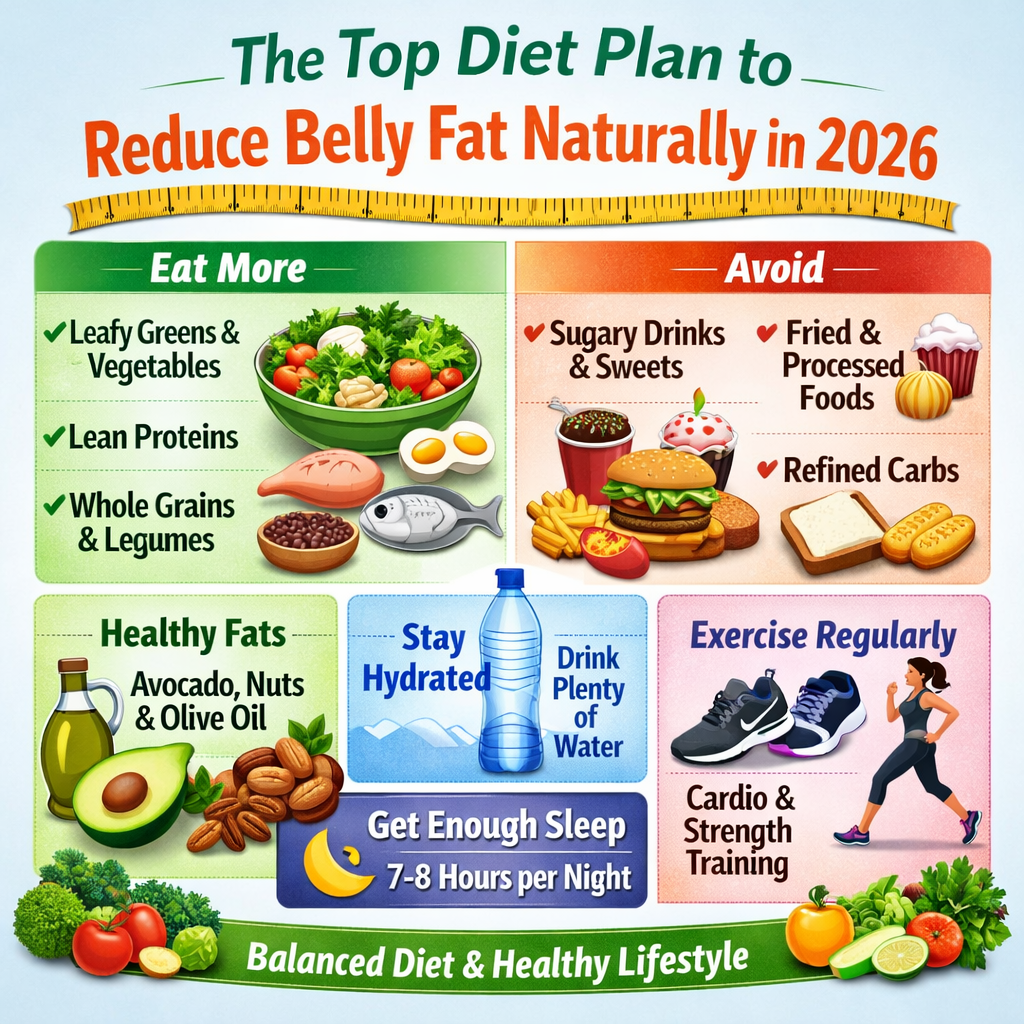
Ensure your meta description is compelling and includes the focus keyword. You can use this: “Tired of stubborn belly fat? Discover The Top Diet Plan to Reduce Belly Fat Naturally in 2026 based on the latest US Dietary Guidelines. Real food, real results—no gimmicks. Includes meal plan & expert tips.”
Let me tell you about my friend, Priya.
Let me tell you about The Top Diet Plan to Reduce Belly Fat Naturally in 2026 and how it can transform your approach to health.
For years, she did everything the old diet books told her to do. She ate low-fat yogurt, counted every calorie, and spent hours on the treadmill. She lost weight, sure, but that stubborn pouch around her middle? It stayed put. And the minute she eased up on her strict rules, the weight came roaring back.
“I feel like my body is fighting me,” she said one afternoon, frustration heavy in her voice.
Here’s what I told her, and what I need to tell you: the old rules are dead. The “calories in, calories out” mantra, the fear of fat, the obsession with processed “diet” foods—it’s all being rewritten.
To effectively follow The Top Diet Plan to Reduce Belly Fat Naturally in 2026, it’s essential to integrate healthy lifestyle changes that complement your dietary choices.
In January 2026, the US government released its latest Dietary Guidelines for Americans, and it’s nothing short of a nutritional revolution . After 40 years of getting it wrong, the official advice has finally caught up with what many scientists have been saying for decades: it’s not about how much you eat, but what you eat.
If you want to lose belly fat naturally in 2026—and keep it off—you need to understand this new paradigm. Let’s walk through it together.
To truly succeed, follow The Top Diet Plan to Reduce Belly Fat Naturally in 2026 that emphasizes whole foods and balanced nutrition.
First, the Old Map Was Wrong
The Top Diet Plan to Reduce Belly Fat Naturally in 2026: Key Elements for Success
Understanding The Top Diet Plan to Reduce Belly Fat Naturally in 2026
Remember the food pyramid from school? The one with a huge base of bread, rice, and pasta telling us to eat more carbs, and a tiny tip warning us away from fats and oils? That pyramid, which shaped our eating habits for 40 years, has been officially overturned .
The 2025-2030 Dietary Guidelines for Americans admit that the old strategy—focusing on calorie balance and fearing fat—failed. It led to an explosion of low-fat, high-sugar processed foods that fueled the obesity epidemic .
The new philosophy is simple but profound: metabolic health first, calories second . It’s not that calories don’t matter. They do. But how you get those calories—whether from real food or industrial concoctions—determines whether you’ll be able to lose belly fat and keep it off.
The 2026 Plate: An “Inverted Pyramid”
If you’re still building your meals around a big pile of rice or pasta, it’s time to flip your plate. The new visual is essentially an upside-down version of the old pyramid .
At the top—meaning the largest portion of your diet—should be protein and healthy fats. Yes, you read that right. The foods we were taught to fear are now the foundation of a healthy diet. Protein helps preserve muscle, keeps you full, and has a higher “thermic effect,” meaning your body burns more calories digesting it . Healthy fats from whole foods like avocados, olive oil, and even full-fat dairy are no longer enemies; they’re essential for hormone function and satiety .
At the bottom—the smallest part of your plate—are grains and starches. This doesn’t mean you eliminate carbs. It means you eat them strategically and choose wisely. The emphasis is on “smart carbs” like whole grains, oats, sweet potatoes, and quinoa, rather than refined white bread and sugary snacks .
Forget the idea that you need to “bulk up” meals with rice. In 2026, you build your meal around protein and vegetables, then add a sensible portion of carbs if your activity level demands it.
Double Your Protein: The Non-Negotiable Move
If you only make one change after reading this, let it be this: eat more protein.
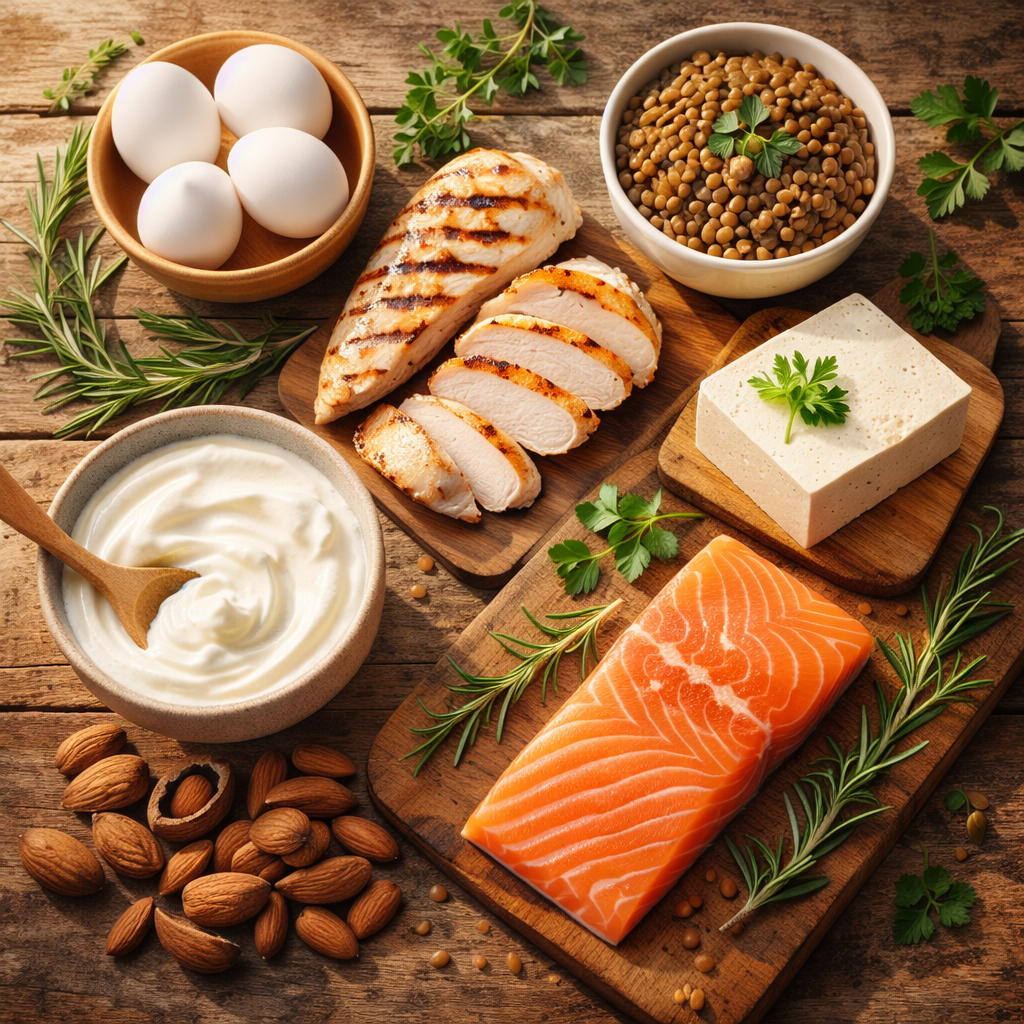
The new guidelines have dramatically increased the recommended protein intake for adults. We’re now looking at 1.2 to 1.6 grams of protein per kilogram of body weight—roughly double the old recommendation of 0.8 grams .
For a 70kg (154lb) person, that’s 84 to 112 grams of protein per day.
Why the big increase? It comes down to a fascinating concept called the “protein leverage hypothesis.” Our bodies have a built-in appetite for protein. If we don’t get enough, our brains keep signaling us to eat more in an attempt to hit that protein target. We end up overeating fats and carbs, driving up calorie intake without ever feeling satisfied .
When you prioritize protein, you naturally eat less overall because your body finally gets what it’s craving. Plus, protein is essential for preserving muscle mass as we age. More muscle means a higher resting metabolism, which means you burn more calories even on the couch .
Practical tips:
- Aim for a palm-sized portion of protein at every meal .
- Choose a variety of sources: chicken, fish, eggs, beans, lentils, tofu, Greek yogurt .
- If you eat red meat, treat it as an occasional side dish, not the main event. The guidelines emphasize “protein diversity”—beans and fish should lead the way .
Declare War on Ultra-Processed “Food”
This is the most important battle in the war against belly fat. The 2026 guidelines are unequivocal: avoid highly processed foods .
We’re talking about anything with a long ingredient list full of words you can’t pronounce. Packaged cookies, chips, sugary cereals, frozen meals, and yes, even those “healthy” diet bars and zero-calorie drinks.
The guidelines specifically call out artificial sweeteners (like those in diet sodas) as something to avoid entirely. They may mess with your gut bacteria and keep your sugar cravings alive, making it harder to break the cycle .
Instead, the focus is on “real food”—ingredients that are as close to their natural state as possible. Think fresh vegetables, fruits, nuts, seeds, eggs, and fresh meat or fish.
The Mediterranean diet, consistently ranked as one of the healthiest eating patterns, is built on this principle. When combined with other strategies, experts are calling the Mediterranean approach the “best diet of 2026” for its ability to target dangerous belly fat .
What “real food” looks like:
- A piece of grilled fish with a heap of roasted vegetables
- A salad with leafy greens, chickpeas, feta, and olive oil
- Scrambled eggs with spinach and avocado
- A bowl of berries with full-fat Greek yogurt and nuts
Don’t Fear Fat (But Be Smart About It)
Let’s settle this once and for all: fat does not make you fat. In fact, healthy fats are crucial for losing belly fat.
The new guidelines have rehabilitated full-fat dairy and even acknowledged that naturally occurring saturated fats from whole foods aren’t the villains they were made out to be . However, there’s a catch. The official recommendation still caps saturated fat at 10% of daily calories. If you’re eating red meat and butter, you need to be precise with portions, as a small steak can use up your saturated fat allowance quickly .
The smarter approach is to focus on fats from:
- Olive oil (the cornerstone of the Mediterranean diet)
- Avocados
- Nuts and seeds (walnuts, almonds, chia seeds, flaxseeds)
- Fatty fish (salmon, mackerel, sardines)
These fats fight inflammation, support brain health, and help you feel full and satisfied.
The Gentle Power of Time-Restricted Eating
Here’s where 2026’s top diet gets its edge. A groundbreaking Spanish study found that combining the Mediterranean diet with a simple form of intermittent fasting doubled the loss of dangerous belly fat .
We’re not talking about extreme fasting. This is time-restricted eating (TRE) , where you eat all your meals within a specific window each day. The study used a 12-hour window (say, 7 AM to 7 PM), which is gentle and sustainable for beginners .
Why does this work? Extending the overnight fasting period gives your body time to enter a metabolic state called autophagy, where it cleans out damaged cells and burns stored fat for fuel. It also naturally reduces your calorie intake without the mental stress of counting every bite . One study found people eating in a 10-hour window naturally consumed 550 fewer calories a day without feeling deprived .
For a practical, 2026-friendly approach, aim for a 10 to 12-hour eating window. Finish dinner by 7 or 8 PM and don’t eat again until 7 or 8 AM the next morning. This aligns with your body’s natural circadian rhythms and is incredibly effective for reducing the fat stored around your organs .
The Supporting Cast: Sleep, Stress, and Strength
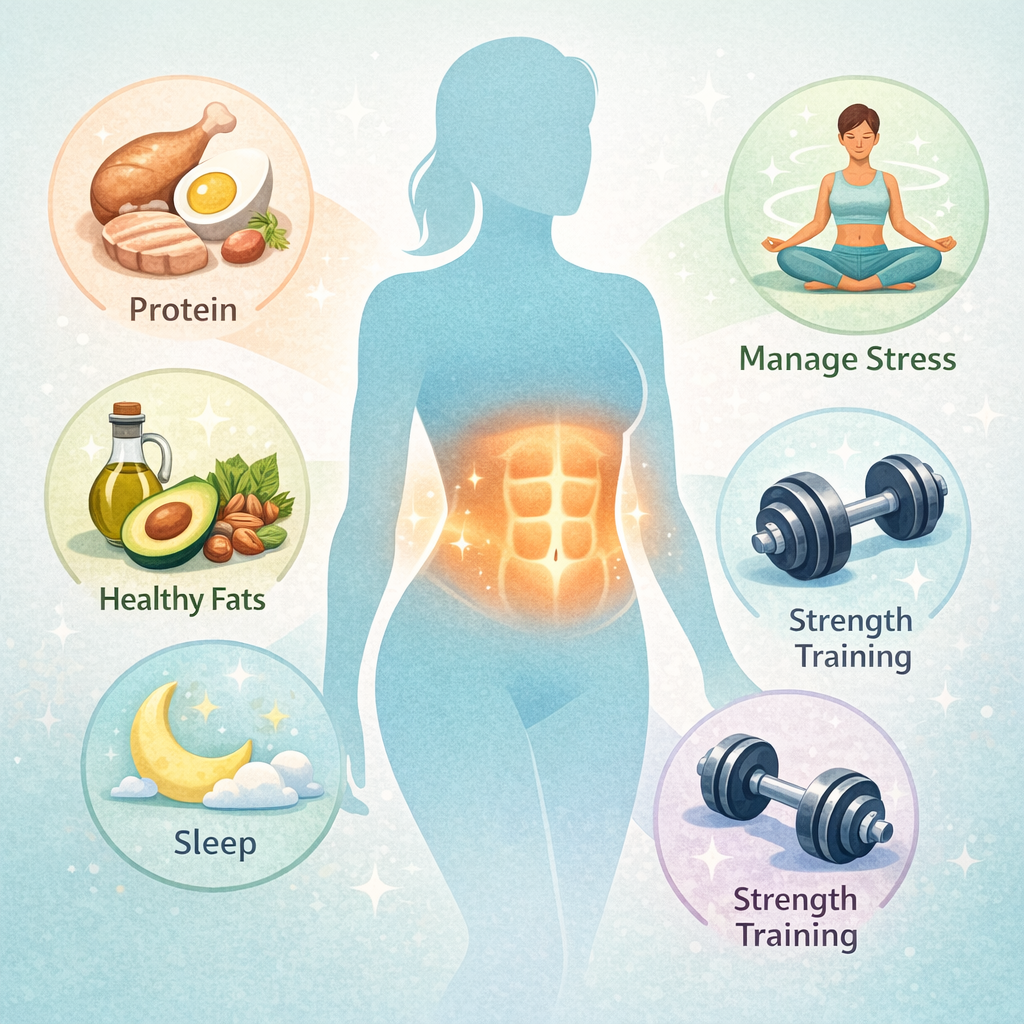
No diet exists in a vacuum. To unlock your body’s ability to shed belly fat, you need to support it with the right lifestyle habits. This isn’t optional—it’s biology.
Sleep is non-negotiable. When you’re sleep-deprived, your body pumps out more ghrelin (the hunger hormone) and less leptin (the “I’m full” hormone). You get hungrier, and you crave high-calorie foods. Studies show that people who sleep less than six hours lose more muscle and less fat during a diet compared to those who sleep seven to nine hours . Aim for seven to nine hours of quality sleep.
Stress management is fat loss. Chronic stress raises cortisol, a hormone that specifically instructs your body to store fat—you guessed it—right around your middle . This creates a vicious cycle where belly fat itself can produce more cortisol. Managing stress through walks, meditation, deep breathing, or simply connecting with friends is a direct fat-loss strategy.
Lift heavy things. Cardio is great for your heart, but resistance training is the secret weapon for belly fat . Building muscle increases your resting metabolic rate and improves insulin sensitivity. Aim for two to four strength sessions a week, focusing on compound movements like squats, lunges, push-ups, and rows. This signals your body to burn fat, not muscle .
And don’t underestimate NEAT—Non-Exercise Activity Thermogenesis. This is all the movement you do that isn’t formal exercise: walking to the shops, taking the stairs, doing housework. Increasing your daily NEAT can significantly boost your calorie burn without the fatigue of another workout .
What This Looks Like: A Day on the 2026 Plan
Here’s a sample day that brings all these principles together:
Breakfast (around 8 AM): Greek yogurt (full-fat) with a handful of berries and a tablespoon of chopped walnuts. A boiled egg on the side for extra protein.
Lunch (around 1 PM): A large salad with mixed greens, grilled chicken or chickpeas, cucumber, tomatoes, avocado, and a generous drizzle of olive oil. A small serving of quinoa on the side.
Snack (around 4 PM): An apple with a small handful of almonds.
Dinner (around 6:30 PM): Baked salmon with a heap of roasted broccoli and bell peppers. A small roasted sweet potato if you’re active.
After 7 PM: Only water or herbal tea.
A Gentle Reminder
If you take nothing else from this, remember this: the goal isn’t perfection. It’s consistency.
The 2026 guidelines aren’t about a temporary diet. They’re about a permanent shift toward eating real food, honoring your body’s need for protein and healthy fat, and giving your digestive system a break overnight.
You don’t have to do it all at once. Start by adding more protein to your breakfast. Swap your afternoon biscuit for a handful of nuts. Try finishing dinner an hour earlier than usual.
Small changes, repeated daily, create the kind of lasting results that crash diets never can.
Your body isn’t fighting you. It’s waiting for you to give it the right fuel. Now you know what that looks like.
Tools to Support Your Journey
If you’re putting this plan into action and want to understand your body’s needs better, sometimes a little data helps.
👉 Use Our Free Calorie Calculator
This simple tool uses the scientific Mifflin-St Jeor equation to estimate your Basal Metabolic Rate (BMR) and Total Daily Energy Expenditure (TDEE). It can help you find that “sweet spot” calorie deficit—enough to lose fat, but not so much that you crash your metabolism .
👉 Use Our Free Weight Loss & Fitness Calculator
This gives you a fuller picture—BMI, BMR, TDEE, daily target, and estimated timeline to your goal. A helpful way to check in with where you are.
👉 Use Our Free Fitness Unit Converter
If you’re following recipes or workout plans from different countries, this tool instantly converts weight, height, distance, and pace.
A Supplement to Support Your Efforts
If you’re looking for extra support on your journey, particularly with managing cravings and blood sugar levels (a key factor in stubborn fat storage), some people find targeted supplements helpful.
GlucoTonic combines natural ingredients traditionally used to support healthy blood sugar balance and sustained energy, which can be a great complement to a whole-foods diet.
This article contains affiliate links. If you purchase through these links, I may earn a commission at no extra cost to you. I only recommend products I genuinely believe in.
A Final Thought
The science of weight loss has finally caught up with common sense. The 2026 diet plan for reducing belly fat isn’t about deprivation. It’s about nourishment. It’s about protein, plants, healthy fats, and giving your body the time it needs to rest and repair.
You don’t need to starve yourself. You don’t need to fear your food. You just need to eat real things, mostly plants and protein, with a side of strength and a good night’s sleep.
Your body knows what to do. Give it the chance.
❓ Frequently Asked Questions
1. How quickly can I expect to lose belly fat on this 2026 diet plan?
Weight loss varies by individual, but most people notice visible changes within 4 to 6 weeks of consistent effort. Because this plan focuses on whole foods, protein, and healthy fats rather than severe calorie restriction, the weight loss tends to be slower but more sustainable—and it specifically targets stubborn belly fat. The key is consistency, not speed.
2. Do I need to count calories on this diet?
No, you don’t need to count calories obsessively. The 2026 guidelines emphasize food quality over calorie counting. Instead of tracking numbers, focus on building your plate around protein, vegetables, and healthy fats, while limiting ultra-processed foods. However, if you want to understand your baseline, our free calculator can help you find your ideal calorie range without the stress of daily tracking.
👉 [Use Our Free Calorie Calculator]
3. Can I follow this diet if I’m vegetarian or vegan?
Absolutely. The plan emphasizes “protein diversity,” which means beans, lentils, tofu, tempeh, and plant-based proteins are just as important as animal sources. The Mediterranean-inspired approach works beautifully for vegetarians and vegans with simple swaps—like using chickpeas instead of chicken, or avocado and nuts for healthy fats. For a full plant-based guide, check out our 7-Day Vegan Meal Plan.