
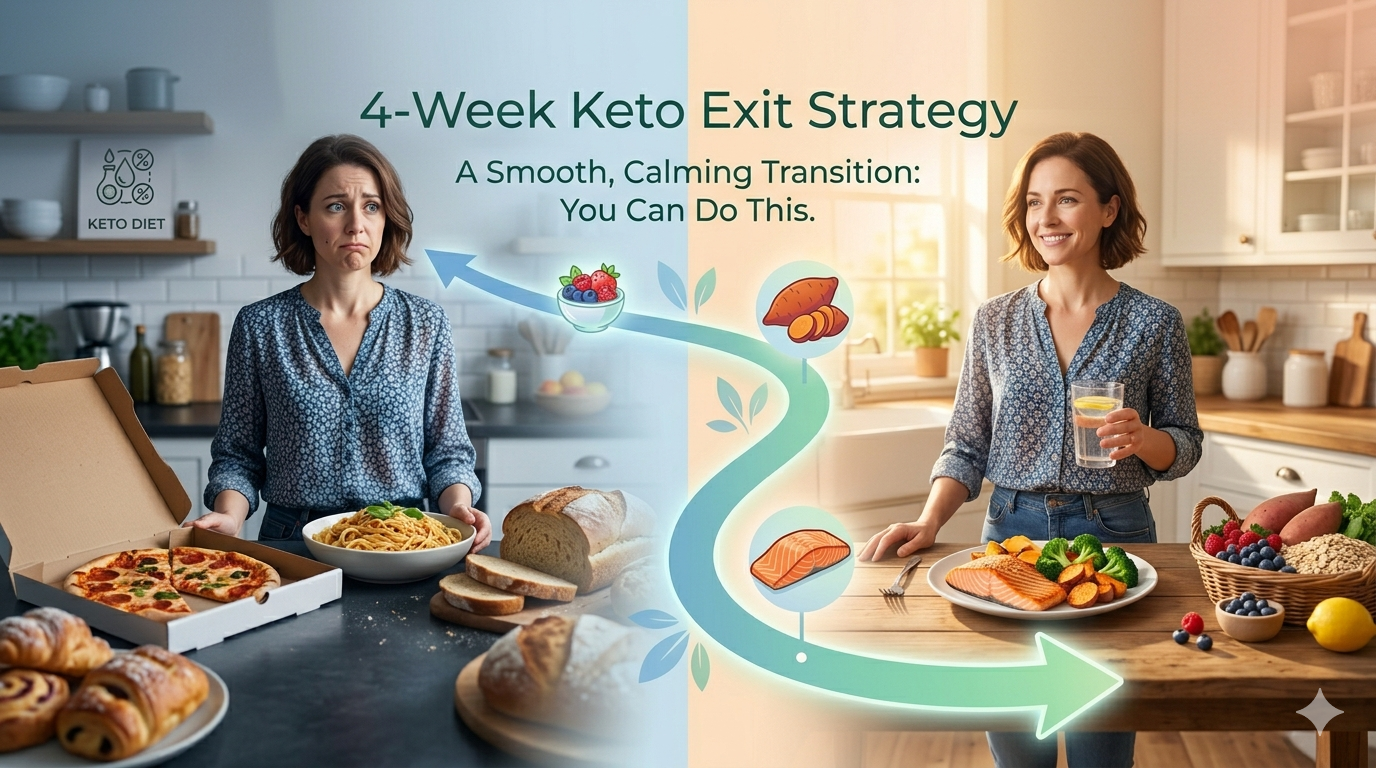
Done with keto? Stop the right way. This smart exit strategy helps you transition off keto without gaining weight, crashing your energy, or losing your progress. Start your plan today.
You did it. You committed to keto. You said goodbye to bread, pasta, and sugar. You pushed through the “keto flu,” learned to love cauliflower rice, and watched the numbers on the scale drop. You feel proud. You should.
But now you’re ready for something different. Maybe you miss the simplicity of eating an apple. Maybe you want to enjoy a meal out without analyzing every ingredient. Maybe your body is just telling you it’s time for a change.
The problem is, you’re terrified. You’ve heard the horror stories. Someone stops keto, eats one slice of pizza, and gains back ten pounds overnight. The weight comes roaring back, plus extra. All that hard work, gone.
I’ve been there. The fear is real. But here’s the truth no one tells you: gaining weight after keto is not inevitable. It only happens if you stop the wrong way. If you crash-land instead of doing a controlled descent.
Think of keto like a long-haul flight. You can’t just jump out of the plane when you reach your destination. You need a smooth, gentle landing. This guide is your landing gear.
Let me show you how to leave keto gracefully, keep the weight off, and rebuild a healthy relationship with all kinds of food. No fear, no shame, just a smart, science-backed plan.
First, Understand What Happens When You Stop Keto (The Science)
Before we talk about the “how,” let’s talk about the “why.” Why does stopping keto often lead to weight gain?
When you eat a very low-carb diet for a long time, your body becomes something called “fat-adapted.” It gets incredibly efficient at burning fat for fuel. But it also gets out of practice at using carbohydrates.
Your glycogen stores (the stored form of carbs in your muscles and liver) are empty. The enzymes needed to process carbs have taken a nap. And your body is holding onto less water.
So what happens when you suddenly eat a high-carb meal?
- Your body panics. It releases a flood of insulin to deal with the unexpected sugar.
- It stores that sugar as glycogen in your muscles and liver.
- Every gram of glycogen binds to three to four grams of water. That’s the sudden “weight gain” – it’s mostly water, not fat.
- If you keep eating high-carb, your insulin stays high, signaling your body to store fat instead of burning it.
This is the “carb shock.” It’s real, it’s uncomfortable, and it’s completely avoidable if you transition slowly.
Your 4-Week Keto Exit Strategy (The Smart Landing)
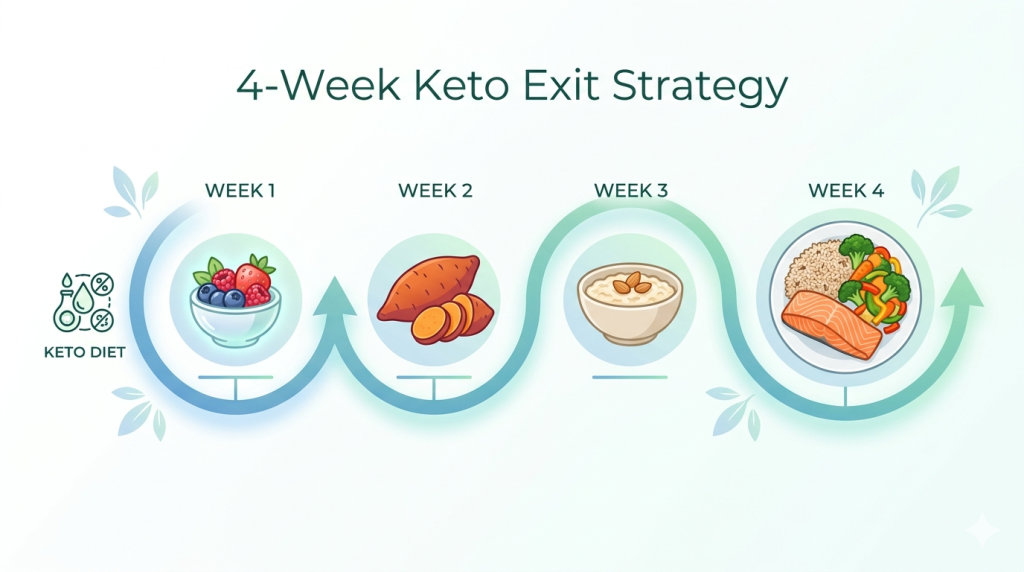
Don’t stop keto in a day. Give your body time to adapt. This 4-week plan is designed to slowly reintroduce carbs, stabilize your blood sugar, and keep your metabolism humming.
Think of each week as turning a dial. You’re not flipping a switch.
Week 1: The Foundation (Add 10-15g of Carbs)
Your goal this week isn’t to eat “high-carb.” It’s just to add a small serving of healthy carbs to your existing keto framework.
What to do:
- Add one serving of berries (blueberries, raspberries, strawberries) to your breakfast.
- Or, add a small sweet potato to your dinner.
- Keep your protein and fat intake the same.
Sample Day:
- Breakfast: Eggs and avocado (your keto base) + a handful of blueberries.
- Lunch: Large salad with chicken, olive oil, and feta.
- Dinner: Salmon + roasted broccoli + a small sweet potato.
What to expect: You might feel a little puffier. That’s just water returning to your muscles. Don’t panic.
Week 2: The Expansion (Add Another 10-15g of Carbs)
Your body is adjusting. Now it’s time to add a second serving of healthy carbs. Start including more starchy vegetables and legumes.
What to do:
- Add beans or lentils to your lunch salad or soup.
- Add a serving of carrots, peas, or winter squash to your dinner.
- Start reducing your fat intake slightly (e.g., use a little less oil).
Sample Day:
- Breakfast: Greek yogurt with berries and a sprinkle of granola.
- Lunch: Lentil soup with a side salad.
- Dinner: Chicken stir-fry with broccoli, carrots, and a small portion of brown rice.
What to expect: Your energy might dip. This is normal. Stay hydrated. Keep moving.
Week 3: The Integration (Aim for 100-150g of Carbs)
Now we’re getting into a more balanced, sustainable range. This is where most people feel their best.
What to do:
- Add whole grains like quinoa, oats, or brown rice to your meals.
- Include whole fruits like apples, bananas, and oranges.
- Your plate should now look like: 1/4 protein, 1/4 carbs, 1/2 vegetables.
Sample Day:
- Breakfast: Oatmeal made with milk, topped with banana and walnuts.
- Lunch: Leftover chicken and rice bowl with vegetables.
- Dinner: Bean burrito bowl with salsa, avocado, and a side of corn.
What to expect: Your workouts might feel stronger. You’ll have more “quick energy” available.
Week 4: The New Normal (Your Sustainable Diet)
Congratulations! You’re off keto. Now you get to find your new, forever way of eating. This isn’t a diet. It’s a lifestyle.
What to do:
- Listen to your body. How do you feel after eating certain foods?
- Aim for a balance of protein, healthy fats, and complex carbs at every meal.
- Keep processed foods and added sugars to a minimum.
- Use the Simple Plate Method: Half your plate vegetables, one-quarter protein, one-quarter whole grains or starchy vegetables.
Your goal is not perfection. It’s consistency. You can have pizza with friends. You can enjoy birthday cake. Just return to your balanced plate at the next meal. No guilt. No spiral.
Track Your Transition with These Smart Tools
Exiting keto is a major change. Don’t try to remember everything. Use these free tools to track your progress, build new habits, and make your transition smooth and successful.
📊 Vitalis Dashboard – Track Your Fitness & Recovery
Log your daily meals, track your weight, monitor your energy levels, and see your progress over time. This dashboard puts everything in one place—steps, sleep, calories, and your transition journey.
👉 Visit Your Vitalis Dashboard
🧠 RoutineFlow AI – Build Your New Eating Streak
Consistency is medicine. Use RoutineFlow AI to set a daily reminder for your new eating habits, track your streak, and celebrate your wins. Even tracking your meals for 10 minutes a day adds up.
👉 Start Your Streak with RoutineFlow AI
🥗 Meal Planner + Calories – Fuel Your New Diet
Stopping keto doesn’t mean you stop planning. Use the Meal Planner to build balanced, delicious meals that fit your new lifestyle without the guesswork.
💧 Daily Detox Challenge – Support Your Body’s Reset
Transitioning off keto can feel stressful for your body. Gentle daily detox habits—like drinking more water, eating whole foods, and reducing processed sugar—lower your body’s inflammatory load.
👉 Join the Daily Detox Challenge
🎯 FocusForge – Build the Habit
Building a new way of eating is hard. FocusForge helps you stay accountable, track your daily food choices, and build the discipline to show up for yourself every day.
👉 Build Your Habit with FocusForge
Internal Links to Keep You Exploring
While you’re here, check out these related articles to support your journey:
- Beginner-Friendly Nutrition Tips for Home Fitness – Learn how to fuel your body for movement, not just weight loss.
- The Top Diet Plan to Reduce Belly Fat Naturally in 2026 – A broader look at sustainable, science-backed weight management.
- 5 Beginner Mistakes to Avoid When Starting a Home Workout – Avoid common pitfalls as you build new exercise habits to support your metabolism.
Frequently Asked Questions
1. Will I gain weight when I stop keto?
Not if you follow this plan. You will gain water weight (2-5 pounds) as your glycogen stores refill. That’s normal and healthy. You will NOT gain fat if you transition slowly and eat a balanced diet.
2. How long should the transition take?
4 weeks is the sweet spot. If you were on keto for less than 3 months, you might transition faster (2-3 weeks). If you were on keto for over a year, take it slower (6-8 weeks).
3. What foods should I add first?
Berries, sweet potatoes, beans, lentils, and carrots. These are nutrient-dense, high-fiber carbs that digest slowly and won’t spike your blood sugar.
4. Can I ever eat bread or pasta again?
Yes. But treat them as treats, not staples. Start with whole-grain versions. See how your body feels. If you feel bloated or tired, you know your limit.
5. What if I accidentally eat too many carbs?
Don’t panic. Don’t starve yourself the next day. Just return to your plan. One high-carb meal will not ruin your progress. The guilt spiral is more dangerous than the carbs.
6. How do I know my new diet is working?
You feel good. Your energy is stable. You sleep well. Your clothes fit comfortably. You’re not obsessing over food. That’s success.
My Final Advice
Leaving keto can feel like walking a tightrope without a net. You’re afraid of falling. You’re afraid of losing everything you worked for.
But here’s the truth I want you to remember: keto was a tool, not a life sentence. You used it to achieve a goal. Now you’re moving on to a new phase—one where you can eat an apple without guilt, enjoy a meal with friends, and still feel strong and healthy in your body.
The fear you feel is just your brain trying to protect you from the unknown. But you are not helpless. You have a plan. You have tools. And you have the knowledge to land this plane smoothly.
Start with Week 1. Add those berries to your breakfast. See how you feel. Then add the sweet potato. One small step at a time.
Your body is resilient. It wants to adapt. It wants to find balance. Give it the chance.
You’ve got this.
This article contains links to other pages on our site. We also offer free tools to support your health journey. Please consult your healthcare provider before making significant dietary changes.