Wondering what vegans actually eat? This beginner-friendly guide covers vegan-friendly foods, essential nutrients, and practical tips for healthy plant-based eating.
Let me tell you about the biggest question I had when I first considered going vegan.
I stood in the grocery store, staring at my cart, feeling completely lost. I knew what I couldn’t eat—meat, dairy, eggs. But I had no idea what I could eat. Was I doomed to a life of sad salads and plain rice?
If you’ve ever felt that way, you’re not alone. And here’s the truth: a vegan diet is actually incredibly varied and delicious. You can eat almost anything—as long as it doesn’t come from an animal .
Let me walk you through exactly what you can eat on a vegan diet, from everyday staples to special treats.
What Vegans Eat (And Don’t Eat)
First, let’s clear up what “vegan” actually means. Vegans don’t eat any foods that come from animals—that includes meat, poultry, fish, dairy products, eggs, honey, and gelatin . But here’s what many people don’t realize: that leaves an enormous variety of delicious foods to enjoy .
A healthy vegan diet is based on plants—vegetables, fruits, grains, nuts, seeds, and foods made from them . When well-planned, it can provide all the nutrients your body needs .
A Simple Vegan Plate Formula
If you’re ever unsure what to put together, use this formula:
½ plate vegetables + ¼ plate protein (beans, tofu, lentils) + ¼ plate whole grains + a source of healthy fat (nuts, seeds, or avocado)
This single formula covers breakfast, lunch, and dinner if you just rotate the specific ingredients.
The Vegan Food Categories You’ll Love
Vegetables and Fruits
This is the foundation of a healthy vegan diet. The NHS recommends eating at least 5 portions of a variety of fruit and vegetables every day .
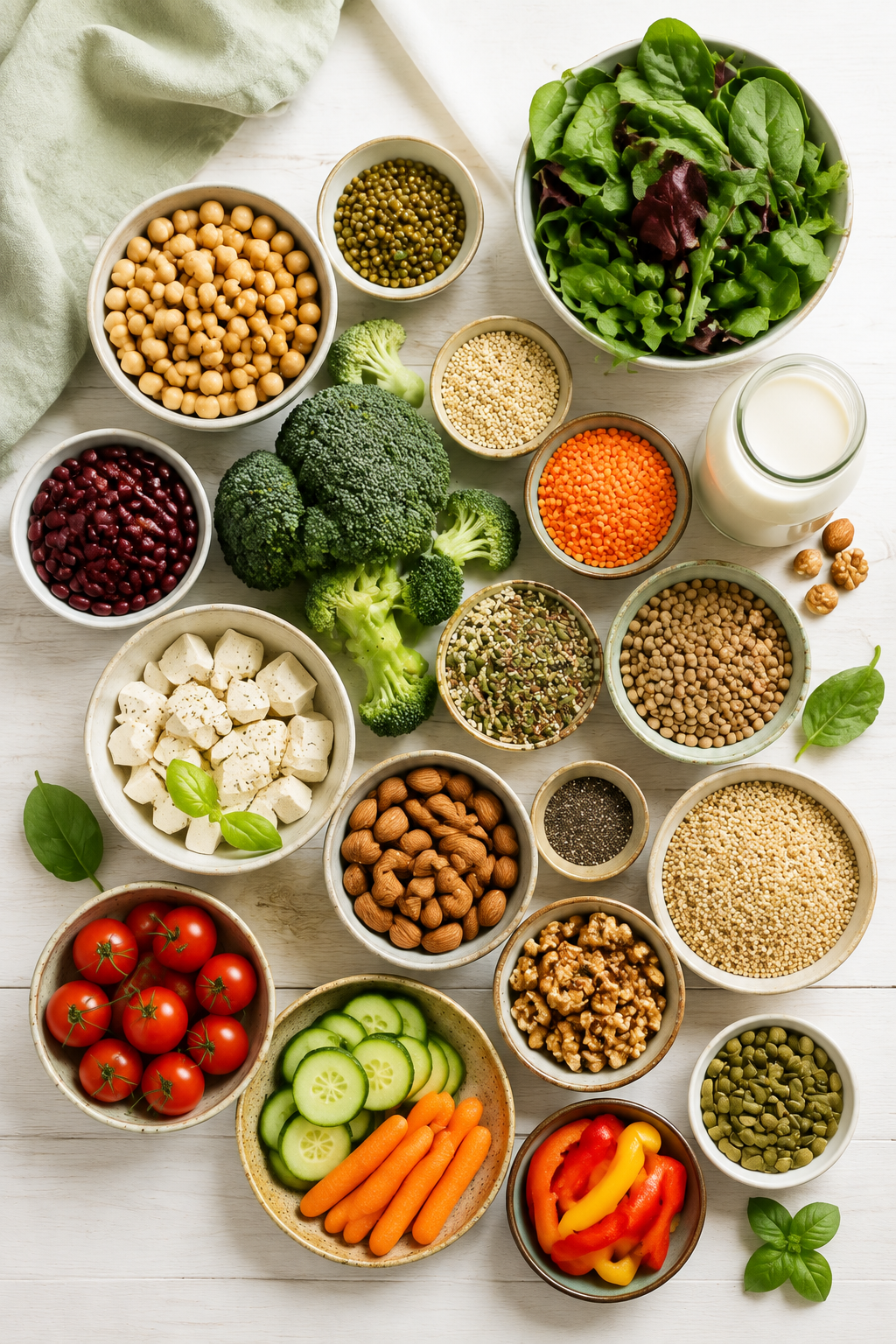
Vegetables to enjoy: Leafy greens like spinach, kale, and Swiss chard; cruciferous vegetables like broccoli and cauliflower; colorful options like bell peppers, carrots, tomatoes, and winter squash; plus mushrooms, onions, garlic, and cucumbers .
Fruits to enjoy: Apples, bananas, berries, oranges, grapefruit, peaches, pears, mangoes, and more. Dried fruits like raisins, dates, and apricots are also great—but should be eaten with meals rather than as snacks to protect your teeth .
Pro tip: One cup equivalent includes one cup of cooked or 2 cups of raw leafy vegetables, one cup of fresh fruit, or one-half cup of dried fruit .
Beans, Peas, and Lentils
These are the protein powerhouses of a vegan diet. They’re rich in protein, fiber, folate, and potassium . According to registered dietitians, they’re a cornerstone of plant-based eating that keeps you full and supports digestion .
Options include: Kidney beans, black beans, pinto beans, white beans, chickpeas, lentils (red, green, and brown), split peas, black-eyed peas, edamame, and soybeans .
Protein content: A cup of cooked lentils provides about 18 grams of protein, while chickpeas and beans offer 14-16 grams per cup .
Tofu, Tempeh, and Edamame
These soy-based foods are nutritional stars. Soy offers all nine essential amino acids, making it a complete protein source .
Tofu takes on whatever flavor you give it. A half-cup of calcium-set tofu provides about 21 grams of protein, 861 mg of calcium (66% of your daily needs), and significant amounts of iron and zinc .
Tempeh is fermented and offers a firmer texture with about 17 grams of protein per half-cup .
Edamame (young soybeans) makes a perfect snack, with about 18 grams of protein per cup .
Grains and Whole Grains
Grains provide carbohydrates for energy, fiber, and B vitamins. Whole grains contain more nutrients than refined grains . Dietitians recommend basing meals on potatoes, bread, rice, pasta, or other starchy carbohydrates—choosing wholegrain options where possible .
Whole grains to try: Brown rice, quinoa, oats, buckwheat, millet, amaranth, bulgur, and whole wheat bread and pasta .
Protein bonus: Quinoa is actually a complete protein, with about 8 grams per cup .
Nuts and Seeds
These are rich in healthy fats, protein, and essential minerals . They’re also a great way to get omega-3 fatty acids, which help maintain healthy eyes, skin, and immune function .
Nuts to enjoy: Almonds, walnuts (rich in plant-based omega-3 ALA), Brazil nuts, cashews, pistachios, and mixed nuts .
Seeds to enjoy: Chia seeds (high in fiber), flaxseeds (rich in omega-3s), pumpkin seeds, sunflower seeds, sesame seeds, and hemp seeds .
Protein content: A 1-ounce serving of mixed nuts contains 6 grams of protein. Two tablespoons of peanut butter provide about 8 grams .
Dairy Alternatives
Vegans replace dairy with plant-based alternatives made from nuts, soy, oats, coconut, and rice . Look for fortified versions to get calcium and vitamin D .
Options include: Unsweetened soy milk, oat milk, almond milk, coconut milk, and plant-based yogurts. The NHS recommends choosing lower-fat and lower-sugar options .
Note: Plant-based milks generally have less protein than cow’s milk (about 1 gram per cup compared to 8 grams), so check labels and choose fortified varieties .
Meat Substitutes and Vegan Convenience Foods
There are plenty of vegan alternatives to meat products, made from soy, pea protein, wheat, rice, and quinoa . These are widely available and can make the transition easier .
Options include: Vegan burgers, sausages, meatless ground, and deli slices. Just check the label—some are highly processed, so look for healthier options with less salt and saturated fat .
Protein comparison: A 100-gram serving of pea-based meatless ground contains about 19 grams of protein, comparable to ground beef’s 18 grams .
Nutritional Yeast
This is a vegan secret weapon. Nutritional yeast is a deactivated yeast that’s often fortified with vitamin B12—which can be hard to get on a vegan diet . It has a cheesy, savory flavor and can be sprinkled on pasta, popcorn, and more .
Nutrition: Just 3 tablespoons provide 8 grams of protein and 1,000% of your daily B12 needs .
Essential Nutrients to Watch on a Vegan Diet
With good planning, a vegan diet can meet all your nutritional needs. However, there are a few nutrients that need extra attention .
Vitamin B12
This is the most important nutrient for vegans to watch. B12 is found naturally only in animal products, so vegans need to get it from fortified foods or supplements . Deficiency can lead to anemia and nervous system problems .
Sources: Fortified breakfast cereals, unsweetened soya drinks, nutritional yeast, yeast extracts like Marmite, and B12 supplements .
Calcium
While dairy is the most common calcium source, vegans can get plenty from plant foods. Calcium is essential for healthy bones and teeth .
Sources: Calcium-set tofu, fortified plant milks, leafy green vegetables (broccoli, cabbage, okra—but not spinach, as the body can’t digest its calcium well), sesame seeds, tahini, pulses, and dried fruit .
Iron
Plant-based iron (non-heme iron) is absorbed less well than iron from meat, but you can improve absorption by eating vitamin C-rich foods at the same time . Avoid drinking tea or coffee during or after meals, as they can block absorption .
Sources: Pulses, wholemeal bread, fortified cereals, dark green leafy vegetables, nuts, dried fruits, and tofu .
Omega-3 Fatty Acids
These support heart, eye, and brain health. While fish is the common source, vegans can get omega-3s from plant foods .
Sources: Ground linseed (flaxseed) oil, rapeseed oil, chia seeds, hemp seeds, and walnuts .
Sample Vegan Grocery List
Here’s what a well-stocked vegan kitchen looks like :
| Category | Foods to Buy |
|---|---|
| Produce | Leafy greens, broccoli, bell peppers, onions, garlic, sweet potatoes, bananas, apples, berries, avocados |
| Protein | Tofu, tempeh, lentils, chickpeas, black beans, edamame, nuts (almonds, walnuts), seeds (chia, flax, hemp) |
| Grains | Brown rice, quinoa, oats, whole wheat pasta, whole grain bread, tortillas |
| Dairy Alternatives | Unsweetened soy milk, oat milk, plant-based yogurt |
| Condiments & Seasonings | Nutritional yeast, olive oil, balsamic vinegar, vegetable stock, herbs and spices, hot sauce |
| Snacks | Hummus, dark chocolate, popcorn, rice cakes, trail mix |
A Practical Tip: Start With Meals You Already Like
According to registered dietitian Julie B. Kramer, the easiest way to transition to vegan eating is to start with meals you already enjoy . If you like smoothies, oatmeal, stir-fries, or grain bowls, you’re already halfway there .
Beginner-friendly meal ideas:
- Breakfast: Overnight oats with berries and nuts, tofu scramble, smoothie with banana and greens
- Lunch: Lentil soup, bean salad with avocado, stir-fry with veggies and rice
- Dinner: Roasted vegetables with tahini, grain bowls with chickpeas, quinoa with greens
Frequently Asked Questions
1. Can I get enough protein on a vegan diet?
Absolutely. Protein deficiency is virtually nonexistent in the U.S., even among vegans . The key is eating a variety of plant proteins throughout the day—lentils, beans, tofu, tempeh, nuts, seeds, and whole grains . Professional athletes on plant-based diets meet their protein needs without tracking .
2. Do I need to combine proteins at each meal?
No. Your body pools amino acids from all your meals throughout the day. As long as you eat a varied diet, you don’t need to worry about “completing” proteins at every meal .
3. Do I need supplements?
For B12, yes. It’s the one nutrient that’s very difficult to get from plant foods alone, even with a well-planned vegan diet . Consider a B12 supplement or eat fortified foods daily. You might also consider vitamin D, iodine, and selenium supplements, especially in winter .
4. Is vegan automatically healthy?
Not necessarily. You can be vegan and eat pasta, bagels, and vegan butter all day—that’s processed, not healthy . Focus on whole foods: fruits, vegetables, legumes, whole grains, nuts, and seeds .
5. What about vegan processed foods?
Vegan alternatives to meat and cheese are widely available and can help with the transition. However, choose them occasionally, not daily, and look for lower-sodium, lower-saturated-fat options .
A Final Thought
Going vegan isn’t about restriction—it’s about discovery. You’ll find new foods you love, learn to cook in new ways, and often feel better physically and mentally. The NHS advises that with good planning and an understanding of what makes up a healthy, balanced vegan diet, you can get all the nutrients your body needs .
Start with what you know. Add a new plant-based recipe each week. And remember: you don’t have to be perfect. Just keep moving in the right direction.
Your body—and the planet—will thank you.
This article contains general information and is not medical advice. Always consult a healthcare professional before starting a new diet plan.
1 thought on “What Foods Can You Eat on a Vegan Diet? A Complete Beginner’s Guide”