
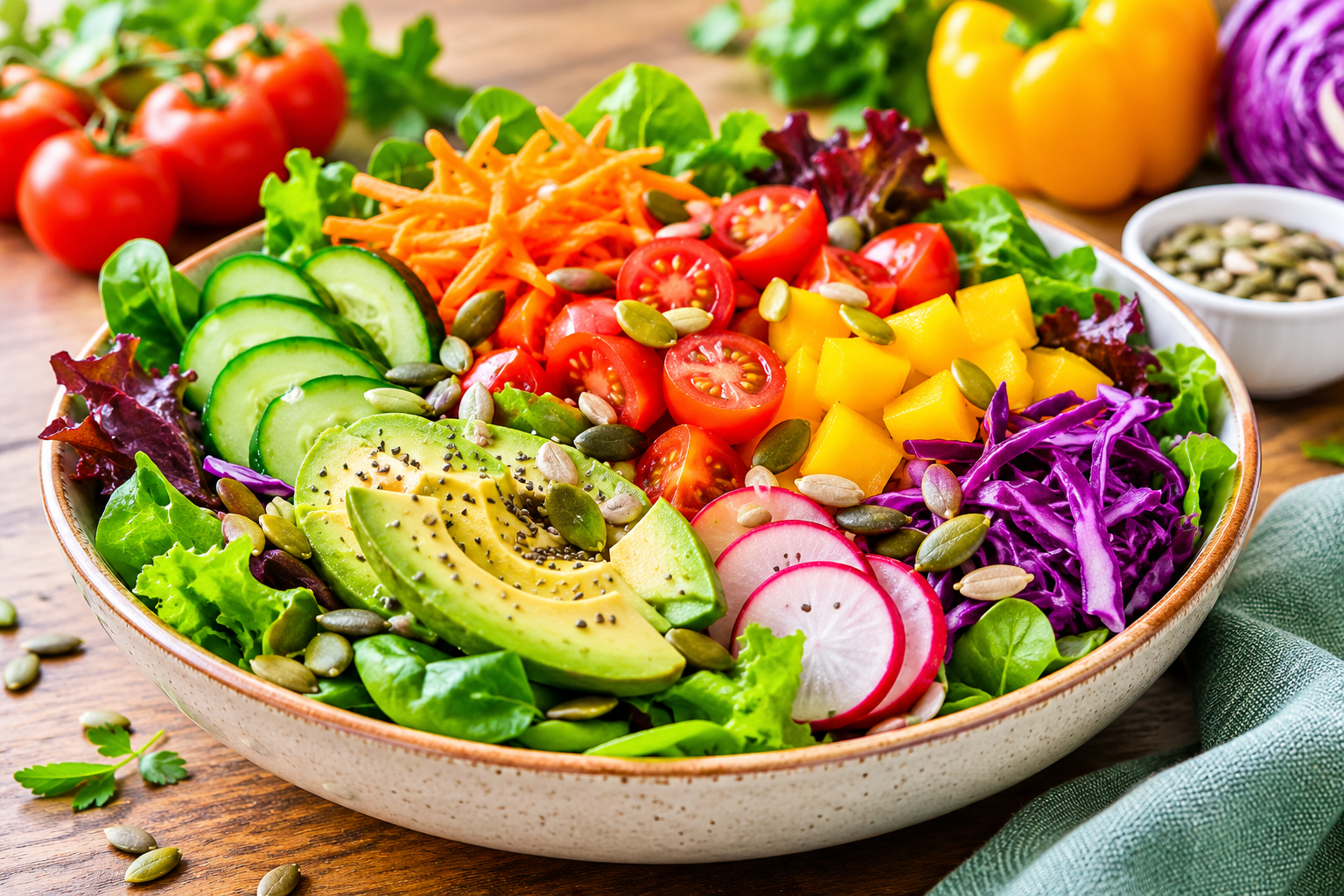
What does eat the rainbow mean? Learn why colorful vegetables matter, what the research says, 10 easy rainbow salad ideas, dressings and tips for the USA and UK.
By FitHealthyMind.com Editorial Team | Reading time: about 16 minutes | Written for readers in the USA and UK
Disclosure: This article contains links to our own digital products. We may earn money if you buy. It is general education and not medical advice.
You have probably heard the advice to “eat the rainbow”. It sounds cheerful and simple: fill your plate with fruits and vegetables in many colors. A colorful salad is one of the easiest ways to do it, and it can taste far better than a sad bowl of lettuce.
But what does “eat the rainbow” really mean? Is it backed by science, or is it just a nice slogan? What can colorful food honestly do for your health and mood, and what can it not do?
This guide answers those questions. You will learn what each color offers, what the research suggests, 10 easy rainbow salad ideas, simple dressings, tips for making salads you actually want to eat, who needs to be careful with certain vegetables, and a 7-day plan. It is written for readers in the USA and UK.
Quick answer: “Eat the rainbow” means eating a variety of colorful fruits and vegetables, because different colors often signal different nutrients and plant compounds. It is a useful rule of thumb for eating more vegetables and getting a mix of fiber, vitamins and minerals. A colorful salad is an easy way to start, especially with some protein, healthy fat and whole grains to make it filling. It is part of healthy eating, not a cure-all.
Table of Contents
- What Does “Eat the Rainbow” Mean?
- The Rainbow Reviewed: What Each Color Offers
- What the Research Says (and What It Does Not)
- How Much Should You Eat?
- How to Build a Rainbow Salad That Fills You Up
- 10 Easy Rainbow Salad Ideas
- 6 Simple Salad Dressings
- Tips to Get the Most From Your Salad
- Make Salads Easy: Prep, Budget and Storage
- Who Should Be Careful With Certain Vegetables?
- Food Safety for Salads
- Your 7-Day Rainbow Plan
- Plan Your Week: Meals and Grocery Budget
- Common Mistakes to Avoid
- Frequently Asked Questions
- Final Thoughts
- References
What Does “Eat the Rainbow” Mean?
“Eat the rainbow” is simple advice: include fruits and vegetables of many colors in your meals. The idea is that colors often come from natural plant compounds, such as carotenoids, anthocyanins, chlorophyll and flavonoids, and different colors tend to bring different nutrients.
It works well as a practical tip for several reasons:
- It encourages variety. No single vegetable has everything, so mixing colors helps you get a wider range of nutrients.
- It makes meals look appealing. A colorful plate is more inviting, which can help you eat more vegetables.
- It is easy to remember, even for kids.
- It nudges you away from beige food. More color often means more fiber and fewer ultra-processed foods.
The slogan is a guide, not a rule. You do not have to eat all seven colors every day. Aim for variety across the week.
The Rainbow Reviewed: What Each Color Offers
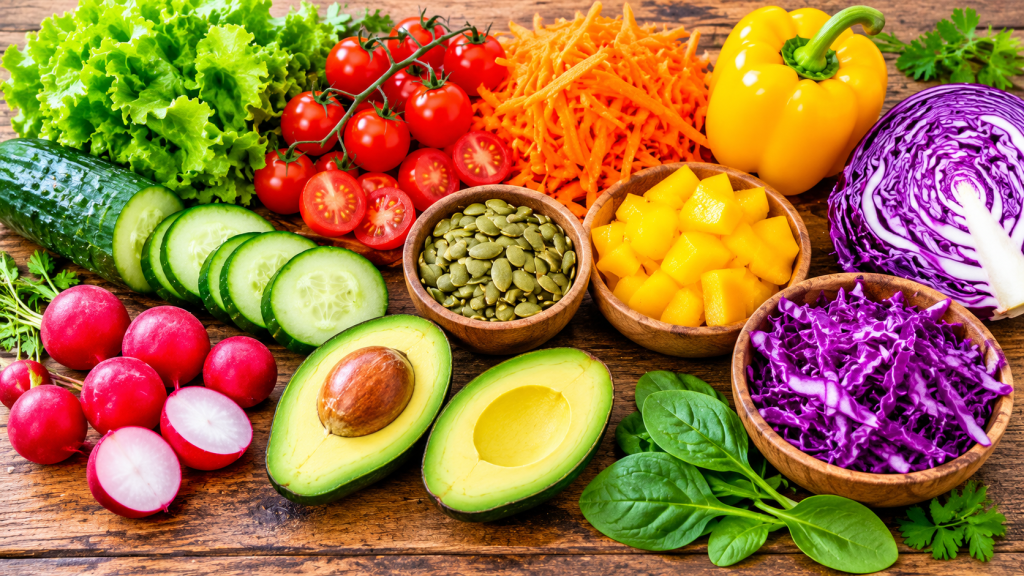
Here is an honest review of each color group: what it commonly provides, how to use it in a salad, and what to keep in mind. The nutrients below are general, and amounts vary by vegetable.
| Color | Examples | What they commonly offer | Good to know |
|---|---|---|---|
| Red | Tomatoes, red peppers (bell peppers), radishes, strawberries, pomegranate, red cabbage (purple-red) | Vitamin C, lycopene (in tomatoes, watermelon, pink grapefruit), potassium | Lycopene is absorbed better from cooked or processed tomatoes and with a little fat. |
| Orange and yellow | Carrots, orange peppers, sweet potato, pumpkin (squash), corn, oranges, mango, yellow squash | Beta-carotene and other carotenoids (the body can turn some into vitamin A), vitamin C, fiber | Carotenoids are absorbed better with some fat, such as olive oil, nuts or avocado. |
| Green | Spinach, kale, rocket (arugula), lettuce, broccoli, cucumber, courgette (zucchini), peas, avocado, herbs | Folate, vitamin K, vitamin C, fiber, potassium, lutein | People who take warfarin need a steady (not sudden) intake of vitamin K foods. Spinach is high in oxalates. |
| Blue and purple | Red or purple cabbage, purple carrots, beets (beetroot), aubergine (eggplant), blueberries, blackberries, purple kale | Anthocyanins and other plant compounds, fiber, vitamin C | Beets can turn urine or stools pink or red, which is harmless. |
| White, tan and brown | Cauliflower, onions, garlic, mushrooms, parsnips, fennel, chickpeas, beans, nuts, seeds | Fiber, potassium, prebiotic fibers, plant protein, sulfur compounds (onions, garlic) | Beans and some veg can cause gas for some people. Introduce gradually. |
Take-away: Variety matters more than any single color. If you only like some colors, start there and add one new vegetable at a time.
Want to add more colorful, nutrient-rich foods to your everyday meals? Explore our anti-inflammatory diet for beginners guide for simple ways to include vegetables, fruits, nuts, seeds, and healthy fats in your routine.
What the Research Says (and What It Does Not)
Here is the honest picture, which also helps you avoid hype.
What Is Well Supported
- Eating more fruits and vegetables is linked with better health. Large studies, and guidelines from the World Health Organization and national health agencies, consistently link higher vegetable and fruit intake with lower risk of conditions such as heart disease and some others, and with better diet quality overall.
- Fiber, vitamins and minerals from whole foods matter. Most people in the USA and UK do not eat enough fiber or vegetables.
- Fat helps you absorb some plant compounds. One well-known study found that people absorbed substantially more carotenoids from a salad eaten with a full-fat dressing than with a fat-free one. So a little olive oil, nuts or avocado is not just for taste.
What Is Less Certain
- Most research on vegetables and health is observational. People who eat lots of vegetables also tend to differ in other ways (exercise, smoking, income), so studies cannot prove cause and effect.
- The “color” itself is not a proven health switch. Color is a handy shortcut for variety, but science has not shown that you must eat each color every day. Supplements of isolated plant compounds have often failed to match the benefits seen from whole foods.
- “Superfood” and “detox” claims are marketing, not science. No single vegetable or salad detoxes your body or cures disease.
What About “Happiness”?
Some studies suggest a link between eating more fruit and vegetables and feeling better. For example, one large study that followed thousands of adults in Australia found that people who increased their fruit and vegetable intake reported higher life satisfaction over the following two years. This does not prove that vegetables cause happiness, and other factors may be involved. But it is encouraging, and eating well is certainly linked to feeling good in many people’s experience. Think of a colorful salad as one pleasant, supportive part of a healthy life, alongside sleep, movement, connection and care for your mental health.
How Much Should You Eat?
Guidelines differ slightly but agree on the main point: most of us should eat more vegetables.
- World Health Organization: at least about 400 grams of fruit and vegetables a day (roughly five portions) for adults.
- UK (NHS 5 A DAY): at least five 80 g portions of a variety of fruit and vegetables a day. A portion is about a cereal bowl of salad, or 3 heaped tablespoons of cooked vegetables.
- USA (Dietary Guidelines): about 2 to 4 cups of vegetables and 1.5 to 2.5 cups of fruit a day for most adults, depending on age, sex and calorie needs. Vary the types, including dark green, red and orange vegetables, beans, and starchy vegetables.
A large salad can supply several portions, and it is an easy way to get closer to these amounts. If you are far from these numbers, increase gradually, add one extra portion a day and drink water, to avoid bloating.
Building balanced meals is also an important part of a healthy lifestyle. Read our guide on how to boost your metabolism naturally for practical nutrition and daily habit tips.
How to Build a Rainbow Salad That Fills You Up
A salad is only satisfying if it contains more than leaves. Use this simple formula:
The Rainbow Salad Formula
- Base (1 to 2 big handfuls): lettuce, spinach, rocket (arugula), kale, shredded cabbage, or a grain such as quinoa or brown rice
- Colors (3 to 5 kinds): tomatoes, carrots, peppers, cucumber, beets, purple cabbage, radishes, corn, berries, orange segments, mango
- Protein (a palm-sized portion): eggs, chickpeas, lentils, black beans, tofu, tempeh, grilled chicken, fish, feta or cottage cheese
- Healthy fat (1 to 2 tablespoons): avocado, olive oil dressing, nuts, seeds, olives, tahini
- Crunch: toasted seeds, nuts, croutons made from wholegrain bread, baked chickpeas
- Flavor boosters: fresh herbs, lemon or lime, garlic, spices, a little cheese
- Dressing (1 to 2 tablespoons): homemade is easy and often cheaper and lower in additives
Tip: Cut vegetables in different shapes (ribbons, matchsticks, cubes) for variety in texture. A bowl with different textures and colors is much more appealing.
10 Easy Rainbow Salad Ideas
1. Classic Rainbow Chopped Salad
Chopped romaine, cherry tomatoes, cucumber, carrots, yellow pepper, red cabbage and chickpeas, with lemon-olive oil dressing.
2. Rainbow Quinoa Bowl
Cooked quinoa, shredded purple cabbage, grated carrot, diced mango, edamame, avocado and cilantro (coriander) with lime dressing.
3. Mediterranean Rainbow Salad
Tomatoes, cucumber, red onion, olives, peppers, chickpeas and feta (optional) with oregano, olive oil and lemon.
4. Rainbow Slaw (No-Mayo)
Shredded green and red cabbage, carrot, red pepper, spring onions (scallions) and herbs, tossed in an apple cider vinegar and olive oil dressing. Add sunflower seeds for crunch.
5. Roasted Rainbow Vegetable Salad
Roast beets, sweet potato, carrots, courgette (zucchini) and red onion, then serve over rocket (arugula) with goat cheese or chickpeas and a balsamic dressing.
6. Rainbow Pasta Salad
Wholegrain pasta, cherry tomatoes, cucumber, peppers, sweetcorn, olives and basil with an Italian-style dressing. Add white beans for protein.
7. Fruit and Veg Rainbow Salad
Baby spinach, strawberries, blueberries, orange segments, shaved carrot, sliced almonds and a poppy seed or yogurt dressing.
8. Asian-Style Rainbow Salad
Shredded cabbage, carrots, red pepper, edamame, cucumber, spring onions and cilantro with a peanut-lime or sesame-ginger dressing. Add tofu or grilled chicken.
9. Rainbow Bean Salad
Black beans, corn, tomatoes, red pepper, avocado, red onion and cilantro with lime juice. Serve with tortilla chips or in a wrap.
10. Rainbow Jar Salad (Meal Prep)
Layer in a jar: dressing at the bottom, then hard vegetables (carrot, pepper, cucumber), beans or grains, protein, then leaves on top. Shake and tip into a bowl when ready. Keeps for 3 to 4 days in the fridge.
6 Simple Salad Dressings
Make them in a small jar and shake. Each makes about 4 servings.
| Dressing | How to make it |
|---|---|
| Lemon-olive oil | 3 tbsp olive oil, 2 tbsp lemon juice, 1 tsp Dijon mustard, pinch of salt and pepper |
| Tahini-lemon | 2 tbsp tahini, 2 tbsp lemon juice, 2 to 3 tbsp water, 1 small garlic clove (grated), pinch of salt |
| Yogurt-herb | 1/2 cup (120 g) plain yogurt, 1 tbsp lemon juice, 1 tbsp chopped herbs (dill, mint or parsley), pinch of salt |
| Peanut-lime | 2 tbsp peanut butter, 1 tbsp soy sauce, 1 tbsp lime juice, 1 tsp honey or maple syrup, 2 to 3 tbsp warm water |
| Balsamic vinaigrette | 3 tbsp olive oil, 1 tbsp balsamic vinegar, 1 tsp mustard, pinch of salt |
| Orange-ginger | 3 tbsp olive oil, 2 tbsp orange juice, 1 tsp grated ginger, 1 tsp rice vinegar |
Tip: Dress the salad just before eating so the leaves stay crisp, or keep dressing separate when packing lunches. Watch the salt in store-bought dressings.
Tips to Get the Most From Your Salad
- Include some healthy fat. As noted, fat helps your body absorb carotenoids. Olive oil, avocado, nuts or seeds do the job.
- Add protein and whole grains so the salad keeps you full.
- Do not drown it. A big pour of creamy dressing can add a lot of calories and salt.
- Mix raw and cooked. Some nutrients, such as lycopene in tomatoes, are better absorbed from cooked food, while others, such as vitamin C, are reduced by long cooking.
- Eat seasonal produce when you can. It tastes better and is often cheaper.
- Wash and dry leaves well. Wet leaves make a soggy salad. A salad spinner helps.
- Keep the skin on (where it is edible and clean) for extra fiber, such as on cucumber, carrots and apples.
- Be adventurous with herbs and spices. Mint, basil, cilantro (coriander), dill, cumin and chili make salads exciting.
- Salads do not have to be cold. Warm grain bowls and roasted vegetable salads count too, especially in winter.
Make Salads Easy: Prep, Budget and Storage
Prep Once, Eat All Week
- Wash, dry and store greens in a container with a paper towel
- Chop sturdy vegetables (carrots, cabbage, peppers, cucumber) in advance
- Cook a batch of grains or beans
- Hard-boil a few eggs
- Make a jar of dressing
- Build jar salads or pack ingredients separately in containers
Budget-Friendly Rainbow
- Frozen vegetables such as peas, sweetcorn, spinach and mixed peppers are nutritious, cheap and last long
- Cabbage, carrots, cucumbers, onions and canned beans or tomatoes are low cost
- Buy seasonal produce and “wonky” vegetables
- Use leftovers: roasted vegetables from dinner are tomorrow’s salad
- Grow herbs on a windowsill
Storage
- Store washed leaves in the fridge for about 3 to 5 days
- Keep tomatoes at room temperature for flavor until ripe, then in the fridge if needed
- Store cut avocado with lemon juice and cover tightly
- Follow “use by” dates on bagged salad
Planning meals ahead can make healthy eating easier throughout the week. Explore our 7-day vegan meal plan for beginners for more ideas to organize balanced meals.
Who Should Be Careful With Certain Vegetables?
Most people can enjoy a wide range of vegetables, but a few considerations apply.
- Warfarin or other blood thinners: Leafy greens are high in vitamin K, which affects clotting. The advice is usually to keep your intake consistent, not to avoid them. Talk to your doctor or anticoagulation clinic.
- History of kidney stones: Some vegetables, such as spinach, rhubarb, beets and swiss chard, are high in oxalates. Ask your doctor or dietitian whether you should limit them.
- Kidney disease: You may need to limit potassium-rich vegetables, such as tomatoes, potatoes and spinach. Follow your care team’s advice.
- Irritable bowel syndrome (IBS) or digestive sensitivity: Raw vegetables, onions, garlic, beans and cruciferous vegetables can cause gas or bloating. Introduce them slowly, cook them if raw ones bother you, and ask a dietitian for personal help.
- Thyroid conditions: Normal amounts of cruciferous vegetables (such as cabbage and broccoli) are fine for most people. If you have been given specific dietary advice, follow it.
- Allergies or oral allergy syndrome: Some people react to raw fruits and vegetables, especially if they have hay fever. Check with an allergy specialist.
- Young children and older adults with swallowing difficulties: Cut foods small, grate or cook hard vegetables, and avoid choking hazards such as whole nuts and large raw chunks.
- Pregnancy or weakened immunity: Follow food safety advice for salads and sprouts (see below).
- Diabetes: Most vegetables are low in carbohydrates, but fruit, corn, beets and starchy vegetables add up. A dietitian can help you adjust portions.
Food Safety for Salads
Raw produce can carry germs, so a few simple steps help:
- Wash your hands and surfaces before preparing salads
- Rinse fresh vegetables and fruit under running water, even if you will peel them. Do not use soap or bleach. Follow package directions on bagged salad that says “ready to eat” or “washed”
- Keep raw meat and its juices away from salad ingredients and use separate boards
- Keep salads cold (fridge at or below about 40°F / 4°C in the USA, and 5°C or below in the UK) and do not leave them out for more than a couple of hours (one hour in hot weather)
- Raw sprouts (alfalfa, bean sprouts) are higher risk. Pregnant people, older adults, young children and people with weakened immunity are often advised to cook them thoroughly or avoid them
- Follow “use by” dates and throw away leaves that are slimy or smell off
- Leftover salads: US guidance generally allows a few days in the fridge for dressed salads like bean or pasta salad, and UK guidance generally advises eating leftovers within 2 days. When in doubt, use the shorter time
Your 7-Day Rainbow Plan
Use this as inspiration. Swap ingredients to suit your taste, budget and dietary needs.
| Day | Salad or bowl | Color focus |
|---|---|---|
| Monday | Classic rainbow chopped salad with chickpeas | Red, orange, green, purple |
| Tuesday | Rainbow quinoa bowl with mango and edamame | Orange, green, purple |
| Wednesday | Mediterranean rainbow salad with feta | Red, green, white |
| Thursday | Rainbow slaw with grilled chicken or tofu | Purple, orange, green |
| Friday | Roasted rainbow vegetable salad over rocket (arugula) | Orange, purple, green |
| Saturday | Asian-style rainbow salad with peanut-lime dressing | Green, orange, red |
| Sunday | Fruit and veg rainbow salad plus meal prep jars for next week | All colors |
Challenge: Try to include at least three colors at lunch and dinner for one week. Notice how it feels, and keep the swaps that you enjoy.
Looking for more plant-based meal inspiration? Try our 7-day vegan weight loss meal plan for practical meal ideas featuring vegetables, fruits, legumes, and whole foods.
Plan Your Week: Meals and Grocery Budget
Eating more vegetables is easier when the plan is already made. A simple weekly plan helps you buy only what you will use, reduces waste and keeps salads from going soggy in the back of the fridge.
If you would like one place for this, the Family Wellness Dashboard may help. According to the product page, it includes:
- A 7-day breakfast, lunch and dinner meal-planning grid
- A printable meal-plan PDF
- A monthly wellness budget with an expense tracker that covers groceries
- A family fitness tracker and health notes for each household member
- Weekly overview reports, plus a JSON backup and restore feature
It is an instant digital download with no subscription, priced at $10.
Good to know: The dashboard is an HTML file that opens in a browser and saves entries in that browser on your device, so export a backup regularly. It may work more reliably on a computer than on some phones. It is an organizational tool, not medical or nutritional advice.
See the Family Wellness Dashboard →
Prefer to start free? A printed weekly grid on the fridge and a shared grocery list on your phone work well too.
Common Mistakes to Avoid
Making Salad Boring
A bowl of plain lettuce and a few cucumber slices will not keep you interested. Add color, crunch, protein, flavor and a tasty dressing.
Not Adding Protein or Healthy Fat
Without them, a salad may leave you hungry soon, and you may absorb fewer fat-soluble nutrients.
Drowning It in Heavy Dressing
A salad can quickly become high in calories and salt. Measure dressing and choose lighter options.
Buying Too Much and Wasting It
Buy what you will use, and plan meals around fresh produce first.
Believing “Superfood” Hype
No single vegetable or salad is a miracle food. Variety and consistency matter most.
Forcing Foods You Dislike
If you hate raw kale, try cooked kale, spinach or cabbage. Pick colors you enjoy first.
Skipping Food Safety
Wash produce and keep salads cold.
Expecting Instant Results
Eating more vegetables supports long-term health. It will not fix everything in a week.
Frequently Asked Questions
What does “eat the rainbow” mean?
It means eating fruits and vegetables of many different colors, since colors often reflect different nutrients and plant compounds. It is a simple rule of thumb for variety.
Is eating the rainbow backed by science?
Eating a variety of fruits and vegetables is well supported by health guidelines. The idea that each color must be eaten daily is a helpful guide rather than a proven rule, and most evidence is observational.
What are the benefits of a colorful salad?
A colorful salad can provide fiber, vitamins, minerals and plant compounds, and can help you eat more vegetables. It also tends to be low in calories and high in volume. Benefits depend on what you add and on the rest of your diet.
How many colors should I eat each day?
There is no official number. Aim for variety, for example three or more colors at each meal if possible, and different colors across the week.
Do I need to eat raw vegetables?
No. Cooked, roasted, steamed, frozen and canned vegetables all count. Some nutrients are better absorbed from cooked foods, and others from raw.
Why add fat to a salad?
Some plant compounds, including carotenoids, are fat-soluble. Research has found better absorption when salad is eaten with some fat, such as olive oil, nuts or avocado. It also makes the salad more filling.
Is a salad enough for a meal?
It can be, if it includes protein, healthy fat and some whole grains or starchy vegetables. A salad of only leaves may not keep you full.
Can a salad make you happier?
Some studies link higher fruit and vegetable intake with better wellbeing, but they cannot prove cause and effect. Enjoying colorful food may help you feel good, but it is not a treatment for low mood. If you feel persistently low or anxious, speak to a healthcare professional.
How can I make salads more interesting?
Add roasted vegetables, fruit, nuts, seeds, herbs, grains, beans and a tasty homemade dressing, and vary textures.
How long does a prepared salad last?
Undressed chopped vegetables and leaves can last 3 to 4 days in the fridge. Salads with cooked ingredients, such as pasta, grain or bean salads, are best eaten within 2 to 3 days (and within 2 days following UK guidance). Keep dressing separate until serving.
Are bagged salads healthy and safe?
Bagged salads are convenient and can be a healthy choice. Follow the “use by” date and package directions about washing, and keep them cold.
Are frozen vegetables as good as fresh?
Frozen vegetables are usually frozen soon after picking and can be just as nutritious. They are convenient and affordable.
What can I add to a salad to make it more filling?
Beans, lentils, chickpeas, eggs, tofu, tempeh, chicken, fish, cheese, quinoa, brown rice, whole-wheat pasta, nuts and seeds.
Can kids eat rainbow salads?
Most children can, with age-appropriate cutting to avoid choking. Let them pick colors, build their own bowls and dip vegetables in yogurt or hummus. Repeated exposure helps picky eaters.
Are greens powders a substitute for vegetables?
Greens powders are not a replacement for whole vegetables, which provide fiber and a wider range of nutrients. If you are considering a supplement, ask a doctor or pharmacist first, since some can interact with medicines or contain vitamin K.
Do I need to avoid anything if I take blood thinners?
You usually do not need to avoid leafy greens, but keep your intake steady and tell your doctor or anticoagulation clinic about any big changes.
What is the Family Wellness Dashboard?
It is a digital HTML dashboard sold on FitHealthyMind.com that helps families plan meals, track fitness, organize health notes and monitor a wellness budget. According to its product page, it includes a 7-day meal planning grid and printable PDF reports. It is an organizational tool and not medical advice.
Final Thoughts
A colorful salad will not give you a perfect life, but it is a simple, tasty way to eat more vegetables, bring variety to your plate and take care of your body. “Eat the rainbow” works best as an invitation: add one more color, one more portion, one more vegetable you enjoy.
This week, choose one salad idea from this guide and make it your own. Add some protein, a little healthy fat and a dressing you love. If you enjoy it, make it again.
Want to plan your meals and groceries in one place? Check out the Family Wellness Dashboard, or explore more simple guides on FitHealthyMind.com.
Disclaimer: This article is for general educational purposes only and is not medical advice. It does not diagnose, treat, cure or prevent any condition. Nutrition information describes foods in general and is not a claim about medical effects. Talk to a doctor, pharmacist or registered dietitian before making major changes to your diet, especially if you have a medical condition, take medication (including blood thinners), have food allergies or a history of disordered eating, or are pregnant or breastfeeding. If you feel persistently low, anxious or unwell, speak to a healthcare professional. Food safety rules differ between countries, so follow guidance from your national authority. The Family Wellness Dashboard is an organizational tool and does not provide medical or nutritional advice. This article contains links to our own products; see the disclosure at the top.