
What is holistic health and wellness? Learn the 6 dimensions of whole-person self-care, simple daily rituals, a 30-day plan, and wellness quotes to inspire you.
By FitHealthyMind.com Editorial Team | Reading time: about 16 minutes
Wellness is changing. It is no longer only about gym memberships and diets. More and more people are looking for a way of living that cares for the whole person: body, mind, emotions, relationships, and sense of meaning. That is the idea behind holistic health.
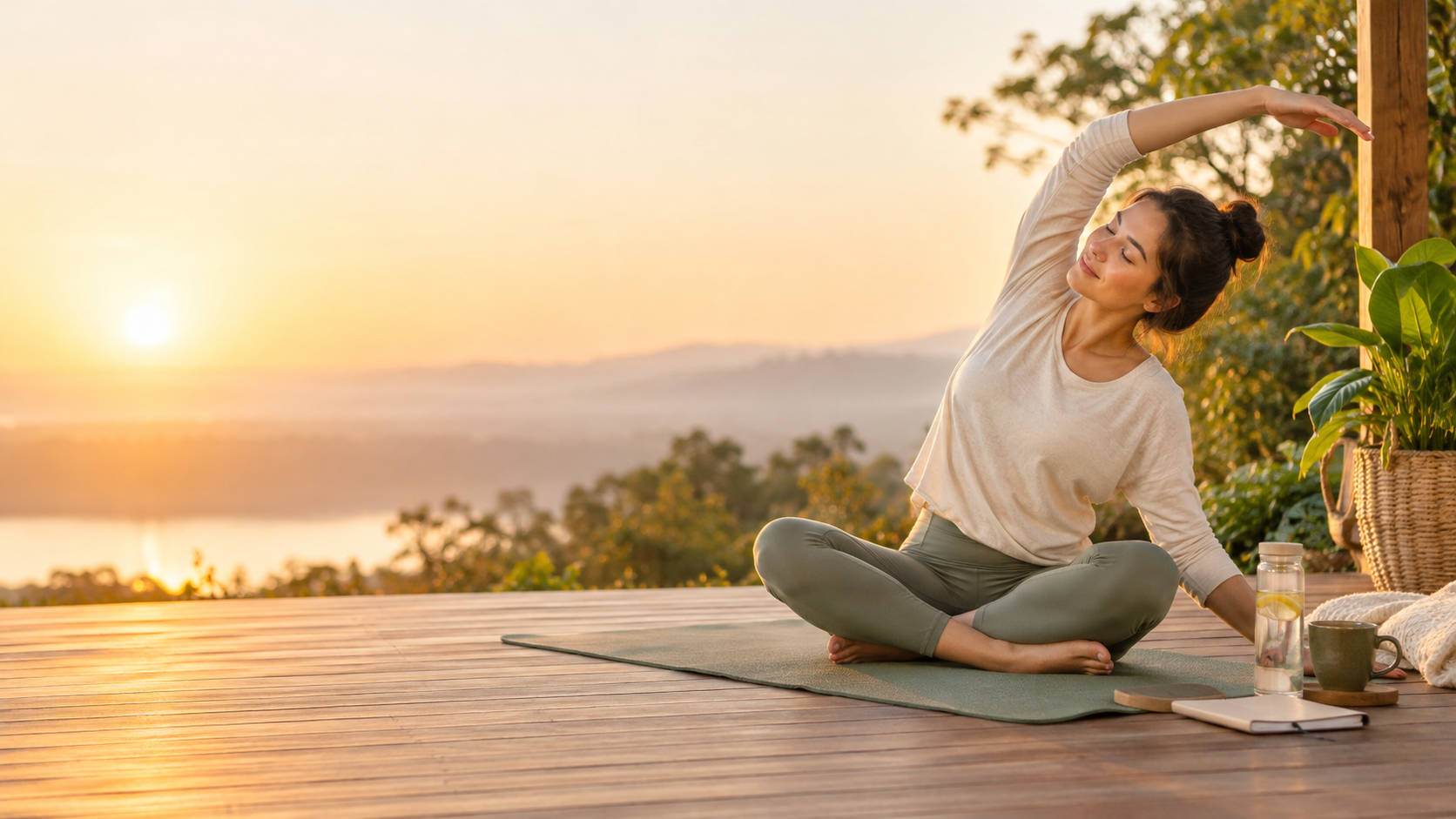
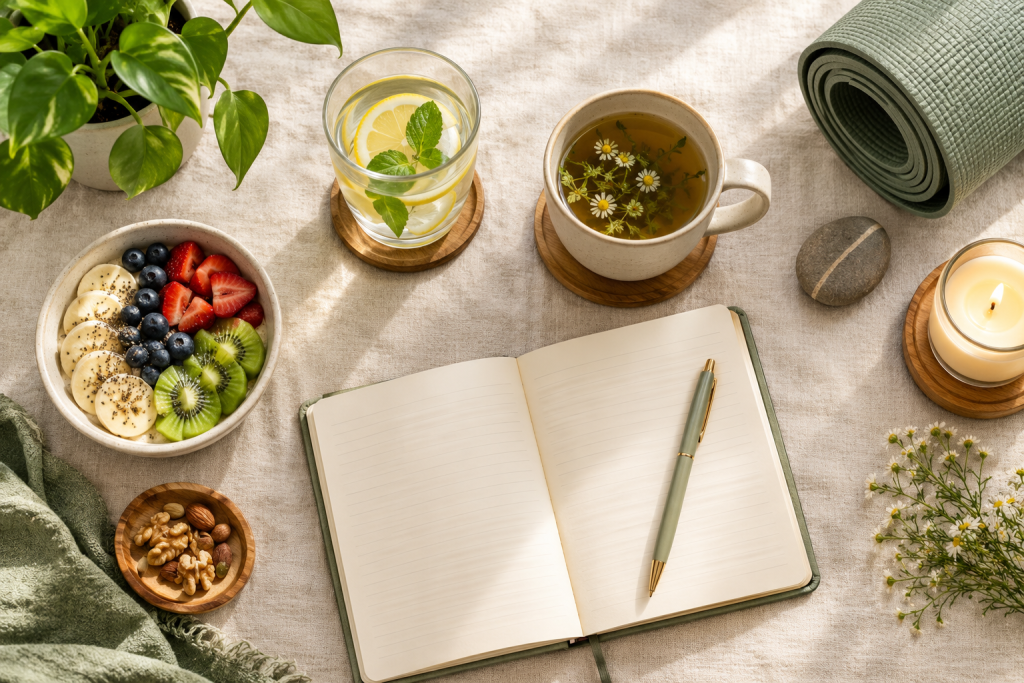
Think of a calm morning with a glass of water, a few stretches in the sunlight, a quiet moment to breathe, and a few lines in a journal. It is not about perfection or expensive products. It is about small rituals that make you feel more grounded, connected, and cared for.
In this guide, you will learn what holistic health and wellness really means, the six dimensions of whole-person wellbeing, simple daily rituals, a 30-day starter plan, journaling prompts, wellness quotes, and how to stay safe and evidence-informed along the way. Everything is written in plain language for beginners.
Quick answer: Holistic health is an approach to wellbeing that looks at the whole person, including physical, mental, emotional, social, spiritual, and environmental health, rather than treating each part separately. A simple holistic routine includes nourishing food, daily movement, good sleep, stress care, meaningful connection, time in nature, and a few minutes of reflection. It works best alongside regular medical care, not instead of it.
Table of Contents
- What Is Holistic Health and Wellness?
- Why Holistic Wellness Is Growing
- The 6 Dimensions of Holistic Wellness
- A Simple Holistic Morning Ritual
- Holistic Nutrition: Nourish, Do Not Punish
- Movement for Body and Mind
- Sleep and Rest
- Stress Care and Emotional Wellness
- Connection, Nature and Meaning
- Wellness Quotes to Inspire You
- Journaling Prompts for Whole-Person Wellness
- Track Your Wellness Journey
- Your 30-Day Holistic Wellness Plan
- How to Stay Safe and Evidence-Informed
- Common Mistakes to Avoid
- Frequently Asked Questions
- Final Thoughts
What Is Holistic Health and Wellness?
Holistic health is a way of caring for yourself that considers all parts of your life and how they connect. Instead of asking only “What is wrong with my body?”, it also asks, “How are my sleep, stress, food, relationships, work, and sense of purpose affecting how I feel?”
Holistic Does Not Mean Alternative Only
A common misunderstanding is that holistic health means avoiding doctors or medicine. It does not. Modern medicine and holistic self-care can work together. For example, you might take a prescribed medication and use breathing exercises, movement, and better sleep habits to support your wellbeing.
The World Health Organization defines health as more than the absence of disease. It includes physical, mental, and social wellbeing. Holistic wellness builds on that broader idea.
Wellness vs. Holistic Health
- Wellness is the ongoing process of making choices that help you feel your best.
- Holistic health is a whole-person approach to wellness that connects body, mind, and environment.
In everyday life, the two ideas overlap, and many people use the terms together.
Why Holistic Wellness Is Growing
More people are turning to whole-person self-care for several reasons:
- Burnout and stress. Busy lives leave many people feeling tired, anxious, or disconnected.
- Screen overload. Constant notifications make calm moments feel rare and valuable.
- A shift from quick fixes to sustainable habits. People want routines they can keep, not extreme plans.
- Interest in the mind-body connection. Sleep, stress, food, and mood influence each other.
- A desire for meaning and connection. Many want rituals that feel soulful, not only productive.
Brands, studios, and communities are responding with calming campaigns and slow-living ideas, but you do not need to buy anything to start. A glass of water, a few deep breaths, and ten minutes outside are a perfectly good beginning.
The 6 Dimensions of Holistic Wellness
Holistic health is often described in six connected areas. When one is neglected, others can suffer. You do not need to be perfect in all six. Aim for small, steady care in each.
1. Physical Wellness
This covers movement, nutrition, sleep, and medical care.
Simple actions: Walk daily, eat mostly whole foods, drink enough water, go to regular check-ups, and protect your sleep.
2. Mental Wellness
This is about how you think, learn, focus, and handle challenges.
Simple actions: Read something you enjoy, take breaks from screens, learn a new skill, and limit constant multitasking.
3. Emotional Wellness
This is the ability to notice, understand, and express your feelings in healthy ways.
Simple actions: Do a daily emotional check-in, talk to someone you trust, journal, and practice self-compassion.
4. Social Wellness
Healthy relationships and a sense of belonging are central to wellbeing.
Simple actions: Call a friend, share a meal, join a community or class, and set kind boundaries.
5. Spiritual Wellness
This does not have to be religious. It is about meaning, values, and a sense of connection to something larger than yourself.
Simple actions: Spend time in nature, meditate or pray if that is meaningful to you, practice gratitude, or volunteer.
6. Environmental Wellness
Your surroundings influence your mood and health.
Simple actions: Declutter a small space, open windows for fresh air, add a plant, use natural light, and create a calm corner for rest.
A Simple Holistic Morning Ritual
A morning ritual sets the tone for your day. It does not need to be long, expensive, or complicated. Here is a gentle 15-minute example.
Step 1: Wake Slowly (1 Minute)
Before reaching for your phone, take three slow breaths. Notice how your body feels.
Step 2: Hydrate (1 Minute)
Drink a glass of water. Add a slice of lemon if you like.
Step 3: Open the Curtains and Breathe (2 Minutes)
Let in natural light and fresh air. If you have a balcony, garden, or deck, step outside for a few moments.
Step 4: Move Gently (5 Minutes)
Try a few stretches, cat-cow, or a short yoga flow. Move in a way that feels kind to your body.
Step 5: Pause and Set an Intention (3 Minutes)
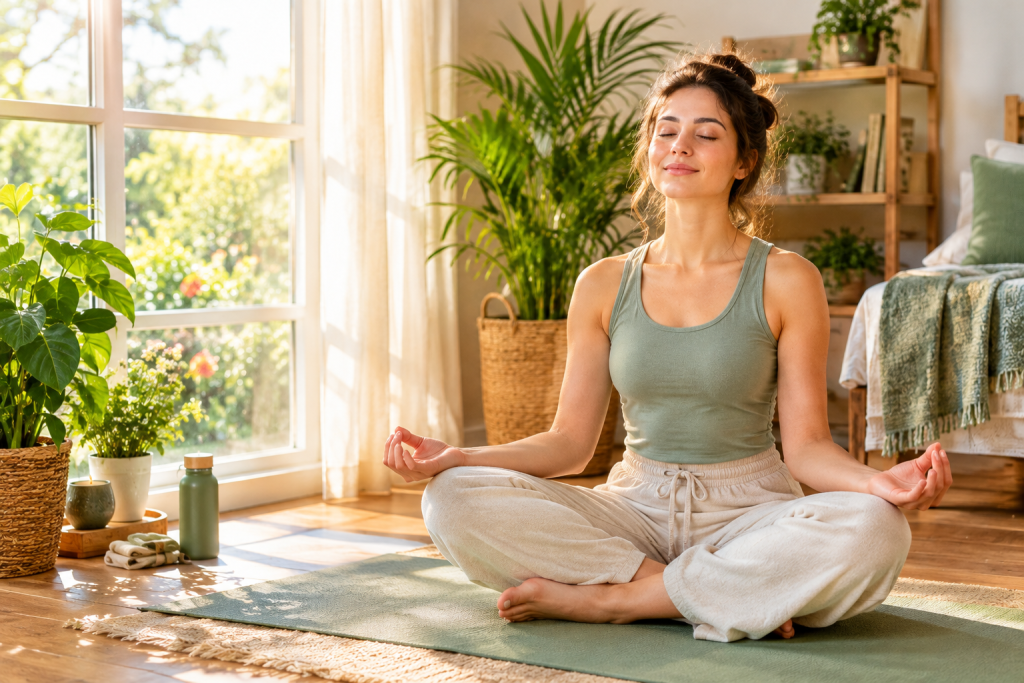
Sit quietly and take five slow breaths. Ask yourself, “How do I want to feel today?” Choose one word, such as calm, focused, or kind.
Step 6: Write One Line (3 Minutes)
Jot down one thing you are grateful for or one small priority for the day.
About Sage and Smudging
Burning sage and similar smudging practices are often used in wellness rituals. These practices come from Indigenous traditions that hold deep cultural and spiritual meaning. If you are drawn to scent-based rituals, consider respectful alternatives such as a simple candle, a diffuser with a gentle scent you enjoy, a cup of herbal tea, or opening a window. Also be mindful that smoke can bother people with asthma or allergies, and children and pets.
Holistic Nutrition: Nourish, Do Not Punish
In a holistic approach, food is nourishment and enjoyment, not punishment or a tool for guilt.
Simple Principles
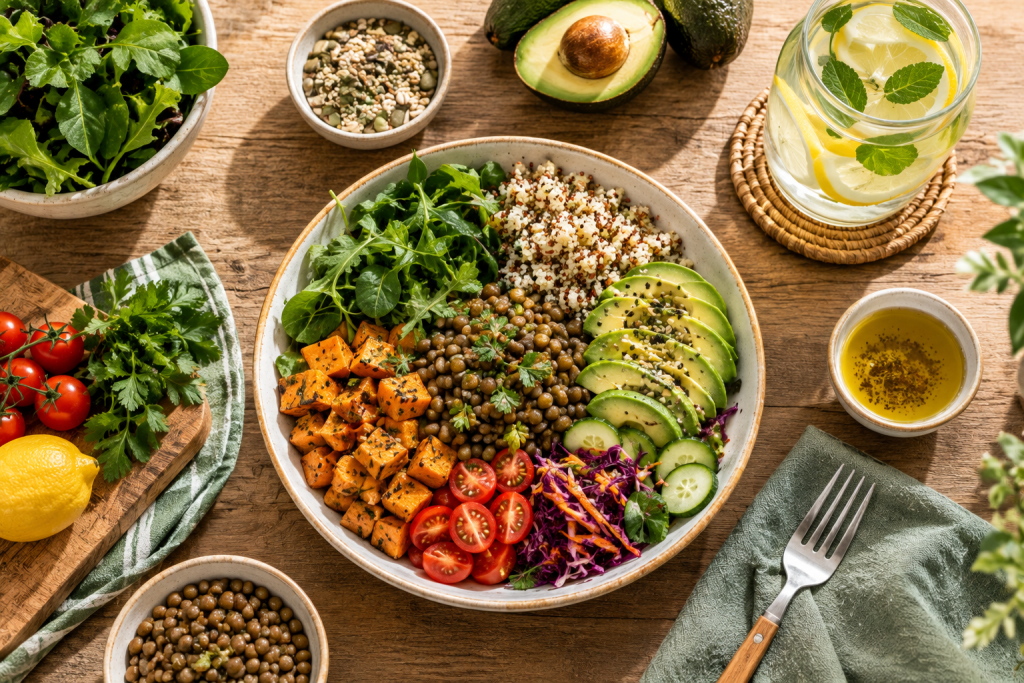
- Eat mostly whole foods: vegetables, fruit, legumes, whole grains, nuts, seeds, and healthy fats.
- Include protein at meals to help you feel satisfied.
- Drink water throughout the day.
- Eat mindfully. Sit down, slow down, and notice flavors and fullness.
- Include foods you love. Balance matters more than strict rules.
- Cook at home when you can, and enjoy meals with others.
Easy Nourishing Ideas
- Oatmeal with berries and nuts
- Lentil and vegetable soup
- A colorful salad with beans and olive oil
- Roasted vegetables with rice or quinoa
- Herbal tea after dinner
A Note on Supplements and Herbs
Vitamins, minerals, and herbal products are not risk-free. Some can interact with medications or be unsafe in pregnancy or with certain conditions. Talk to your doctor or pharmacist before starting any supplement or herbal remedy.
If Food Feels Stressful
If you notice constant worry about food, strict rules, guilt, or patterns of restricting or bingeing, please speak with a healthcare professional or a registered dietitian. Wellness should feel supportive, not controlling.
Movement for Body and Mind
Movement helps your body, and it can also lift your mood and release tension.
How Much Do We Need?
Health organizations generally recommend that most adults aim for at least 150 minutes of moderate activity per week, plus muscle-strengthening activity on two or more days. Short sessions count, and any movement is better than none. If you have a health condition, ask your doctor what is right for you.
Gentle Ways to Move
- Walking in nature
- Stretching or yoga
- Tai chi or gentle dance
- Swimming or cycling
- Bodyweight strength exercises
- Playing with kids or pets
A 10-Minute Mind-Body Flow
- Standing reach: 5 slow breaths with arms overhead
- Side bends: 5 each side
- Cat-cow: 8 slow rounds
- Child’s pose: 30 seconds
- Low lunge: 20 seconds each side
- Seated twist: 20 seconds each side
- Forward fold with soft knees: 20 seconds
- Final rest: 1 minute of slow breathing
Move at a comfortable pace. Stretching should feel like a gentle pull, never sharp pain.
Sleep and Rest
Sleep is one of the pillars of holistic wellness. Most adults need around 7 or more hours per night, though needs vary.
Simple Sleep Rituals
- Keep a consistent bedtime and wake time.
- Dim the lights an hour before bed.
- Turn off screens 30 to 60 minutes before sleep.
- Keep your bedroom cool, dark, and quiet.
- Avoid heavy meals and caffeine late in the day.
- Try a warm shower, light stretching, or reading.
Rest Is Not Laziness
Rest comes in many forms: sleep, quiet time, play, creative time, and time with people who make you feel safe. Build a few minutes of rest into every day.
If you have ongoing trouble sleeping, snore loudly, or feel exhausted despite enough hours in bed, talk to a healthcare professional.
Stress Care and Emotional Wellness
Stress is part of life, but chronic stress can affect mood, sleep, and health. Small tools can help you feel more steady.
Simple Calm Tools
- Slow breathing: Inhale for 4 counts, exhale for 6 counts, for 2 minutes.
- Grounding: Name 5 things you can see, 4 you can touch, 3 you can hear, 2 you can smell, and 1 you can taste.
- A short walk outside without your phone.
- Body scan: Slowly notice each part of the body from head to toe.
- Mindful pauses: Take one conscious breath before opening an email or answering a call.
- Creative outlets: Draw, play music, cook, garden, or write.
Set Healthy Boundaries
Saying no, taking breaks, and limiting news and social media can protect your energy.
When to Get Extra Support
Self-care is powerful, but it is not a replacement for professional help. If you feel persistently sad, anxious, hopeless, or overwhelmed, or if your daily life is affected, please reach out to a doctor, therapist, or counselor. If you ever feel unsafe or think about harming yourself, contact your local emergency number or a crisis line right away.
Connection, Nature and Meaning
Connection
Strong relationships are linked with better wellbeing. Make time for people who support you. Even a short call, a shared meal, or a kind message counts.
Nature
Time outdoors can lift mood and help you feel calm. Try a walk in a park, sitting under a tree, gardening, or watching the sunset. Even looking at plants through a window can help.
Meaning and Gratitude
Take a few minutes each day to notice what matters to you and what you appreciate. Gratitude can shift your attention toward what is going well.
Digital Balance
Choose moments to unplug: during meals, the first hour of the day, and the hour before bed. Replace some scroll time with a walk, a book, or a conversation.
Wellness Quotes to Inspire You
A good quote can be a gentle reminder to slow down and care for yourself. Here are some to save, print, or use as a daily intention.
Quotes From FitHealthyMind
- “Wellness is not a finish line. It is a daily return to yourself.”
- “Small rituals, repeated with care, build a life that feels like home.”
- “Rest is not a reward. It is part of the work of being well.”
- “Healing and growing are not about doing more. They are about doing what matters, gently.”
- “Take care of your whole self: body, mind, heart, and spirit.”
- “You do not need a perfect morning. You need a kind one.”
- “Progress counts, even when it is quiet.”
Classic Reminders
- “Take care of your body. It’s the only place you have to live.” (Jim Rohn)
- “The greatest wealth is health.” (often attributed to Virgil)
How to Use Wellness Quotes
- Choose one each week as an intention.
- Write it on a sticky note and put it on your mirror.
- Use it as a journaling prompt.
- Set it as your phone lock screen.
- Share it with a friend who needs encouragement.
Journaling Prompts for Whole-Person Wellness
Journaling is a simple, low-cost way to understand your feelings and habits. You do not need to write much. Even a few lines help.
Daily Prompts
- How do I feel in my body today?
- What is one thing I am grateful for?
- What do I need most right now?
- What small thing would make today feel good?
Weekly Prompts
- What gave me energy this week? What drained it?
- Which habit am I proud of?
- Where do I need more rest, connection, or movement?
- What boundary do I want to practice next week?
Monthly Prompts
- What has changed in how I feel since last month?
- Which part of my wellness (physical, mental, emotional, social, spiritual, environmental) needs attention?
- What is one small step I will take next month?
Track Your Wellness Journey
What you can see, you can keep doing. A simple tracker or planner helps you notice patterns in mood, sleep, energy, and habits, and gives you a small win every day.
If you want a single place for this, the 106-Day Mind System Digital Planner is designed for exactly this kind of whole-person routine. According to the product page, it includes:
- Wellness tracking: mood, energy, sleep, water, and exercise trackers
- Mindset and emotional wellness: a mindset journal, gratitude journal, emotional check-in, confidence builder, and self-talk exercises
- Goals and habits: goal setting, goal progress tracking, habit trackers, and a life vision
- Productivity: daily priorities, task planning, focus sessions, and time blocking
- Reflection: reflection pages, affirmations, a vision board, and daily and weekly reset tools
- A structured 106-day journey, an interactive HTML dashboard that opens in your browser, and a printable system of 88+ pages
It is a digital download with no subscription, priced at $39.
Good to know: The planner is an HTML file that opens in a browser, and saving entries and backups depend on your browser and device. The product page recommends keeping a backup of important entries, since browser data can be lost when it is cleared or when you change devices. It is a personal planning and self-reflection tool, not therapy, medical treatment, or medical advice.
See the 106-Day Mind System Digital Planner →
If you prefer a lighter or free option, a simple notebook with three lines a day (mood, energy, one gratitude) is a great start. The best tracker is the one you will actually use.
Your 30-Day Holistic Wellness Plan
Add one small habit each week so it never feels overwhelming.
Week 1: Ground Your Mornings
- Drink a glass of water when you wake.
- Take 5 slow breaths before checking your phone.
- Write one line of gratitude each day.
Week 2: Add Movement and Nourishment
- Keep your Week 1 habits.
- Move for 10 to 20 minutes a day (walking, stretching, or yoga).
- Add one vegetable or fruit to each meal.
Week 3: Protect Sleep and Calm
- Keep your earlier habits.
- Set a regular bedtime and screens-off time.
- Practice 2 minutes of slow breathing in the evening.
Week 4: Deepen Connection and Meaning
- Keep your earlier habits.
- Spend 15 minutes outside each day.
- Connect with one friend or loved one this week.
- Do a weekly reflection: what helped, what to adjust?
After 30 Days
Look back. What felt good? What was hard? Keep what supports you and adjust the rest. Your routine should evolve as your life does.
How to Stay Safe and Evidence-Informed
The wellness world has helpful ideas, but also hype. A few guidelines can protect you.
- Use holistic practices alongside medical care, not instead of it.
- Be cautious of big promises. Beware of claims such as “cures,” “detoxes,” or “reverses disease,” especially when selling a product.
- Check the evidence. Look for information from reputable health organizations, universities, and qualified professionals.
- Ask about safety. Herbs, supplements, and some practices can interact with medicines or may not suit pregnancy or certain conditions.
- Avoid fear-based or shame-based messaging. Good wellness supports you without making you feel guilty.
- See a professional for symptoms. New, severe, or ongoing symptoms deserve a proper medical evaluation.
- Respect cultural origins. Many rituals have deep cultural roots. Learn about them and avoid treating them as trends.
Common Mistakes to Avoid
Trying to Do Everything at Once
A full lifestyle overhaul often collapses. Start with one or two small habits.
Treating Wellness as Another To-Do List
If self-care starts to feel like pressure, simplify it. Wellness should support you, not stress you.
Chasing Trends and Products
Expensive gadgets, powders, and retreats are not required. Basic habits matter most.
Ignoring Medical Advice
Holistic care works best together with regular check-ups and professional guidance.
Comparing Yourself With Others
Social media rituals are carefully staged. Your routine only has to fit your life.
Neglecting Emotional and Social Health
Food and exercise are important, but so are rest, relationships, and meaning.
Giving Up After a Missed Day
One missed day does not erase progress. Restart gently the next day.
Frequently Asked Questions
What is holistic health and wellness?
Holistic health and wellness is an approach that looks at the whole person, including physical, mental, emotional, social, spiritual, and environmental wellbeing. It focuses on how these parts connect and supports them through daily habits.
What are the 6 dimensions of holistic wellness?
The six commonly described dimensions are physical, mental, emotional, social, spiritual, and environmental wellness.
Is holistic health the same as alternative medicine?
No. Holistic health is about caring for the whole person and can be used alongside conventional medicine. Alternative medicine refers to practices used instead of standard medical treatment, which is not recommended for serious conditions without professional advice.
How do I start a holistic wellness routine?
Start small. Add one simple habit, such as drinking water in the morning or taking a 10-minute walk, then build from there. Track your progress and adjust as you learn what works for you.
What is a good holistic morning routine?
A simple routine includes water, a few slow breaths, natural light, gentle movement, setting an intention, and writing one line of gratitude. Even 10 to 15 minutes can help.
Does holistic wellness work?
Many practices, such as regular movement, good sleep, balanced eating, stress management, and social connection, are supported by research for improving wellbeing. Individual experiences differ, and not every trend is backed by strong evidence.
Can holistic practices replace my medication?
No. Never stop or change prescribed medication without talking to your healthcare provider. Holistic habits can support your care, but they should not replace it.
Are herbs and supplements safe?
Not always. They can interact with medications and may not be suitable for everyone. Talk to a doctor or pharmacist before starting any supplement.
Is burning sage okay?
Smudging has deep meaning in many Indigenous cultures, and it can also irritate people with asthma, allergies, or pets. Consider respectful alternatives, such as tea, a candle, or fresh air.
How can I reduce stress holistically?
Try slow breathing, regular movement, time in nature, enough sleep, journaling, and talking with someone you trust. If stress feels overwhelming, seek support from a professional.
How long does it take to feel the benefits?
Some people notice better mood or energy within days or weeks, while deeper changes take longer. Be patient and focus on consistency rather than perfection.
Do I need to spend a lot of money on wellness?
No. Water, walking, home-cooked meals, sleep, breathing, and journaling cost little or nothing. Products can be nice extras, but they are not necessary.
What is the best way to track wellness habits?
Use a simple tracker you will actually look at daily, whether a notebook, a printable, or a digital planner. Track a few things, such as mood, energy, sleep, and one or two habits.
What is the 106-Day Mind System Digital Planner?
It is a digital wellness, habit, mindset, and productivity planner sold on FitHealthyMind.com. According to its product page, it includes wellness trackers, journaling tools, habit tracking, goal setting, and an interactive HTML dashboard. It is a self-reflection and planning tool, not medical or mental health treatment.
Are wellness quotes useful?
Quotes can serve as gentle reminders and intentions. They work best when paired with action, such as choosing one small habit to practice that day.
When should I see a professional?
See a doctor or mental health professional for ongoing symptoms, persistent low mood or anxiety, major changes in sleep or appetite, or if you are unsure which habits are safe for you.
Final Thoughts
Holistic health and wellness is not about doing everything perfectly or buying the right products. It is about caring for the whole you with small, kind, repeatable habits: nourishing food, movement you enjoy, restful sleep, calming breaths, meaningful connection, time outside, and a few quiet minutes to reflect.
Start tomorrow with one small ritual. Drink a glass of water, take five slow breaths, and write one line of gratitude. Let that be enough for today.
Ready to track your wellness journey? Explore the 106-Day Mind System Digital Planner, or browse more simple guides on FitHealthyMind.com.
Disclaimer: This article is for general educational purposes only and does not replace advice from a qualified healthcare professional. Consult your doctor before making significant changes to your diet, exercise, supplements, or health routine, especially if you have a medical condition, take medication, or are pregnant. The 106-Day Mind System Digital Planner is a personal planning and self-reflection tool and is not therapy, medical treatment, or medical advice.