

Learn how to build healthy habits that actually last. 9 simple steps, easy examples, a 30-day plan and a free habit tracker to help you stay consistent.
By FitHealthyMind.com Editorial Team | Reading time: about 16 minutes
You know what you should do. Drink more water, move more, sleep earlier, eat better, take a few quiet minutes for yourself. You may even start strong. But a few weeks later the routine fades and you are back where you began.
If that sounds familiar, the problem is not your willpower. It is your method. Most people try to build habits using motivation and big goals, but lasting habits are built with small steps, clear cues, simple tracking, and a plan for hard days.
In this guide, you will learn how to build healthy habits that actually last, using nine simple steps, easy examples, and a 30-day plan. Everything is written in plain language so you can start today.
Quick answer: To build healthy habits that last, start with one tiny habit, attach it to something you already do, make it easy and enjoyable, track it where you can see it, and plan for missed days. Focus on being consistent rather than perfect, and give a new habit weeks, not days, to settle in.
Table of Contents
- What Is a Habit (and Why Do Most Fail)?
- How Long Does It Really Take to Build a Habit?
- The 9 Steps to Build Healthy Habits That Last
- 12 Healthy Habits Worth Starting
- Your 30-Day Habit-Building Plan
- How to Track Your Habits
- What to Do When You Fall Off Track
- Troubleshooting: Why Your Habit Is Not Sticking
- Common Mistakes to Avoid
- Frequently Asked Questions
- Final Thoughts
What Is a Habit (and Why Do Most Fail)?
A habit is a behavior you repeat so often that it becomes automatic. You do not have to think about brushing your teeth. You just do it. The goal of habit building is to make healthy actions feel just as natural.
The Habit Loop
Most habits follow a simple loop:
- Cue: a trigger that starts the habit (a time, place, feeling, or another action)
- Routine: the habit itself
- Reward: the benefit that makes your brain want to repeat it
For example: you finish dinner (cue), you take a 10-minute walk (routine), and you feel calm and proud (reward). With enough repetition, the loop runs on its own.
Track Your Daily Habits With Streakify AI
Stop guessing what works. Track your daily routines, build powerful streaks and stay consistent with a clean, modern habit tracker made for fitness, wellness and self-improvement.
- ✔ Editable HTML planner
- ✔ Printable and mobile friendly
- ✔ Instant digital download
- ✔ No subscription required
One-time purchase • Instant access
Want to see real progress? Track your daily habits and build streaks with Streakify AI, our premium habit tracker.
Download the Free Printable Habit Tracker
Start building healthy habits today. Print it, hang it up and tick off each day. No sign-up needed.
Want streaks, tracking and more? Try Streakify AI Premium.
Why Most Habits Fail
- The goal is too big. “Exercise for an hour every day” is hard to keep.
- There is no clear cue. “I will do it sometime today” often means never.
- It relies on motivation. Motivation rises and falls. Systems stay.
- There is no tracking. Without feedback, progress feels invisible.
- All-or-nothing thinking. One missed day turns into quitting.
- Too many changes at once. Changing five things at the same time is overwhelming.
The good news is that each of these problems has a simple fix, and the nine steps below solve them one by one.
How Long Does It Really Take to Build a Habit?
You may have heard that habits take 21 days. That number is popular, but it is not a rule. A well-known study from University College London looked at how long people took to make new behaviors automatic. It found an average of around 66 days, with a huge range between individuals, from a few weeks to many months, depending on the person and the habit.
What this means for you:
- Easy habits (like drinking a glass of water) can feel automatic faster.
- Harder habits (like exercise) usually take longer.
- Missing a day here and there did not ruin the process in that research. Overall consistency mattered more than perfection.
So be patient. Give each habit at least 4 to 8 weeks before judging it, and expect some ups and downs.
The 9 Steps to Build Healthy Habits That Last

Step 1: Start Tiny
The biggest secret to lasting habits is starting smaller than feels necessary. A tiny habit is so easy that you cannot say no to it.
Examples:
- Instead of “exercise for 30 minutes,” try “put on workout shoes and walk for 5 minutes.”
- Instead of “eat healthy,” try “add one vegetable to dinner.”
- Instead of “meditate daily,” try “take 5 slow breaths after waking up.”
- Instead of “read more,” try “read one page before bed.”
Once the tiny habit feels automatic, you can grow it. Starting small builds confidence, and confidence builds momentum.
Step 2: Choose One Habit at a Time
Trying to overhaul your whole life leads to burnout. Pick one habit to focus on for the first few weeks. Choose something that matters to you and feels doable.
Ask yourself:
- Which single habit would make the biggest difference to my health?
- Which one feels easiest to start?
- Which one will make other habits easier? (Sleep and movement often do.)
When the first habit is steady, add the second one.
Step 3: Anchor It to an Existing Habit (Habit Stacking)
The easiest way to create a cue is to attach your new habit to something you already do every day. This is called habit stacking.
Formula: After I [current habit], I will [new habit].
Examples:
- After I pour my morning coffee, I will drink a glass of water.
- After I brush my teeth, I will stretch for 3 minutes.
- After I sit down at my desk, I will take 5 deep breaths.
- After dinner, I will go for a 10-minute walk.
- After I get into bed, I will write down one thing I am grateful for.
Because the old habit already happens daily, it works like a reminder for the new one.
Step 4: Make It Clear and Specific
“I will exercise more” is vague. “I will walk for 10 minutes after lunch on Monday, Wednesday, and Friday” is clear. Research on “implementation intentions” suggests that planning exactly when and where you will act makes you more likely to follow through.
Use this template: I will [habit] at [time] in [place].
Examples:
- I will stretch at 7:00 a.m. in the living room.
- I will prepare my lunch at 8:00 p.m. in the kitchen.
- I will turn off screens at 10:00 p.m. and read in bed.
Specific plans remove daily decision-making, which saves your energy.
Step 5: Make It Easy (Design Your Environment)
Your surroundings shape your behavior more than you realize. Make healthy habits easy and unhealthy ones harder.
To make good habits easier:
- Put your workout clothes where you can see them.
- Keep a water bottle on your desk.
- Place fruit on the counter and hide treats in a cupboard.
- Lay out your mat the night before.
- Prep vegetables on the weekend.
To make unhelpful habits harder:
- Charge your phone outside the bedroom.
- Remove distracting apps from your home screen.
- Do not keep large amounts of tempting snacks in view.
The less effort a healthy habit needs, the more likely you are to keep doing it.
Step 6: Make It Enjoyable
If a habit feels like punishment, you will find reasons to skip it. Look for ways to make it rewarding.
- Listen to a favorite playlist or podcast during your walk.
- Pair exercise with a friend or family member.
- Choose movement you enjoy, such as dancing, cycling, or swimming.
- Cook healthy meals with spices and flavors you love.
- Celebrate after each session with a small, non-food reward, like a stretch, a song, or a moment of pride.
Enjoyment is not a luxury. It is what keeps a habit alive when motivation fades.
Step 7: Track Your Progress Where You Can See It
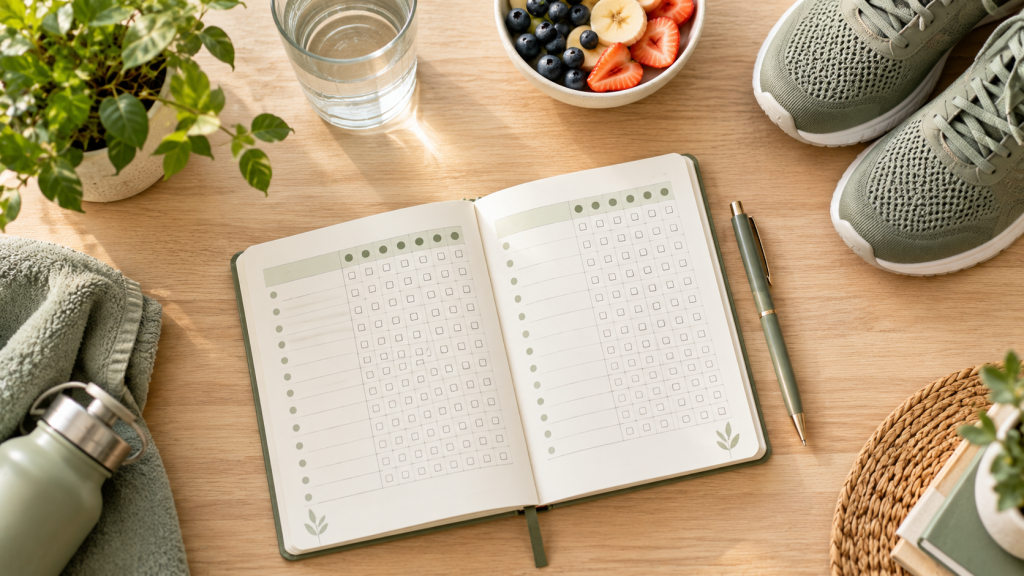
What you can see, you can keep doing. A visible tracker shows your streak, builds momentum, and gives you a small win every day.
Ways to track:
- A wall calendar with an X for each completed day
- A notebook or bullet journal
- A printable habit tracker
- A digital habit tracker with streaks and progress views
If you want a free option, you can download our free printable habit tracker (PDF) and put it on your fridge or desk.
If you prefer something digital, Streakify AI Premium Habit Tracker is an editable HTML planner designed to help you track daily routines, monitor progress, and build streaks. According to the product page, it is printable and mobile friendly, is an instant digital download, and has no subscription. It is priced at $10.
Get Streakify AI Premium Habit Tracker for $10 →
The best tracker is the one you will actually look at every day, so choose whichever feels easiest.
Step 8: Plan for Bad Days (and Never Miss Twice)
Everyone has days when they are tired, busy, or unmotivated. Habits that last have a plan for those days.
Create a “minimum version” of your habit. For example, if your habit is a 20-minute workout, your minimum might be 5 minutes of stretching. On tough days, do the minimum. This keeps the habit alive.
Follow the “never miss twice” rule. Missing one day is normal. Missing two or more in a row starts a new habit of not doing it. Whatever happens, get back on track the very next day.
Expect obstacles and plan for them:
- If I am traveling, I will do a 10-minute routine in my room.
- If I am sick, I will rest and restart gently when I feel better.
- If I am too busy, I will do the minimum version.
If you want more help staying consistent when motivation drops, see our guide on why most people quit fitness after two weeks and how to avoid it.
Step 9: Build Your Identity, Not Just Your Routine
The strongest habits are tied to who you believe you are. Instead of thinking, “I am trying to exercise,” start thinking, “I am someone who takes care of my body.”
Every time you complete a habit, you cast a small vote for that identity. After enough votes, the habit feels like part of you rather than a chore.
Try this: Complete the sentence, “I am the kind of person who ______.” Then take one small action today that proves it.
A simple morning routine can help you start your day with more intention. You don’t need to change everything at once—even a few minutes of movement can be a manageable first step. Try this morning stretch routine for beginners for simple ideas to get started.
12 Healthy Habits Worth Starting
You do not need all of these. Pick one that fits you and start tiny.
1. Drink Water First Thing
Have a glass of water when you wake up or with your morning routine. Tiny version: Place a glass by your bed.
2. Move for 10 Minutes a Day
Walk, stretch, dance, or do a short bodyweight routine. Tiny version: 2 minutes of stretching after brushing your teeth.
3. Go to Bed at a Consistent Time
Sleep affects mood, energy, appetite, and focus. Most adults need around 7 or more hours. Tiny version: Go to bed 10 minutes earlier than usual.
4. Add One Vegetable or Fruit to Every Meal
Simple additions beat complicated diets. Tiny version: Add fruit to breakfast.
5. Prep Meals Ahead
A little weekend planning prevents last-minute unhealthy choices. Tiny version: Plan three dinners for the week.
6. Take a Daily Walk Outside
Fresh air and natural light can lift your mood. Tiny version: A 5-minute walk after lunch.
7. Practice Deep Breathing or Meditation
A few calm minutes can reduce feelings of stress. Tiny version: 5 slow breaths when you wake up.
8. Limit Screen Time Before Bed
Turn off screens 30 to 60 minutes before sleep for a calmer wind-down. Tiny version: Start with 15 minutes.
9. Stretch Daily
Gentle stretching can help you feel less stiff. Tiny version: One stretch before bed.
10. Write Down One Good Thing
Gratitude journaling can help shift attention toward positives. Tiny version: One sentence a day.
11. Take Breaks From Sitting
Stand and move for a minute or two every hour if you sit a lot. Tiny version: Stand up and stretch each time you refill your water.
12. Do a Weekly Review
Take 10 minutes each week to look at what worked and what to adjust. Tiny version: Do it every Sunday with a cup of tea.
Your 30-Day Habit-Building Plan
Use this simple plan to build your first lasting habit.
Days 1 to 3: Choose and Prepare
- Pick one healthy habit.
- Write your tiny version and your anchor (“After I ____, I will ____”).
- Set up your environment and your tracker.
Days 4 to 10: Build the Streak
- Do your tiny habit every day, even if it takes only a minute or two.
- Mark your tracker each time.
- Do not increase the habit yet. Focus on showing up.
Days 11 to 14: Pass the Two-Week Test
- Expect motivation to dip. This is normal.
- Use your minimum version on hard days.
- Remind yourself why this habit matters.
Days 15 to 21: Grow Slowly
- If the habit feels easy, increase it slightly, for example from 5 to 10 minutes.
- Add a small reward you enjoy.
- Review what is working and what is not.
Days 22 to 30: Lock It In
- Keep your habit consistent and your tracker visible.
- Reflect: How do you feel compared with Day 1?
- Celebrate with a non-food reward.
- Decide whether to continue growing this habit or add a second one.
Remember: Day 30 is not the finish line. It is just the point where the habit often starts to feel more natural.
How to Track Your Habits
What to Track
- Whether you did it: a simple yes or no each day
- Streaks: how many days in a row
- How you feel: energy, mood, or sleep on a 1 to 10 scale
- Weekly totals: number of days you completed the habit
Tips for Tracking Well
- Keep it simple. Too many categories make you quit tracking.
- Mark it right after you finish the habit.
- Put your tracker where you will see it daily.
- Review weekly, not just daily.
- Celebrate milestones such as 7, 14, and 30 days.
- Do not judge yourself by gaps. Treat them as information.
What to Do When You Fall Off Track
Everyone falls off track sometimes. What matters is how you restart.
Step 1: Skip the Guilt
Guilt drains energy. Treat the break as data, not as failure.
Step 2: Ask What Got in the Way
Was the habit too big? Was your schedule different? Were you tired? Identify one cause.
Step 3: Shrink the Habit
Make it easier. If 20 minutes was too much, try 5.
Step 4: Restart Today
Do not wait for Monday or the first of the month. Do the tiny version today.
Step 5: Adjust Your System
Change your cue, time, or environment so the habit fits your real life.
Troubleshooting: Why Your Habit Is Not Sticking
| Problem | Likely Cause | Simple Fix |
|---|---|---|
| I forget to do it | No clear cue | Attach it to an existing habit and set a reminder |
| I never feel like it | Habit is too big or boring | Shrink it and make it enjoyable |
| I do it for a week, then stop | Relying on motivation | Add tracking, a minimum version, and a bad-day plan |
| I do not see results | Wrong measure or too early | Track behavior and how you feel, not only the scale |
| I miss a day and quit | All-or-nothing mindset | Use the never-miss-twice rule |
| I am too busy | Plan is unrealistic | Choose a 2-minute version |
| I feel exhausted | Too many changes or poor sleep | Focus on one habit and protect sleep |
Common Mistakes to Avoid
Starting Too Big
Big goals feel exciting, but small ones last. Start tiny and grow.
Changing Everything at Once
One habit at a time. Master it, then add another.
Waiting for Motivation
Motivation often follows action. Start with the smallest step.
Not Tracking
Without feedback, progress feels invisible. Track your habit visibly.
Being Too Hard on Yourself
Self-criticism makes habits harder to keep. Be kind and curious instead.
Comparing Yourself With Others
Compare yourself only with your past self.
Ignoring Sleep, Food, and Stress
Foundations matter. If you are exhausted, even tiny habits feel hard. Support your energy first.
Skipping Rewards
Your brain repeats what feels rewarding. Add small, healthy rewards.
Frequently Asked Questions
How do I build healthy habits that last?
Start with one tiny habit, anchor it to something you already do, make it specific and easy, track it visibly, and plan for hard days with a minimum version. Be patient and give it several weeks.
How long does it take to build a healthy habit?
It varies. A well-known study found an average of about 66 days, with a very wide range between people and habits. Easier habits can form faster, and harder ones take longer. Consistency matters more than any exact number.
What is habit stacking?
Habit stacking means attaching a new habit to an existing one, using the formula “After I [current habit], I will [new habit].” The existing habit acts as a reminder.
What is the easiest healthy habit to start with?
Drinking a glass of water in the morning, taking a 5-minute walk, adding one vegetable to a meal, or going to bed 10 minutes earlier are all simple starting points.
How many habits should I build at once?
Start with one, especially if you have struggled before. After it feels automatic, add a second. Some people can handle two at a time, but one is usually best.
Why do I keep quitting my healthy habits?
Common reasons include starting too big, relying on motivation, having no clear cue or tracker, and an all-or-nothing mindset. Shrinking the habit and tracking it can make a big difference.
What should I do if I miss a day?
Do not panic. Get back on track the next day, even with a very small version. Remember the rule: never miss twice.
Do habit trackers really work?
Many people find that seeing streaks and progress keeps them motivated and consistent. Trackers work best when paired with a tiny, specific habit and a realistic plan. Results vary from person to person.
Is a paper or digital habit tracker better?
Both work. Paper is simple and visible on a wall or fridge. Digital trackers can be more convenient and easier to edit. Choose the one you will actually use daily.
How do I stay motivated to keep healthy habits?
Do not rely only on motivation. Use systems: clear cues, easy setup, visible tracking, enjoyable rewards, and accountability from a friend or family member.
Can I build healthy habits if I am very busy?
Yes. Choose 2-minute versions, stack them onto existing routines, and focus on consistency. Even small actions add up over time.
What is a minimum viable habit?
It is the smallest version of your habit that still counts, such as a 5-minute walk instead of 30 minutes. It keeps your streak alive on difficult days.
How do I make exercise a habit?
Start with 5 to 10 minutes, choose activity you enjoy, schedule it at the same time each day, and track every session. Increase gradually after a few weeks.
How do I build a healthy eating habit?
Start with one small change, such as adding vegetables to dinner or preparing three meals ahead of time. Focus on adding good foods rather than only cutting things out.
Should I talk to a professional before changing habits?
If you have a medical condition, are pregnant, take medication, or are making big changes to your diet or exercise, talk with a doctor or registered dietitian. Support is also helpful if habits are linked to stress, mood, or mental health concerns.
Final Thoughts
Knowing how to build healthy habits that actually last is less about willpower and more about design. Start tiny. Choose one habit. Anchor it to your day. Make it easy and enjoyable. Track it where you can see it. Plan for bad days. And think of yourself as someone who takes care of their health.
You do not need a perfect plan or a fresh start on Monday. You only need to take one small step today and repeat it tomorrow.
Ready to start? Download the free printable habit tracker, or try the Streakify AI Premium Habit Tracker to track your streaks and progress. Then explore more simple guides on FitHealthyMind.com.
Disclaimer: This article is for general educational purposes only and does not replace advice from a qualified healthcare professional. Consult your doctor or a registered dietitian before making significant changes to your diet, exercise routine, or healthcare plan.
4 thoughts on “How to Build Healthy Habits That Actually Last: 9 Simple Steps That Work”